
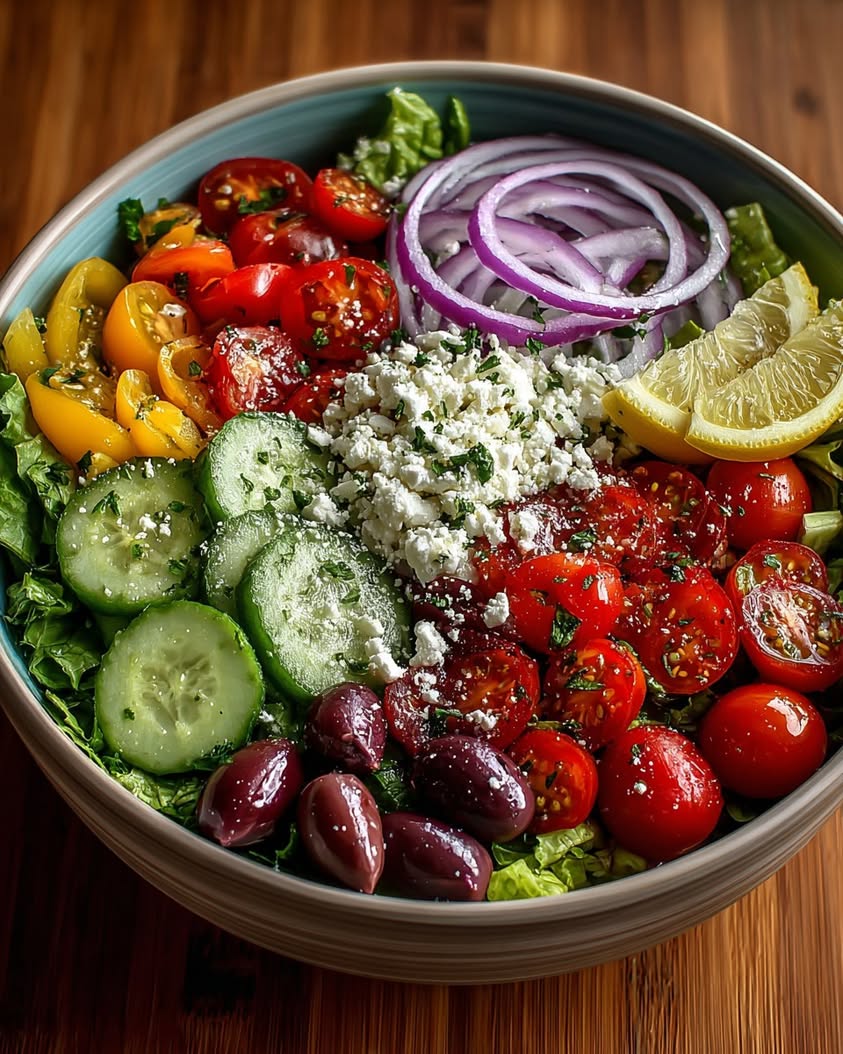
Authentic Greek Salad Recipe: A Taste of the Mediterranean Sun
Imagine the sun-drenched shores of the Aegean Sea, where simple, fresh ingredients come together to create something truly magical. This authentic Greek salad recipe, known as Horiatiki, is that magic on a plate. It is a vibrant celebration of the Mediterranean diet’s core principles. Consequently, it focuses on peak-season produce, high-quality olive oil, and briny, savory accents. Every bite transports you to a seaside taverna with its bold, clean flavors and satisfying textures.
This is not your average tossed salad. Instead, it is a composed dish where each ingredient shines individually while contributing to a harmonious whole. The key to a perfect Greek salad lies in its simplicity and the quality of its components. You will find no lettuce here, only the essential vegetables and cheese that define this classic. Ultimately, this recipe delivers a healthy, refreshing, and utterly delicious experience that is perfect for any occasion, from a quick lunch to a festive gathering.
Mastering this Greek salad recipe is surprisingly straightforward. The process involves minimal chopping and a simple whisked dressing. However, the result is a dish with complex layers of flavor. The juicy tomatoes provide a sweet base, while the cucumber adds a cooling crunch. Furthermore, the red onion offers a sharp bite, and the olives contribute a salty depth. Finally, the creamy feta cheese and fragrant oregano tie everything together. This salad is a testament to the idea that the best food often requires the least fuss.
Quick Recipe Highlights
- Flavor Profile: This Greek salad recipe delivers a bright, tangy, and savory experience. The lemon-oregano dressing is zesty and herbaceous, perfectly complementing the sweet tomatoes and briny olives. Additionally, the creamy, salty feta cheese balances the acidity for a well-rounded taste.
- Texture: Expect a wonderful contrast of textures in every forkful. You get the juicy burst of ripe tomatoes, the firm crunch of cucumber, and the tender bite of bell pepper. Meanwhile, the feta offers a creamy crumble, and the olives provide a meaty chew.
- Aroma: The aroma is fresh and inviting, dominated by the grassy scent of extra virgin olive oil and the earthy, pine-like fragrance of dried oregano. When squeezed, the lemon adds a sharp, clean citrus note that awakens the senses.
- Visual Appeal: This salad is a feast for the eyes with its brilliant colors. The deep red of the tomatoes, green cucumber, purple onion, and black olives create a stunning mosaic. Topped with a slab of white feta and a sprinkle of green oregano, it is incredibly photogenic.
- Skill Level Needed: This is a beginner-friendly recipe requiring no special culinary skills. The only techniques involved are basic knife work for chopping vegetables and whisking a simple dressing. Therefore, it is an excellent recipe for novice cooks or anyone needing a quick, impressive dish.
- Special Equipment: You need only standard kitchen tools. A sharp chef’s knife and cutting board are essential for prepping vegetables. Additionally, a small bowl and whisk are helpful for the dressing, though you can simply shake the ingredients in a jar with a tight lid.
Recipe Overview
- Difficulty Level: This Greek salad recipe earns its “Easy” rating for several reasons. First, there is no cooking involved, eliminating heat management. Second, the ingredient list is short and familiar. Third, the assembly is intuitive and forgiving. Essentially, if you can chop vegetables, you can make this iconic dish successfully.
- Category: This dish fits multiple meal categories beautifully. It serves as a stellar side dish for grilled meats like lamb or chicken. Moreover, it can be a light main course for lunch, especially when paired with crusty bread. It is also a fantastic potluck or picnic offering due to its durability.
- Cuisine: This recipe is a cornerstone of Greek cuisine and the wider Mediterranean diet. Its origins are rural and traditional, designed to showcase the fresh produce of the Greek countryside. The flavors are characteristic of the region: olive oil, lemon, oregano, and brined ingredients like olives and cheese.
- Cost: This is a very cost-effective recipe to prepare. The primary expenses are the block of feta cheese and a good bottle of olive oil, both of which are used sparingly and have long shelf lives. Seasonal vegetables are typically affordable. Overall, it delivers restaurant-quality flavor for a fraction of the price.
- Season: This salad is truly a summer masterpiece. It is best when tomatoes and cucumbers are at their peak sweetness and crispness, typically from late spring through early fall. However, with quality greenhouse vegetables, you can enjoy a respectable version year-round, though the flavor will be less intense.
- Occasion: Its versatility makes it suitable for countless occasions. It is perfect for casual weeknight dinners, elegant dinner parties, outdoor barbecues, and packed lunches. Furthermore, it is a staple at festive gatherings and holidays, offering a refreshing counterpoint to richer dishes.
Why You’ll Love This Recipe
First and foremost, the taste and texture of this Greek salad recipe are unbeatable. Each ingredient contributes a distinct note that creates a symphony in your mouth. The juicy tomatoes burst with sweetness, contrasting with the salty punch of Kalamata olives. Meanwhile, the cucumber provides a refreshing crunch, and the creamy feta mellows the sharp red onion. The dressing, a simple blend of olive oil, lemon, and oregano, amplifies all these flavors without overpowering them. This combination is both satisfying and light, leaving you feeling nourished rather than heavy.
From a practical standpoint, the convenience of this dish is a major win. It comes together in about fifteen minutes with minimal cleanup. There are no pots to scrub or ovens to preheat. You simply chop, whisk, and assemble. This makes it an ideal solution for busy weeknights when you want something healthy and delicious without a long time commitment. Additionally, the ingredients are easy to find at any standard grocery store, so you do not need to make a special trip.
Nutritionally, this salad is a powerhouse aligned with the celebrated Mediterranean diet. It is packed with vitamins, antioxidants, and healthy fats. The tomatoes and peppers are rich in Vitamin C and lycopene. The olive oil provides heart-healthy monounsaturated fats. Furthermore, the cucumbers offer hydration and fiber. The feta cheese adds a dose of calcium and protein. Eating this salad regularly supports overall wellness, promoting good heart health, digestion, and stable energy levels.
For entertaining, this Greek salad recipe is a social superstar. Its vibrant appearance immediately brightens any table and invites people to dig in. It pairs wonderfully with a variety of main dishes, from grilled fish to roasted chicken, making menu planning easy. Because it can be prepared ahead of time, you can spend more moments with your guests and less time in the kitchen. It is a dish that feels both rustic and elegant, impressing visitors with its authentic flavors and beautiful presentation.
Finally, its cost-effectiveness and accessibility cannot be overstated. You can feed a crowd inexpensively with this recipe. A single block of feta and a pint of olives go a long way. Seasonal vegetables are often budget-friendly. Even if you splurge on high-end extra virgin olive oil, the amount used per serving is small, making it a worthwhile investment. This accessibility means that enjoying a taste of the Mediterranean is possible for nearly everyone, regardless of cooking skill or budget.
Historical Background and Cultural Significance
The origin story of the Greek salad, or Horiatiki, meaning “village salad,” is deeply rooted in the rural life of Greece. It was not created by chefs in a restaurant but by farmers and villagers using what was readily available from their gardens and pantries. Historically, this dish was a summer staple when tomatoes, cucumbers, and peppers were abundant. The addition of preserved items like olives and cheese made it a sustaining meal for workers in the fields. This humble beginning is why the recipe remains simple, focusing on ingredient quality over complicated technique.
Culturally, this salad is a symbol of Greek hospitality and the Mediterranean way of life. It is almost always present on the table at family meals, tavernas, and celebrations. Sharing a large platter of Horiatiki signifies community and togetherness. The act of drizzling the olive oil and oregano over the salad at the table is a small ritual that connects people to the land and tradition. It embodies the Greek philosophy of “philoxenia,” or love for strangers, often being one of the first dishes offered to guests.
The evolution of the recipe is interesting, particularly outside of Greece. The traditional Horiatiki never includes lettuce. However, as the dish traveled internationally, many versions began adding leafy greens to stretch the ingredients or cater to local tastes. Purists maintain that the authentic version should only contain tomatoes, cucumber, green pepper, red onion, olives, and a large slab of feta. The dressing is always added just before serving to prevent the vegetables from becoming soggy, a key difference from many pre-dressed Western salads.
Regional variations within Greece do exist, often based on local produce. For example, on some islands, you might find capers added for an extra briny note. In Crete, they might use their local, tangier cheese called “anthotyros” or a barley rusk underneath the salad to soak up the juices. The type of olive can also vary, with Kalamata being the most famous but not the only option. These subtle changes reflect the micro-climates and agricultural traditions of different parts of the country, yet the soul of the dish remains unmistakably Greek.
Ingredient Deep Dive
Let us start with the tomatoes. In Greece, they use ripe, flavorful tomatoes often picked at peak season. The tomato’s journey to Greece likely came from the Americas, but it was embraced wholeheartedly into the cuisine. Nutritionally, tomatoes are rich in lycopene, an antioxidant linked to reduced risk of heart disease and cancer. For the best Greek salad recipe, choose vine-ripened tomatoes that are firm yet give slightly to pressure. Avoid refrigerating them, as cold temperatures degrade their texture and flavor. If good fresh tomatoes are unavailable, cherry or grape tomatoes are a decent substitute due to their concentrated sweetness.
Next, consider the cucumber. The English or hothouse cucumber is preferred for its thin skin and minimal seeds. Cucumbers have been cultivated for thousands of years in Western Asia and offer great hydration and a satisfying crunch. They provide vitamins K and C, plus potassium. Select cucumbers that are firm and dark green, avoiding any with soft spots or yellowing. You can peel them if the skin is waxed, but leaving the skin on adds color and nutrients. For storage, keep them in the refrigerator’s crisper drawer. There is no real substitute for cucumber’s unique crisp, watery texture in this salad.
The feta cheese is the crown jewel. By E.U. law, authentic feta is a protected designation of origin (PDO) product made in Greece from at least 70% sheep’s milk, often blended with goat’s milk. This gives it a tangy, salty, and crumbly character unlike any other cheese. It is a good source of calcium and protein. Always buy feta in a block submerged in brine, as pre-crumbled feta is drier and contains anti-caking agents. Store it in its brine in the refrigerator. For a dairy-free version, a firm, brined tofu or a vegan feta alternative can be used, though the flavor profile will change.
Kalamata olives are another non-negotiable element. These dark purple, almond-shaped olives are named after the city of Kalamata in southern Greece. They are typically preserved in wine vinegar or olive oil, giving them a rich, fruity, and smoky flavor. They are packed with healthy monounsaturated fats. Look for olives sold in jars or at the deli counter, avoiding canned varieties which can be mushy. You can store them in their liquid in the fridge. If unavailable, other brine-cured black olives like Gaeta can work, but they will not provide the exact same distinctive taste.
Finally, the extra virgin olive oil and dried oregano form the soul of the dressing. Greek olive oil is known for its peppery, grassy notes. Extra virgin means it is from the first cold pressing, retaining the most flavor and nutrients. Oregano in Greece is a specific variety, *rigani*, which is more pungent and earthy than common supermarket oregano. For the best results, use the highest quality extra virgin olive oil you can afford and seek out Greek oregano if possible. Store olive oil in a cool, dark place to prevent rancidity. Fresh oregano can be used, but the dried version is traditional and provides a more concentrated flavor.
Common Mistakes to Avoid
- Using unripe or bland tomatoes. This is the most critical error. The tomatoes provide the foundational sweetness and juice for the salad. Winter greenhouse tomatoes will result in a watery, flavorless dish. Always seek out the ripest, most aromatic tomatoes you can find, even if it means using cherry tomatoes as a substitute.
- Dicing the feta cheese too small. Traditional Greek salad features a large slab of feta placed on top, not tiny cubes mixed in. The slab allows you to get a perfect bite of creamy cheese with each forkful. Crumbling it too finely causes it to disappear and become muddy.
- Adding lettuce or other leafy greens. While common in “Greek-style” salads abroad, authentic Horiatiki contains no lettuce. The salad is about the hearty vegetables and cheese. Adding lettuce waters down the flavors and causes the salad to wilt quickly under the dressing.
- Dressing the salad too early. The lemon juice and salt in the dressing will draw water out of the vegetables, creating a pool at the bottom of the bowl and making everything soggy. Always dress the salad just before serving to maintain optimal texture.
- Using low-quality olive oil. The dressing is simple, so each component must shine. A bland or rancid olive oil will flatten the entire flavor profile. Invest in a good bottle of extra virgin olive oil; its peppery finish is essential to the authentic taste.
- Substituting fresh oregano for dried. While fresh herbs are often preferred, in this case, dried Greek oregano is traditional and provides a more intense, earthy flavor that stands up to the other strong ingredients. Fresh oregano can be used as a garnish, but dried is best for the dressing.
- Forgetting to season the vegetables. A light sprinkle of sea salt on the tomatoes and cucumbers after chopping helps to enhance their natural flavors. Do not rely solely on the saltiness from the feta and olives to season the entire dish.
- Not including the pepper. The green bell pepper adds a specific vegetal sweetness and crunch that balances the other ingredients. Some omit it, but it is a classic component that contributes to the salad’s signature texture and flavor balance.
- Using pre-sliced olives from a can. These often lack flavor and have a mushy texture. For the best results, buy whole Kalamata olives in brine and pit them yourself. The superior taste and firm texture are immediately noticeable.
- Skipping the red onion soak. Raw red onion can be overwhelmingly sharp. Soaking the slices in cold water for 5-10 minutes tames their bite while preserving their color and crunch, making them much more palatable in the final salad.
Essential Techniques
The first essential technique is chopping the vegetables to the correct size. The goal is pieces that are substantial enough to require a fork but not so large they are unwieldy. Tomatoes should be cut into wedges or large chunks, not small dice. The cucumber should be in thick half-moons. This size ensures each vegetable retains its individual character and texture. A common pitfall is cutting everything too small, which causes the salad to become mushy and homogeneous. The visual cue for success is seeing distinct, colorful pieces that you can easily pick up with a fork.
Another key technique is properly preparing the red onion. Soaking thin slices of red onion in ice water is a simple but transformative step. The cold water draws out the pungent sulfur compounds that cause the harsh, raw onion bite. After just five to ten minutes, the onions become crisp, mild, and slightly sweet. This makes them infinitely more enjoyable in the salad. The pitfall is skipping this step and ending up with onion flavor that overpowers every other ingredient. Success is indicated by onions that add a pleasant sharpness without lingering heat.
Whisking the emulsion for the dressing is also important. While you can simply combine the ingredients, taking a moment to whisk vigorously helps create a temporary emulsion. This means the oil and lemon juice blend together more thoroughly, coating the vegetables evenly. The technique involves combining the lemon juice, oregano, and salt first, then slowly streaming in the olive oil while whisking constantly. The pitfall is a separated dressing where the oil sits on top. Success is a slightly thickened, unified dressing that clings to the vegetables.
Finally, mastering the assembly order protects the salad’s integrity. Always place the sturdy vegetables (tomatoes, cucumber, pepper) in the bowl first. Then, scatter the soaked onions and olives on top. Place the slab of feta cheese centrally on the mound. Do not toss the salad until you are ready to serve. Drizzle the dressing over everything just before bringing it to the table. This technique prevents premature wilting and sogginess. The pitfall is mixing everything together in the kitchen. The visual cue for success is a beautifully composed, crisp salad where each ingredient is visible and vibrant.
Pro Tips for Perfect Greek Salad
First, salt your tomatoes and cucumbers lightly after chopping them. This small step draws out their natural juices slightly, which then mingles with the olive oil and lemon to create a delicious, impromptu “vinaigrette” in the bottom of the bowl. This juice is meant to be sopped up with crusty bread.
Always use a block of feta in brine, not pre-crumbled feta. The brine keeps the cheese moist and flavorful. Pre-crumbled varieties are often drier, chalkier, and contain anti-caking agents that affect texture.
If you cannot find Greek oregano, rub regular dried oregano between your palms before adding it to the dressing. This action releases the essential oils, awakening its aroma and mimicking the potency of true *rigani*.
For the ultimate experience, serve your Greek salad recipe at room temperature. Taking the vegetables out of the refrigerator 30 minutes before assembling allows their flavors to become more pronounced and vibrant.
Use the best extra virgin olive oil you have. Since the dressing is not cooked, you will taste the oil’s full character. A high-quality, peppery oil will elevate the entire dish from good to extraordinary.
Do not discard the feta brine! It is a flavorful liquid gold. You can use a splash in the dressing for extra saltiness or save it to marinate chicken or olives.
Consider adding a pinch of dried mint to the oregano in the dressing. While not universal, this is a common variation in some Greek regions that adds a lovely, refreshing layer of complexity.
For a dramatic presentation, assemble the salad on a large, flat platter instead of in a deep bowl. This showcases all the beautiful colors and makes it easier for guests to serve themselves.
Variations and Adaptations
Exploring regional variations can be fascinating. In Cyprus, they often add a handful of capers for an extra briny punch. On some Aegean islands, you might find a few leaves of fresh purslane mixed in, adding a lemony, succulent crunch. In tavernas, it is common to see a sprinkle of dried rigani (oregano) over the entire salad just before serving, not just in the dressing. Some versions include a green pepper, as in our core recipe, while others might use a milder pepperoncini.
Seasonal adaptations are straightforward. In the height of summer, use heirloom tomatoes of different colors for a stunning effect. In cooler months, when tomatoes are less flavorful, you can increase the ratio of cucumbers and peppers or add roasted red peppers for sweetness. You could also incorporate preserved artichoke hearts for a different texture and flavor when fresh produce is limited.
For dietary modifications, this salad is naturally gluten-free. To make it vegan, omit the feta cheese or use a high-quality vegan feta alternative made from almonds or tofu. For a lower-fat version, reduce the amount of olive oil slightly and use a reduced-fat feta, though this will impact the traditional creamy texture and rich flavor.
Flavor variations can cater to personal taste. Add a minced garlic clove to the dressing for a more robust kick. Include a teaspoon of red wine vinegar along with the lemon juice for added acidity. For a sweeter note, add a pinch of sugar to the dressing to balance very acidic tomatoes. Some enjoy a sprinkle of sumac over the top for a tangy, lemony finish.
Texture modifications are also possible. For a heartier salad, add a handful of cooked chickpeas or white beans. To include a crunchy element, sprinkle with toasted pine nuts or slivered almonds just before serving. If you prefer a softer texture, you can very lightly salt the tomatoes and let them sit for 10 minutes to break down slightly before assembling.
Presentation alternatives offer creative freedom. Serve individual portions in wide, shallow bowls. For a deconstructed version, arrange each ingredient in separate sections on a large board. Skewer cherry tomatoes, cucumber cubes, olives, and feta chunks on toothpicks for a Greek salad “kebab” appetizer. The classic family-style platter, however, remains the most authentic and communal option.
Serving and Presentation Guide
Plating techniques for a Greek salad recipe should emphasize its rustic, abundant beauty. Use a large, shallow serving platter or a wide, low bowl. This allows the ingredients to spread out, showcasing their colors and preventing them from being piled and crushed. Start by creating a base layer with the tomato and cucumber chunks. Then, artfully scatter the pepper strips, onion slices, and olives over the top. Finally, place the imposing slab of feta cheese right in the center, slightly tilted for visual interest.
Garnishing ideas are simple but effective. A final drizzle of extra virgin olive oil over the feta slab makes it glisten. A generous sprinkle of dried oregano across the entire salad adds a pop of green and intensifies the aroma. You can also add a few whole oregano sprigs or a twist of lemon peel on the side for decoration. Avoid wet herbs like parsley as a garnish, as they are not traditional and can introduce moisture.
Traditional accompaniments are non-negotiable. A basket of warm, crusty bread is essential—not for eating *with* the salad, but for *mopping up* the incredible juices left at the bottom of the bowl. This combination of bread and salad juices, known as “papara,” is considered a delicacy in itself. Additionally, a glass of chilled white wine or a small carafe of ouzo diluted with water completes the authentic Greek meal experience.
Modern serving suggestions might include pairing the salad with grilled proteins. It is fantastic alongside lemon-oregano grilled chicken skewers (souvlaki), lamb chops, or a whole roasted fish. For a vegetarian feast, serve it with spanakopita (spinach pie) and grilled halloumi cheese. You can also chop the salad more finely after serving and stuff it into a pita pocket for a quick gyro-inspired wrap.
Temperature considerations are crucial. This salad should never be served ice-cold straight from the refrigerator. The cold masks the flavors of the tomatoes and makes the olive oil congeal slightly. Instead, let the chopped vegetables sit out for 20-30 minutes before assembling. The final dish should be cool and refreshing, but not frigid, allowing every nuanced flavor to shine through.
Portion control tips are easy with this dish. As a side salad, plan for about one large tomato and a quarter of a cucumber per person. As a main course, double those amounts. The olives, feta, and onion are potent, so a little goes a long way. Remember, the salad is meant to be a sharing dish, so erring on the side of a larger platter encourages a communal dining experience and ensures there is plenty of the flavorful juice for bread-dipping.
Wine and Beverage Pairing
Wine pairings for a Greek salad recipe are wonderfully straightforward due to the salad’s bright acidity and briny notes. The classic choice is a crisp, dry Greek white wine. Assyrtiko from Santorini is perfect, with its high acidity and citrus-mineral profile that mirrors the lemon in the dressing. Other excellent Greek options include Moschofilero, which is aromatic and peachy, or a simple, refreshing Retsina if you enjoy its unique pine resin character. These wines cut through the richness of the olive oil and feta beautifully.
If you prefer non-Greek wines, look for high-acid, unoaked whites. A Sauvignon Blanc from New Zealand or the Loire Valley offers grassy notes that complement the vegetables. A dry Italian Pinot Grigio or Vermentino also works well. Generally, avoid heavily oaked Chardonnays or sweet wines, as they will clash with the salad’s tangy and savory elements.
For non-alcoholic alternatives, you have several refreshing options. Sparkling water with a squeeze of lemon and a sprig of mint is always a winner. A chilled, unsweetened mint iced tea provides a herbal note that pairs nicely with the oregano. You could also make a “shrubb” by mixing pomegranate juice with sparkling water and a dash of orange bitters for a complex, tart beverage that stands up to the bold flavors.
Coffee and tea pairings are more relevant after the meal. A strong Greek coffee, served sweet and with the grounds settled at the bottom of the cup, is the traditional digestive. Alternatively, a cup of herbal tea, such as chamomile or mountain tea (Greek *tsai tou vounou*), is a soothing, caffeine-free way to end a Mediterranean-inspired meal.
Temperature and serving suggestions are key. White wines should be served well-chilled, between 45-50°F (7-10°C). Non-alcoholic sparkling drinks should be ice-cold. The contrast between the cool beverage and the room-temperature salad is part of the pleasure. Always serve drinks in clear glasses to appreciate their color, and have plenty of ice and water on the table to cleanse the palate between bites of the salty feta and olives.
Storage and Shelf Life
Storage methods for leftover Greek salad require careful separation to preserve texture. The dressed vegetables will become soggy and unappealing if stored together. The best practice is to store any undressed vegetable components (tomatoes, cucumber, pepper, onion) in a single airtight container. Store the olives and feta separately in their own brine or a small container. Keep the leftover dressing in a sealed jar. This way, you can reassemble fresh portions for up to two days.
Temperature requirements are simple: refrigeration is a must. All components should be stored in the refrigerator at or below 40°F (4°C). However, remember to let the vegetables come to a cool room temperature for about 15 minutes before serving again. Never freeze a prepared Greek salad, as freezing will utterly destroy the texture of the vegetables, turning them mushy and watery upon thawing.
Container recommendations focus on airtightness and material. Glass containers are ideal as they do not absorb odors and allow you to see the contents. Use separate small containers for the feta (in its brine), olives, and dressing. For the chopped vegetables, a large glass container with a tight-fitting lid works best. If you must store a fully assembled salad, use a shallow container to minimize crushing, but expect significant wilting within hours.
Signs of spoilage are usually visual and olfactory. Look for a significant amount of cloudy liquid at the bottom of the container, far beyond the normal tomato juices. The vegetables, especially the cucumbers, may become slimy or excessively soft. The feta cheese, if not stored in brine, can develop mold or an off smell. If the olive oil in the dressing smells rancid (like crayons or old nuts), it has spoiled. When in doubt, it is safest to discard the leftovers.
Reheating instructions do not apply, as this is a cold salad. The concept is “re-freshing,” not reheating. To revive leftovers, drain any excess liquid from the vegetable container. Give the veggies a quick rinse in cold water and pat them very dry with a paper towel. Reassemble with the stored feta, olives, and a fresh drizzle of dressing. The texture will not be as perfect as day one, but it will be salvageable.
Freezing guidelines are clear: do not freeze the assembled salad or its main vegetable components. The high water content in tomatoes and cucumbers causes ice crystals to form, rupturing cell walls and resulting in a limp, watery mess upon thawing. The only component you could potentially freeze is the dressing, but since it takes minutes to make fresh, freezing is unnecessary and may cause the olive oil to solidify oddly.
Make Ahead Strategies
Creating a prep timeline makes entertaining stress-free. The day before, you can pit the olives and store them in their brine. You can also make the dressing and store it in a jar at room temperature (if using within 24 hours) or in the fridge. Wash and dry your vegetables, but do not chop them yet, as cut surfaces lose moisture and flavor. About 2-3 hours before serving, chop all the vegetables. This is the ideal window—it allows flavors to develop slightly without significant water release.
Storage between steps is crucial for quality. Keep chopped tomatoes and cucumbers in a colander over a bowl in the fridge; this allows any initial moisture to drain away. Store the sliced onions in their ice water bath in the fridge. Keep the bell pepper strips in a separate bag. Have your block of feta ready in its brine. This modular approach keeps everything crisp and fresh until the final assembly.
Assessing the quality impact of make-ahead steps is important. Chopping vegetables more than 3-4 hours in advance will lead to a noticeable loss of crispness and fresh flavor, especially in the cucumber. The dressing can be made up to 2 days ahead, but the dried oregano’s flavor will infuse more strongly over time, which can be a positive. The key is to protect the structural integrity of the vegetables for as long as possible.
Assembly tips for a make-ahead scenario involve layering. You can compose the salad on the platter up to 30 minutes before serving. Place the tomatoes, cucumber, and peppers down first. Scatter the drained onions and olives on top. Place the feta slab in the center. Do not add the dressing. Cover the entire platter loosely with plastic wrap and leave it at cool room temperature. This allows the vegetables to lose their refrigerator chill without becoming soggy.
For reheating guidelines, again, there is none. The goal is to serve cool, not cold. If you have stored your pre-chopped veggies in the fridge, take them out 30 minutes before final assembly to take the chill off. The only thing you might need to “refresh” is the dressing—give it a vigorous shake or whisk to re-emulsify the oil and lemon juice before drizzling.
Adding fresh elements at the last minute is the final pro move. Even if you pre-assembled the salad, add a final, generous sprinkle of dried oregano over everything just before carrying it to the table. This provides an aromatic burst that signals freshness. You can also add a final drizzle of a little extra virgin olive oil over the feta at this point to make it glisten appealingly.
Scaling Instructions
Halving the recipe is simple for smaller households. Use one large tomato, half a cucumber, half a bell pepper, a quarter of a red onion, a handful of olives, and a 4-ounce slab of feta. Mix the dressing ingredients in a small jar: 2 tablespoons olive oil, 1 tablespoon lemon juice, and a scaled-down pinch of oregano and salt. The assembly process remains identical. The primary adjustment is using a smaller serving bowl or platter to maintain the salad’s visually abundant appearance.
Doubling or tripling the recipe for a crowd requires minimal adjustment to the ingredient ratios. Simply multiply everything accordingly. The only caveat is with the dressing—you may want to be slightly conservative with the salt at first, as the feta and olives already provide plenty. You can always add more after tasting. Use a very large, wide platter or multiple platters to avoid creating a deep, compressed mound of salad that bruises the vegetables at the bottom.
Equipment adjustments become necessary when scaling up. For a large batch, a very sharp chef’s knife and a large cutting board are essential for prepping the volume of vegetables. Consider using a large mixing bowl to initially toss the tomatoes, cucumber, and pepper with a little salt before transferring to the serving platter(s). For the dressing, a large liquid measuring cup and a whisk, or simply a large jar with a tight lid for shaking, will be more efficient than making multiple small batches.
Timing modifications are minimal since there is no cooking. However, chopping a large quantity of vegetables will take more time. Budget an extra 10-15 minutes of prep time for a doubled recipe. The assembly time on the platter will also be slightly longer. The good news is that the “resting” time for the vegetables to come to room temperature remains the same, regardless of quantity.
Storage considerations for large batches are similar but more critical. If you expect leftovers, it is even more important to store components separately. Have several airtight containers ready. Encourage guests to take only what they will eat to minimize waste, and keep the dressing on the side for people to add individually, which keeps any uneaten portion fresher for later.
Nutritional Deep Dive
A macro breakdown of this Greek salad recipe reveals a balanced profile. A typical serving provides healthy fats primarily from the olive oil and olives, which are monounsaturated and support heart health. The feta cheese offers a moderate amount of protein and fat. The vegetables contribute complex carbohydrates and fiber, with very little simple sugar. This combination provides sustained energy without a blood sugar spike. The salad is relatively low in calories per volume, making it a weight-friendly choice that is still highly satiating due to its fiber and fat content.
The micronutrient analysis is impressive. Tomatoes are loaded with vitamin C, potassium, and the antioxidant lycopene. Cucumbers provide vitamin K and are great for hydration. Red onions offer quercetin, an
Print
Classic Greek Salad
Description
A refreshing and vibrant salad featuring crisp vegetables, tangy feta cheese, and a simple lemon-oregano dressing, perfect for a light meal or side dish.
Ingredients
For the Crust:
- 4 large ripe tomatoes, cut into wedges
- 1 cucumber, peeled and sliced
- 1 red onion, thinly sliced
- 1 green bell pepper, sliced
- 1 cup Kalamata olives, pitted
- 200g feta cheese, cubed
- 1/4 cup extra virgin olive oil
- 2 tablespoons fresh lemon juice
- 1 teaspoon dried oregano
- Salt and black pepper to taste
Instructions
1. Prepare the Crust:
- In a large bowl, combine the tomatoes, cucumber, red onion, bell pepper, and olives.
- Gently fold in the cubed feta cheese, being careful not to break it up too much.
- In a small bowl, whisk together the olive oil, lemon juice, oregano, salt, and pepper. Pour the dressing over the salad and toss lightly to coat.
- Serve immediately or chill for 15 minutes to let the flavors meld.
Notes
You can customize the seasonings to taste.

I’m Shaykee—born in Morocco, seasoned across continents. From airplane galleys to home kitchens, I share the flavors and stories that shaped my journey.