
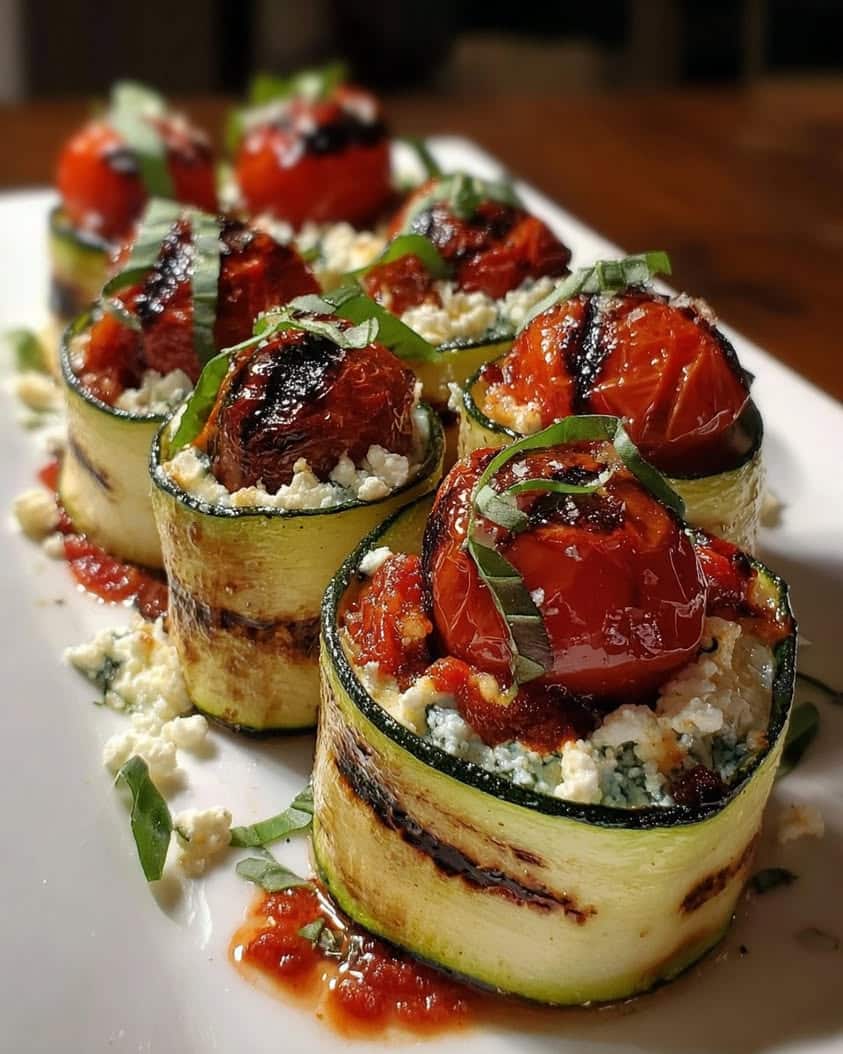
Grilled Zucchini Rollups: An Elegant Low-Carb Appetizer
These stunning grilled zucchini rollups stuffed with lemon-basil ricotta and slow roasted tomatoes redefine elegant eating. Consequently, they transform simple summer vegetables into a culinary masterpiece that impresses guests while nourishing your body. Each component works harmoniously to create a symphony of textures and flavors that celebrate fresh, seasonal ingredients. Moreover, this dish proves that healthy, low-carb options can be both beautiful and deeply satisfying.
The magic begins with pliable strips of grilled zucchini that cradle a creamy, vibrant filling. Meanwhile, slow roasted tomatoes concentrate their natural sweetness, providing bursts of umami-rich flavor. Ultimately, the final presentation showcases beautiful spirals of green, white, and red that look as impressive as they taste. This recipe for grilled zucchini rollups demonstrates how thoughtful preparation elevates humble ingredients into something extraordinary.
Perfect for entertaining or a special family meal, these rollups offer restaurant-quality presentation with approachable techniques. Furthermore, they accommodate various dietary preferences while delivering sophisticated flavor profiles. The combination of creamy lemon-basil ricotta and sweet roasted tomatoes rolled into grilled zucchini creates a stunning, low-carb appetizer or light meal that celebrates Mediterranean-inspired cooking at its finest.
Quick Recipe Highlights
- Flavor Profile: Bright lemon and fresh basil cut through the rich creaminess of the ricotta, while slow roasted tomatoes add deep, caramelized sweetness. Additionally, the grilled zucchini provides a subtle smoky note that ties all the elements together beautifully.
- Texture: Tender yet firm grilled zucchini strips contrast with the creamy ricotta filling, while the slow roasted tomatoes offer concentrated chewiness. Furthermore, each bite delivers a satisfying combination of soft, creamy, and slightly firm textures that keep your palate engaged.
- Aroma: The scent of fresh basil and zesty lemon permeates the ricotta mixture, complemented by the earthy aroma of grilled zucchini. Meanwhile, the slow roasting process intensifies the tomatoes’ natural fragrance, creating an irresistible Mediterranean-inspired scent profile.
- Visual Appeal: Vibrant green zucchini spirals reveal creamy white ricotta studded with basil flecks and ruby-red tomato pieces. Consequently, the finished dish presents as an elegant color palette that looks professional and appetizing on any table.
- Skill Level Needed: Basic knife skills and grill management are required, plus patience for the slow roasting process. However, the assembly technique is straightforward and forgiving, making this accessible for intermediate home cooks looking to expand their repertoire.
- Special Equipment: A mandoline ensures uniformly thin zucchini slices, while a grill pan or outdoor grill creates perfect char marks. Additionally, parchment-lined baking sheets are essential for the slow roasting process to achieve properly concentrated tomatoes.
Recipe Overview
- Difficulty Level: This grilled zucchini rollups recipe earns its medium rating due to multiple components requiring coordination. While each step is simple individually, managing the simultaneous preparation of grilled zucchini, slow roasted tomatoes, and ricotta filling demands organization. However, with proper timing and preparation, even novice cooks can achieve excellent results. The techniques involved build fundamental kitchen skills that transfer to other recipes.
- Category: These versatile rollups function beautifully as an elegant appetizer, light lunch, or sophisticated side dish. Furthermore, they fit perfectly into vegetarian menus, low-carb eating plans, and gluten-free diets. Their elegant presentation makes them suitable for everything from casual family dinners to formal entertaining occasions.
- Cuisine: Drawing inspiration from Italian culinary traditions, this dish celebrates Mediterranean flavors and techniques. The use of fresh basil, quality ricotta, and slow-roasted vegetables reflects Southern European cooking philosophies. Meanwhile, the grilling technique adds a universal appeal that transcends specific regional boundaries while honoring Italian appetizer traditions.
- Cost: Using seasonal zucchini and homegrown basil significantly reduces expenses, while quality ricotta represents the main investment. Cherry tomatoes remain affordable year-round, and other ingredients are pantry staples. Overall, this recipe delivers impressive restaurant-quality presentation at a fraction of the cost of dining out.
- Season: Summer provides the ideal season when zucchini and basil peak in flavor and affordability. However, this recipe adapts well to year-round preparation thanks to greenhouse vegetables and always-available herbs. The bright, fresh flavors particularly complement warmer months but bring welcome sunshine to winter tables.
- Occasion: Perfect for dinner parties, holiday appetizers, bridal showers, or romantic meals at home. Additionally, they make ordinary weeknights feel special without excessive effort. Their elegant appearance and sophisticated flavors transform any gathering into a memorable culinary experience.
Why You’ll Love This Recipe
The taste experience begins with the creamy lemon-basil ricotta filling that bursts with fresh, bright flavors. Meanwhile, the slow roasted tomatoes deliver intense sweetness that contrasts beautifully with the tangy cheese. The grilled zucchini wrappers provide subtle smokiness and tender texture that holds the components together perfectly. Each bite offers a balanced combination of creamy, sweet, tangy, and savory notes that dance across your palate. Furthermore, the layers of flavor continue to reveal themselves, making this dish interesting from first bite to last.
Preparation benefits include the ability to create components ahead of time for stress-free entertaining. The slow roasted tomatoes can be made days in advance, while the zucchini can be grilled several hours before assembling. Consequently, final preparation becomes simply filling and rolling, allowing you to enjoy your own party. The recipe scales beautifully for crowds while maintaining its elegant presentation and consistent quality across batches.
Nutritional advantages stem from zucchini’s high water content, fiber, and essential vitamins like C and B6. Ricotta provides high-quality protein and calcium with relatively low fat content compared to other cheeses. Meanwhile, slow roasting concentrates the lycopene in tomatoes, making this antioxidant more bioavailable. This combination creates a dish that supports weight management, digestive health, and overall wellness without sacrificing satisfaction or flavor.
Entertaining value shines through the stunning visual presentation that suggests professional culinary skills. Guests consistently marvel at the beautiful spirals and sophisticated flavor combinations. Moreover, the recipe accommodates various dietary restrictions simultaneously, serving vegetarian, gluten-free, and low-carb guests from one beautiful dish. The individual portions make serving straightforward and elegant without last-minute plating stress.
Cost-effectiveness comes from transforming affordable seasonal vegetables into what appears to be a gourmet restaurant dish. Zucchini represents one of summer’s most economical vegetables, while ricotta provides luxury at a reasonable price point. Compared to similar appetizers at restaurants or specialty stores, homemade versions save significant money while delivering superior quality and freshness. The ingredients stretch beautifully, making this an economical choice for feeding groups impressively.
Historical Background and Cultural Significance
The concept of stuffing and rolling vegetables has deep roots in Mediterranean culinary traditions. Italian cooks have practiced similar techniques for centuries, using abundant summer produce creatively. However, the specific combination in these grilled zucchini rollups represents a modern interpretation of classic approaches. Contemporary interest in low-carb and gluten-free eating has inspired chefs to reinvent traditional stuffed vegetable dishes using new techniques and presentations.
Cultural importance stems from Italian antipasto traditions where vegetables often play starring roles. Stuffed and rolled preparations frequently appear in regional Italian cooking, from involtini in the south to rotoli in the north. This recipe honors that heritage while adapting to contemporary tastes and dietary preferences. The use of ricotta specifically connects to Southern Italian culinary traditions where fresh cheeses feature prominently in vegetable preparations.
Evolution of the recipe reflects broader food trends emphasizing vegetable-forward dishes and beautiful plating. Traditional Italian stuffed zucchini often involves halving and scooping out vegetables, then baking with fillings. The rollup technique represents a more modern approach that maximizes visual appeal and portion control. Meanwhile, the slow roasting technique for tomatoes has gained popularity as chefs seek to intensify flavors without adding fats or sweeteners.
Regional variations might include adding pine nuts or raisins in Sicilian style, or incorporating anchovies in coastal regions. Northern Italian versions might use mascarpone instead of ricotta for richer texture, while Tuscan preparations might include breadcrumbs in the filling. Contemporary American interpretations sometimes add goat cheese for tanginess or incorporate pesto directly into the ricotta mixture. The basic formula welcomes creative adaptations while maintaining its essential Mediterranean character.
Ingredient Deep Dive
Zucchini, also called courgette, originated in Central and South America before spreading globally through trade routes. This summer squash provides excellent sources of vitamin C, manganese, and various antioxidants that support immune function and reduce inflammation. Select firm, glossy vegetables with bright green skin and no soft spots, ideally medium-sized for easier slicing and rolling. Store unwashed in perforated plastic bags in the refrigerator crisper drawer for up to five days. Yellow squash or thin eggplant slices work well as substitutes, though grilling times may need adjustment.
Ricotta cheese literally means “recooked” in Italian, referring to its traditional production from whey leftover from other cheese making. This fresh cheese provides high-quality protein, calcium, and phosphorus with relatively low fat content compared to many other cheeses. Look for whole milk ricotta for creamiest texture, checking for minimal ingredients without stabilizers or gums. Store tightly covered in the refrigerator and use within five days of opening. For dairy-free versions, well-drained firm tofu blended with lemon juice and nutritional yeast creates surprisingly similar texture and tang.
Fresh basil has been cultivated for over 5,000 years, originating in India and spreading through Asia to the Mediterranean. This aromatic herb contains essential oils like estragole and linalool with anti-inflammatory and antioxidant properties. Choose vibrant green leaves without dark spots or wilting, with a strong, sweet aroma indicating freshness. Store like cut flowers—stems in water at room temperature or refrigerated in plastic bags with paper towels. In winter months, pesto can substitute for fresh basil, though the flavor profile will shift accordingly.
Cherry tomatoes descended from larger tomato varieties first domesticated in Mesoamerica before European introduction. These small fruits concentrate lycopene, an antioxidant linked to reduced cancer and heart disease risk, particularly when cooked. Select brightly colored, firm tomatoes still attached to stems when possible, avoiding any with wrinkles or soft spots. Store at room temperature away from direct sunlight to preserve flavor and texture. Grape tomatoes work equally well, while sun-dried tomatoes packed in oil offer more intense flavor if fresh aren’t available.
Common Mistakes to Avoid
- Cutting zucchini too thick creates stiff rolls that crack during assembly. Instead, use a mandoline for consistent ¼-inch slices that become pliable when grilled while maintaining structural integrity.
- Over-grilling zucchini leads to fragile strips that tear when handled. Watch carefully for just tender with grill marks rather than completely soft and collapsing texture.
- Under-draining ricotta produces watery filling that leaks and makes zucchini soggy. Always drain ricotta in cheesecloth or a fine strainer for at least thirty minutes before mixing.
- Rushing tomato roasting prevents proper caramelization and flavor concentration. Low and slow roasting transforms texture and sweetness, so resist increasing oven temperature to save time.
- Overfilling rollups causes leaking and messy presentation. Use approximately one tablespoon of filling per zucchini strip, spreading evenly but leaving border space.
- Skipping the cooling step for grilled zucchini results in melted ricotta upon contact. Always cool zucchini completely before filling to maintain ideal texture and appearance.
- Using stale breadcrumbs in the filling creates unpleasant texture rather than welcome crunch. Fresh breadcrumbs toasted with olive oil provide superior flavor and consistency.
- Neglecting to season each component separately leads to bland final results. Season zucchini before grilling, tomatoes before roasting, and ricotta mixture independently for balanced flavor.
- Arranging rollups too closely in baking dish prevents proper browning and creates steaming. Leave space between rollups for air circulation during final heating.
- Serving directly from the oven doesn’t allow fillings to set properly. Let rest five minutes after baking for cleaner slicing and improved texture.
Essential Techniques
Uniform zucchini slicing requires a sharp mandoline set to ¼-inch thickness for consistent results. This precision ensures even cooking and pliable strips that roll without cracking. Position the zucchini lengthwise and use the safety guard to protect your fingers while applying steady, even pressure. Visual cues include translucent strips with defined grill marks that bend easily without breaking when lifted with tongs.
Slow roasting tomatoes concentrates their natural sugars through gentle dehydration and caramelization. This technique transforms texture from juicy to slightly chewy while intensifying flavor dramatically. Spread tomatoes in a single layer on parchment-lined baking sheets, drizzle lightly with oil, and roast at low temperature until shriveled and sweet. Perfect slow roasted tomatoes appear collapsed with concentrated color and sticky, caramelized surfaces without burning.
Grilling zucchini strips demands medium-high heat and brief cooking time to achieve pliability without mushiness. Brush slices lightly with oil, season with salt and pepper, then grill approximately two minutes per side until marked and tender. The goal is cooked but still structurally sound strips that roll neatly around the filling without falling apart.
Ricotta preparation begins with thorough draining to eliminate excess moisture that would waterlog the final dish. Line a strainer with cheesecloth, add ricotta, and refrigerate for at least thirty minutes before mixing with other ingredients. Properly drained ricotta maintains its shape when pressed and blends smoothly with flavorings without becoming watery.
Pro Tips for Perfect Grilled Zucchini Rollups
Salt zucchini slices before grilling to draw out excess moisture that could make rollups soggy. Sprinkle with kosher salt, let rest ten minutes, then pat dry thoroughly with paper towels before oiling and grilling.
Toast breadcrumbs for the filling until golden brown to add nutty flavor and welcome textural contrast. Combine panko with olive oil in a skillet over medium heat, stirring frequently until evenly colored and fragrant.
Incorporate lemon zest into the ricotta mixture rather than just juice for more complex citrus flavor. The essential oils in the zest provide brighter, more aromatic lemon notes that permeate the entire filling.
Arrange rollups seam-side down in the baking dish to prevent unrolling during heating. The weight of the rollup itself helps seal the seam while the filling slightly firms during baking.
Brush rollups lightly with olive oil before the final bake to promote beautiful browning and add flavor. Use a pastry brush for even, light application that doesn’t overwhelm the delicate ingredients.
Garnish with fresh basil leaves added after baking to preserve their vibrant color and fresh aroma. The heat from the baked rollups will gently wilt the basil without turning it black or bitter.
Let rollups rest five minutes after removing from oven to allow fillings to set for cleaner serving. This brief waiting period ensures the ricotta firms slightly for neater presentation when transferring to plates.
Variations and Adaptations
Regional variations might include adding chopped Kalamata olives and feta to the ricotta mixture for Greek-inspired flavors. Alternatively, incorporate sun-dried tomatoes and pine nuts for Tuscan character, or add Calabrian chili paste for spicy Southern Italian flair. Mexican adaptations could use cotija cheese and cilantro with roasted poblano strips, while French versions might include herbes de Provence and goat cheese.
Seasonal adaptations welcome various produce substitutions throughout the year. Spring versions might incorporate roasted asparagus tips and fresh mint, while autumn adaptations could feature roasted mushrooms and thyme. Winter variations might use roasted red peppers and rosemary when fresh tomatoes lack flavor, maintaining the colorful presentation despite seasonal limitations.
Dietary modifications easily accommodate gluten-free needs by ensuring breadcrumbs come from certified gluten-free sources. Vegan versions can use cashew ricotta and nutritional yeast, while keto adaptations might eliminate breadcrumbs entirely or substitute crushed pork rinds. Low-fat versions could incorporate part-skim ricotta and reduce oil in all preparation stages.
Flavor variations might include adding prepared pesto to the ricotta mixture or incorporating roasted garlic for deeper flavor. Smoked paprika or cumin can add warmth, while preserved lemon provides more complex citrus notes. For herb variations, try tarragon with lemon or dill with lemon for completely different but equally delicious profiles.
Serving and Presentation Guide
Plating techniques include arranging three rollups slightly overlapping on individual plates for restaurant-style presentation. Alternatively, create a family-style platter with rollups radiating from a central garnish or arranged in neat rows. For dramatic height, stand rollups vertically in a serving dish supported by herbed rice or quinoa that also catches any delicious drippings.
Garnishing ideas extend beyond basic basil leaves to include microgreens, edible flowers, or toasted pine nuts. Lemon zest sprinkled over the top adds color and fragrance, while a drizzle of high-quality olive oil or balsamic glaze provides professional finishing touches. Freshly cracked black pepper or flaky sea salt both enhance flavor and contribute visual interest.
Traditional accompaniments might include crusty bread for soaking up any released juices or a simple green salad with lemon vinaigrette. Italian-inspired menus might continue with pasta dishes or protein mains like grilled chicken or fish that complement the Mediterranean flavors.
Modern serving suggestions might place rollups atop pools of herb sauce or alongside grain salads for more substantial meals. For appetizer portions, serve single rollups on small plates with a knife and fork, or offer as finger food for casual gatherings.
Wine and Beverage Pairing
Wine pairings should complement the bright acidity and creamy textures without overwhelming delicate flavors. Sauvignon Blanc’s citrus notes mirror the lemon in the filling, while its acidity cuts through the ricotta’s richness. Pinot Grigio offers neutral fruitiness that doesn’t compete with the dish’s herbal elements, and Vermentino provides Mediterranean authenticity with its herbal notes and crisp finish.
Non-alcoholic alternatives include sparkling water with lemon and basil for refreshing simplicity. Alternatively, cucumber mint coolers provide cooling contrast, while virgin basil lemonade echoes the dish’s flavor profile. Iced herbal teas like lemon verbena or peppermint complement without adding sweetness that might clash with the tomatoes’ natural sugar.
Temperature considerations ensure beverages properly refresh the palate between rich, flavorful bites. White wines should chill to 45-50°F, while non-alcoholic options benefit from plenty of ice. Avoid over-chilling, which can numb taste buds and diminish perception of the dish’s subtle flavors.
Storage and Shelf Life
Storage methods require airtight containers to prevent absorption of other refrigerator odors while maintaining moisture balance. Layer rollups between parchment paper in shallow containers to prevent sticking and crushing. Never store while still warm, as condensation will create sogginess and compromise texture throughout the storage period.
Temperature requirements mandate consistent refrigeration at 40°F or below for food safety, particularly given the dairy content. The door provides the least consistent temperature, so store toward the back of the middle shelf where temperature remains most stable. For longer storage, freezing works surprisingly well despite slight texture changes upon thawing.
Container recommendations include glass or BPA-free plastic with tight-fitting lids that seal properly. Single-layer storage prevents crushing, while separating layers with parchment protects appearance if stacking becomes necessary. For partial batches, smaller containers reduce air exposure that accelerates quality deterioration.
Make Ahead Strategies
Prep timeline can extend over three days with proper storage of individual components. Roast tomatoes up to three days ahead, refrigerate in airtight containers with any accumulated oils. Grill zucchini strips two days ahead, layer between parchment in containers, and refrigerate. Prepare ricotta filling one day ahead, store covered directly in the mixing bowl with plastic wrap pressed against the surface.
Storage between steps maintains quality when components are properly cooled before refrigeration and protected from drying out. Tomatoes retain best texture stored in their natural oils, while zucchini needs parchment separation to prevent sticking. The ricotta mixture benefits from surface protection to prevent skin formation and flavor absorption from other foods.
Quality impact assessment shows minimal difference between fully made-ahead and freshly prepared versions. The tomatoes actually improve with time as flavors meld, while zucchini may soften slightly but remain perfectly usable. The ricotta filling maintains excellent texture and flavor when properly stored, with lemon juice helping preserve freshness.
Scaling Instructions
Halving the recipe works beautifully for smaller households, using one medium zucchini and adjusting other ingredients proportionally. Reduce baking dish size to maintain proper arrangement without overcrowding, and monitor roasting tomatoes more carefully as smaller batches cook faster. All techniques remain identical, though grilling time may decrease slightly with fewer zucchini slices on the grill.
Doubling or tripling requires multiple baking sheets for tomatoes, ensuring single layers for proper caramelization. Grill zucchini in batches to prevent overcrowding that causes steaming rather than proper grilling. Mix ricotta filling in larger batches, but consider reserving some fresh herbs to mix in just before assembly for brightest flavor.
Equipment adjustments might include using multiple grill pans or outdoor grill space for larger zucchini quantities. For very large batches, roast tomatoes in convection ovens if available, reducing temperature by 25°F and checking frequently. Additional mixing bowls and preparation space become essential when scaling beyond triple the original recipe.
Nutritional Deep Dive
Macro breakdown highlights the low-carb, moderate-protein, and healthy fat profile ideal for various eating plans. Each serving provides approximately 8 grams of carbohydrates, 12 grams of protein, and 10 grams of fat, with specific numbers varying by ingredient brands. The balance comes primarily from the ricotta’s protein and fat content balanced against the zucchini’s minimal carbohydrate contribution.
Micronutrient analysis reveals significant vitamin C from both zucchini and tomatoes, plus vitamin A from the tomato concentration process. Basil contributes vitamin K, while ricotta provides calcium and phosphorus for bone health. The olive oil adds vitamin E, creating a well-rounded micronutrient profile that supports multiple bodily systems.
Health benefits include anti-inflammatory properties from the olive oil and basil, plus digestive support from the zucchini’s fiber content. The lycopene in cooked tomatoes offers antioxidant protection, while the combination of nutrients supports cardiovascular health. Together, these elements create a dish that tastes indulgent while providing genuine nutritional advantages.
Dietary Adaptations
Gluten-free adaptation simply requires verified gluten-free breadcrumbs or elimination of breadcrumbs entirely. Many commercial breadcrumbs contain wheat, so either make your own from gluten-free bread or use crushed gluten-free crackers. The recipe otherwise naturally contains no gluten sources, making this one of the simplest adaptations.
Dairy-free versions replace ricotta with blended firm tofu drained thoroughly and seasoned with nutritional yeast for cheesy flavor. Add extra lemon juice to approximate the tang of dairy-based ricotta, and consider a tablespoon of tahini for richness. The result surprisingly mimics the original texture while providing completely plant-based nutrition.
Vegan adaptation combines the dairy-free ricotta alternative with egg-free breadcrumbs if using. Ensure all components contain no animal products, including checking that breadcrumbs don’t contain dairy or eggs. The dish otherwise naturally contains no animal products beyond the cheese in the standard version.
Troubleshooting Guide
Texture issues often stem from excess moisture in either the zucchini or ricotta components. If rollups become soggy, ensure thorough draining of ricotta and proper salting and drying of zucchini before grilling. For fillings that seem too loose, add additional breadcrumbs to absorb moisture and help bind the mixture.
Flavor balance problems might include blandness from underseasoning or overwhelming lemon from overzealous zesting. Always taste each component separately before assembly, remembering that flavors concentrate slightly during baking. If tomatoes taste too acidic, a pinch of sugar during roasting helps balance their natural tartness.
Temperature problems typically involve fillings leaking because components were too warm during assembly. Ensure all elements cool completely before filling and rolling, and refrigerate assembled rollups for at least fifteen minutes before baking if time permits. This chilling period helps the fillings firm up for cleaner slicing and serving.
Recipe Success Stories
Community feedback consistently highlights the impressive presentation that belies the relatively simple preparation. Many home cooks report receiving compliments from guests who assume these grilled zucchini rollups required professional culinary skills. Several readers have successfully served them at important events including engagement parties, anniversary dinners, and holiday gatherings with rave reviews.
Variation successes include creative adaptations like adding cooked quinoa to the filling for more substantial vegetarian meals. Others have incorporated different herbs from their gardens, with mint and parsley variations proving particularly popular in summer months. One reader created a beautiful multicolored version using both green and yellow zucchini that looked spectacular on the plate.
Photography tips from successful makers emphasize natural lighting that highlights the beautiful spiral cross-sections. Shooting from slightly above shows the arrangement to best advantage, while close-ups capture the contrasting textures and colors. Many recommend garnishing with extra basil leaves and lemon slices for more vibrant food photography that does justice to the dish’s visual appeal.
Frequently Asked Questions
Can I use a grill pan instead of an outdoor grill? Absolutely, a grill pan works perfectly for this recipe. Preheat it over medium-high heat until very hot, then grill zucchini slices in batches without overcrowding. The results will be nearly identical to outdoor grilling, with beautiful char marks and proper texture development.
How do I prevent the zucchini from becoming too watery? Salting the sliced zucchini before grilling draws out excess moisture. Sprinkle with kosher salt, let rest for ten minutes, then pat thoroughly dry with paper towels before brushing with oil and grilling. This simple step significantly improves the final texture.
Can I make these completely ahead of time? You can prepare all components ahead and assemble several hours before serving. For best texture, assemble no more than four hours in advance, cover tightly, and refrigerate until baking. The components keep well separately for 2-3 days.
What can I substitute for ricotta cheese? Good alternatives include goat cheese, feta, or even well-drained cottage cheese pureed until smooth. For vegan versions, blended firm tofu with nutritional yeast and lemon juice creates surprisingly similar texture and flavor profile.
How do I get my rollups to stay closed? Ensure you don’t overfill the zucchini strips, and always place them seam-side down in the baking dish. The weight of the rollup itself helps keep it closed, and the filling slightly firms during baking to secure the seal.
Can I freeze assembled rollups? Yes, though the texture will soften slightly upon thawing. Freeze unbaked rollups in single layers on parchment-lined baking sheets, then transfer to airtight containers. Bake directly from frozen, adding 5-10 minutes to the cooking time.
Why are my tomatoes not caramelizing? This usually means oven temperature is too low or tomatoes are overcrowded. Ensure your oven is properly calibrated and spread tomatoes in a single layer with space between them for proper air circulation and caramelization.
What’s the best way to slice zucchini evenly? A mandoline slicer provides the most consistent results, set to approximately ¼-inch thickness. If using a knife, take your time and measure occasionally to maintain uniform slices for even cooking and easy rolling.
Can I use larger tomatoes instead of cherry tomatoes? Yes, simply cut larger tomatoes into uniform wedges or slices. The roasting time may vary slightly depending on size and thickness, so watch for the same visual cues of shrinkage and caramelization.
How do I know when the zucchini is properly grilled? The strips should show clear grill marks and be pliable enough to roll without cracking, but not so soft that they fall apart. This usually takes 1-2 minutes per side over medium-high heat, depending on thickness.
Additional Resources
Related recipes include other vegetable-based appetizers like roasted pepper bruschetta or eggplant rollatini that use similar techniques. Main dishes that complement these rollups include herb-roasted chicken, grilled fish, or pasta with light sauces that won’t overwhelm the delicate flavors. Seasonal vegetable sides might feature grilled asparagus or roasted carrots using the same slow-cooking approach applied to the tomatoes.
Technique guides for perfect grilling vegetables emphasize proper heat management and oil application. Understanding how to create beautiful char marks without burning requires practice and attention to visual cues. Additional resources might include tutorials on knife skills for uniform slicing or cheese draining methods for various culinary applications.
Ingredient information expands on selecting peak-season produce and proper storage methods for maximum flavor. Learning to identify the best zucchini at the market ensures superior results, while understanding tomato varieties helps choose the right type for roasting. Herb selection and preservation techniques extend beyond basil to create versatile kitchen skills.
PrintGrilled Zucchini Rollups Stuffed with Lemon-Basil Ricotta and Slow Roasted Tomatoes
Description
Tender grilled zucchini slices rolled around a creamy lemon-basil ricotta filling and topped with sweet, slow-roasted tomatoes for a vibrant and elegant dish.
Ingredients
For the Crust:
- 2 medium zucchinis, sliced lengthwise into 1/4-inch strips
- 1 cup whole milk ricotta cheese
- 1/4 cup fresh basil, finely chopped
- 1 lemon, zested and juiced
- 1 cup cherry tomatoes, halved
- 2 cloves garlic, minced
- 2 tablespoons olive oil, divided
- Salt and black pepper to taste
- 1/4 cup grated Parmesan cheese
Instructions
1. Prepare the Crust:
- Preheat oven to 300°F. Toss cherry tomatoes with 1 tablespoon olive oil, minced garlic, salt, and pepper. Spread on a baking sheet and roast for 45-60 minutes until shriveled and sweet.
- Brush zucchini strips with remaining olive oil and season with salt and pepper. Grill over medium-high heat for 2-3 minutes per side until tender and lightly charred. Let cool slightly.
- In a bowl, mix ricotta, basil, lemon zest, 1 tablespoon lemon juice, Parmesan, salt, and pepper until well combined.
- Lay out a grilled zucchini strip, spoon a tablespoon of ricotta mixture along one end, top with a few roasted tomatoes, and roll up tightly. Repeat with remaining strips.
- Arrange rollups on a serving platter, drizzle with extra lemon juice if desired, and garnish with fresh basil.
Notes
You can customize the seasonings to taste.

I’m Shaykee—born in Morocco, seasoned across continents. From airplane galleys to home kitchens, I share the flavors and stories that shaped my journey.