
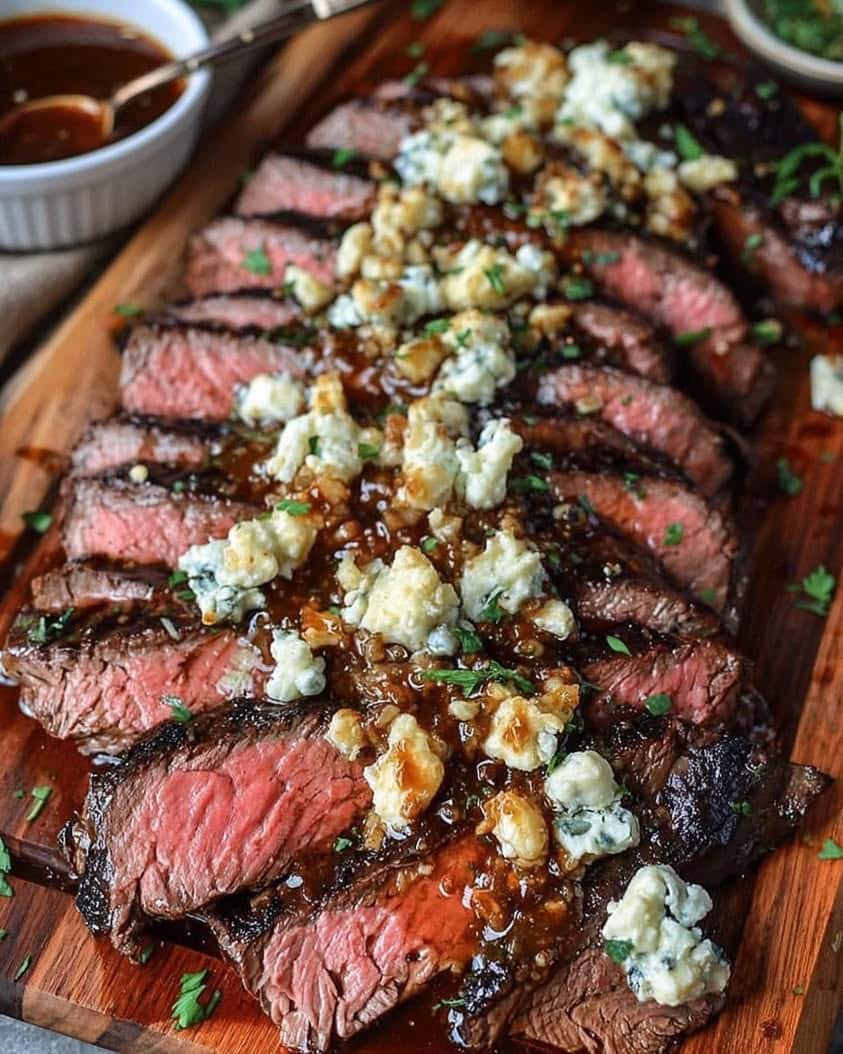
Balsamic Marinated Flank Steak with Blue Cheese Crust: A Gourmet Dinner Made Easy
This balsamic marinated flank steak with blue cheese crust transforms an affordable cut of beef into a restaurant-quality masterpiece. The marinade, a perfect balance of sweet and tangy, tenderizes the meat while infusing it with deep, complex flavor. Meanwhile, the savory blue cheese crust creates a crispy, umami-rich topping that will have your guests begging for the recipe. Ultimately, this dish proves that gourmet dining doesn’t require expensive ingredients or complicated techniques.
Imagine slicing into a perfectly cooked flank steak, its pink interior contrasting with a golden, crumbly crust. The aroma of garlic and herbs mingles with the sharp, tantalizing scent of melted blue cheese. Each bite delivers a symphony of textures and tastes, from the juicy, tender beef to the crispy, savory topping. Consequently, this recipe has become a staple for special occasions and impressive weeknight dinners alike.
Furthermore, the versatility of this balsamic marinated flank steak makes it suitable for various dining scenarios. You can serve it sliced over a bed of greens for a sophisticated salad, alongside roasted potatoes for a hearty meal, or in sandwiches for a next-day lunch treat. The marinade works its magic with minimal effort, and the blue cheese crust comes together in minutes. Therefore, even novice cooks can achieve spectacular results with this approachable gourmet dinner recipe.
Quick Recipe Highlights
- Flavor Profile: This balsamic marinated flank steak offers a beautiful harmony of sweet, tangy, and savory notes. The balsamic vinegar provides a subtle sweetness that caramelizes during cooking, while the blue cheese crust adds a sharp, salty counterpoint. Herbs and garlic round out the flavor profile, creating a complex and satisfying taste experience.
- Texture: The texture journey begins with a tender, juicy interior from the marinated flank steak. Conversely, the blue cheese crust provides a delightful crispy, crumbly contrast. This combination of soft and crisp textures makes each mouthful interesting and deeply satisfying for any steak lover.
- Aroma: As the steak cooks, your kitchen will fill with an irresistible aroma. The sharp, funky scent of melting blue cheese blends with the sweet, acidic notes of reducing balsamic. Additionally, garlic and herbs release their fragrant oils, creating a mouthwatering scent that signals a gourmet dinner is moments away.
- Visual Appeal: This dish presents beautifully on any plate. The deep brown sear on the flank steak provides a stunning backdrop for the golden, bubbly blue cheese crust. When sliced, the pink medium-rare interior creates a gorgeous color contrast that makes this easy recipe look professionally crafted.
- Skill Level Needed: This recipe requires basic kitchen skills like mixing a marinade and using a broiler or grill. While the techniques are simple, timing is crucial for achieving the perfect doneness and crust. Fortunately, the steps are straightforward enough for confident beginners yet rewarding for experienced cooks.
- Special Equipment: You need only standard kitchen tools for this gourmet dinner. A zip-top bag or shallow dish works for marinating, while a reliable oven broiler or grill creates the perfect crust. Ultimately, a sharp knife for slicing and a meat thermometer for precision are the only specialized tools recommended.
Recipe Overview
- Difficulty Level: We rate this balsamic marinated flank steak recipe as medium difficulty because it involves multiple components that require timing coordination. The marinating process is simple but essential for developing flavor and tenderness. Meanwhile, achieving the perfect blue cheese crust demands attention during the final cooking stage to prevent burning while ensuring proper melting.
- Category: This versatile dish fits multiple meal categories beautifully. It serves as an impressive main course for dinner parties, a protein-packed component for salads, and even makes extraordinary steak sandwiches. Furthermore, its elegant presentation qualifies it as a special occasion centerpiece, while its straightforward preparation makes it suitable for weeknight family dinners.
- Cuisine: This recipe draws inspiration from Italian-American culinary traditions with its balsamic marinade, while the blue cheese crust nods to French steakhouse classics. The combination creates a fusion dish that feels both familiar and excitingly new. Consequently, it appeals to a wide range of palates while offering a sophisticated twist on standard steak preparations.
- Cost: Flank steak represents an excellent value compared to premium cuts like filet mignon or ribeye. The marinade ingredients are pantry staples for most home cooks, and a small amount of blue cheese delivers big flavor impact. Therefore, this gourmet dinner recipe provides restaurant-quality results at a fraction of the cost, making it accessible for regular enjoyment.
- Season: This balsamic marinated flank steak shines throughout the year with slight adaptations. During warmer months, grilling the steak outdoors enhances its smoky character. In cooler weather, broiling in the oven provides comforting warmth and incredible aroma. Ultimately, the balanced flavors transition seamlessly between seasons, making it a reliable choice regardless of the calendar.
- Occasion: This dish elevates any gathering from casual to memorable. It impresses at dinner parties without requiring excessive kitchen time, making the cook available to guests. For romantic dinners, it creates an intimate, restaurant-quality experience at home. Even for family celebrations, it feels special enough to mark the occasion while pleasing both adults and children.
Why You’ll Love This Balsamic Marinated Flank Steak
The taste and texture appeal of this balsamic marinated flank steak is truly remarkable. Each component contributes to a multi-dimensional eating experience that delights the senses. The marinade penetrates the meat, ensuring every bite is infused with flavor rather than just seasoned on the surface. Meanwhile, the blue cheese crust provides a crispy, savory contrast that complements the tender beef perfectly. This combination of juicy interior and crunchy topping creates a textural symphony that keeps you coming back for another slice.
Convenience and preparation benefits make this recipe a weeknight hero despite its gourmet appearance. The marinade requires just minutes to whisk together, then the steak does most of the work while resting in the refrigerator. Active cooking time is surprisingly short, typically under 15 minutes from pan to plate. This efficient timeline means you can achieve impressive results without spending hours in the kitchen. The recipe also accommodates make-ahead preparation, allowing you to marinate the steak overnight for even deeper flavor penetration.
Nutritional advantages position this dish as a smart choice for health-conscious eaters. Flank steak is a lean cut of beef, providing high-quality protein with moderate fat content. The balsamic vinegar in the marinade contains antioxidants, while the blue cheese offers calcium and protein in concentrated form. When served with vegetable sides, this meal delivers balanced nutrition without sacrificing flavor. Portion control comes naturally since flank steak slices beautifully into appropriate serving sizes.
Social and entertaining value makes this recipe a guaranteed crowd-pleaser. The dramatic presentation of the whole steak with its golden crust creates instant excitement at the table. Slicing against the grain reveals the beautiful pink interior, demonstrating your cooking expertise to guests. The robust flavors pair wonderfully with various side dishes and wines, making menu planning straightforward. This versatility ensures the recipe adapts to different dietary preferences and occasion styles without compromising its core appeal.
Cost-effectiveness and accessibility make this gourmet dinner achievable on any budget. Flank steak remains one of the most affordable beef cuts, especially when compared to traditional steakhouse options. The marinade ingredients are pantry staples for most home cooks, and a small amount of blue cheese delivers substantial flavor impact. This economic approach means you can enjoy restaurant-quality meals regularly without straining your food budget. The recipe also utilizes common kitchen equipment, eliminating the need for specialized tools or appliances.
Historical Background and Cultural Significance
The origin story of marinating meat dates back centuries as a preservation method and tenderizing technique. Italian cuisine particularly embraced balsamic vinegar for marinating, using the prized condiment from Modena to enhance less tender cuts of meat. Meanwhile, cheese-crusted meats have roots in French culinary traditions, where combining protein with cheese created luxurious textures. The specific combination of balsamic marinade with blue cheese crust represents a modern fusion of these European techniques, likely developed by contemporary chefs seeking to elevate affordable cuts.
Cultural importance of this dish reflects broader food trends emphasizing flavor over expense. The recipe demonstrates how global culinary influences can merge to create something new and exciting. It represents a shift away from the premium-cut obsession toward celebrating technique and flavor combinations. This approach aligns with sustainable eating principles by making excellent use of an underutilized cut of meat. The dish thus embodies a modern culinary philosophy that values creativity, accessibility, and cross-cultural inspiration.
Evolution of the recipe continues as home cooks and chefs experiment with variations. The basic formula of acid-based marinade plus cheese crust has spawned countless interpretations using different vinegars, citrus juices, and cheese types. Cooking methods have expanded beyond broiling to include grilling, pan-searing, and even sous vide preparation. These adaptations demonstrate the recipe’s fundamental soundness and versatility across different cooking styles and equipment availability. The core concept remains consistently successful regardless of the specific execution.
Regional variations have emerged based on local ingredient availability and culinary traditions. In areas known for artisan cheese production, local blue varieties like Maytag, Roquefort, or Gorgonzola might feature prominently. Some regions might incorporate additional ingredients into the crust, such as breadcrumbs, herbs, or nuts. The marinade might see regional tweaks with the addition of local honey, specific herb combinations, or distinctive olive oils. These adaptations make the recipe a canvas for personal and regional expression while maintaining its essential character.
Ingredient Deep Dive
Flank steak forms the foundation of this recipe, and understanding this cut ensures optimal results. This long, flat cut comes from the cow’s abdominal muscles, resulting in a lean texture with prominent grain. Historically, flank steak was considered a secondary cut until Latin American cuisines popularized it in dishes like fajitas. Nutritionally, it provides high-quality protein, iron, zinc, and B vitamins with less marbling than premium cuts. When selecting flank steak, look for bright red color with minimal surface moisture and even thickness throughout. Store it in the coldest part of your refrigerator for up to three days before use, or freeze for longer storage. For substitutions, skirt steak works well with adjusted cooking times, while hanger steak offers similar texture and flavor profile.
Balsamic vinegar serves as the marinade’s flavor backbone, providing both tenderizing acidity and complex sweetness. Traditional balsamic vinegar from Modena, Italy undergoes years of aging in wooden barrels, developing incredible depth. However, for marinating, a good-quality commercial balsamic works perfectly while remaining affordable. The acetic acid in vinegar breaks down tough muscle fibers while helping other flavors penetrate the meat. Nutritionally, balsamic vinegar contains antioxidants and may help regulate blood sugar. When selecting balsamic vinegar for marinades, avoid the thick, syrupy traditional varieties reserved for finishing. Store vinegar in a cool, dark place where it will maintain quality indefinitely. For substitutions, red wine vinegar mixed with a teaspoon of honey provides similar acidity with subtle sweetness.
Blue cheese creates the signature crust that elevates this dish from simple to spectacular. This category of cheese features visible blue-green mold veins introduced during production, creating sharp, salty flavors. Different blue cheeses vary significantly in intensity, from mild Gorgonzola Dolce to powerfully sharp Roquefort. The cheese contributes umami depth while forming a crispy, savory crust under high heat. Nutritionally, blue cheese provides protein, calcium, and phosphorus in concentrated form. When selecting blue cheese, choose a variety that matches your flavor preference, remembering that intensity will mellow slightly during cooking. Store blue cheese tightly wrapped in the refrigerator and use within two weeks of opening. For substitutions, feta cheese mixed with a tablespoon of mayonnaise can mimic the salty tang with different melting characteristics.
Common Mistakes to Avoid
- Over-marinating the steak represents a common error that can compromise texture. While the acid in balsamic vinegar tenderizes, prolonged exposure beyond 12 hours can make the meat mushy. The ideal marinating time falls between 2-8 hours, providing sufficient flavor penetration without breaking down the protein structure excessively.
- Failing to pat the steak dry before cooking prevents proper browning. Moisture on the meat surface creates steam that interferes with the Maillard reaction, which creates complex flavors and appealing color. Always use paper towels to thoroughly dry the marinated steak before it hits the hot cooking surface.
- Applying the blue cheese crust too early leads to burning rather than melting. The high heat needed to cook the steak can incinerate the cheese before the meat reaches proper doneness. Wait until the final few minutes of cooking to add the crust, then watch carefully as it bubbles and browns.
- Slicing with the grain instead of against it results in tough, chewy pieces. Flank steak has long, prominent muscle fibers that require perpendicular cutting for tenderness. Identify the direction of the grain before cooking and slice thinly across those fibers once the meat has rested.
- Skipping the resting period causes valuable juices to流失 from the meat. The fibers need time to relax after cooking to retain moisture. Always let the steak rest for at least 5-10 minutes after cooking and before slicing to ensure maximum juiciness.
- Using cheese that’s too cold prevents proper melting and crust formation. Remove the blue cheese from the refrigerator about 30 minutes before crumbing to allow it to reach closer to room temperature. This ensures even melting and better integration with any other crust ingredients.
- Crowding the pan during searing steams rather than browns the meat. Leave sufficient space around the steak to allow moisture evaporation and proper heat circulation. If necessary, cook in batches or use a larger pan to achieve the desirable crust formation.
- Neglecting to preheat the cooking surface thoroughly compromises the sear. Whether using a grill, broiler, or skillet, ensure it reaches proper temperature before adding the steak. The initial high heat creates flavor through caramelization and ensures even cooking throughout.
Essential Techniques
Marinating meat properly requires understanding the balance between flavor infusion and texture management. The acidic component, in this case balsamic vinegar, works to break down tough muscle fibers while carrying other flavors into the meat. For optimal results, place the steak and marinade in a zip-top bag, removing as much air as possible to ensure full contact. Refrigerate during marinating, turning occasionally to distribute the liquid evenly. Avoid using reactive metal containers that can impart off-flavors during the marinating process. The marinade should fully coat the meat but doesn’t need to completely submerge it if you’re using a bag method.
Creating the perfect sear demands high heat and proper surface preparation. Pat the marinated steak completely dry with paper towels before cooking to eliminate surface moisture that creates steam. Preheat your cooking surface—whether grill, broiler, or skillet—until properly hot before adding the meat. Resist the temptation to move or press the steak during the initial searing phase, as this disrupts crust formation. Look for the meat to release easily from the cooking surface when properly seared, indicating sufficient browning has occurred. This technique ensures flavorful caramelization while sealing in juices.
Developing the blue cheese crust requires precise timing and heat management. Apply the crumbled cheese during the final stages of cooking to prevent burning while ensuring proper melting. If broiling, position the steak sufficiently far from the heat element to allow the cheese to melt and bubble without charring. Watch carefully during this stage, as the transformation from melted to burned happens quickly. The crust is ready when the cheese has formed a cohesive, lightly browned layer with appealing bubbles across the surface. This technique adds both visual appeal and textural contrast to the finished dish.
Pro Tips for Perfect Balsamic Marinated Flank Steak
Score the surface of the flank steak lightly before marinating to increase surface area and flavor penetration. Make shallow diagonal cuts about 1/8 inch deep in a crosshatch pattern, being careful not to cut too deeply. This technique helps the marinade penetrate more effectively while also interrupting some muscle fibers for additional tenderness.
Bring the marinated steak to room temperature before cooking for more even doneness. Remove the steak from the refrigerator about 30 minutes before cooking time, allowing the chill to dissipate. This simple step prevents the common problem of an overcooked exterior and undercooked center, especially important with thinner cuts like flank steak.
Use a meat thermometer to achieve perfect doneness every time. Flank steak reaches ideal temperature at 130-135°F for medium-rare, after which carryover cooking will bring it to the final temperature. This precision prevents guesswork and ensures consistently excellent results, particularly important when cooking for guests.
Combine the blue cheese with a small amount of complementary ingredients for enhanced crust texture. A tablespoon of breadcrumbs helps absorb excess fat while adding crunch, while a teaspoon of fresh herbs provides aromatic complexity. These additions create a more complex crust that adheres better to the meat surface during cooking.
Let the cooked steak rest adequately before slicing to preserve juiciness. Transfer the steak to a cutting board and tent loosely with foil for 5-10 minutes before slicing. This allows the muscle fibers to relax and reabsorb juices that would otherwise be lost when cutting.
Slice the flank steak as thinly as possible against the grain for maximum tenderness. Identify the direction of the muscle fibers before cooking to remember orientation after resting. Use a sharp knife and slice perpendicular to those fibers at a slight angle for attractive, tender pieces.
Variations and Adaptations
Regional variations allow this recipe to reflect local ingredients and culinary traditions. In California-inspired versions, fresh herbs like rosemary and thyme might feature more prominently in both marinade and crust. Texas adaptations often incorporate smoky elements like chipotle peppers in the marinade or smoked blue cheese in the crust. Mediterranean interpretations might include olives, sun-dried tomatoes, or oregano to complement the balsamic base. These regional touches demonstrate the recipe’s adaptability while maintaining its core appeal across different culinary contexts.
Seasonal adaptations make this dish appropriate year-round with simple ingredient adjustments. During summer, fresh basil and ripe tomatoes can accompany the steak, either as garnish or in accompanying salads. Autumn versions might incorporate roasted root vegetables and heartier herbs like sage. Winter adaptations could include a red wine reduction sauce alongside the blue cheese crust for extra richness. Spring variations might feature fresh peas, asparagus, and lighter herb combinations like tarragon and chives.
Dietary modifications accommodate various eating preferences without sacrificing flavor. For gluten-free needs, ensure any breadcrumbs in the crust come from certified gluten-free sources or omit them entirely. Dairy-free adaptations can substitute the blue cheese with a mixture of nutritional yeast, ground nuts, and miso paste for similar umami impact. Lower-carb versions might eliminate breadcrumbs from the crust entirely, relying solely on cheese and herbs for texture. These modifications ensure the recipe remains accessible across different dietary requirements.
Serving and Presentation Guide
Plating techniques significantly impact the visual appeal of this already impressive dish. For formal presentations, slice the steak before plating and fan the pieces slightly overlapping across the plate. Drizzle any accumulated juices around the steak rather than over it to maintain the crust’s visual integrity. Place accompaniments strategically to create height and color contrast, perhaps propping the steak against a vegetable stack or potato cake. This approach transforms the meal from simple protein and sides to a composed restaurant-style presentation.
Garnishing ideas should complement rather than compete with the steak’s robust flavors. Fresh herb sprigs like rosemary or thyme echo the marinade ingredients while adding visual freshness. Microgreens provide delicate texture and color without overwhelming flavors. For additional color, consider pomegranate seeds in winter or edible flowers in spring. These garnishes should be applied just before serving to maintain their vibrant appearance and fresh taste alongside the rich steak.
Traditional accompaniments balance the strong flavors of the balsamic and blue cheese. Creamy polenta or mashed potatoes provide neutral canvas that highlights the steak’s complexity. Roasted root vegetables like carrots and parsnips offer sweet counterpoints to the tangy marinade. Simple green salads with sharp vinaigrettes cut through the richness effectively. These classic pairings have stood the test of time because they create harmonious flavor relationships with the main component.
Wine and Beverage Pairing
Wine pairings should consider both the balsamic marinade’s acidity and the blue cheese’s intensity. Robust red wines with good acidity stand up well to these strong flavors. Cabernet Sauvignon offers tannic structure that complements the meat while cutting through the richness. Zinfandel provides fruit-forward character that balances the balsamic’s sweetness. For those preferring white wine, oaked Chardonnay has sufficient body and buttery notes to harmonize with the dish. Ultimately, the best pairing depends on personal preference within these general guidelines.
Non-alcoholic alternatives can provide equally sophisticated pairing experiences. Sparkling water with a twist of lemon or lime cleanses the palate between bites of the rich steak. Grape-based juices like tart cherry or pomegranate mirror the fruit notes in balsamic vinegar. Herbal iced teas, particularly those with rosemary or thyme, echo the marinade ingredients. These thoughtful non-alcoholic options ensure all guests enjoy complementary beverage experiences.
Storage and Shelf Life
Storage methods for leftover balsamic marinated flank steak maintain quality and safety. Cool the steak completely before refrigerating, ideally within two hours of cooking. Store sliced meat in an airtight container with any accumulated juices to prevent drying. Properly stored, cooked flank steak remains safe to eat for 3-4 days in the refrigerator. For longer storage, freezing provides excellent results when done properly.
Reheating instructions focus on preserving texture rather than simply warming the meat. Gentle methods like low-temperature oven warming or brief sautéing work best. Avoid microwave reheating, which can make the meat rubbery and overcook it quickly. If the steak has been sliced, reheating in a skillet with a small amount of broth or sauce helps maintain moisture. The blue cheese crust will soften upon reheating but still contributes flavor to the dish.
Make Ahead Strategies
Prep timeline optimization makes this recipe accessible for busy schedules. The marinade can be prepared up to three days in advance and refrigerated until ready to use. The steak can be placed in the marinade up to 24 hours before cooking, with flavor improving over time. The blue cheese crust mixture can be prepared several hours ahead and kept covered at room temperature. These make-ahead steps distribute the workload while ensuring fresh, vibrant results at mealtime.
Storage between steps requires attention to food safety principles. Always marinate meat in the refrigerator, never at room temperature. If preparing components ahead, ensure proper covering to prevent cross-contamination and flavor transfer. When assembling ahead, keep components separate until final cooking to maintain textural integrity. These precautions ensure the convenience of advance preparation doesn’t compromise quality or safety.
Scaling Instructions
Halving the recipe works beautifully for smaller households or intimate dinners. Use a smaller flank steak or cut a standard one in half crosswise before marinating. Reduce all marinade ingredients proportionally, though you may need slightly less than half the volume to coat adequately. Cooking time decreases slightly for a smaller piece of meat, so rely on thermometer readings rather than fixed timing. This adaptation makes the recipe practical for different household sizes without compromising results.
Doubling or tripling the recipe accommodates larger gatherings efficiently. Use multiple baking sheets or roasting pans to avoid overcrowding during the crusting phase. Consider staggering cooking times if oven space is limited, holding finished steaks tented with foil in a warm oven. For very large groups, cooking the steaks to medium-rare and slicing before serving facilitates buffet-style presentation. These strategies maintain quality while scaling up for entertaining.
Nutritional Deep Dive
Macro breakdown of this balsamic marinated flank steak provides valuable information for various dietary approaches. A 4-ounce serving of cooked flank steak delivers approximately 35 grams of protein with moderate fat content. The blue cheese crust adds additional protein and fat while contributing minimal carbohydrates. The marinade ingredients contribute negligible macronutrients beyond the sugar content in balsamic vinegar. This profile makes the dish suitable for high-protein and lower-carbohydrate eating patterns when portioned appropriately.
Micronutrient analysis reveals significant nutritional benefits beyond basic macronutrients. Flank steak provides heme iron, which is more readily absorbed than plant-based iron sources. Zinc content supports immune function, while B vitamins contribute to energy metabolism. Blue cheese offers calcium for bone health and various other minerals. The balsamic vinegar contains antioxidants that may provide anti-inflammatory benefits. These micronutrients make the dish nutritionally dense beyond its protein content.
Dietary Adaptations
Gluten-free adaptation requires minimal changes to the standard recipe. Naturally, ensure all ingredients, particularly the balsamic vinegar, come from certified gluten-free sources if cross-contamination is a concern. Omit breadcrumbs from the crust or replace with gluten-free alternatives like crushed gluten-free crackers or nuts. These simple adjustments make the recipe safe for those with celiac disease or gluten sensitivity without compromising flavor or texture.
Dairy-free modification replaces the blue cheese crust with alternative flavorful toppings. A mixture of nutritional yeast, ground walnuts, and miso paste can mimic the umami quality of blue cheese. Alternatively, a crust made from dairy-free breadcrumbs, herbs, and olive oil provides textural contrast without dairy. These substitutions allow those with dairy allergies or lactose intolerance to enjoy a similar culinary experience.
Troubleshooting Guide
Texture issues often stem from incorrect slicing technique or doneness management. If the steak seems tough despite proper cooking, ensure you’re slicing thinly enough against the grain. For chewy results, the meat may be overcooked—use a thermometer next time for precision. If the blue cheese crust isn’t crisping properly, your heat source may be insufficient or the cheese too cold before application. These common texture problems have straightforward solutions for future attempts.
Flavor balance problems typically involve either the marinade or the cheese component. If the balsamic flavor is too sharp, add a teaspoon of honey or maple syrup to the marinade to soften the acidity. If the blue cheese overwhelms other flavors, use a milder variety or reduce the quantity slightly. Adjusting these elements allows you to tailor the recipe to your specific taste preferences while maintaining its essential character.
Recipe Success Stories
Community feedback consistently highlights this recipe’s ability to impress guests without stressing the cook. Many home cooks report receiving compliments that suggest hours of kitchen labor, when in reality the active work is minimal. The dramatic presentation particularly resonates with those entertaining for special occasions, creating memorable dining experiences. These success stories demonstrate how approachable techniques can yield spectacular results that belie their simplicity.
Variation successes show the recipe’s adaptability across different kitchens and preferences. Cooks have reported excellent results with different blue cheese varieties based on local availability and personal taste. Some have added ingredients like walnuts to the crust for extra crunch or fresh herbs to the marinade for additional complexity. These adaptations prove the recipe serves as a excellent foundation for personal creativity while maintaining its core appeal.
Frequently Asked Questions
Can I use a different cut of steak for this recipe? Yes, skirt steak works very well with similar marinating and cooking times. Hanger steak also makes an excellent substitute though it may require slightly longer cooking. Avoid very lean cuts like sirloin tip that lack the necessary fat content for this preparation method.
How long should I marinate the flank steak? The ideal marinating time ranges from 2-8 hours for optimal flavor and texture. While you can marinate for as little as 30 minutes, longer times develop more complex flavor. Avoid exceeding 12 hours as the acid can begin to break down the meat texture excessively.
Can I make this recipe without a broiler? Absolutely, a hot grill or even a skillet followed by a brief oven finish works beautifully. The key is achieving high heat for the cheese crust regardless of the specific heat source. Adjust cooking times slightly based on your equipment while watching for visual doneness cues.
What’s the best way to slice flank steak? Always slice against the grain for maximum tenderness. Identify the direction of the muscle fibers before cooking, then slice perpendicular to those fibers once the meat has rested. Use a sharp knife and slice as thinly as possible for the most tender results.
Can I prepare the marinade in advance? Yes, the marinade can be prepared up to 3 days ahead and refrigerated until ready to use. This advance preparation actually allows the flavors to meld more completely. Simply add the steak when ready to begin the marinating process.
What internal temperature should I cook the steak to? For medium-rare, remove the steak from heat at 130-135°F, as carryover cooking will raise the temperature another 5 degrees. Use an instant-read thermometer for precision, inserting it into the thickest part of the meat without touching the cooking surface.
How do I prevent the blue cheese crust from burning? Watch carefully during the final cooking stage and adjust the distance from the heat source if necessary. If using a broiler, position the steak further from the element. The crust should bubble and brown lightly but not blacken—this happens quickly so don’t walk away.
Can I freeze the marinated steak? Yes, you can freeze the steak in the marinade for up to 3 months. Thaw completely in the refrigerator before cooking. The texture may be slightly softer after freezing but the flavor will be well-developed throughout the meat.
What are the best side dishes for this recipe? Creamy polenta, roasted potatoes, or a simple green salad all complement the strong flavors beautifully. Grilled vegetables like asparagus or zucchini provide lighter accompaniments. Consider your guests’ preferences and the occasion when selecting sides.
How long do leftovers keep? Properly stored in an airtight container, cooked flank steak remains safe to eat for 3-4 days in the refrigerator. For longer storage, freeze for up to 3 months. Reheat gently to preserve texture and moisture.
Additional Resources
Related recipes that complement this balsamic marinated flank steak include various vegetable preparations and starches. Creamy polenta provides a neutral canvas that highlights the steak’s complexity. Roasted asparagus with lemon mirrors the bright notes in the marinade. Garlic mashed potatoes offer comforting richness that balances the sharp blue cheese. These accompaniments create complete meals that showcase the steak while providing balanced nutrition and flavor profiles.
Technique guides for fundamental cooking skills enhance results across all your kitchen endeavors. Understanding the Maillard reaction explains the importance of proper searing for flavor development. Meat resting principles ensure juiciness in all your protein preparations. Knife skills tutorials improve your slicing technique for perfect presentation. These fundamental skills transfer across countless recipes beyond this specific dish.
PrintBalsamic Marinated Flank Steak with Blue Cheese Crust
Description
A savory flank steak marinated in balsamic vinegar and herbs, then topped with a tangy blue cheese and breadcrumb crust for a flavorful main dish.
Ingredients
For the Crust:
- 1.5 lbs flank steak
- 1/2 cup balsamic vinegar
- 2 cloves garlic, minced
- 1 tbsp olive oil
- 1 tsp dried rosemary
- 1/2 cup crumbled blue cheese
- 1/4 cup breadcrumbs
- 1 tbsp chopped fresh parsley
- Salt and black pepper to taste
Instructions
1. Prepare the Crust:
- In a bowl, whisk together balsamic vinegar, minced garlic, olive oil, rosemary, salt, and pepper.
- Place flank steak in a resealable bag, pour marinade over steak, seal, and refrigerate for at least 2 hours or overnight.
- Preheat oven to 400°F (200°C). Remove steak from marinade and pat dry; discard marinade.
- In a small bowl, mix blue cheese, breadcrumbs, and parsley to form the crust.
- Press the blue cheese mixture evenly onto the top of the steak.
- Place steak on a baking sheet and bake for 20-25 minutes, or until desired doneness is reached.
- Let steak rest for 5 minutes before slicing against the grain and serving.
Notes
You can customize the seasonings to taste.

I’m Shaykee—born in Morocco, seasoned across continents. From airplane galleys to home kitchens, I share the flavors and stories that shaped my journey.