
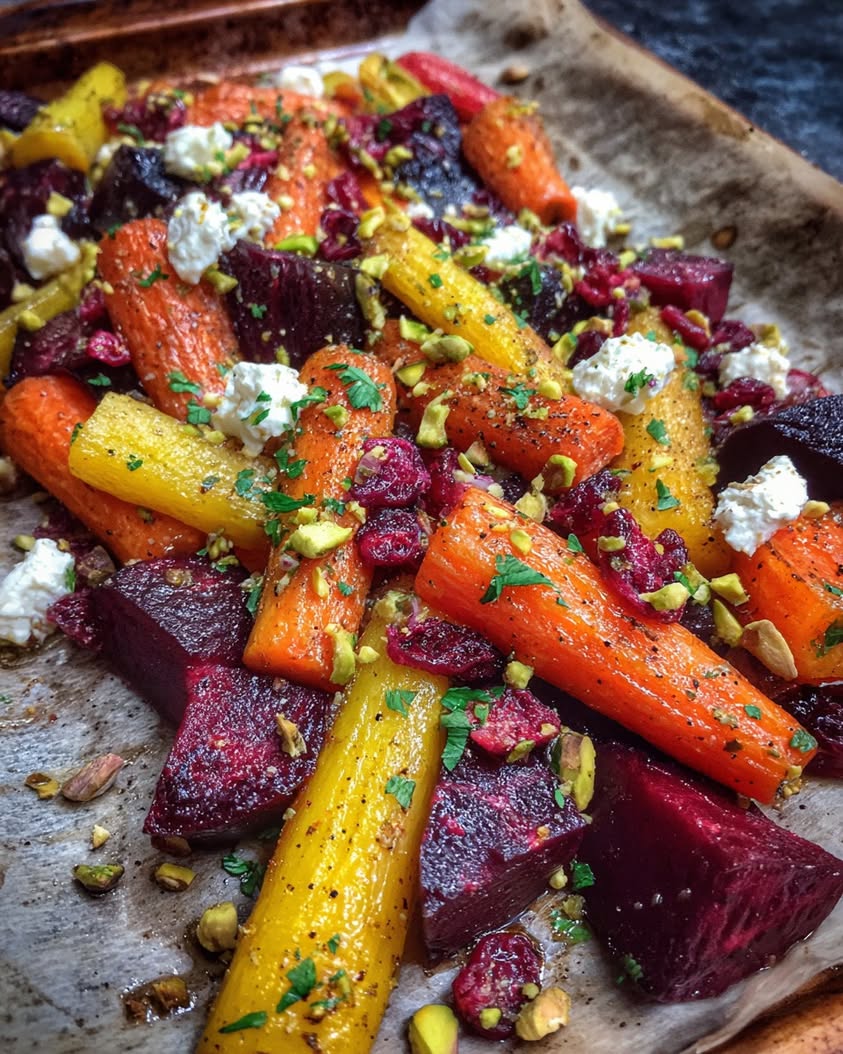
Honey Roasted Carrots & Beets with Feta, Cranberries & Toasted Pistachios: A Vibrant Side Dish for Any Table
This stunning honey roasted carrots and beets recipe transforms simple root vegetables into an extraordinary culinary experience. Imagine tender, caramelized carrots and earthy beets, all glistening with a sweet honey glaze. The final dish bursts with contrasting textures and flavors, from the creamy tang of feta to the pop of sweet cranberries and the satisfying crunch of pistachios. Consequently, this recipe delivers a side dish that is as beautiful to look at as it is delicious to eat.
Perfect for busy weeknights or special holiday gatherings, these roasted veggies require minimal effort for maximum impact. The natural sugars in the carrots and beets caramelize beautifully in the oven, creating a depth of flavor that is both rustic and refined. Moreover, the vibrant colors make this dish a showstopper on any dinner table. Ultimately, this honey roasted carrots and beets dish proves that healthy eating can be an indulgent and visually spectacular affair.
Gathering around the table for a memorable meal just got easier with this effortless yet impressive side. The combination of sweet, savory, tangy, and crunchy elements creates a complex flavor profile that complements a wide variety of main courses. Whether you are hosting a festive dinner or simply elevating a Tuesday night meal, this recipe guarantees rave reviews. Furthermore, its flexibility allows for numerous adaptations to suit different dietary needs and seasonal ingredients.
Quick Recipe Highlights
- Flavor Profile: This dish masterfully balances sweet and savory notes. The natural earthiness of the beets and the sweetness of the carrots are enhanced by the honey glaze, while the feta cheese provides a sharp, salty counterpoint. Finally, the dried cranberries contribute a tangy fruitiness that ties all the flavors together.
- Texture: You will experience a delightful contrast in every bite. The roasted vegetables become tender and almost creamy inside with slightly crisp edges. Meanwhile, the toasted pistachios add a satisfying crunch, and the feta cheese offers a soft, crumbly texture that melts in your mouth.
- Aroma: As the honey roasted carrots and beets cook, your kitchen will fill with an irresistible fragrance. The scent of caramelizing honey and roasting root vegetables is warm and comforting. Additionally, the final garnish of fresh herbs adds a bright, aromatic finish that awakens the senses.
- Visual Appeal: This dish is a feast for the eyes with its brilliant jewel-toned colors. The deep ruby red of the beets contrasts beautifully with the bright orange carrots and the green pistachios. The white feta and red cranberries create a confetti-like effect that makes the plate look celebratory and vibrant.
- Skill Level Needed: This is an ideal recipe for cooks of all experience levels, especially beginners. The process involves simple chopping, tossing, and roasting, with no advanced techniques required. Therefore, even a novice cook can achieve spectacular, restaurant-quality results with this straightforward method.
- Special Equipment: You need only a basic sheet pan and oven to create this masterpiece. A good chef’s knife for chopping the vegetables and a small bowl for mixing the honey glaze are the only other essentials. Consequently, this recipe is accessible to anyone with a standard kitchen setup.
Recipe Overview
- Difficulty Level: We classify this honey roasted carrots and beets recipe as easy because it involves fundamental cooking techniques. The steps are straightforward: peel, chop, toss, and roast. There is no intricate knife work or complicated procedures, making it a fantastic confidence-builder for new cooks and a reliable staple for experienced ones.
- Category: This dish fits perfectly into the side dish category, designed to accompany a protein main course. It also works wonderfully as part of a vegetarian or vegan spread when modified. Its robust nature allows it to stand up to hearty meats like roast chicken or beef, while also complementing lighter fish dishes.
- Cuisine: While root vegetable roasting is a universal technique, this particular combination of flavors leans into modern American cuisine. The use of honey as a sweetener and the inclusion of cranberries give it a festive, North American feel. However, the concept of pairing sweet and savory elements with roasted vegetables has roots in many culinary traditions around the world.
- Cost: This is an incredibly cost-effective dish that makes the most of affordable, seasonal produce. Carrots and beets are typically inexpensive, especially in the fall and winter. The garnishes, while seemingly luxurious, are used sparingly, so a small amount of feta, pistachios, and dried cranberries goes a long way to create a high-impact result.
- Season: This honey roasted carrots and beets recipe shines brightest in the autumn and winter months. This is when root vegetables are at their peak of flavor and sweetness. Furthermore, the warm, comforting nature of roasted dishes is particularly appealing during cooler weather, making it a holiday season favorite.
- Occasion: This versatile side dish is suitable for everything from a casual family dinner to an elegant holiday feast. It brings a touch of sophistication to weeknight meals and fits right in on a Thanksgiving or Christmas table. Its make-ahead potential also makes it a smart choice for entertaining when you want to minimize last-minute kitchen tasks.
Why You’ll Love This Recipe
First and foremost, the taste and texture appeal of this dish is undeniable. The honey glaze caramelizes on the vegetables, creating a slightly sticky, sweet exterior that gives way to a tender, flavorful interior. The salty feta, tart cranberries, and crunchy pistachios provide a symphony of contrasting elements in every single bite. This complex layering of flavors and textures makes the eating experience dynamic and thoroughly satisfying from start to finish.
From a convenience standpoint, this honey roasted carrots and beets recipe is a dream come true. The preparation is incredibly simple, involving mostly hands-off time while the oven does the work. You can easily prepare the vegetables ahead of time and simply pop them in the oven about 30 minutes before you want to serve. This makes it an ideal solution for busy cooks who want to serve impressive food without spending hours in the kitchen.
Nutritionally, this dish is a powerhouse of vitamins, minerals, and fiber. Carrots are famously rich in beta-carotene, which supports eye health, while beets provide essential nutrients like folate, manganese, and potassium. The healthy fats from the pistachios and olive oil help your body absorb the fat-soluble vitamins from the vegetables. Consequently, you are serving a side dish that is not only delicious but also genuinely good for you and your family.
For social and entertaining value, this recipe is a true winner. Its stunning visual presentation is guaranteed to draw compliments from your guests, making it a fantastic conversation starter. The recipe scales up effortlessly, allowing you to feed a crowd without significantly increasing your workload. Moreover, its crowd-pleasing flavor profile appeals to a wide range of palates, from adventurous foodies to picky eaters who might normally shy away from vegetables.
Finally, the cost-effectiveness and accessibility of the ingredients make this a recipe you will return to again and again. Root vegetables are among the most affordable produce items year-round, and the garnishes can be purchased in bulk and used for other recipes. You are creating a dish that looks and tastes luxurious without requiring expensive or hard-to-find ingredients. This accessibility ensures that you can enjoy restaurant-quality roasted veggies anytime the craving strikes.
Historical Background and Cultural Significance
The practice of roasting root vegetables over fire dates back to ancient times, forming a cornerstone of many culinary traditions worldwide. Early civilizations discovered that applying dry heat to hardy vegetables like carrots and beets transformed their texture and concentrated their natural sugars. This honey roasted carrots and beets recipe is a modern iteration of this ancient cooking method, updated with contemporary flavor combinations and global ingredients that reflect our interconnected food culture today.
Carrots have a particularly fascinating history, originating in Central Asia where their wild ancestors were purple and yellow, not orange. The familiar orange carrot we know today was developed by Dutch growers in the 17th century as a tribute to the House of Orange. Beets also have ancient origins, with evidence of their cultivation dating back to the Mediterranean region as early as the second millennium BC. Both vegetables were valued for their storage capabilities, providing vital nutrition through winter months.
The evolution of this specific recipe reflects broader trends in modern American cooking. The combination of sweet and savory elements mirrors a departure from strictly separated flavor categories toward more adventurous, globally-inspired pairings. The addition of feta cheese introduces a Mediterranean influence, while the use of honey as a glaze connects to ancient preservation techniques. This honey roasted carrots and beets dish represents a beautiful fusion of traditional cooking methods with contemporary flavor sensibilities.
Regional variations of roasted root vegetables appear in cuisines across Europe, from the classic British roast dinner to Scandinavian holiday tables. In Eastern European Jewish cuisine, a similar dish called tzimmes often combines carrots and honey, though typically stewed rather than roasted. The American innovation lies in the colorful presentation and the bold combination of textures and flavors, creating a side dish that is both rooted in tradition and distinctly modern in its execution and appeal.
Ingredient Deep Dive
Carrots form the sweet foundation of this dish. Historically, carrots were first cultivated for their aromatic leaves and seeds rather than their roots. Nutritionally, they are packed with beta-carotene, which converts to vitamin A in the body and supports vision, immune function, and skin health. When selecting carrots, look for firm, smooth specimens without significant cracks or soft spots. Store them in the plastic bag in your refrigerator’s crisper drawer, where they will keep for several weeks. For substitutions, parsnips or sweet potatoes work beautifully, offering similar sweetness and roasting qualities.
Beets contribute earthy depth and stunning color to this honey roasted carrots and beets recipe. These vibrant root vegetables have been used medicinally since Roman times and were initially consumed for their leafy greens rather than their roots. They are nutritional powerhouses, rich in folate, manganese, potassium, and vitamin C, with studies suggesting they may help support blood pressure and athletic performance. Choose beets that feel firm and heavy for their size with smooth, unblemished skins. Store them separately from carrots in the refrigerator, where they will last for weeks. Golden beets can be substituted for a less messy alternative that offers a milder, sweeter flavor.
Honey serves as the magical glaze that brings everything together. As one of humanity’s oldest sweeteners, honey has been harvested for over 8,000 years and appears in ancient Egyptian, Greek, and Roman culinary records. Beyond its sweetening properties, honey contains antioxidants and has natural antimicrobial qualities. For the best flavor, choose a locally sourced, raw honey if possible, as it will have more complex flavor notes. Vegans can substitute maple syrup or agave nectar, while those monitoring sugar intake might use a sugar-free maple-flavored syrup instead.
Feta cheese provides the essential salty, tangy counterpoint to the sweet vegetables. This brined cheese has Protected Designation of Origin status in Greece, where it must be made from at least 70% sheep’s milk. Feta is a good source of calcium and protein while being lower in fat than many hard cheeses. Look for feta packed in brine for the best texture and flavor. For dairy-free versions, cubed firm tofu marinated in lemon juice and salt or a vegan feta alternative works well. Similarly, goat cheese or blue cheese crumbles can offer a different but equally delicious tangy profile.
Common Mistakes to Avoid
- Overcrowding the pan is a frequent error that leads to steamed rather than roasted vegetables. When the vegetables are too close together, they release moisture that prevents proper caramelization. Always use a large enough baking sheet and spread the vegetables in a single layer with some space between pieces to ensure they roast properly instead of steam.
- Neglecting to toss the vegetables halfway through cooking results in uneven browning. The side touching the hot pan will become dark and crispy while the top remains pale and soft. For perfectly caramelized honey roasted carrots and beets, make sure to use a spatula to turn and redistribute them at the midway point of the cooking time.
- Cutting the vegetables unevenly causes some pieces to burn while others remain undercooked. Take the time to chop your carrots and beets into similarly sized pieces, approximately 1-inch chunks. This ensures everything cooks at the same rate and you achieve a consistent texture throughout the entire dish.
- Adding the garnishes before roasting will ruin their texture and flavor. The feta will melt into a puddle, the pistachios will burn, and the cranberries will become tough and bitter. Always add these delicate components after the vegetables have finished roasting and have had a few minutes to cool slightly.
- Using old, dried-out herbs diminishes the fresh flavor impact. If you are garnishing with fresh thyme or parsley, make sure it is vibrant and fragrant. Wilting herbs that have been in your refrigerator for weeks will not provide the bright, fresh contrast that elevates this dish from good to exceptional.
- Skipping the toasting step for the pistachios misses an opportunity for deeper flavor. Raw nuts have a milder taste, while toasting them briefly in a dry skillet enhances their nuttiness and provides a more satisfying crunch. This small extra step makes a significant difference in the final texture and flavor complexity.
- Not preheating the oven properly can affect the roasting process. A properly hot oven is essential for creating that initial sear that locks in flavor and creates caramelization. Always allow your oven to fully preheat before adding your baking sheet of vegetables for the best results.
- Forgetting to adjust seasoning after roasting is a missed opportunity for flavor balancing. Vegetables often need an additional pinch of salt after cooking, especially when paired with sweet elements like honey. Always taste your finished honey roasted carrots and beets and adjust the seasoning with salt and pepper just before serving.
Essential Techniques
Proper vegetable cutting is fundamental to successful roasting. The goal is uniform pieces that cook evenly, typically 1-inch chunks or half-moons for this honey roasted carrots and beets recipe. Use a sharp chef’s knife and pay attention to creating consistent thickness, as varying sizes will result in some pieces being overcooked while others remain hard. The visual cue for success is similarly shaped pieces that you can arrange in a single layer on your baking sheet. This technique ensures every bite has the perfect texture.
Mastering the roasting process itself transforms simple vegetables into something extraordinary. Roasting at a high temperature (400°F/200°C) caramelizes the natural sugars in the vegetables while creating a slightly crisp exterior. The key is to toss the vegetables with oil and seasonings until evenly coated, then spread them in a single layer without overcrowding. The visual cue for perfectly roasted vegetables is tender interiors with golden-brown, slightly crisp edges. This technique intensifies flavors and creates complex taste profiles from simple ingredients.
Toasting nuts might seem like a small step, but it significantly enhances their flavor and texture. Place raw pistachios in a single layer in a dry skillet over medium heat. Shake the pan frequently until they become fragrant and lightly golden, which usually takes 3-5 minutes. Immediately transfer them to a plate to stop the cooking process. The visual cue for perfectly toasted nuts is a slight color change and a rich, nutty aroma. This technique prevents burnt nuts and ensures they provide the ideal crunchy contrast to your roasted veggies.
Pro Tips for Perfect Honey Roasted Carrots and Beets
First, use separate bowls for tossing the carrots and beets if you want to maintain their distinct colors. The beet juice will naturally tint the carrots pink if they are mixed raw. For a visually stunning presentation with vibrant orange carrots and deep red beets, toss them in oil and seasonings in separate bowls before arranging them on the same baking sheet.
Consider roasting the vegetables on parchment paper or a silicone baking mat for easier cleanup. The honey glaze can caramelize and stick to the baking sheet, creating a challenging cleaning task. Lining your pan prevents sticking and ensures you can easily transfer every delicious morsel to your serving platter without leaving half the dish stuck to the pan.
Add a tablespoon of balsamic vinegar to the honey glaze for an extra dimension of flavor. The acidity balances the sweetness of the honey and helps cut through the richness of the olive oil. This simple addition creates a more complex flavor profile that will have your guests wondering about your secret ingredient.
Let the roasted vegetables rest for 5-10 minutes after removing them from the oven before adding the garnishes. This allows them to firm up slightly, making them less likely to break apart when tossed with the feta, cranberries, and pistachios. The residual heat will also gently warm the feta without causing it to melt completely.
If preparing this dish for a holiday meal, you can roast the vegetables completely ahead of time and serve them at room temperature. The flavors actually develop and improve as they sit. Simply add the garnishes right before serving to maintain their texture and visual appeal.
For an extra flavor boost, toss the vegetables with a teaspoon of orange or lemon zest along with the fresh herbs at the end. The citrus notes brighten the entire dish and provide a refreshing contrast to the earthy vegetables and rich toppings.
Variations and Adaptations
Regional variations can take this dish in exciting new directions. For a Mediterranean twist, add Kalamata olives and fresh oregano instead of thyme. For a Middle Eastern version, incorporate warm spices like cumin and coriander into the honey glaze and use pomegranate seeds instead of cranberries. An Asian-inspired adaptation might include a glaze of miso, ginger, and sesame oil with black sesame seeds as garnish. These global variations demonstrate the incredible versatility of the basic honey roasted carrots and beets concept.
Seasonal adaptations keep this recipe exciting throughout the year. In spring, use baby carrots and baby beets for a more delicate presentation. Summer versions might include adding cherry tomatoes during the last 10 minutes of roasting. Autumn is perfect for incorporating cubed squash or sweet potatoes alongside the carrots and beets. Winter variations can include heartier roots like parsnips or turnips, creating a robust cold-weather side dish that comforts and satisfies.
Dietary modifications make this dish accessible to everyone. For a vegan version, substitute maple syrup for honey and use a plant-based feta alternative or omit the cheese entirely. A Whole30-compliant version would use no sweetener or a date paste instead of honey and omit the cheese. For a nut-free version, substitute toasted pumpkin seeds (pepitas) for the pistachios. These adaptations ensure that everyone can enjoy this beautiful dish regardless of dietary restrictions.
Serving and Presentation Guide
Plating techniques can elevate this humble side dish to restaurant-quality status. Instead of simply piling the honey roasted carrots and beets on a plate, consider arranging them intentionally. Create a colorful mosaic by grouping the carrots and beets in alternating sections, or make a vertical presentation by stacking them neatly. Use a ring mold for a precise, professional look, or simply scatter them artfully across a large platter. The goal is to showcase the beautiful colors and varied textures rather than hiding them in a mixed pile.
Garnishing is the final touch that makes the dish visually spectacular. Sprinkle the feta, cranberries, and pistachios evenly over the top rather than mixing them in, which allows each component to be visible. Finish with a generous sprinkle of fresh herbs, a drizzle of high-quality olive oil, or even a final light drizzle of honey for shine. These finishing touches not only enhance the appearance but also provide bursts of flavor and texture that complement the roasted vegetables perfectly.
Wine and Beverage Pairing
Wine pairings should complement both the earthy sweetness of the vegetables and the salty tang of the feta. A crisp, acidic white wine like Sauvignon Blanc cuts through the richness and highlights the herbal notes. For red wine lovers, a light-bodied Pinot Noir with its red fruit characteristics won’t overpower the dish. Rosé offers a versatile middle ground with enough acidity to balance the flavors and fruitiness to complement the sweetness of the honey and carrots.
Non-alcoholic alternatives can be just as sophisticated. Sparkling water with a twist of orange or lemon provides refreshing acidity. For something more special, try a ginger-based mocktail that echoes the warmth of the roasted vegetables. Iced hibiscus tea offers tartness that mirrors the cranberries, while a simple apple cider highlights the autumnal notes in this honey roasted carrots and beets dish.
Storage and Shelf Life
Proper storage methods ensure you can enjoy leftovers safely. Allow the dish to cool completely before transferring it to an airtight container. Store in the refrigerator for up to 4 days, though the vegetables may soften slightly over time. For best results, store the roasted vegetables separately from the garnishes if possible, adding fresh garnishes when serving leftovers. The feta cheese will continue to release moisture, so if storing assembled, expect the vegetables to become softer.
Reheating instructions are straightforward but important for maintaining quality. Spread the vegetables in a single layer on a baking sheet and warm in a 350°F (175°C) oven for 10-15 minutes until heated through. This method helps restore some of the crispness lost during refrigeration. Avoid microwaving if possible, as this will make the vegetables soggy. If you must use a microwave, do so briefly and consider finishing under the broiler for a minute to crisp the edges.
Make Ahead Strategies
Prep timeline for efficient entertaining begins with washing, peeling, and chopping the vegetables up to 2 days in advance. Store them in separate airtight containers in the refrigerator to prevent color bleeding. The honey glaze can be mixed and refrigerated separately. On the day of serving, simply toss the vegetables with oil and the glaze, then roast. This approach cuts your active prep time significantly when you are ready to cook.
Storage between steps maintains quality when preparing in stages. If you need to roast the vegetables completely ahead of time, let them cool completely before refrigerating in an airtight container. They will keep for up to 3 days. When ready to serve, bring them to room temperature or reheat gently in the oven. Add all garnishes just before serving to preserve their texture and visual appeal. This make-ahead strategy makes entertaining stress-free.
Scaling Instructions
Halving the recipe is straightforward for smaller households. Simply divide all ingredient quantities by two and use a smaller baking sheet. The cooking time may be slightly reduced, so begin checking for doneness around the 20-minute mark. When making a smaller batch, ensure you still spread the vegetables in a single layer without overcrowding, even if using a smaller pan. This maintains the proper roasting environment that creates caramelization rather than steaming.
Doubling or tripling the recipe for a crowd requires some adjustments. Use multiple baking sheets rather than crowding everything onto one large sheet. Rotate the pans halfway through cooking to ensure even browning, and you may need to add 5-10 minutes to the cooking time. When scaling up, mix the vegetables with the oil and seasonings in batches to ensure even coating. These simple adjustments guarantee that your honey roasted carrots and beets turn out perfectly regardless of quantity.
Nutritional Deep Dive
Macro breakdown reveals this dish as a well-balanced option. The carbohydrates come primarily from the vegetables themselves, which provide complex carbs and fiber for sustained energy. The olive oil and pistachios contribute healthy monounsaturated fats, while the feta cheese adds protein. This combination creates a side dish that is satisfying without being heavy, making it an excellent addition to any meal from a nutritional standpoint.
Micronutrient analysis shows an impressive profile. Carrots deliver massive amounts of vitamin A in the form of beta-carotene, essential for vision and immune function. Beets provide folate, important for cell growth, and manganese, which supports bone health and metabolism. The pistachios contribute B vitamins and minerals like copper and phosphorus. Together, these ingredients create a nutrient-dense dish that supports overall health while delighting your taste buds.
Dietary Adaptations
Vegan adaptation is simple and delicious. Replace the honey with maple syrup or agave nectar to maintain the sweet glaze. Omit the feta cheese or use a plant-based feta alternative made from tofu or almonds. Check that your dried cranberries are not processed with honey or other animal products—many commercial dried cranberries contain sugar rather than honey. These simple swaps create a plant-based version that is equally vibrant and flavorful.
Paleo adaptation requires minimal adjustments. Use raw honey rather than processed sweeteners, and omit the feta cheese since dairy is typically excluded from strict Paleo diets. Ensure your pistachios are raw or dry-roasted without industrial oils. The resulting dish aligns with Paleo principles while delivering the same beautiful presentation and satisfying combination of sweet and savory flavors that make the original so appealing.
Troubleshooting Guide
Texture issues often stem from improper roasting techniques. If your vegetables are soggy rather than caramelized, the likely culprit is overcrowding the pan or insufficient oven temperature. Solutions include using a larger baking sheet, ensuring your oven is fully preheated, and patting the vegetables dry after washing before tossing with oil. If your vegetables are burning on the edges before cooking through, your oven temperature may be too high, or your vegetable pieces may be cut too small.
Flavor balance problems can usually be corrected with simple adjustments. If the dish tastes too sweet, add a squeeze of lemon juice or a splash of vinegar to brighten it. If it seems bland, the solution is often as simple as adding more salt, which helps all the other flavors pop. Remember that feta cheese is quite salty, so if you are reducing the cheese for dietary reasons, you may need to compensate with additional seasoning.
Recipe Success Stories
Community feedback consistently highlights how this recipe wins over vegetable skeptics. Many home cooks report that family members who normally avoid beets enthusiastically enjoy them in this preparation. The combination of sweet honey, salty feta, and crunchy pistachios seems to create a magic formula that appeals to even the pickiest eaters. Several readers have shared that this dish has become a requested staple at their holiday gatherings, sometimes replacing more traditional sides.
Adaptation stories demonstrate the recipe’s incredible versatility. One cook shared how they used rainbow carrots and golden beets for a stunning color variation that was particularly popular at a baby shower. Another substituted goat cheese for the feta and added walnuts instead of pistachios for a different but equally delicious result. These success stories illustrate how this honey roasted carrots and beets recipe serves as a fantastic template for creativity while consistently delivering excellent results.
Frequently Asked Questions
Can I use pre-cooked beets to save time?
While you can use pre-cooked beets, they will not develop the same caramelized flavor and texture as raw beets roasted from scratch. Pre-cooked beets tend to release more moisture and can become mushy when roasted again. For the best results, we recommend starting with raw beets, as the roasting process is essential for developing the deep, sweet, earthy flavors that make this dish special.
How do I prevent the beets from staining everything?
Beet stains can be challenging but manageable. Wear disposable gloves when handling raw beets, and use a cutting board you don’t mind potentially staining. Immediately wash any utensils, boards, or bowls that contact beet juice. Some cooks swear by rubbing a cut lemon over their hands after working with beets to minimize staining. Using golden beets instead of red beets is another effective solution if you are concerned about stains.
Can I make this dish ahead of time for a party?
Absolutely, this dish is excellent for making ahead. You can roast the vegetables completely up to 3 days in advance and store them refrigerated in an airtight container. Reheat in a 350°F oven for 10-15 minutes before serving, then add the garnishes. Alternatively, you can serve it at room temperature, which allows the flavors to meld beautifully—just add the garnishes right before serving to maintain their texture.
What can I substitute for feta cheese?
Several cheeses work well as feta substitutes. Goat cheese (chèvre) provides a similar tangy profile with creamier texture. Queso fresco offers a milder, less salty alternative that still crumbles nicely. For vegan options, firm tofu marinated in lemon juice and salt mimics the texture, or commercial vegan feta alternatives work well. Blue cheese crumbles can provide a more assertive flavor for those who enjoy it.
My vegetables are not caramelizing—what am I doing wrong?
Several factors affect caramelization. First, ensure your oven is fully preheated before adding the vegetables. Second, check that you are not overcrowding the pan—the vegetables need space for moisture to evaporate. Third, make sure you are using enough oil to coat the vegetables properly. Finally, resist the urge to stir too frequently; letting the vegetables sit undisturbed for at least 15-20 minutes allows surfaces to brown properly.
Can I use different vegetables in this recipe?
This recipe template works beautifully with many root vegetables. Parsnips, sweet potatoes, turnips, and rutabagas all roast well using the same method. Just ensure you cut them to similar sizes for even cooking. More delicate vegetables like Brussels sprouts or cauliflower can be added, but may require less cooking time. Consider adding them halfway through the roasting process to prevent overcooking.
Is there a way to reduce the sugar content?
You can reduce the honey by half or omit it entirely—the vegetables will still caramelize from their natural sugars. Alternatively, use a sugar-free sweetener like monk fruit or steia that measures like sugar. Another option is to enhance other flavors with herbs, spices, or a splash of balsamic vinegar to compensate for reduced sweetness. The dish will be less glossy but still delicious.
Can I freeze this dish?
We do not recommend freezing the completed dish as the texture of the roasted vegetables becomes mushy upon thawing. The feta cheese also does not freeze well. However, you can freeze the plain roasted vegetables before adding garnishes—they will be softer when thawed but still usable in soups, grain bowls, or as a component in other dishes where texture is less critical.
What main dishes pair well with this side?
This versatile side complements many main dishes beautifully. It pairs excellently with roast chicken, turkey, pork tenderloin, or salmon. For vegetarian meals, serve it alongside quinoa or farro salads, stuffed peppers, or lentil loaf. The sweet and savory profile makes it particularly good with simply prepared proteins that allow the vegetables to shine as the star side dish.
How do I know when the vegetables are properly roasted?
Properly roasted vegetables should be tender enough to easily pierce with a fork but not mushy. The edges should be caramelized and slightly crisp, with visible browning. The honey glaze will become sticky and darken slightly. If your vegetables are still firm, continue roasting in 5-minute increments until done. Remember that carryover cooking will continue after you remove them from the oven, so it’s better to err slightly under than over.
Additional Resources
Related recipes that complement this honey roasted carrots and beets dish include simple roast chicken, herbed quinoa, and massaged kale salad. These pairings create a well-balanced meal that highlights the vegetables as the star. For those who enjoy meal prepping, this dish can be component in grain bowls throughout the week, paired with different proteins and greens for varied lunches that feel special but require minimal daily effort.
Seasonal variations allow you to enjoy this concept year-round. In spring, consider using baby vegetables and adding fresh peas. Summer versions might include grilling the vegetables instead of roasting for a smokier flavor. Autumn is perfect for incorporating squash and apples, while winter welcomes heartier roots like parsnips and celery root. This adaptability makes the recipe a valuable addition to your seasonal cooking repertoire.
PrintHoney Roasted Carrots & Beets with Feta, Cranberries & Toasted Pistachio
Description
A vibrant and flavorful side dish featuring sweet roasted carrots and beets, topped with tangy feta, dried cranberries, and crunchy toasted pistachios.
Ingredients
For the Crust:
- 4 large carrots, peeled and sliced into sticks
- 3 medium beets, peeled and cubed
- 2 tablespoons olive oil
- 2 tablespoons honey
- 1 teaspoon dried thyme
- Salt and black pepper to taste
- 1/2 cup crumbled feta cheese
- 1/4 cup dried cranberries
- 1/4 cup toasted pistachios, chopped
Instructions
1. Prepare the Crust:
- Preheat oven to 400°F (200°C). Line a baking sheet with parchment paper.
- In a large bowl, toss carrots and beets with olive oil, honey, thyme, salt, and pepper until evenly coated.
- Spread vegetables in a single layer on the baking sheet. Roast for 25-30 minutes, or until tender and lightly caramelized.
- Transfer roasted vegetables to a serving dish. Top with crumbled feta, dried cranberries, and toasted pistachios.
- Serve warm or at room temperature.
Notes
You can customize the seasonings to taste.

I’m Shaykee—born in Morocco, seasoned across continents. From airplane galleys to home kitchens, I share the flavors and stories that shaped my journey.