
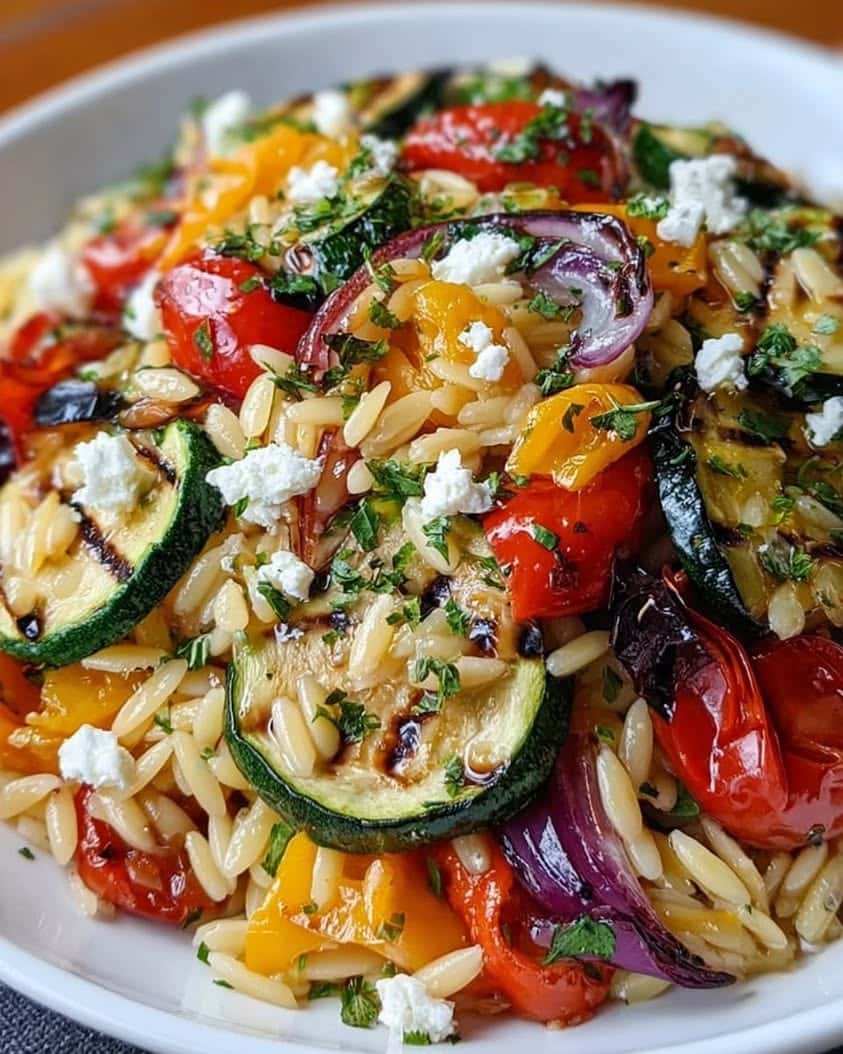
Sun-drenched Mediterranean Orzo: A Vibrant Vegetarian Feast
Imagine a dish that captures the essence of a Mediterranean summer, a vibrant medley of flavors and textures that transports you to a sun-drenched coastal village with every bite. This Mediterranean orzo recipe does exactly that, combining tender pasta with perfectly roasted vegetables in a harmonious celebration of fresh, wholesome ingredients. Furthermore, the aroma of garlic and herbs filling your kitchen promises a meal that is as comforting as it is nutritious. Ultimately, this dish represents the heart of Mediterranean cooking, where simplicity meets extraordinary flavor.
This particular Mediterranean orzo recipe stands out because it balances heartiness with a light, refreshing quality. The roasted vegetables develop a caramelized sweetness that contrasts beautifully with the briny olives and tangy feta cheese. Meanwhile, the orzo pasta absorbs all the delicious flavors, creating a cohesive and satisfying dish. Consequently, even on a busy weeknight, you can create a meal that feels both special and effortless. This versatile recipe adapts easily to seasonal produce, making it a year-round favorite in any household.
Whether you are seeking a impressive vegetarian main course or a stunning side dish for gatherings, this Mediterranean orzo delivers on every front. The colorful combination of red bell peppers, zucchini, and cherry tomatoes creates a visual feast that is guaranteed to impress guests. Additionally, the lemon-herb vinaigrette ties everything together with a bright, zesty finish. Therefore, you get a complete meal that nourishes the body and delights the senses. This is one of those foundational recipes you will return to again and again for its reliability and crowd-pleasing appeal.
Quick Recipe Highlights
- Flavor Profile: This Mediterranean orzo features a sophisticated balance of sweet roasted vegetables, salty feta and olives, and bright herbal notes from fresh basil and oregano. The lemon vinaigrette adds a crucial acidic component that lifts all the flavors, creating a complex taste experience reminiscent of coastal Italian and Greek cuisine.
- Texture: You will enjoy a delightful contrast between the tender, almost creamy orzo pasta and the firm, slightly charred roasted vegetables. The crumbled feta provides creamy pockets, while the kalamata olives offer a pleasant, briny chew that keeps every bite interesting and satisfying from start to finish.
- Aroma: As this Mediterranean orzo cooks, your kitchen will fill with the earthy fragrance of roasting garlic and onions melding with the sweet scent of caramelizing vegetables. The fresh basil and oregano release their volatile oils, especially when tossed warm, creating an irresistible herbal perfume that signals a truly homemade meal.
- Visual Appeal: The dish presents a stunning mosaic of colors with vibrant red cherry tomatoes, deep green zucchini, and bright yellow bell peppers against the pale white orzo pasta. Garnished with green basil and white feta, it looks as beautiful on the table as it tastes on the palate.
- Skill Level Needed: This is an accessible recipe perfect for beginners, as it involves straightforward techniques like chopping, roasting, and boiling. The most advanced skill required is balancing the vinaigrette, which is a simple matter of whisking ingredients together.
- Special Equipment: You need only basic kitchen tools a baking sheet for roasting, a medium pot for boiling orzo, and a small bowl for the vinaigrette. Parchment paper is recommended for easier cleanup but is not essential for success.
Recipe Overview
- Difficulty Level: We classify this Mediterranean orzo as easy because it breaks down into simple, manageable steps that even novice cooks can execute confidently. The roasting process is forgiving, and the orzo cooks in just minutes. There is no intricate knife work or complex techniques involved, making it a stress-free cooking experience from start to finish.
- Category: This versatile dish functions beautifully as a vegetarian main course, a substantial side dish alongside grilled chicken or fish, or a standout potluck contribution. Its satisfying nature comes from the combination of carbohydrates, vegetables, and protein from the cheese, making it a well-rounded option for various dining situations.
- Cuisine: This recipe draws direct inspiration from the sun-soaked coastal regions of Italy and Greece, where simple, high-quality ingredients are paramount. The use of olive oil, garlic, oregano, and lemon is classic to these culinary traditions, celebrating a philosophy of eating that is both healthy and deeply flavorful.
- Cost: Preparing this Mediterranean orzo is remarkably budget-friendly, as it relies on pantry staples and affordable seasonal vegetables. The most significant cost comes from the block feta cheese and kalamata olives, but these ingredients provide a big flavor payoff and can be adjusted based on your budget.
- Season: While excellent year-round, this dish truly shines in late summer when zucchini, bell peppers, and tomatoes are at their peak sweetness and most affordable. However, it also provides a welcome burst of color and freshness during the colder months, making it a versatile seasonal staple.
- Occasion: Perfect for casual weeknight dinners, elegant weekend entertaining, or portable meals for picnics and potlucks. Its make-ahead flexibility and crowd-pleasing flavors make it suitable for everything from a simple family meal to a festive holiday spread.
Why You’ll Love This Mediterranean Orzo
First and foremost, the taste and texture of this Mediterranean orzo are utterly captivating. Each forkful delivers a symphony of sensations the creamy tenderness of the pasta, the juicy burst of roasted cherry tomatoes, the slight resistance of the zucchini, and the salty punch of feta and olives. Furthermore, the lemon-herb vinaigrette permeates every component, ensuring a consistent and bright flavor profile. This is not a one-note dish; it offers complexity and satisfaction that will keep you coming back for more. Ultimately, it proves that healthy, vegetable-forward eating can be an absolute delight.
From a practical standpoint, the convenience of this Mediterranean orzo recipe is a major win for any home cook. The preparation is straightforward, involving simple chopping and tossing, while the oven does most of the work. You can easily multitask by boiling the orzo while the vegetables roast, resulting in a complete meal in under forty-five minutes. Consequently, it is a perfect solution for busy evenings when you want something wholesome without spending hours in the kitchen. The entire process is efficient and manageable.
Nutritionally, this dish is a powerhouse of vitamins, minerals, and fiber. The colorful array of vegetables provides a wide spectrum of antioxidants, while the olive oil contributes heart-healthy monounsaturated fats. Using whole wheat orzo is an easy swap to increase the fiber content even further. This Mediterranean orzo aligns perfectly with the principles of the Mediterranean diet, which is renowned for supporting long-term health and wellness. You can feel great about serving this meal to your family.
For social gatherings, this Mediterranean orzo is a guaranteed crowd-pleaser. Its vibrant appearance immediately draws people in, and its familiar yet elevated flavors appeal to a wide range of palates. It is a fantastic option for potlucks because it tastes excellent at room temperature and travels well. Moreover, it is naturally vegetarian, making it inclusive for guests with various dietary preferences. You will consistently receive compliments and requests for the recipe.
Finally, the cost-effectiveness and accessibility of the ingredients make this a smart staple. You do not need any rare or expensive components to create this restaurant-quality dish at home. In fact, you can adapt the vegetable selection based on what is seasonal or on sale at your local market. This flexibility ensures that you can enjoy a delicious and nutritious meal without straining your grocery budget. It is a practical and delicious choice for everyday cooking.
Historical Background and Cultural Significance
The story of orzo itself is deeply woven into the fabric of Mediterranean culinary history. Although it looks like a grain, this rice-shaped pasta has been a staple in Italian and Greek pantries for centuries. Its name, “orzo,” literally means “barley” in Italian, a nod to its grain-like appearance. Historically, pasta shapes like this developed as a way to create variety and interest from simple ingredients of flour and water. Consequently, orzo became a versatile foundation for pilafs, soups, and salads throughout the region.
Culturally, the combination of roasted vegetables, pasta, and cheese epitomizes the resourceful and seasonal cooking of the Mediterranean basin. This style of cooking is not about complicated sauces or techniques; instead, it celebrates the inherent flavors of sun-ripened produce, high-quality olive oil, and aromatic herbs. Dishes like this Mediterranean orzo were born from a lifestyle centered around family, community, and the shared table. They represent a philosophy where food is both sustenance and a profound expression of culture and place.
The evolution of this specific recipe is a modern interpretation of classic principles. While our ancestors certainly combined their local vegetables with pasta, the specific combination of zucchini, bell peppers, and cherry tomatoes with a lemon vinaigrette reflects contemporary tastes and global ingredient availability. This evolution shows the dynamic nature of food traditions, which adapt and thrive by incorporating new ideas while staying true to their roots. Therefore, this dish is both timeless and perfectly suited for today’s kitchen.
Regional variations of this concept abound throughout the Mediterranean. In Greece, you might find a similar dish called “kritharaki,” often prepared with tomatoes, onions, and sometimes ground meat. In Italy, “orzo alla verdure” is a common preparation, highlighting the vegetables of a particular region. The version presented here is a fusion that captures the spirit of the entire region, prioritizing bright flavors, colorful presentation, and wholesome ingredients. It is a tribute to a way of eating that has sustained and delighted people for generations.
Ingredient Deep Dive
Orzo pasta forms the heart of this dish. Despite its rice-like appearance, orzo is a type of pasta traditionally made from semolina flour. It has been a staple in Mediterranean kitchens for centuries, valued for its ability to absorb flavors and create a comforting, risotto-like texture without constant stirring. Nutritionally, it provides carbohydrates for energy, and opting for a whole wheat variety boosts the fiber content significantly. When selecting orzo, look for a brand with a smooth, uniform appearance. You can store it in a cool, dry pantry for many months. For a gluten-free adaptation, brown rice orzo is an excellent substitute that maintains the dish’s characteristic texture.
Zucchini and yellow squash bring a delicate, slightly sweet flavor and a tender texture to the Mediterranean orzo. These summer squashes have been cultivated for thousands of years and are central to the vegetable gardens of Italy and the Middle East. They are incredibly hydrating and a good source of vitamin C, manganese, and antioxidants. Choose firm, medium-sized squashes with glossy, unblemished skin for the best flavor and texture. Store them in the refrigerator’s crisper drawer. If unavailable, eggplant or additional bell peppers make suitable replacements, though the cooking time may need slight adjustment.
Bell peppers, both red and yellow, contribute a crucial sweetness and vibrant color. Their journey to the Mediterranean began in the Americas, but they were eagerly adopted and are now indispensable in the region’s cuisine. They are packed with vitamins A and C, far exceeding the content of their green counterparts. Select peppers that feel heavy for their size with taut, shiny skin. You can store them in the refrigerator. For a different flavor profile, roasted red peppers from a jar can be used, though they should be added after roasting to prevent overcooking.
The cherry tomatoes are essential for their explosive juiciness and concentrated sweetness. When roasted, their natural sugars caramelize, creating little pockets of intense flavor within the Mediterranean orzo. Tomatoes are synonymous with Mediterranean cooking, though they are also a relatively New World addition. They are a fantastic source of lycopene, an antioxidant linked to numerous health benefits. Look for tomatoes on the vine or in pints, ensuring they are plump and fragrant. Do not refrigerate them, as this damages their texture and flavor. Sun-dried tomatoes packed in oil can be a flavorful off-season alternative.
Common Mistakes to Avoid
- Overcrowding the Baking Sheet: If you pile all the vegetables onto one pan, they will steam instead of roast. This results in soggy, limp vegetables rather than achieving the desired caramelized edges and concentrated flavor. Always use a large enough sheet and spread the vegetables in a single layer for the best texture in your Mediterranean orzo.
- Underseasoning the Vegetables: Vegetables need a generous amount of seasoning before roasting to bring out their natural sweetness. Do not be shy with the salt and pepper at this stage. Remember, you are seasoning the entire dish at this foundational step. Properly seasoned vegetables are key to a flavorful final product.
- Overcooking the Orzo: Orzo cooks quickly and can turn mushy if left in the boiling water for too long. Aim for an al dente texture, as it will continue to absorb moisture from the dressing and vegetables after cooking. A mushy pasta will make the entire dish feel heavy and pasty.
- Neglecting to Reserve Pasta Water: The starchy, salted water used to cook the orzo is liquid gold for creating a cohesive sauce. Before draining, always scoop out at least a half-cup of this water. It helps the vinaigrette emulsify and cling to every component of the Mediterranean orzo, unifying the dish.
- Skipping the Acid Balance: The lemon juice in the vinaigrette is not optional; it is critical for balancing the richness of the olive oil and the sweetness of the roasted vegetables. Without this bright, acidic element, the dish can taste flat and one-dimensional. Always taste and adjust the lemon at the end.
- Adding Delicate Herbs Too Early: If you add fresh basil to the hot pasta and vegetables, it will wilt and lose its vibrant color and fresh flavor. Instead, stir most of it in just before serving to preserve its aromatic qualities. This simple timing adjustment makes a significant difference.
- Using Pre-Crumbled Feta: Block feta cheese stored in brine is far superior in flavor and texture to the dry, pre-crumbled variety. It is creamier and less salty. Always take the extra minute to crumble your own feta for a more luxurious and authentic taste in your Mediterranean orzo.
- Serving Immediately Without Resting: While you do not want it to be cold, allowing the assembled dish to sit for 5-10 minutes lets the flavors meld together beautifully. The orzo soaks up the dressing, and the overall taste becomes more harmonious and developed.
Essential Techniques
Roasting vegetables is the cornerstone technique for this Mediterranean orzo. The goal is to use high, dry heat to caramelize the natural sugars in the vegetables, creating a deep, complex sweetness and a tender interior with slightly charred edges. To master this, ensure your oven is fully preheated and your vegetables are cut into uniform sizes for even cooking. A common pitfall is using a low oven temperature, which steams the vegetables instead of roasting them. You will know they are done when they are easily pierced with a fork and have developed noticeable browned spots, which are packed with flavor.
Creating an emulsion with the vinaigrette is another vital skill. An emulsion is a stable mixture of two liquids that do not normally combine, like oil and lemon juice. The key to a successful vinaigrette is gradual incorporation. Start by whisking the lemon juice, Dijon mustard, and minced garlic together. Then, while whisking constantly, slowly drizzle in the olive oil. This method encourages the oil to break into tiny droplets suspended in the acid, creating a creamy, unified dressing that will coat the Mediterranean orzo evenly instead of separating and pooling.
Cooking pasta al dente is crucial for the perfect texture. “Al dente” translates to “to the tooth,” meaning the pasta should be tender but still offer a slight resistance when bitten. To achieve this, follow the package instructions but start tasting the orzo a minute or two before the suggested time is up. The pasta will continue to cook slightly from residual heat after draining and when mixed with the warm vegetables. Perfectly cooked orzo will hold its shape and provide a pleasing texture that contrasts with the soft vegetables.
Pro Tips for Perfect Mediterranean Orzo
For maximum flavor, toss your vegetables with the olive oil and seasonings in a large bowl before spreading them on the sheet pan. This ensures every piece is evenly coated, leading to uniform roasting and browning.
Elevate your dish by toasting the orzo in a dry skillet for a few minutes before boiling. This simple step gives the pasta a nutty, deeper flavor and helps it maintain a better texture, preventing it from becoming gummy.
Add a layer of complexity by incorporating a teaspoon of dried oregano or thyme into the oil used for roasting the vegetables. The heat will toast the dried herbs, unlocking their full aromatic potential and infusing the entire dish.
For a creamier consistency, stir a tablespoon of the starchy pasta water into the vinaigrette before tossing it with the orzo and vegetables. The starch acts as a natural thickener, helping the dressing cling beautifully to every component.
If you have time, let the dressed Mediterranean orzo sit at room temperature for 15-20 minutes before serving. This allows the pasta to fully absorb the dressing, resulting in a more cohesive and flavorful final dish.
Just before serving, finish the dish with a final drizzle of high-quality extra virgin olive oil. This adds a fresh, fruity note and a luxurious mouthfeel that enhances the overall eating experience.
Variations and Adaptations
For regional variations, consider adding different ingredients to reflect specific Mediterranean locales. A Greek-inspired version could include artichoke hearts and fresh dill. For an Italian twist, incorporate sun-dried tomatoes and a sprinkle of red pepper flakes. A Provençal take might feature herbes de Provence and niçoise olives. These small adjustments can transport the basic recipe across the Mediterranean, allowing you to explore different flavor profiles while maintaining the core cooking technique.
Seasonal adaptations are straightforward and recommended. In the spring, use asparagus and peas. During the heart of summer, eggplant and fresh corn are wonderful additions. For a cozy autumn version, roast sweet potatoes, Brussels sprouts, and red onion. In winter, rely on heartier vegetables like cauliflower and carrots. The lemon-herb vinaigrette provides a constant bright note that ties all these seasonal variations together, making this Mediterranean orzo a year-round staple.
Dietary modifications are easily implemented. For a vegan Mediterranean orzo, simply omit the feta cheese or use a plant-based alternative. To make it gluten-free, use certified gluten-free orzo made from brown rice or corn. For a protein boost, add a can of rinsed chickpeas to the sheet pan for the last 10 minutes of roasting. You can also stir in grilled shrimp or shredded rotisserie chicken at the end for a non-vegetarian option.
Serving and Presentation Guide
Plating techniques can elevate this humble dish into a restaurant-quality presentation. Instead of piling it into a bowl, use a wide, shallow pasta plate or a lipped platter. Use a large spoon or tongs to create a gentle mound, allowing the colorful vegetables to be visible on the surface. This approach showcases the beautiful ingredients and makes the meal feel more special and intentional.
Garnishing is the final touch that adds freshness and visual appeal. A generous scattering of torn fresh basil leaves is essential. You can also add a sprinkle of fresh oregano or flat-leaf parsley. For a pop of color and flavor, add a few extra whole kalamata olives and a final dusting of crumbled feta cheese. A light drizzle of high-quality extra virgin olive oil over the top just before serving adds a lovely sheen.
Consider traditional accompaniments to round out the meal. This Mediterranean orzo pairs wonderfully with a simple arugula salad dressed with lemon vinaigrette. For a non-vegetarian meal, grilled lamb chops, lemon-herb chicken, or seared salmon fillets are excellent protein partners. A side of warm, crusty bread is perfect for soaking up any remaining dressing on the plate.
Wine and Beverage Pairing
Selecting the right wine can enhance the flavors of your Mediterranean orzo beautifully. A crisp, dry white wine like Sauvignon Blanc or Pinot Grigio is an excellent choice. Their bright acidity mirrors the lemon in the dressing and cuts through the richness of the olive oil and feta. Alternatively, a light-bodied, fruity rosé from Provence complements the herbal and vegetable notes without overpowering the dish. For red wine lovers, a chilled, light red like a Beaujolais or a Frappato can work surprisingly well.
For non-alcoholic alternatives, consider beverages that offer refreshment and complement the dish’s zesty profile. Homemade lavender lemonade provides a floral note that pairs wonderfully with the herbs. Sparkling water with a squeeze of lime and a few fresh mint leaves is always a classic and cleansing option. A chilled, unsweetened iced tea, perhaps with a hint of peach or raspberry, also makes a delightful partner to the Mediterranean flavors.
Storage and Shelf Life
Proper storage is key to enjoying your Mediterranean orzo leftovers. Allow the dish to cool completely to room temperature before transferring it to an airtight container. You can store it in the refrigerator for up to 4 days. The flavors often meld and improve after a day, making the leftovers particularly delicious. However, the fresh basil will wilt and darken, so you may want to add a fresh garnish when serving leftovers.
Reheating requires a gentle touch to prevent the orzo from becoming gummy. The best method is to reheat it in a skillet over medium-low heat with a splash of water or vegetable broth. This adds back moisture and allows for even warming without overcooking the pasta. You can also reheat individual portions in the microwave, covered, at a medium power level, stirring halfway through. Avoid reheating the entire batch multiple times.
Freezing is not generally recommended for this dish. The texture of the cooked vegetables and orzo will become soft and watery upon thawing. The dairy component (feta) may also separate and become grainy. For best results, enjoy this Mediterranean orzo fresh or refrigerated for a few days.
Make Ahead Strategies
You can efficiently break down the preparation for this Mediterranean orzo to make weeknight cooking a breeze. The day before, chop all your vegetables and store them in separate airtight containers in the refrigerator. You can also make the lemon-herb vinaigrette up to three days in advance; simply shake it well before using. This advance prep means that when you are ready to cook, you can simply toss the vegetables with oil and roast them while the orzo boils, drastically cutting down your active kitchen time.
For fully assembled make-ahead meals, you can combine the cooked and cooled orzo with the roasted vegetables and vinaigrette. Store this base mixture in the refrigerator for up to 24 hours. However, hold the fresh basil and feta cheese until just before serving. When ready to eat, let the dish sit at room temperature for 20-30 minutes to take the chill off, then stir in the fresh herbs and cheese. This method preserves the textures and bright flavors perfectly.
Scaling Instructions
Halving this Mediterranean orzo recipe is straightforward for smaller households. Simply divide all the ingredient quantities by two. Use a standard quarter sheet pan for roasting the smaller volume of vegetables to ensure they still have room to caramelize properly. The cooking times for both the vegetables and the orzo will remain roughly the same, so rely on visual and textural cues for doneness rather than the timer alone.
Doubling or tripling the recipe is ideal for feeding a crowd or for meal prep. Use two large sheet pans for the vegetables, rotating them from top to bottom halfway through the roasting time to ensure even cooking. You will likely need to cook the orzo in two separate batches to prevent overcrowding the pot, which leads to uneven cooking. When making the dressing, whisk it together in a large measuring cup or a small bowl with a spout for easy pouring over the larger quantity of ingredients.
Nutritional Deep Dive
This Mediterranean orzo is a nutritionally balanced meal, providing a healthy mix of macronutrients. The orzo pasta serves as an excellent source of complex carbohydrates, offering sustained energy. The olive oil and feta cheese contribute healthy fats, including monounsaturated fats known for supporting heart health. The vegetables provide a modest amount of plant-based protein and are packed with dietary fiber, which aids digestion and promotes a feeling of fullness. This macronutrient profile makes it a satisfying and energizing meal.
From a micronutrient perspective, this dish is a powerhouse. The colorful vegetables deliver a wide array of vitamins and antioxidants. Red bell peppers and cherry tomatoes are exceptionally high in Vitamin C and Vitamin A. Zucchini provides potassium and manganese. The olive oil and olives offer Vitamin E and other antioxidants. Together, these components support immune function, skin health, and reduce inflammation, aligning perfectly with the well-documented health benefits of the Mediterranean diet.
Dietary Adaptations
For a gluten-free Mediterranean orzo, the only substitution needed is the pasta itself. Seek out certified gluten-free orzo, which is commonly made from brown rice or corn. These alternatives cook similarly to traditional orzo, though it is wise to check the package instructions for exact timing. All other ingredients in the recipe are naturally gluten-free, making this a simple and effective swap that allows everyone to enjoy the dish.
Creating a vegan version is equally simple. Omit the feta cheese entirely, or use a high-quality plant-based feta alternative. To replace the salty, tangy flavor that the feta provides, you can add a tablespoon of capers or chopped, marinated artichoke hearts. Ensure that the Dijon mustard you use in the vinaigrette does not contain honey. This adaptation results in a completely plant-based meal that is still rich in flavor and satisfying texture.
Troubleshooting Guide
If your final Mediterranean orzo seems dry, the issue is likely not enough dressing or the pasta absorbing too much moisture. The solution is simple: whisk together an extra tablespoon of lemon juice and two tablespoons of olive oil. Alternatively, use a splash of vegetable broth or the reserved pasta water if you still have it. Drizzle this over the salad and toss well. This will refresh the dish and bring back its intended saucy consistency.
Should your roasted vegetables turn out soggy instead of caramelized, the cause is usually overcrowding on the pan or an under-heated oven. For a quick fix, you can spread the cooked vegetables on a fresh sheet pan and pop them under the broiler for 2-3 minutes, watching carefully to avoid burning. This will help evaporate excess moisture and create those desirable browned edges. For next time, remember to preheat your oven thoroughly and use two pans if necessary.
Recipe Success Stories
Our community of home cooks has embraced this Mediterranean orzo recipe with incredible creativity. One reader, Sarah from Colorado, shared that she now makes a double batch every Sunday for her family’s weekly lunches, adding that her teenagers actually request it. Another, Mark from Florida, reported that he added grilled shrimp and a pinch of saffron to the orzo cooking water, creating a spectacular company dish that earned him rave reviews. These stories highlight the recipe’s versatility and its role as a foundation for personal culinary expression.
Photography tips from our readers have also been invaluable. Many suggest photographing the dish in natural light, preferably on a rustic wooden table or a bright, colorful plate to enhance its Mediterranean vibe. Shooting from above captures the beautiful mosaic of vegetables, while a close-up side shot can showcase the different textures. A sprig of fresh basil and a lemon wedge placed beside the bowl makes for a simple, elegant prop that reinforces the fresh ingredients inside.
Frequently Asked Questions
Can I use a different type of pasta?
Absolutely. While orzo is traditional for its unique texture, you can substitute it with other small pasta shapes like ditalini, small shells, or even couscous. Keep in mind that cooking times will vary, so always refer to the package instructions for the pasta you choose. The key is to select a shape that will hold the dressing and mingle well with the roasted vegetables.
Is this dish served hot or cold?
This Mediterranean orzo is best served warm or at room temperature. Serving it warm allows the flavors to be most vibrant and the textures to be ideal. If you make it ahead and refrigerate it, let it sit out for 20-30 minutes before serving to take the chill off. It is not intended to be served piping hot or ice cold.
Can I add other vegetables?
Yes, the recipe is very adaptable. Excellent additions include red onion, eggplant, asparagus, broccoli, or mushrooms. Just be mindful of the different roasting times for various vegetables. Denser vegetables like carrots or potatoes should be cut small and may need a few extra minutes in the oven, while delicate vegetables like asparagus should be added later in the roasting process.
How can I make it more protein-rich?
For a protein boost, consider adding a can of rinsed and drained chickpeas or white beans, tossing them with the vegetables for the last 10 minutes of roasting. Grilled chicken breast, shrimp, or flaked salmon are also fantastic non-vegetarian additions. For a plant-based option, stir in a cup of cooked quinoa along with the orzo.
My orzo turned out gummy. What happened?
Gummy orzo is typically a result of overcooking. Next time, cook the orzo for 1-2 minutes less than the package suggests, as it will continue to soften when mixed with the dressing and warm vegetables. Also, ensure you are using a sufficient amount of boiling, salted water—at least 4 quarts of water for one cup of orzo—to prevent starch overload.
Additional Resources
If you loved the flavors in this Mediterranean orzo, you might enjoy exploring other recipes that use similar ingredients and techniques. Our Greek Quinoa Salad with a lemon-oregano vinaigrette offers a gluten-free alternative with the same bright profile. For a warm, comforting option, our Lemon Herb Roasted Chicken Thighs pair perfectly with the orzo as a side dish. Our guide to Mastering the Perfect Vinaigrette provides deeper insight into creating balanced dressings for all your salad needs.
For technique guides, we recommend our comprehensive article on How to Roast Any Vegetable to Perfection, which breaks down cooking times and temperatures for a wide variety of produce. If you are new to working with fresh herbs, our guide on Herb Identification and Usage will help you build confidence. Investing in a good quality extra virgin olive oil is also key to Mediterranean cooking; our tasting and selection guide can help you choose the best oil for your kitchen.
PrintMediterranean Orzo with Roasted Vegetables
Description
A vibrant and healthy dish featuring tender orzo pasta tossed with roasted vegetables and Mediterranean flavors.
Ingredients
For the Crust:
- 1 cup orzo pasta
- 2 cups mixed vegetables (zucchini, bell peppers, red onion, cherry tomatoes)
- 3 tablespoons olive oil
- 2 cloves garlic, minced
- 1 teaspoon dried oregano
- 1/2 teaspoon smoked paprika
- Salt and black pepper to taste
- 1/4 cup crumbled feta cheese
- 2 tablespoons chopped fresh parsley
- 1 tablespoon lemon juice
Instructions
1. Prepare the Crust:
- Preheat oven to 400°F (200°C). Toss vegetables with 2 tablespoons olive oil, oregano, paprika, salt, and pepper. Spread on a baking sheet and roast for 20-25 minutes until tender.
- Cook orzo according to package directions until al dente. Drain and set aside.
- In a large bowl, combine cooked orzo, roasted vegetables, remaining olive oil, garlic, lemon juice, and parsley. Gently stir in feta cheese. Adjust seasoning and serve warm.
Notes
You can customize the seasonings to taste.

I’m Shaykee—born in Morocco, seasoned across continents. From airplane galleys to home kitchens, I share the flavors and stories that shaped my journey.