
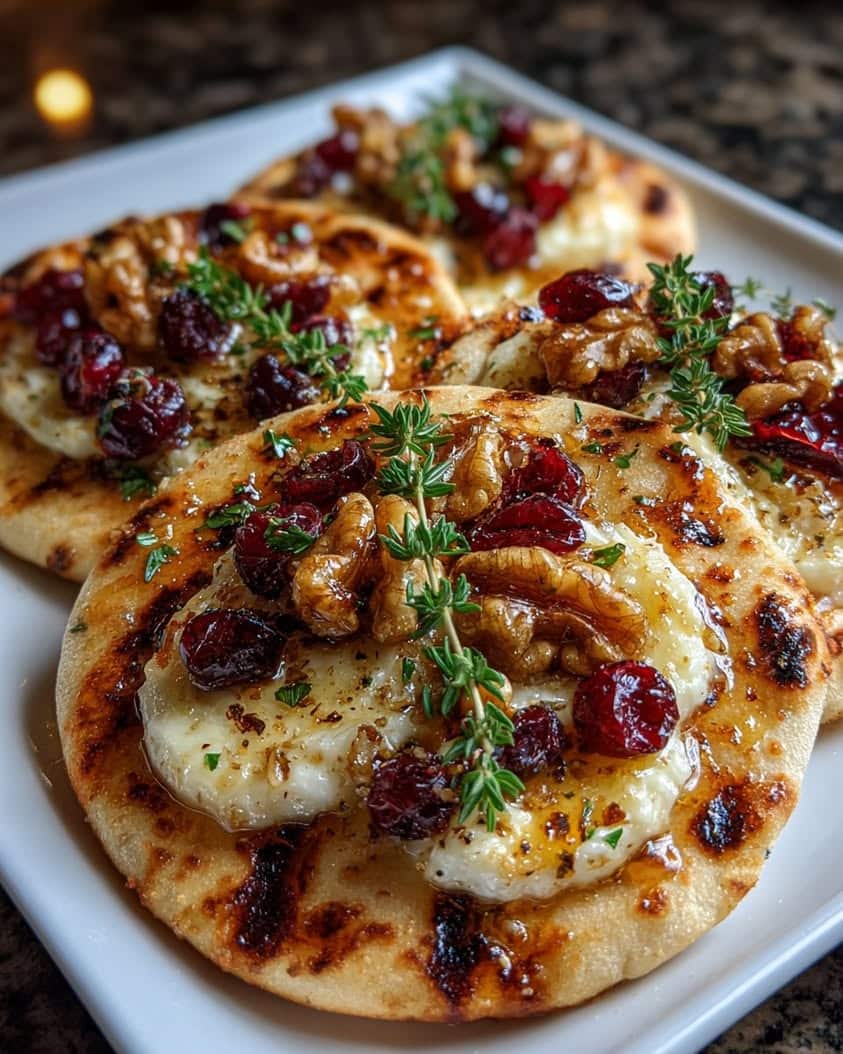
Mini Pizza with Brie, Cranberries & Toasted Walnuts: An Elegant Appetizer for Any Gathering
This gourmet Mini Pizza with Brie, Cranberries & Toasted Walnuts is a guaranteed crowd-pleaser. The combination of creamy brie, tart cranberries, and crunchy walnuts creates a sophisticated flavor profile that will impress your guests. Furthermore, the final touch of a sweet and spicy hot honey drizzle elevates this appetizer from simple to spectacular. Consequently, this recipe is perfect for holiday parties, game day gatherings, or even a fancy weeknight treat.
Imagine pulling a tray of these golden, bubbling mini pizzas from your oven. The aroma of melted cheese and toasted nuts fills your kitchen. Each bite offers a perfect harmony of textures and tastes. The rich, buttery brie melts beautifully, while the cranberries provide a bright, tangy burst. Meanwhile, the walnuts add a satisfying crunch that contrasts with the soft pizza base. Ultimately, the hot honey drizzle ties everything together with its unique balance of heat and sweetness.
This recipe is incredibly versatile and easy to customize. You can use pre-made pizza dough or naan bread for a quick base. Additionally, you can adjust the level of spice in the honey to suit your taste. Whether you are an experienced cook or a beginner, this Mini Pizza with Brie, Cranberries & Toasted Walnuts is straightforward to prepare. Therefore, it is an excellent choice for entertaining, as it looks impressive but requires minimal effort.
Quick Recipe Highlights
- Flavor Profile: This gourmet pizza features a sophisticated balance of creamy, tangy, and nutty notes. The rich brie cheese pairs perfectly with the sharp cranberries, while the hot honey adds a surprising kick. Consequently, every bite is a complex and delightful experience.
- Texture: You will enjoy a wonderful contrast of textures in this appetizer. The crispy pizza base supports the gooey, melted brie and the juicy cranberries. Furthermore, the toasted walnuts provide a crucial crunchy element that makes the dish more interesting.
- Aroma: As these mini pizzas bake, your kitchen will fill with an inviting scent. The nutty fragrance of toasting walnuts blends with the sweet aroma of melting cheese and fruit. Ultimately, the spicy-sweet scent of the hot honey finish completes the sensory experience.
- Visual Appeal: These mini pizzas are as beautiful as they are delicious. The golden crust, white melted brie, vibrant red cranberries, and brown walnuts create a festive color palette. Therefore, they make a stunning addition to any party platter.
- Skill Level Needed: This is an accessible recipe for cooks of all levels. You only need basic assembly skills and the ability to use an oven. Moreover, the recipe is forgiving, allowing for personal touches and substitutions.
- Special Equipment: You need a standard baking sheet and parchment paper for this recipe. A pizza cutter or sharp knife is helpful for slicing. Additionally, a small saucepan is useful for warming the honey, though a microwave-safe bowl works too.
Recipe Overview
- Difficulty Level: This Mini Pizza with Brie, Cranberries & Toasted Walnuts is remarkably easy to make. The steps involve simple assembly rather than complex techniques. Therefore, even novice cooks can achieve excellent results without stress. The short ingredient list and straightforward instructions make it a low-fuss, high-reward recipe.
- Category: This dish fits perfectly into the appetizer and snack categories. It is ideal for finger food at parties or a light lunch. Furthermore, its gourmet ingredients make it suitable for upscale events and casual get-togethers alike.
- Cuisine: This recipe draws inspiration from modern American gastropub fare. It combines classic French cheese with Italian pizza format and a contemporary spicy-sweet drizzle. Consequently, it represents a fusion style that is popular in current culinary trends.
- Cost: The cost is moderate, depending on the quality of brie you select. Pre-made pizza dough is economical, while specialty ingredients like fresh cranberries and quality honey may cost slightly more. However, the impressive result justifies the investment for special occasions.
- Season: This recipe is particularly wonderful during the fall and winter months. The cranberries and walnuts evoke holiday flavors. Meanwhile, the warm, comforting nature of baked pizza makes it ideal for colder weather.
- Occasion: Serve these mini pizzas at holiday parties, wine tastings, or book club gatherings. They are also perfect for game day snacks or as a sophisticated appetizer before a dinner party. Their elegant appearance belies their simple preparation.
Why You’ll Love This Mini Pizza with Brie, Cranberries & Toasted Walnuts
The taste and texture appeal of this gourmet appetizer is undeniable. Each component plays a specific role in creating a harmonious bite. The creamy brie melts into a luxurious pool that contrasts with the crisp crust. Simultaneously, the tart cranberries cut through the richness of the cheese. The toasted walnuts add an essential earthy crunch, while the hot honey drizzle provides a final flourish of sweet heat. This complex layering of flavors and textures makes the eating experience continually interesting and satisfying.
Convenience is another major benefit of this recipe. You can assemble these mini pizzas in just fifteen minutes using pre-made dough or flatbreads. Furthermore, the cooking time is brief, allowing you to prepare a fresh, hot appetizer quickly for unexpected guests. The ingredients are also readily available at most grocery stores. You can even prepare components ahead of time, such as toasting the walnuts and making the hot honey. Therefore, this recipe reduces last-minute stress when entertaining.
This Mini Pizza with Brie, Cranberries & Toasted Walnuts offers several nutritional advantages. Walnuts are an excellent source of omega-3 fatty acids and antioxidants. Cranberries provide vitamin C and various phytonutrients. Using a whole-wheat pizza base can add fiber to the dish. While brie is a rich cheese, a little goes a long way in terms of flavor. Consequently, you can enjoy a gourmet treat that includes beneficial ingredients.
The social and entertaining value of this dish is significant. These mini pizzas are perfectly sized for passing at a party. They look professional and thoughtfully prepared, which will impress your friends and family. The recipe is easily scalable, so you can make a large batch for a crowd or just a few for a cozy night in. Their elegant appearance encourages conversation and makes any event feel more special.
Cost-effectiveness and accessibility make this recipe a practical choice. While it tastes luxurious, it does not require expensive equipment or hard-to-find ingredients. You can adapt the recipe based on what you have available. For instance, you can substitute dried cranberries for fresh or use a different nut if needed. The hot honey is simple to make with pantry staples. Ultimately, this Mini Pizza with Brie, Cranberries & Toasted Walnuts delivers restaurant-quality flavor at a fraction of the price.
Historical Background and Cultural Significance
The origin story of this flavor combination is rooted in modern culinary innovation. Chefs began experimenting with sweet and savory pairings on pizza beyond the traditional tomato sauce and cheese. The specific pairing of brie and cranberry likely emerged from charcuterie board trends, where these ingredients are classic companions. The addition of hot honey is a more recent development, influenced by the popularity of artisanal honey and spice-infused condiments. This recipe represents the evolution of pizza from a simple Italian staple to a global canvas for creative toppings.
This dish holds cultural importance as a fusion food that bridges culinary traditions. It incorporates French cheese, a North American fruit, and a sweetener used in many global cuisines. The mini pizza format itself is adaptable for various eating occasions, from casual American parties to more formal gatherings. This versatility reflects contemporary dining habits, where boundaries between meal categories are increasingly fluid. The recipe symbolizes how food culture continues to blend and evolve.
The evolution of this recipe follows broader food trends. Initially, gourmet pizzas gained popularity in upscale restaurants during the 1990s. Subsequently, the farm-to-table movement encouraged the use of high-quality, complementary ingredients like artisan cheese and fresh fruit. More recently, the sweet-heat flavor profile has become extremely popular, leading to the inclusion of the hot honey drizzle. This Mini Pizza with Brie, Cranberries & Toasted Walnuts is a product of these converging culinary movements.
Regional variations of this concept exist across different food cultures. In France, a similar flavor profile might appear on a tartine. In the American South, you might find brie and pepper jelly on crackers. The Italian version might feature figs and gorgonzola. This recipe borrows elements from these diverse traditions while presenting them in the universally loved pizza format. Its adaptability allows it to fit into various culinary contexts while maintaining its distinctive character.
Ingredient Deep Dive
Brie cheese is a soft French cheese known for its creamy texture and edible white rind. Historically, it dates back to the 8th century and was famously declared the “King of Cheeses” at the Congress of Vienna in 1815. Nutritionally, brie provides protein, calcium, and vitamin B12. When selecting brie, look for a wheel that feels springy to the touch and has a fresh, mild aroma. Avoid any with an ammonia smell. Store brie in the refrigerator in its original wrapping. For substitutions, Camembert offers a similar texture and flavor profile.
Fresh cranberries are native to North America and have been used by Indigenous peoples for centuries, both as food and medicine. They are packed with vitamin C, fiber, and various antioxidants that support urinary tract health. Choose cranberries that are firm, shiny, and deep red in color; discard any that are soft or discolored. Store fresh cranberries in the refrigerator for up to a month or freeze them for longer storage. If you cannot find fresh cranberries, dried cranberries can be used, though they will provide a sweeter, chewier result.
Walnuts are one of the oldest tree foods, dating back to 7000 B.C. They are nutritionally dense, providing omega-3 fatty acids, antioxidants, and minerals like manganese and copper. Toasting walnuts enhances their flavor and gives them a satisfying crunch. Select walnuts that feel heavy for their size and are not shriveled. Store them in an airtight container in the refrigerator or freezer to prevent their oils from turning rancid. For a different nutty flavor, pecans or almonds make excellent substitutes in this recipe.
Hot honey is a relatively modern condiment that combines the natural sweetness of honey with chili heat. Honey itself has an ancient history, used by various cultures for thousands of years as both food and medicine. To make your own, gently warm honey and infuse it with dried chili flakes or fresh sliced chilies. The quality of honey affects the final result, so choose a flavorful variety like wildflower or orange blossom. For a substitution, you can use maple syrup infused with chili, though the flavor profile will be different.
Common Mistakes to Avoid
- Overloading the pizza base with toppings can lead to a soggy crust. The weight of excessive ingredients prevents proper crisping. Instead, use a moderate amount of each component to allow everything to cook evenly.
- Using cold brie straight from the refrigerator makes it difficult to slice neatly. Let the cheese sit at room temperature for 15-20 minutes before assembling. This simple step makes the process much easier.
- Burning the walnuts during toasting ruins their delicate flavor. Toast them in a dry skillet over medium heat, shaking frequently, just until fragrant. They continue to cook slightly after removal from heat.
- Skipping the walnut toasting step diminishes the flavor and texture impact. Raw walnuts lack the deep, nutty taste that toasted walnuts provide. This small extra step significantly enhances the final dish.
- Applying the hot honey drizzle before baking causes it to burn and lose its complexity. Always add it after the pizzas come out of the oven. The residual heat will help it spread nicely.
- Using a thick pizza base results in doughy, undercooked centers. Roll or stretch your dough thinly, especially if using pre-made dough. A thinner base ensures proper crisping.
- Not preheating your baking sheet or oven leads to uneven cooking. A properly hot oven is essential for achieving a crispy crust. Place your oven rack in the center position for best results.
- Cutting the brie with the rind removed changes its melting properties. The rind helps contain the cheese as it melts. Include the rind for the proper texture and presentation.
Essential Techniques
Toasting walnuts is a simple but crucial technique for this recipe. This process enhances their flavor by releasing their natural oils and creating a deeper, nuttier taste. To master it, spread raw walnuts in a single layer in a dry skillet over medium heat. Shake or stir them frequently for even toasting. Watch carefully for color change and listen for a slight cracking sound. Remove them from the heat as soon as they become fragrant and take on a slightly darker color. Common pitfalls include walking away from the stove, which can lead to burning in seconds. Properly toasted walnuts should be golden brown and crisp, not blackened or bitter.
Preparing the pizza base correctly ensures the ideal texture for your mini pizzas. If using dough, roll it out thinly to about 1/4-inch thickness. This allows it to become crisp rather than doughy during the short baking time. For pre-made flatbreads or naan, ensure they are at room temperature before topping. Prick the base lightly with a fork before adding toppings to prevent large air bubbles from forming. The visual cue for success is a golden brown, crisp edge that holds its shape when lifted. A pale, flexible base indicates undercooking, while a dark brown, hard base means it has baked too long.
Assembling the pizzas in the correct order is key to balanced cooking. Start with a thin layer of olive oil on the base instead of tomato sauce. This prevents sogginess and complements the other flavors. Arrange the brie slices evenly, leaving small spaces between them rather than covering the entire surface. This allows the cheese to melt properly without becoming greasy. Scatter the cranberries and walnuts evenly across the surface. The visual cue before baking should show distinct components rather than a piled-on mass. This technique ensures each ingredient cooks properly and maintains its character in the final dish.
Pro Tips for Perfect Mini Pizza with Brie, Cranberries & Toasted Walnuts
Bring all ingredients to room temperature before assembly. This ensures even melting and cooking. Cold cheese straight from the refrigerator will not spread properly.
Use a pizza stone or preheated baking sheet for an extra crispy crust. The immediate heat transfer creates a professional-quality base. This simple trick makes a significant difference.
Experiment with different honey varieties for unique flavor profiles. Orange blossom honey adds citrus notes, while buckwheat honey offers a deeper, molasses-like flavor. Each variety will create a slightly different final product.
Add fresh herbs after baking for a burst of color and freshness. Thyme, rosemary, or sage complement the other flavors beautifully. The residual heat will release their aromatic oils.
Let the baked pizzas rest for one minute before slicing. This allows the cheese to set slightly, preventing it from sliding off when cut. The brief wait improves the serving presentation.
Create a flavor-balanced bite by ensuring each slice contains all components. Arrange toppings thoughtfully rather than randomly scattering them. This attention to detail enhances the eating experience.
Adjust the spice level in your hot honey to suit your preference. Start with a small amount of chili and taste as you go. Remember that the heat will intensify slightly when drizzled over the warm pizza.
If using dried cranberries, plump them in warm water first. This restores some moisture and prevents them from becoming too chewy when baked. Drain them thoroughly before using.
Variations and Adaptations
Regional variations can inspire creative twists on this recipe. For a Mediterranean version, substitute feta for the brie and use Kalamata olives instead of cranberries. A French-inspired adaptation might include caramelized onions and herbes de Provence alongside the brie. For an American Southern twist, replace the hot honey with pepper jelly thinned with a little vinegar. These regional interpretations maintain the spirit of the original while incorporating local flavor profiles. Experimenting with different cultural influences can yield exciting new combinations.
Seasonal adaptations keep this recipe relevant throughout the year. In spring, use asparagus tips and fresh peas with lemon zest. Summer versions might feature fresh figs and prosciutto with the brie. Autumn adaptations could include roasted squash and sage. These seasonal variations take advantage of produce at its peak, ensuring the best possible flavor. The basic template of cheese, fruit, and nuts remains constant while the specific ingredients change with the seasons.
Dietary modifications make this recipe accessible to more people. For a gluten-free version, use your favorite gluten-free pizza crust or cauliflower base. Vegan adaptations can substitute vegan brie-style cheese and maple syrup for the honey. Lower-carb options might use a portobello mushroom cap or zucchini round as the base. These modifications allow everyone to enjoy a version of this delicious appetizer, regardless of dietary restrictions.
Flavor variations can personalize this recipe to your taste preferences. Try different cheese options like goat cheese, blue cheese, or smoked gouda. Alternative fruits might include sliced pears, apples, or even pomegranate arils. Different nuts like pecans, pistachios, or hazelnuts provide unique textures and flavors. Herbed oils instead of plain olive oil can add another layer of complexity. These simple swaps allow you to create a signature version that reflects your personal palate.
Serving and Presentation Guide
Plating techniques can elevate the appearance of your mini pizzas. Arrange them on a wooden cutting board or slate platter for a rustic look. Alternatively, use individual small plates for a more formal presentation. Space them evenly with the sliced edges facing outward for easy grabbing. Garnish the platter with fresh rosemary sprigs or additional cranberries for color contrast. These simple presentation choices transform the pizzas from casual snack to elegant appetizer.
Garnishing ideas add the final visual flourish to your dish. A light sprinkle of flaky sea salt over the hot honey drizzle enhances both appearance and flavor. Fresh microgreens or arugula scattered over the top provide color and a peppery note. Edible flowers make a stunning garnish for special occasions. A dusting of finely chopped fresh herbs like chives or parsley adds both color and freshness. These garnishes should complement rather than overwhelm the existing flavors.
Traditional accompaniments balance the rich flavors of the pizza. A simple green salad with a sharp vinaigrette cuts through the richness of the brie. Marinated olives or pickled vegetables provide a tangy contrast. For beverage pairings, dry sparkling wine or crisp cider complements the flavors beautifully. These accompaniments create a more complete eating experience and prevent the appetizer from feeling too heavy.
Modern serving suggestions adapt this recipe for contemporary dining. Serve them as part of a grazing table or charcuterie board arrangement. Cut them into smaller wedges for cocktail party bite-sized portions. Package them individually in parchment paper for a stylish picnic or packed lunch. These approaches make the recipe suitable for various modern eating occasions beyond the traditional sit-down appetizer.
Wine and Beverage Pairing
Wine pairings should complement the complex flavors of this mini pizza. A dry sparkling wine like Champagne or Prosecco cuts through the richness of the brie beautifully. The bubbles cleanse the palate between bites. For still wines, a crisp Sauvignon Blanc with its citrus notes balances the creamy cheese and sweet honey. Light-bodied reds like Pinot Noir work well too, as their subtle fruitiness echoes the cranberries without overwhelming the dish. Avoid heavily oaked wines, as they can clash with the delicate flavors.
Non-alcoholic alternatives provide sophisticated options for all guests. Sparkling apple cider mirrors the effervescence of Champagne while complementing the fruit elements. Iced hibiscus tea offers tartness that parallels the cranberries. A ginger-based mocktail provides spice that echoes the hot honey. Even high-quality sparkling water with a twist of lemon can refresh the palate between bites. These non-alcoholic options ensure everyone can enjoy a well-paired beverage.
Coffee and tea pairings work surprisingly well with this appetizer. A light roast coffee with bright acidity complements without overwhelming the flavors. For tea, Earl Grey’s bergamot notes pair elegantly with the brie and honey. Chai tea’s warm spices mirror the heat in the honey drizzle. These pairings are particularly appropriate for brunch or afternoon gatherings where alcohol might be less suitable.
Temperature considerations are crucial for beverage pairing. White wines and sparkling options should be properly chilled but not ice-cold, which mutes their flavors. Red wines should be slightly cooler than room temperature. Non-alcoholic beverages should be served at the temperature that best showcases their characteristics. Proper serving temperatures ensure the beverages complement rather than compete with the food.
Storage and Shelf Life
Storage methods for leftovers maintain quality and safety. Cool completely before storing to prevent condensation that would make the crust soggy. Place in an airtight container with layers separated by parchment paper. Refrigerate for up to two days. For longer storage, freezing is an option, though the texture will change upon reheating. Proper storage ensures you can enjoy any leftovers without compromising food safety.
Temperature requirements are important for food safety. Never leave these pizzas at room temperature for more than two hours. Refrigerate promptly after cooling. When reheating, ensure the internal temperature reaches 165°F to kill any potential bacteria. These simple temperature guidelines protect against foodborne illness while maintaining quality.
Container recommendations affect how well the pizzas keep. Airtight containers prevent absorption of other refrigerator odors. Glass containers are ideal as they don’t retain smells and allow you to see the contents. If using plastic containers, ensure they are food-grade and BPA-free. For individual portions, reusable silicone bags work well. The right container preserves both flavor and texture.
Signs of spoilage indicate when leftovers should be discarded. Look for any mold growth, especially on the cheese components. An off or sour smell suggests bacterial growth. If the crust becomes exceptionally hard or develops an unusual texture, it’s best to err on the side of caution. When in doubt, throw it out—this simple rule prevents foodborne illness.
Make Ahead Strategies
Prep timeline planning reduces stress when entertaining. You can toast the walnuts up to three days in advance and store them at room temperature. The hot honey can be prepared weeks ahead and stored in a sealed jar. The pizza bases can be pre-shaped and refrigerated for a day. The brie can be sliced and returned to the refrigerator. Having these components ready means assembly takes just minutes before baking.
Storage between steps maintains ingredient quality. Store toasted walnuts in an airtight container at room temperature. Keep prepared hot honey in a sealed jar in a cool, dark place. Refrigerate pre-sliced brie wrapped tightly to prevent drying. Chilled pizza dough should be brought to room temperature before assembly. Proper storage between prep stages ensures all components are at their best when you’re ready to assemble.
Quality impact assessment helps determine which steps are best done ahead. Toasted walnuts maintain their flavor well when stored properly. Hot honey actually improves as the flavors meld over time. Sliced brie is fine when refrigerated briefly but can dry out if cut too far in advance. Pizza dough is best used fresh but can be refrigerated for a day. Understanding how each component holds up allows for efficient advance preparation.
Assembly tips for make-ahead success involve timing. You can assemble the pizzas completely up to two hours before baking. Cover them loosely with plastic wrap and refrigerate. Remove them from the refrigerator about 20 minutes before baking to take the chill off. This approach spreads the work out while still delivering freshly baked results. The brief rest at room temperature ensures even cooking.
Scaling Instructions
Halving the recipe is straightforward for smaller gatherings. Simply divide all ingredient quantities by two. Use a standard baking sheet rather than a half-sheet to maintain proper air circulation. The baking time may be slightly shorter, so check for doneness a minute or two early. This adaptation allows you to enjoy this recipe without excessive leftovers when cooking for just a few people.
Doubling or tripling the recipe requires some adjustments. Use multiple baking sheets and rotate them halfway through baking for even cooking. You may need to work in batches unless you have a commercial oven. Consider increasing the oven temperature by 25°F if baking multiple sheets simultaneously to compensate for heat loss when opening the door. These adjustments ensure consistent results when preparing larger quantities.
Equipment adjustments become necessary when scaling. For larger batches, pizza stones or baking steels provide more consistent heat distribution. Commercial half-sheet pans offer more surface area than standard home baking sheets. A large cutting board or several platters will be needed for presentation. Having the right equipment makes scaling up much more manageable.
Timing modifications help when preparing multiple batches. If serving for a party, bake in successive batches to ensure guests always get hot, fresh pizzas. Keep earlier batches warm in a 200°F oven while subsequent ones bake. Staggering the baking maintains optimal texture and temperature throughout your event.
Nutritional Deep Dive
Macro breakdown varies based on specific ingredients used. A typical mini pizza provides approximately 15-20 grams of carbohydrates, 8-12 grams of protein, and 10-15 grams of fat. The exact numbers depend on your choice of pizza base and the amount of cheese used. Using whole-grain crust increases fiber content, while a white flour base provides quicker energy. The fat comes primarily from the brie and walnuts, which include both saturated and unsaturated fats.
Micronutrient analysis reveals several beneficial compounds. Walnuts provide manganese, copper, and phosphorus. Cranberries offer vitamin C, vitamin E, and vitamin K. Brie contributes calcium, vitamin B12, and phosphorus. Using olive oil adds vitamin E and monounsaturated fats. Together, these micronutrients support various bodily functions from bone health to antioxidant protection.
Health benefits derive from the quality ingredients in this recipe. The antioxidants in cranberries and walnuts help combat oxidative stress. The probiotics in brie support gut health. Omega-3 fatty acids from walnuts contribute to heart and brain health. The complex carbohydrates from a whole-grain crust provide sustained energy. While this is an indulgent treat, it contains genuinely beneficial components.
Dietary considerations are important for those with specific needs. The recipe contains dairy, gluten (unless adapted), and nuts. For lactose intolerance, aged brie may be better tolerated than fresh cheeses. Those with nut allergies can omit the walnuts or substitute seeds. Gluten-free crust options make it suitable for celiac diets. Understanding these considerations helps everyone enjoy the recipe safely.
Dietary Adaptations
Gluten-free adaptation requires a suitable pizza base. Many excellent pre-made gluten-free pizza crusts are available. Alternatively, use gluten-free flatbreads or even portobello mushroom caps as the base. Ensure all other ingredients, including the hot honey, are certified gluten-free. These simple substitutions make the recipe safe for those with celiac disease or gluten sensitivity.
Dairy-free adaptation replaces the brie with vegan cheese alternatives. Several brands now offer credible vegan brie-style cheeses. Nutritional yeast can add a cheesy flavor if using a more neutral vegan cheese. Check that the pizza base is also dairy-free, as some pre-made doughs contain milk products. With these changes, those avoiding dairy can still enjoy this flavor combination.
Vegan adaptation combines the dairy-free changes with a honey substitute. Use maple syrup, agave nectar, or vegan honey alternatives for the drizzle. Infuse it with chili just as you would with honey. Ensure all components, including the pizza base, contain no animal products. This comprehensive approach creates a fully plant-based version of the recipe.
Low-carb and keto adaptations focus on the base. Use fathead dough, cauliflower crust, or even a chicken crust as the foundation. Reduce the number of cranberries as they contain natural sugars. Increase the walnut proportion for healthy fats. These modifications align the recipe with low-carbohydrate eating plans while maintaining the essential flavor profile.
Troubleshooting Guide
Texture issues often relate to the pizza base. A soggy bottom crust typically results from underbaking or over-topping. Solution: Bake on a preheated surface and use toppings sparingly. If the base is pale, your oven may not be hot enough. Use an oven thermometer to verify temperature. A tough crust can come from overworking the dough. Handle it gently and roll rather than stretch aggressively.
Flavor balance problems might make the pizza too sweet, salty, or bland. If too sweet, reduce the honey and increase the black pepper in the drizzle. If too salty, use less salt in the dough and choose a milder brie. If bland, toasting the walnuts deeper and adding a pinch of salt to the finished pizza can help. Taste components as you assemble to catch imbalances early.
Temperature problems affect both cooking and serving. If the cheese melts before the crust browns, your oven temperature is too low. If the nuts burn before the cheese melts, the temperature is too high. The ideal oven temperature is 425-450°F for balanced cooking. When serving, keep finished pizzas in a warm oven until ready to serve to maintain optimal texture.
Equipment challenges can usually be worked around. Without a pizza stone, use an inverted baking sheet preheated in the oven. Without a rolling pin, use a wine bottle to shape dough. Without a pastry brush for the oil, simply drizzle and spread with the back of a spoon. Improvising with common kitchen tools can produce excellent results.
Recipe Success Stories
Community feedback highlights the versatility of this recipe. One reader reported successfully adapting it for her daughter’s nut allergy by using pumpkin seeds instead of walnuts. Another shared how she made a large version as a main course for a romantic dinner. A cooking instructor incorporated it into her entertaining class curriculum. These stories demonstrate how the basic recipe inspires creativity and adaptation in home kitchens.
Variation successes show how personal touches make the recipe special. One family adds a sprinkle of crispy pancetta for a savory element. Another always uses homemade sourdough discard for the base. A third incorporates orange zest into the hot honey for a citrus note. These personalized versions become signature dishes for those who make them repeatedly.
Adaptation stories prove the recipe’s flexibility across dietary needs. A vegan reader created a beautiful version with cashew-based cheese and maple syrup. A gluten-free family uses sweet potato slices as the base for individual portions. Those managing sodium intake have successfully reduced salt without compromising flavor. These adaptations make the recipe inclusive for various eating patterns.
Reader suggestions have improved the recipe over time. Many recommend adding a light sprinkle of flaky salt after the honey drizzle. Others suggest brushing the crust edge with garlic-infused oil before baking. Several readers swear by adding a tiny amount of balsamic vinegar to the cranberries. These community-generated ideas enhance the recipe for everyone.
Frequently Asked Questions
Can I use dried cranberries instead of fresh? Yes, dried cranberries work well, though they provide a different texture and concentrated sweetness. If using dried, consider plumping them in warm water for 10 minutes first to prevent them from becoming too chewy when baked. Drain thoroughly before using them as a topping.
What can I substitute for brie if I don’t like it? Camembert is the closest substitute with a similar texture and flavor profile. Goat cheese provides a tangy alternative that pairs beautifully with the other ingredients. For a milder option, fresh mozzarella or even havarti would work well.
How do I make the hot honey less spicy? Reduce the amount of chili flakes or omit them entirely for plain honey. Alternatively, use a milder chili variety like ancho powder instead of red pepper flakes. You can always add more heat at the end but cannot remove it once incorporated.
Can I prepare these ahead of time and reheat them? You can assemble them up to 2 hours ahead and refrigerate before baking. Baked pizzas are best enjoyed immediately but can be reheated in a 350°F oven for 5-7 minutes until warmed through. The texture will be slightly different but still delicious.
What’s the best way to slice brie for this recipe? Use a sharp knife dipped in hot water between slices for clean cuts. Include the rind as it helps contain the cheese as it melts. Slice it about 1/4-inch thick for optimal melting without becoming greasy.
Can I make these on the grill instead of in the oven? Absolutely! Grill the pizza bases first on medium heat until marked, then flip, add toppings, and cover until the cheese melts. Grilling adds a lovely smoky flavor that complements the other ingredients beautifully.
How do I prevent the walnuts from burning in the oven? Toast walnuts separately in a skillet rather than relying on oven baking alone. This gives you more control. If you must toast them in the oven, watch carefully as they can go from perfect to burnt quickly.
What’s the purpose of the olive oil on the base? The oil creates a barrier that prevents the crust from becoming soggy from the toppings. It also helps the crust brown beautifully and adds flavor that complements rather than competes with the other ingredients.
Can I use pizza sauce instead of olive oil? Tomato sauce would overwhelm the delicate flavors of brie and cranberries. The olive oil provides a neutral base that allows the other ingredients to shine. If you want tomato flavor, a light brush of tomato paste could work.
How do I know when the mini pizzas are done baking? Look for golden brown edges on the crust, melted and slightly bubbly cheese, and lightly toasted walnuts. The bottom should be crisp when lifted with a spatula. This usually takes 8-12 minutes in a properly preheated oven.
Additional Resources
Related recipes that complement this appetizer include other gourmet pizza variations. A fig and prosciutto pizza with gorgonzola offers a similar sweet-savory balance. Caramelized onion and goat cheese tarts
Print
Mini Pizza with Brie, Cranberries & Toasted Walnuts with a Hot Honey Drizzle
Description
A gourmet mini pizza featuring creamy brie, tart cranberries, crunchy walnuts, and a spicy-sweet hot honey drizzle.
Ingredients
For the Crust:
- 4 mini pizza crusts
- 8 oz brie cheese, sliced
- 1/2 cup dried cranberries
- 1/2 cup walnuts, toasted and chopped
- 1/4 cup honey
- 1 tsp red pepper flakes
- 2 tbsp olive oil
- 1 tsp fresh thyme leaves
- Salt and black pepper to taste
Instructions
1. Prepare the Crust:
- Preheat oven to 400°F (200°C). Place mini pizza crusts on a baking sheet.
- Brush each crust with olive oil and season lightly with salt and pepper.
- Arrange brie slices evenly over the crusts, then sprinkle with dried cranberries and toasted walnuts.
- Bake for 10-12 minutes, until cheese is melted and crust is golden.
- While pizzas bake, warm honey in a small saucepan with red pepper flakes over low heat for 2-3 minutes.
- Drizzle hot honey over baked pizzas, garnish with fresh thyme, and serve immediately.
Notes
You can customize the seasonings to taste.

I’m Shaykee—born in Morocco, seasoned across continents. From airplane galleys to home kitchens, I share the flavors and stories that shaped my journey.