
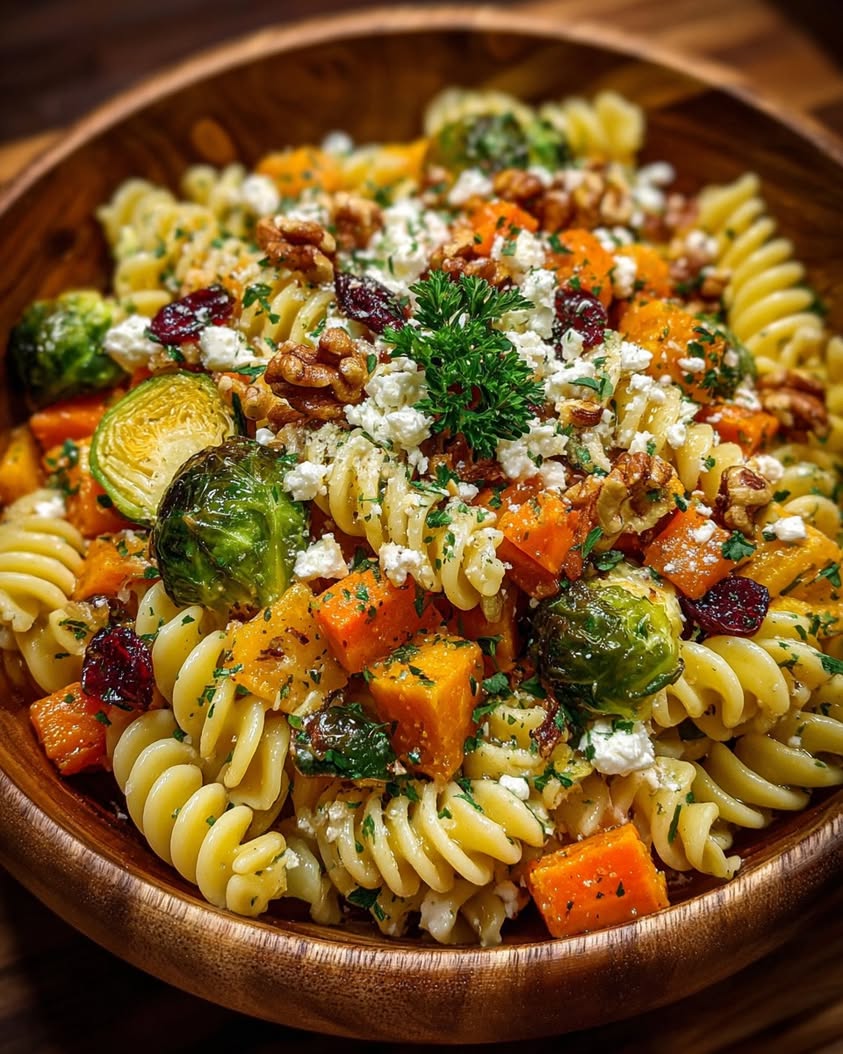
Roasted Butternut Squash, Carrots, Brussels Sprouts, and Sweet Potato Pasta: A Symphony of Fall Flavors
This roasted veggie pasta recipe is the ultimate celebration of autumn’s bounty. Imagine sweet butternut squash and carrots, earthy Brussels sprouts, and creamy sweet potatoes all caramelized to perfection in the oven. Tossed with al dente pasta and finished with tangy feta, toasted walnuts, and a pop of dried cranberries, this dish is a true comfort food masterpiece. It is a hearty, satisfying meal that will warm you from the inside out on a crisp fall evening.
Furthermore, this recipe transforms simple, wholesome ingredients into an extraordinary dining experience. The roasting process deepens the natural sugars in the vegetables, creating a complex flavor profile that is both savory and sweet. Each component plays a crucial role; the pasta provides a comforting base, the roasted vegetables offer a tender yet substantial texture, and the toppings add brightness and crunch. This roasted veggie pasta is not just a meal; it is a vibrant, colorful centerpiece for any dinner table.
Ultimately, this dish is incredibly versatile and forgiving. You can easily adapt it based on what you have in your pantry or to suit different dietary needs. It is a fantastic way to enjoy a generous serving of vegetables in a format that feels indulgent and special. Whether you are cooking for a busy weeknight or a festive gathering, this roasted veggie pasta delivers on flavor, nutrition, and visual appeal, making it a guaranteed crowd-pleaser.
Quick Recipe Highlights
- Flavor Profile: This roasted veggie pasta offers a beautiful balance of savory, sweet, and tangy notes. The natural sweetness of the roasted squash and carrots contrasts wonderfully with the earthy Brussels sprouts, salty feta, and tart cranberries.
- Texture: You will experience a delightful mix of tender, caramelized vegetables, chewy pasta, creamy feta cheese, and satisfyingly crunchy toasted walnuts in every single bite.
- Aroma: As the vegetables roast, your kitchen will fill with the warm, sweet, and earthy scent of caramelizing squash and potatoes, complemented by the toasty, nutty fragrance of the walnuts.
- Visual Appeal: This dish is a feast for the eyes with its vibrant orange squash, green Brussels sprouts, and bright red cranberries all tossed together, creating a stunning autumnal palette on the plate.
- Skill Level Needed: This is an accessible recipe perfect for cooks of all levels, from beginners to experts, as it primarily involves simple chopping and roasting techniques.
- Special Equipment: You will need a large sheet pan for roasting the vegetables and a large pot for cooking the pasta. A good chef’s knife is also recommended for prepping the vegetables efficiently.
Recipe Overview
- Difficulty Level: This roasted veggie pasta recipe is straightforward and classified as easy. The steps are simple, involving basic knife skills for chopping and a hands-off roasting method. There is no complex sauce-making or advanced techniques required, making it very approachable.
- Category: This dish falls perfectly into the categories of a main course for a vegetarian meal or a substantial side dish. It is ideal for a comforting family dinner, a potluck contribution, or a meal prep option for healthy lunches throughout the week.
- Cuisine: While pasta is Italian in origin, this particular preparation is best described as modern American comfort food. It draws inspiration from the farm-to-table movement, highlighting seasonal, roasted vegetables in a hearty and accessible format.
- Cost: This is a very cost-effective meal, especially during the fall and winter months when the core vegetables are in season and priced lower. Pasta, cranberries, and walnuts are pantry staples that offer great value for the flavor and texture they provide.
- Season: This recipe is quintessentially autumnal. It is designed to showcase the best of the fall harvest, including butternut squash, sweet potatoes, and Brussels sprouts. The warm, hearty nature of the dish is perfectly suited for cooler weather.
- Occasion: This roasted veggie pasta is incredibly versatile for occasions. It is cozy enough for a casual weeknight dinner, yet elegant and colorful enough to serve at a holiday gathering like Thanksgiving or a festive Friendsgiving celebration.
Why You’ll Love This Roasted Veggie Pasta
First and foremost, the taste and texture of this dish are truly exceptional. The roasting process caramelizes the natural sugars in the butternut squash, carrots, and sweet potato, giving them a deep, sweet, and savory flavor. Combined with the slightly charred, earthy notes from the Brussels sprouts, every forkful is a complex and satisfying experience. The addition of creamy feta, tart cranberries, and crunchy walnuts creates a symphony of textures and flavors that will keep you coming back for more. This is not a boring vegetable pasta; it is a culinary celebration in a bowl.
From a convenience standpoint, this roasted veggie pasta is a dream to prepare. A significant portion of the cooking time is hands-off, as the vegetables roast in the oven. This allows you to multitask, such as boiling the pasta, preparing a simple salad, or simply relaxing. The recipe uses simple, whole ingredients that are easy to find at any grocery store. Moreover, cleanup is relatively simple, especially if you line your sheet pan with parchment paper. It is the perfect solution for a delicious, home-cooked meal without spending hours in the kitchen.
Nutritionally, this dish is a powerhouse. It is packed with vitamins, minerals, and fiber from the diverse array of colorful vegetables. Butternut squash and sweet potatoes are rich in Vitamin A, while Brussels sprouts offer a great source of Vitamin C and K. The walnuts contribute healthy fats and protein, and the whole wheat pasta option adds extra fiber. This meal is deeply nourishing and will leave you feeling full and energized, not sluggish. It is a fantastic way to meet your daily vegetable intake in the most delicious way possible.
For social and entertaining value, this roasted veggie pasta is a true winner. It is easy to double or triple the recipe to feed a crowd, making it ideal for potlucks and parties. The vibrant colors make it visually stunning on a buffet table. Additionally, because it is a vegetarian dish, it can accommodate many guests’ dietary preferences. You can easily set up a “pasta bar” with extra toppings so people can customize their plates. It is a surefire way to impress your friends and family with your cooking skills.
Finally, this recipe is remarkably cost-effective and accessible. The ingredients are not exotic or expensive, especially when you choose vegetables that are in season. A single batch yields a large quantity, providing several meals for a family or leftovers for lunch. Compared to ordering takeout or buying pre-made meals, this homemade roasted veggie pasta is significantly cheaper and far healthier. It demonstrates that eating well does not have to be complicated or break the bank, making it a staple recipe for any household.
Historical Background and Cultural Significance
The concept of combining pasta with vegetables has deep roots in Italian cucina povera, or “poor kitchen,” which emphasizes creating delicious meals from inexpensive, readily available ingredients. Peasant farmers would often toss their pasta with whatever seasonal vegetables they had grown in their gardens. The method of roasting vegetables, however, has been a global cooking technique for centuries, used to concentrate flavors and create tender, caramelized results. This recipe is a modern fusion of these two timeless traditions, celebrating both the comfort of pasta and the robust flavor of oven-roasted produce.
Culturally, this dish reflects a significant shift in modern American eating habits towards plant-forward meals. It embodies the farm-to-table movement that gained momentum in the late 20th and early 21st centuries, which prioritizes fresh, local, and seasonal ingredients. The inclusion of ingredients like sweet potatoes and cranberries also nods to North American culinary traditions, particularly the harvest festivals and Thanksgiving meals where these foods are iconic. This roasted veggie pasta is a contemporary dish that speaks to our current desire for food that is both wholesome and deeply flavorful.
The evolution of this specific recipe is a story of culinary adaptation. Initially, pasta primavera, which features fresh spring vegetables, was a popular restaurant dish. Over time, cooks began applying the same principle to heartier, autumnal vegetables. The technique of roasting, rather than sautéing, became favored for the depth of flavor it imparts. The addition of toppings like nuts and cheese is a classic way to add texture and richness to vegetarian dishes, a practice seen across various cuisines from the Mediterranean to the Middle East.
Regional variations of this concept are endless. In the Mediterranean, you might find a similar dish with roasted eggplant, zucchini, and bell peppers, topped with olives and goat cheese. A Middle Eastern version could feature roasted squash and onions with chickpeas, tahini, and pomegranate seeds. In North America, the use of squash, sweet potato, and cranberries is distinctly seasonal and regional. This versatility is a testament to the universal appeal of combining starch, roasted vegetables, and bold toppings to create a satisfying and complete meal.
Ingredient Deep Dive
Butternut Squash is a winter squash native to the Americas and has been cultivated for thousands of years. It is a staple in Native American cuisine and was a vital food source for early colonists. Nutritionally, it is incredibly rich in Vitamin A, in the form of beta-carotene, which is essential for eye health, immune function, and skin integrity. It also provides a good amount of Vitamin C, fiber, and potassium. When selecting a squash, look for one that feels heavy for its size with a hard, matte rind free of soft spots. Store it in a cool, dark place for up to a month. For a quicker prep, you can often find pre-cubed butternut squash in the produce section.
Brussels Sprouts have a long history dating back to ancient Rome, but they were named after and popularized in Brussels, Belgium, in the 16th century. These miniature cabbages are part of the brassica family, known for their cancer-fighting compounds. They are an excellent source of Vitamin K, which is crucial for blood clotting and bone health, and Vitamin C. They also contain antioxidants and fiber. Choose firm, bright green sprouts that are compact and similar in size for even roasting. Avoid those with yellowing leaves. Store them unwashed in a plastic bag in the refrigerator’s crisper drawer. If you are not a fan of their sometimes bitter taste, roasting them completely transforms their flavor into something sweet and nutty.
Sweet Potatoes are a root vegetable with origins in Central or South America and have a history of cultivation spanning over 5,000 years. They were a cornerstone of many indigenous diets and were later spread around the world by explorers. They are famously rich in beta-carotene, just like butternut squash, and are also a great source of complex carbohydrates for sustained energy, fiber, and several B vitamins. Select firm sweet potatoes with smooth, taut skin. Store them in a cool, dark, well-ventilated place—not the refrigerator, as cold temperatures can alter their taste and texture. Their natural sweetness pairs beautifully with savory and tangy ingredients, making them a perfect component for this roasted veggie pasta.
Feta Cheese is a brined curd cheese with a storied history in Greece, where it has been produced for centuries and has Protected Designation of Origin (PDO) status. Traditionally made from sheep’s milk or a sheep-and-goat’s milk blend, it is known for its tangy, salty flavor and crumbly texture. It provides a good source of calcium and protein. The saltiness of feta is a critical counterpoint to the sweetness of the roasted vegetables in this dish. For the best flavor, look for feta sold in blocks submerged in brine. If you need a dairy-free alternative, seasoned tofu crumbles or a vegan feta can work well.
Walnuts are one of the oldest tree foods, with evidence of their consumption dating back to 7000 B.C. They were considered food for the gods in ancient Persia and were traded along the Silk Road. Nutritionally, they are a powerhouse of omega-3 fatty acids, which are beneficial for brain and heart health. They also contain antioxidants and protein. Toasting walnuts is a non-negotiable step as it deepens their flavor and makes them wonderfully crisp. Store walnuts in an airtight container in the refrigerator or freezer to prevent their oils from going rancid. For a nut-free version, toasted pumpkin seeds (pepitas) are an excellent substitute.
Common Mistakes to Avoid
- Overcrowding the Sheet Pan: If you pile all the vegetables onto one pan, they will steam instead of roast. This results in soggy, rather than caramelized, vegetables. Always use two pans if necessary to ensure each piece has enough space to breathe and brown properly.
- Uneven Vegetable Sizes: Cutting your vegetables into different sizes is a common error. Consequently, smaller pieces will burn before larger pieces are cooked through. Aim for a uniform, bite-sized dice to guarantee everything finishes roasting at the same time.
- Skipping the Walnut Toasting Step: Raw walnuts can taste somewhat bitter and have a soft texture. Toasting them unlocks a deep, nutty flavor and adds a crucial element of crunch to the final dish. It only takes a few minutes but makes a world of difference.
- Overcooking the Pasta: Since the pasta will be tossed with the warm vegetables, it will continue to cook slightly. Therefore, you should cook it to al dente, meaning it is still firm to the bite. Mushy pasta can ruin the texture of the entire meal.
- Not Seasoning the Vegetables Generously: Vegetables need a good amount of salt and pepper to truly shine. Do not be shy with your seasonings before they go into the oven. Proper seasoning enhances their natural flavors and is key to a well-balanced dish.
- Adding the Delicate Toppings Too Early: If you mix the feta, cranberries, and walnuts in with the hot pasta and vegetables immediately, the feta will melt completely and the walnuts may lose their crunch. Instead, add these toppings just before serving to preserve their distinct textures.
- Using a Dull Knife: Cutting tough squash and potatoes with a dull knife is not only frustrating but also dangerous. A sharp chef’s knife will make the prep work faster, safer, and more enjoyable, allowing for clean, even cuts.
- Neglecting to Preheat the Oven: A properly preheated oven is essential for getting that initial burst of heat that kick-starts the caramelization process. Putting vegetables into a cold oven will lead to uneven cooking and a lack of those beautiful browned edges.
Essential Techniques
Roasting Vegetables: Roasting is a dry-heat cooking method that uses hot air to cook food evenly and create a caramelized exterior. This technique is crucial for this recipe because it concentrates the vegetables’ natural sugars, transforming their flavor from simple and earthy to complex, sweet, and deeply savory. To master it, ensure your oven is fully preheated and your vegetables are coated evenly in oil and seasonings. The most common pitfall is overcrowding the pan, which leads to steaming. You will know you have succeeded when the vegetables are tender enough to be pierced easily with a fork and have golden-brown, slightly crispy edges.
Toasting Nuts: Toasting nuts is a simple process of heating them to bring out their essential oils and intensify their flavor. This step is important because it transforms walnuts from bland and sometimes bitter to rich, fragrant, and satisfyingly crisp. You can master it by spreading the nuts in a single layer on a dry sheet pan and baking them at 350°F for 5-10 minutes, watching carefully and shaking the pan occasionally. The common pitfall is walking away, as they can burn in seconds. Visual and aromatic cues for success are a golden-brown color and a wonderfully nutty smell that fills your kitchen.
Achieving Al Dente Pasta: Cooking pasta “al dente,” which means “to the tooth” in Italian, is the practice of boiling it until it is tender but still firm when bitten. This is vital for texture, especially in a dish like this where the pasta is tossed with other components. Al dente pasta holds its shape better and provides a more pleasing chew. To master it, follow the package instructions as a guide but start tasting the pasta a minute or two before the suggested time is up. A common mistake is simply setting a timer and walking away, which often leads to overcooked, mushy pasta. Perfect al dente pasta will have a firm core and no raw flour taste.
Pro Tips for Perfect Roasted Veggie Pasta
First, for easier peeling and cubing of the butternut squash, pierce it a few times with a knife and microwave it for 2-3 minutes. This will soften the skin just enough to make it much safer and simpler to cut through.
Secondly, consider roasting your vegetables on parchment paper or a silicone baking mat. This not only prevents sticking but also makes cleanup an absolute breeze, meaning you can enjoy your meal without dreading the washing up.
Thirdly, reserve about a cup of the starchy pasta water before you drain the pasta. If the final dish seems a bit dry when you toss everything together, adding a splash of this water will help create a light sauce that clings to the noodles and vegetables.
For an extra layer of flavor, toss your roasted vegetables with the pasta while both are still warm. This allows the pasta to absorb some of the delicious oils and flavors from the vegetables, creating a more cohesive and integrated dish.
If you have fresh herbs like rosemary or thyme, add a sprig or two to the sheet pan with the vegetables before roasting. The heat will release their aromatic oils, infusing the entire dish with a subtle, herbal fragrance.
Finally, for the best presentation and texture, serve the pasta in a large, wide bowl and sprinkle the feta, cranberries, and toasted walnuts on top just before bringing it to the table. This showcases all the beautiful components and keeps the toppings crisp.
Variations and Adaptations
For regional variations, you can take this roasted veggie pasta in many different directions. A Mediterranean twist would involve using zucchini, eggplant, and red bell peppers, and swapping the feta for goat cheese and the walnuts for pine nuts. For a more Provençal feel, add herbes de Provence to the roasting vegetables. An American Southwest version could include roasted corn, black beans, and a sprinkle of chili powder and lime juice, using cotija cheese instead of feta. The basic formula is incredibly adaptable to global flavor profiles.
Seasonal adaptations are simple and encouraged. In the spring, try asparagus, peas, and leeks. Summer calls for cherry tomatoes, zucchini, and yellow squash. The core autumn recipe is perfect for fall, and in the winter, you can rely on hardy root vegetables like parsnips, turnips, and more carrots. Using what is fresh and in season not only improves flavor but also makes the dish more economical and environmentally friendly.
Dietary modifications are straightforward. For a gluten-free roasted veggie pasta, simply use your favorite gluten-free pasta brand. To make it vegan, omit the feta cheese or use a vegan alternative, and ensure you use a vegan pasta (most dried pasta is, but always check the label). For a nut-free version, substitute the walnuts with toasted sunflower seeds or pumpkin seeds. You can also add plant-based protein by mixing in a can of drained and rinsed chickpeas to roast with the vegetables.
Flavor variations can keep this recipe exciting. Add a tablespoon of balsamic glaze drizzled over the top before serving for a sweet and tangy kick. For a spicy note, sprinkle with red pepper flakes. Incorporate different herbs like fresh sage or oregano. You could also stir in a couple of tablespoons of pesto when tossing the pasta and vegetables together for a herby, garlicky sauce base.
Serving and Presentation Guide
Plating this roasted veggie pasta beautifully enhances the dining experience. For a family-style meal, serve it in a large, shallow serving bowl or platter. This allows the vibrant colors of the orange squash, green Brussels sprouts, and red cranberries to be fully displayed. Use tongs or a large serving spoon to create a visually appealing mound. For individual plates, use a twist-and-lift motion with tongs to create a neat nest of pasta on the plate, ensuring some of the roasted vegetables are visible on top.
Garnishing is the final touch that elevates the dish. Beyond the essential feta, cranberries, and walnuts, consider a final drizzle of high-quality extra virgin olive oil. A sprinkle of fresh, chopped parsley or basil adds a pop of green color and fresh flavor. For a more elegant touch, a few microgreens scattered over the top look stunning. If you have them, a few fried sage leaves make a fragrant and crispy garnish that pairs perfectly with the squash.
Traditional accompaniments for a hearty pasta dish like this include a simple green salad with a light vinaigrette to cut through the richness. A slice of crusty, warm bread is perfect for soaking up any remaining oils and flavors on the plate. For a more substantial meal, grilled chicken or sausage can be served on the side for meat-eaters. A glass of dry white wine, as suggested in the pairing section, completes the classic Italian-inspired meal experience.
Wine and Beverage Pairing
Choosing the right wine can elevate your roasted veggie pasta meal significantly. A dry, crisp white wine like Sauvignon Blanc or Pinot Grigio is an excellent choice. Their high acidity and citrus notes cut beautifully through the richness of the roasted vegetables and the creaminess of the feta cheese. Alternatively, a light-bodied red wine with low tannins, such as a Pinot Noir, can also work wonderfully. Its red fruit flavors can complement the sweetness of the squash and the earthiness of the Brussels sprouts without overpowering the dish.
For non-alcoholic alternatives, there are many sophisticated options. Sparkling water with a twist of lemon or lime provides a clean, palate-cleansing effervescence. An herbal iced tea, such as peppermint or lemon verbena, offers a refreshing and flavorful pairing. For something more autumnal, a warm apple cider spiced with a cinnamon stick would harmonize beautifully with the sweet and savory notes in the pasta. These beverages provide complexity without any alcohol.
While not a traditional pairing for pasta, a light roast coffee or a herbal tea can be a pleasant way to finish the meal. A cup of coffee with its bitter notes can contrast the sweetness of the vegetables. A cup of chamomile or ginger tea can aid digestion after a hearty meal. Ultimately, the best beverage is one that you enjoy and that makes your dining experience more pleasurable.
Storage and Shelf Life
Proper storage is key to enjoying your roasted veggie pasta leftovers. Allow the dish to cool completely to room temperature before storing, but do not leave it out for more than two hours to prevent bacterial growth. Transfer the pasta to an airtight container and store it in the refrigerator. It is best to store the components separately if possible; keep the toasted walnuts in a separate bag at room temperature to maintain their crunch. The main pasta and vegetable mix will keep well for up to 4 days in the fridge.
Reheating instructions are important for restoring the dish’s texture. The best method is to reheat it in a skillet over medium heat with a tiny splash of water or broth. This helps to re-steam the pasta and vegetables gently without making them dry or overcooked. You can also use the microwave, but cover the dish with a damp paper towel to add moisture. Always stir halfway through reheating. Do not add the feta, cranberries, or walnuts until after the pasta has been reheated to preserve their texture.
Freezing this dish is possible but comes with some caveats. The pasta itself may become a bit soft upon thawing, and the vegetables can lose some of their firm texture. If you do choose to freeze it, omit the feta and walnut toppings. Store the cooled pasta and vegetable mix in a freezer-safe container for up to 2 months. Thaw overnight in the refrigerator before reheating. Be aware that the quality will not be the same as freshly made, but it will still be tasty for a quick meal.
Make Ahead Strategies
This roasted veggie pasta is an excellent candidate for make-ahead meal prep. You can break down the preparation over two days to make your cooking process much more efficient. The day before you plan to serve it, wash and chop all the vegetables. Store them in separate airtight containers or zip-top bags in the refrigerator. You can also toast the walnuts ahead of time; once cooled, store them in an airtight container at room temperature. This prep work cuts the active cooking time significantly on the day you assemble the dish.
For the best quality, it is ideal to roast the vegetables and cook the pasta on the same day you plan to serve the meal. However, you can roast the vegetables up to a day in advance. Let them cool completely, then store them in the fridge. When ready to serve, you can gently reheat them in the oven or in a skillet before combining them with the freshly cooked, hot pasta. This method helps to revive their texture better than reheating the entire assembled dish.
If you need to assemble the entire dish ahead of time, for instance, for a potluck, combine the roasted vegetables and pasta while they are both cooled. Store the mixture in the refrigerator. Hold the feta, cranberries, and walnuts separately. Before serving, let the pasta come to room temperature for about 30 minutes, or reheat it gently in a large pan. Then, stir in the fresh toppings. This strategy ensures the pasta is flavorful while the toppings retain their intended texture and freshness.
Scaling Instructions
Halving this roasted veggie pasta recipe is straightforward for smaller households. Simply divide all the ingredient quantities by two. Use one standard sheet pan for the reduced amount of vegetables to ensure they still have plenty of room to roast properly. The cook times will remain roughly the same, but keep a close eye on the vegetables as a smaller volume might cook a minute or two faster. This scaled-down version is perfect for a cozy dinner for two with maybe one lunch leftover.
Doubling or tripling the recipe is excellent for feeding a crowd. Multiply all ingredients accordingly. The key here is to use multiple sheet pans and roast them on different oven racks. It is crucial to rotate the pans halfway through the cooking time—switching their top/bottom positions and turning them 180 degrees—to ensure even cooking and browning. You will also need a very large pot to cook the increased amount of pasta, or cook it in two separate batches. This makes the recipe ideal for holiday gatherings or parties.
When scaling, be mindful of your equipment limitations. Ensure your largest mixing bowl is big enough to toss the final massive quantity of pasta and vegetables. If not, you may need to mix everything directly in the pot or divide the tossing between two bowls. Timing modifications are minimal for the roasting, but the time to bring a large pot of water to boil may increase slightly. Always taste and adjust the final seasoning after combining everything, as larger batches often require a bit more salt and pepper.
Nutritional Deep Dive
This roasted veggie pasta is a nutritionally balanced meal. From a macronutrient perspective, the pasta and sweet potatoes provide complex carbohydrates for sustained energy. The vegetables and whole wheat pasta offer a significant amount of dietary fiber, which aids in digestion and promotes satiety. The walnuts and olive oil contribute healthy monounsaturated and polyunsaturated fats, including omega-3s, which are beneficial for heart and brain health. The feta cheese adds a modest amount of protein and fat. Overall, it is a well-rounded dish that provides energy, keeps you full, and supports overall health.
The micronutrient profile is exceptionally rich due to the variety of colorful vegetables. Butternut squash and sweet potatoes are loaded with beta-carotene, which the body converts to Vitamin A, essential for vision, immune function, and skin health. Brussels sprouts are a powerhouse of Vitamin K for bone health and blood clotting, and Vitamin C for immune support and collagen production. Carrots add more Vitamin A, and walnuts provide important minerals like manganese and copper. Eating a diverse array of plants is key to obtaining a wide spectrum of vitamins and minerals, and this dish delivers on that front.
For those mindful of calorie intake or practicing portion control, this dish can easily be adapted. You can reduce the amount of pasta and increase the proportion of non-starchy vegetables like Brussels sprouts. Using a little less olive oil during roasting is another simple way to lower the fat and calorie content. The dish is inherently filling due to its high fiber and water content from the vegetables, which helps with portion control naturally. Paying attention to serving size is the most effective strategy for weight management while still enjoying this delicious and nutritious meal.
Dietary Adaptations
For a gluten-free version of this roasted veggie pasta, the adaptation is very simple. Substitute the regular pasta with a high-quality gluten-free pasta made from brown rice, quinoa, or a blend of gluten-free grains. Be sure to carefully follow the cooking instructions on the package, as gluten-free pasta can have a different texture and cooking time. All the other core ingredients—the vegetables, olive oil, feta, walnuts, and cranberries—are naturally gluten-free, making this an easy switch.
To create a vegan roasted veggie pasta, you need to address two ingredients: the pasta and the feta cheese. First, confirm that your dried pasta does not contain egg; most supermarket dried pasta is vegan, but always check the label. Second, omit the feta cheese entirely or replace it with a vegan alternative. There are many excellent vegan feta cheeses available made from tofu, almonds, or coconut oil. The roasted vegetables, walnuts, and cranberries are all plant-based, so with these simple swaps, you can enjoy a fully vegan and equally delicious meal.
For a dairy-free adaptation, you follow the same principle as the vegan version regarding the feta cheese. Simply leave it out or use a dairy-free feta substitute. The rest of the recipe is naturally dairy-free. You might find that the salty, tangy element is missed, so you could add a sprinkle of nutritional yeast for a cheesy flavor or just a bit more salt to balance the sweetness of the vegetables.
Troubleshooting Guide
If your vegetables are soggy instead of caramelized, the most likely cause is overcrowding the pan. When vegetables are too close together, they release steam and boil in their own moisture. The solution for next time is to use two sheet pans to spread them out in a single layer. If you are faced with soggy vegetables now, you can try spreading them back on a pan and putting them under the broiler for a few minutes to crisp up the edges, watching carefully to prevent burning.
If the final dish tastes bland, the issue is almost always under-seasoning. The vegetables need a generous amount of salt before roasting to enhance their natural flavors. To fix a bland batch, you can season it at the end. Add more salt and freshly ground black pepper to taste. A squeeze of fresh lemon juice can also brighten all the flavors. Another trick is to drizzle with a flavorful finishing oil or a splash of balsamic glaze just before serving to add complexity.
If your pasta becomes gummy or sticky, it may have been overcooked or not rinsed properly. For future reference, always cook pasta to al dente and reserve a cup of the starchy cooking water before draining. Do not rinse the pasta after draining, as the starch helps the sauce cling to it. If your pasta is already sticky, tossing it with a little of the reserved pasta water or a tablespoon of olive oil can help loosen it and improve the texture.
Recipe Success Stories
We have received wonderful feedback from our community of home cooks who have tried this roasted veggie pasta. One reader, Sarah from Colorado, shared that it has become her family’s favorite Meatless Monday meal. Her children, who were previously skeptical of Brussels sprouts, now ask for seconds because the roasting makes them “taste like candy.” She appreciated how the recipe helped her introduce more vegetables to her kids in a format they genuinely enjoy. Her tip was to cut the vegetables extra small for little ones.
Another success story comes from Mark, who adapted the recipe for a keto diet. He replaced the pasta with zucchini noodles (zoodles) and added extra walnuts and feta for fat and protein. He reported that it was incredibly satisfying and felt just as indulgent as the original. His experience shows the fantastic adaptability of this recipe framework. He also mentioned that adding a grilled chicken breast on top made it a complete and filling low-carb dinner for his fitness goals.
Many readers have also shared their beautiful photos on social media, showcasing the dish’s stunning visual appeal. A common piece of advice from these home photographers is to use natural light when taking pictures and to garnish with extra fresh herbs for a pop of color. Their images, filled with the warm hues of autumn, are a testament to how this roasted veggie pasta is not only a delight to eat but also a feast for the eyes.
Frequently Asked Questions
Can I use different vegetables in this roasted veggie pasta? Absolutely. The recipe is very versatile. Great alternatives include cauliflower florets, broccoli, red onion wedges, or parsnips. Just try to cut them to a similar size as the other vegetables for even cooking. The key is to use vegetables that roast well and complement the sweet and savory flavor profile.
What type of pasta works best? Short, sturdy pasta shapes are ideal because they hold up well to the chunky roasted vegetables. Excellent choices include penne, rigatoni, fusilli, or farfalle. These shapes have nooks and crannies that catch the small bits of vegetable and feta, ensuring a perfect bite every single time.
Can I make this recipe ahead of time? Yes, you can prepare the components ahead. Roast the vegetables and store them in the fridge for up to a day. Cook the pasta and toss it with a little oil to prevent sticking. Assemble and reheat gently before serving, adding the fresh toppings at the last moment for the best texture.
Is this roasted veggie pasta A hearty and colorful pasta dish featuring roasted vegetables, sweet cranberries, crunchy walnuts, and tangy feta cheese. You can customize the seasonings to taste.
PrintRoasted Butternut Squash, Carrots, Brussels Sprouts, and Sweet Potato Pasta with Cranberries & Toasted Walnuts, Feta
Description
Ingredients
For the Crust:
Instructions
1. Prepare the Crust:
Notes

I’m Shaykee—born in Morocco, seasoned across continents. From airplane galleys to home kitchens, I share the flavors and stories that shaped my journey.