
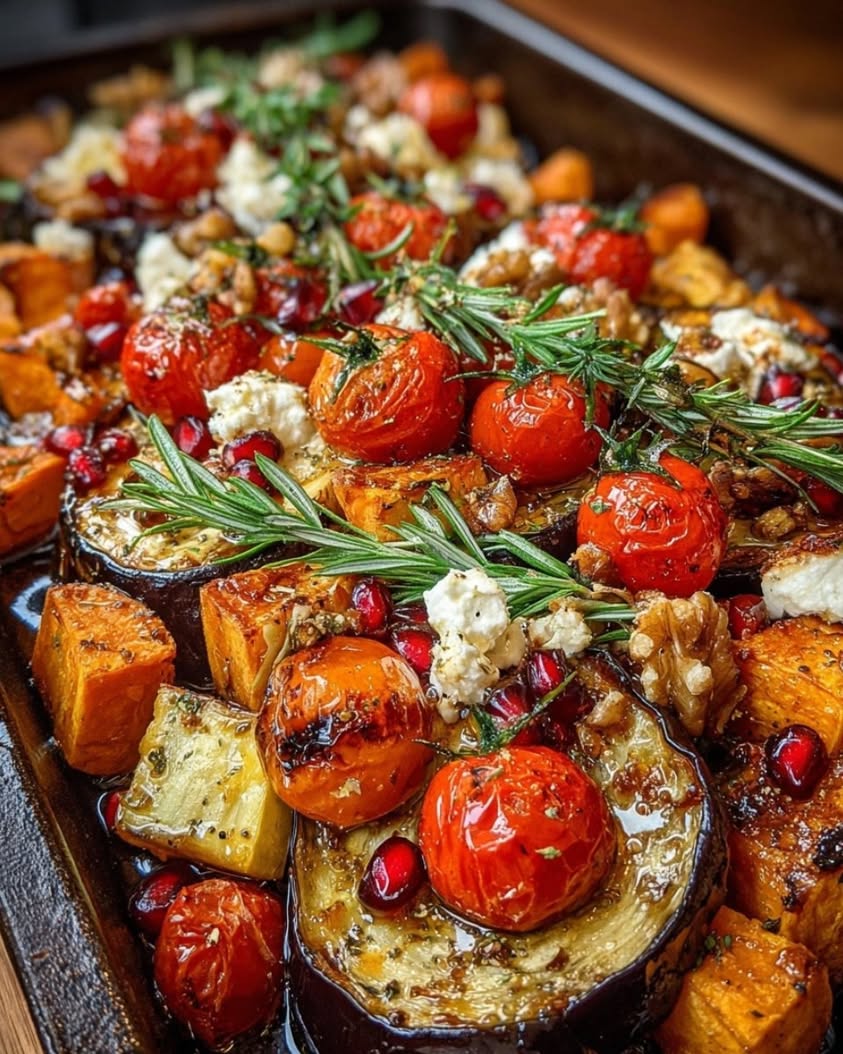
Roasted Eggplant, Cherry Tomatoes & Sweet Potato with Feta, Toasted Walnuts & Pomegranate-Honey Glaze: A Symphony of Sweet and Savory
This stunning recipe for roasted eggplant, cherry tomatoes, and sweet potato with feta, toasted walnuts, and a pomegranate-honey glaze is a true celebration of flavor and texture. It transforms humble vegetables into an extraordinary dish that will impress at any dinner table. The combination of creamy roasted veggies, crunchy walnuts, and tangy feta, all drizzled with a sweet pomegranate-honey glaze, creates a complex and satisfying experience. Ultimately, this dish proves that vegetarian cooking can be both deeply flavorful and visually spectacular.
Imagine tender cubes of sweet potato and eggplant, their edges caramelized from the oven’s heat, bursting with natural sweetness. Juicy cherry tomatoes collapse into the mix, adding a bright, acidic counterpoint. Meanwhile, the final assembly brings everything together with salty feta crumbles, earthy toasted walnuts, and that incredible glaze. This pomegranate-honey glaze is the star, weaving a thread of floral sweetness and tangy depth through every single bite. Consequently, this recipe is perfect for anyone seeking an easy yet elegant side dish or a light main course.
The beauty of this roasted eggplant, cherry tomatoes, and sweet potato dish lies in its versatility. It works wonderfully as a hearty side for a holiday feast, a standout component on a buffet, or a simple yet satisfying weeknight meal. Furthermore, the process is straightforward, relying on the magic of roasting to concentrate the vegetables’ flavors. You will find the aroma filling your kitchen utterly irresistible. This dish is a guaranteed crowd-pleaser that will have everyone asking for the recipe.
Quick Recipe Highlights
- Flavor Profile: This dish masterfully balances sweet, savory, tangy, and earthy notes. The natural sweetness of the roasted vegetables harmonizes with the salty feta and the complex, tart-sweet pomegranate-honey glaze. Every mouthful is a delightful journey for your taste buds.
- Texture: You are treated to a wonderful contrast of creamy soft roasted vegetables, the satisfying crunch of toasted walnuts, and the delicate crumble of feta cheese. This interplay makes the dish exciting and far from monotonous.
- Aroma: As it roasts, the kitchen fills with the warm, sweet scent of caramelizing sweet potato and eggplant, complemented by the earthy fragrance of roasting tomatoes. The final drizzle of the pomegranate-honey glaze adds a final aromatic lift of fruity sweetness.
- Visual Appeal: This dish is a feast for the eyes with its vibrant color palette. You see deep purple eggplant, orange sweet potato, red tomatoes, white feta, and the glossy, deep red glaze, all finished with the brown hues of the walnuts.
- Skill Level Needed: This is an accessible recipe for cooks of all levels, from beginners to experts. The techniques involve simple chopping, tossing, and roasting, requiring no advanced culinary skills for a fantastic result.
- Special Equipment: You only need a basic sheet pan and mixing bowls. A good chef’s knife for prepping the vegetables is the most important tool, making this recipe very approachable for any home cook.
Recipe Overview
- Difficulty Level: This roasted vegetable dish is classified as easy because it involves fundamental kitchen skills like chopping and roasting. The steps are sequential and simple; furthermore, there is very little hands-on time after the vegetables go into the oven. You do not need any special training to achieve a perfectly caramelized and flavorful result.
- Category: This versatile recipe fits into multiple categories beautifully. It serves as a spectacular vegetarian main course, a standout side dish for roasted meats or fish, and a brilliant addition to a potluck or holiday spread. Its flexibility is one of its greatest strengths.
- Cuisine: The dish draws inspiration from Mediterranean and Middle Eastern culinary traditions, which often feature roasted vegetables, feta cheese, walnuts, and pomegranate. However, it is a modern fusion recipe that borrows these beloved elements to create something uniquely delicious and contemporary.
- Cost: This is a very cost-effective recipe, especially when you choose vegetables that are in season. Eggplant, sweet potatoes, and cherry tomatoes are typically affordable. Ingredients like feta, walnuts, and pomegranate molasses are pantry investments that last for multiple recipes.
- Season: This dish is truly a year-round winner. It shines in the fall and winter with its hearty sweet potatoes and warm spices, but it also feels light and bright enough for spring and summer meals, especially when served at room temperature.
- Occasion: It is perfect for everything from a casual family dinner to a formal holiday gathering like Thanksgiving or Christmas. Its stunning presentation makes it special, while its simple preparation keeps it stress-free for the cook.
Why You’ll Love This Roasted Vegetable Medley
You will fall in love with the incredible taste and texture appeal of this dish. The roasted eggplant becomes meltingly tender and almost buttery, while the sweet potato caramelizes at the edges for a deep, rich flavor. The cherry tomatoes burst, releasing their juicy acidity that cuts through the richness. Additionally, the combination of creamy roasted veggies, crunchy walnuts, and tangy feta creates a symphony in your mouth. Finally, the pomegranate-honey glaze ties everything together with its unique sweet-tart profile, ensuring no single bite is boring.
The convenience and preparation benefits are another major reason to adore this recipe. It requires minimal active time; you simply chop the vegetables, toss them with oil and seasonings, and let the oven do the hard work. This makes it an ideal choice for a busy weeknight or when you are entertaining and want to minimize last-minute fuss. Furthermore, the ingredients are straightforward and easy to find at any well-stocked grocery store. You can easily prepare the vegetables ahead of time, storing them in the fridge until you are ready to roast.
From a nutritional standpoint, this dish is a powerhouse. You are consuming a wide array of vitamins, minerals, and fiber from the colorful vegetables. Eggplant provides antioxidants and fiber, sweet potatoes are loaded with Vitamin A, and tomatoes offer Vitamin C and lycopene. The walnuts contribute healthy omega-3 fats and protein, while the feta adds a boost of calcium. Consequently, this is a meal that makes you feel as good as it tastes, supporting overall health and well-being.
The social and entertaining value of this roasted vegetable platter is immense. Its vibrant, colorful presentation is guaranteed to draw compliments from your guests. It looks like something from a gourmet restaurant, yet it is deceptively simple to make. Serving a beautiful, flavorful vegetarian option is also a thoughtful gesture for diverse groups of eaters. It becomes a fantastic centerpiece for a meal, encouraging conversation and shared enjoyment around the table.
Finally, the cost-effectiveness and accessibility of this recipe cannot be overstated. It transforms inexpensive, humble vegetables into a dish that feels luxurious and special. You do not need expensive cuts of meat or rare ingredients to create a memorable dining experience. Moreover, the recipe is easily adaptable; you can swap in other seasonal vegetables based on what is available or on sale at your market. This flexibility makes it a reliable and budget-friendly go-to recipe for any home cook.
Historical Background and Cultural Significance
The concept of roasting vegetables over fire is one of humanity’s oldest cooking methods. While this specific recipe is a modern creation, its roots are deeply embedded in the agricultural traditions of the Mediterranean and Middle East. Cultures in these regions have cultivated eggplants, tomatoes, and pomegranates for centuries. They mastered the art of transforming these simple, sun-ripened ingredients into deeply flavorful dishes using techniques like roasting and combining them with local cheeses and nuts. This dish is a contemporary homage to that timeless, rustic approach to cooking.
Each component carries its own cultural importance. The eggplant, for instance, journeyed from Southeast Asia to the Middle East and Mediterranean, where it became a staple. Similarly, the pomegranate holds symbolic value in many cultures, representing prosperity and abundance. Feta cheese is protected by Greek law, highlighting its significance to that nation’s identity. Toasting nuts is a universal technique to enhance flavor, practiced across countless global cuisines. Therefore, this recipe is a culinary mosaic, weaving together ingredients with rich and diverse histories.
The evolution of this recipe follows the trend of modern fusion cuisine. It takes classic, time-honored pairings—like eggplant with tomatoes or walnuts with pomegranate—and reinterprets them for today’s palate. The use of a sweet potato, a New World vegetable, alongside Old World ingredients like eggplant, is a perfect example of this evolution. The pomegranate-honey glaze itself is a simplified, modern take on traditional Middle Eastern sauces and dressings that often combine fruit syrups with savory dishes. This reflects how recipes continuously adapt and change over time.
Regional variations of this concept are endless. In Greece, you might find a similar dish called briam, a roasted vegetable medley. In the Middle East, roasted vegetables are often served with tahini-based sauces. A Turkish version might include a sprinkle of pungent oregano and a drizzle of pomegranate molasses. This particular recipe for roasted eggplant, cherry tomatoes, and sweet potato draws inspiration from these traditions but stands on its own as a unique, globally-inspired creation. It celebrates the best of multiple culinary worlds on a single sheet pan.
Ingredient Deep Dive
Eggplant, or aubergine, has a storied history originating in India and spreading along trade routes to the Middle East and Europe. For a long time, Europeans viewed it with suspicion, but it eventually became a cornerstone of Mediterranean cooking. Nutritionally, it is low in calories and a good source of fiber and antioxidants. When selecting eggplants, choose ones that are firm, heavy for their size, with smooth, shiny skin and a green stem. Avoid any with soft spots or browning. Store them at cool room temperature for a day or two, or in the refrigerator crisper for slightly longer. If you need a substitute, zucchini or portobello mushrooms can provide a similar meaty texture.
Sweet potatoes have a distinct history from the white potato, with origins in Central or South America. They were a vital crop for many indigenous cultures and later spread across the globe. They are famously rich in beta-carotene, which your body converts to Vitamin A, and are also a great source of Vitamin C, fiber, and complex carbohydrates. Look for firm sweet potatoes with smooth, unbruised skin. Store them in a cool, dark, well-ventilated place—not the refrigerator, as cold temperatures can negatively affect their flavor and texture. As a substitute, you can use butternut squash or regular potatoes, though the flavor profile will change.
Cherry tomatoes are a cultivated variety of the tomato, which is native to western South America. Their development made tomatoes more versatile and easier to eat raw or cooked. They are packed with Vitamin C, potassium, and the antioxidant lycopene. Select cherry tomatoes that are brightly colored, firm, and still attached to their vine if possible, as this often indicates better flavor and freshness. Store them at room temperature out of direct sunlight to preserve their taste and texture; refrigeration can make them mealy. For a substitute, you can use diced regular tomatoes or even sun-dried tomatoes for a more intense flavor.
Feta cheese is a brined curd cheese with a protected designation of origin (PDO) in the European Union, meaning authentic feta must be made in Greece from sheep’s milk or a sheep and goat milk blend. It has a crumbly texture and a tangy, salty flavor that cuts through rich dishes. It provides a good amount of calcium and protein. Look for feta blocks stored in brine for the best flavor and texture. Store it in its brine in the refrigerator. For a dairy-free version, firm tofu crumbled and marinated in lemon juice and salt can work, or a vegan feta alternative.
Pomegranate molasses is a reduction of pomegranate juice, sugar, and sometimes lemon juice. It is a staple in Middle Eastern cooking, adding a intense sweet-and-sour note to dishes. It is rich in antioxidants and provides a unique, complex flavor that is difficult to replicate. You can find it in well-stocked grocery stores, international markets, or online. If you cannot find it, you can make a substitute by simmering pomegranate juice until it reduces to a syrupy consistency, or use a mixture of balsamic glaze and a little lemon juice for a similar sweet-tart effect.
Common Mistakes to Avoid
- Overcrowding the Pan: This is the most common error. If you pile all the vegetables onto one small pan, they will steam instead of roast. You need space for the hot air to circulate and create that desirable caramelization. Always use a large enough baking sheet or split the vegetables between two pans.
- Underseasoning the Vegetables: Vegetables need a generous amount of seasoning before roasting. Do not be shy with the salt, pepper, and dried herbs at the oil-tossing stage. The seasoning penetrates the vegetables as they cook and is crucial for building a deep, foundational flavor.
- Using a Dull Knife: Chopping the eggplant and sweet potato with a dull knife is not only frustrating but also dangerous. A sharp chef’s knife will give you clean, even cuts, which ensures the vegetables cook at the same rate. This is a fundamental prep step for success.
- Skipping the Walnut Toasting: Toasting the walnuts is a non-negotiable step for maximizing flavor. Raw walnuts can be somewhat bitter and soft. Toasting them in a dry pan for a few minutes unlocks their nutty, earthy aroma and gives them a fantastic crunch that elevates the entire dish.
- Adding the Feta Too Early: Feta cheese will melt and become greasy if it is exposed to the high heat of the oven. You must always add the feta crumbles after the vegetables have finished roasting and have had a minute or two to cool down. This preserves its texture and tangy flavor.
- Neglecting the Glaze Consistency: The pomegranate-honey glaze should be syrupy enough to coat the back of a spoon. If it is too thin, it will make the dish watery; if it is too thick, it will not drizzle nicely. Simmer it gently until it reaches the perfect, glossy consistency.
- Cutting Vegetables Inconsistently: If your sweet potato cubes are much larger than your eggplant cubes, they will not cook evenly. Aim for a uniform, bite-sized dice across all vegetables. This attention to detail during prep guarantees that every piece is perfectly cooked at the same time.
- Forgetting to Preheat the Oven: A properly preheated oven is essential for immediate roasting and caramelization. If you put the pan into a cold oven, the vegetables will start to stew and release their water, preventing them from getting those beautiful, browned edges.
Essential Techniques
Uniform Vegetable Chopping is the first critical technique. Cutting your eggplant, sweet potato, and tomatoes to a consistent size ensures they roast evenly. If pieces are different sizes, the smaller ones will burn before the larger ones are tender. Use a sharp chef’s knife and aim for ¾-inch to 1-inch cubes. This precision guarantees that you achieve a perfect texture throughout—creamy softness without any undercooked hard bits or overcooked mush. The visual appeal of the final dish is also greatly enhanced by uniform pieces.
Proper Sheet Pan Roasting is the heart of this recipe. The goal is caramelization, not steaming. To achieve this, you must toss the vegetables in enough oil to coat them lightly but thoroughly, which promotes browning and prevents sticking. Then, spread them in a single layer with some space between each piece. This allows the oven’s dry heat to circulate, cooking the vegetables and creating those delicious, concentrated flavors and slightly crispy edges. Crowding the pan is the enemy of good roasting, as it traps moisture.
Toasting Nuts is a simple but transformative technique. Toasting walnuts in a dry skillet over medium heat for 3-5 minutes wakes up their oils and intensifies their nutty flavor. You will know they are done when they become fragrant and take on a slightly darker color. Shake the pan frequently to prevent burning. This step moves the walnuts from a mere ingredient to a powerful flavor and textural component. It adds a layer of depth that raw nuts simply cannot provide.
Reducing a Glaze is the final finesse technique. Simmering the pomegranate juice, honey, and lemon juice together allows the water to evaporate, concentrating the flavors and thickening the liquid into a syrup. This process sweetens the mixture naturally and creates a glossy, luxurious sauce that clings to the vegetables instead of running off. Watch it carefully towards the end, as it can go from perfectly reduced to burnt quickly. A good glaze should coat the back of a spoon and have a balanced sweet-tart taste.
Pro Tips for Perfect Roasted Vegetables
First, always pat your chopped eggplant dry with a paper towel before tossing it with oil. Eggplant can hold a surprising amount of water, and removing surface moisture helps it roast and brown instead of steam.
For extra crispy edges on your sweet potatoes, give them a 5-minute head start in the oven before adding the eggplant and tomatoes. This accommodates their slightly longer cooking time.
Add a whole, unpeeled garlic clove or two to the sheet pan while roasting. The garlic will become soft, sweet, and spreadable, and you can squeeze it out to mix with the vegetables for a flavor boost.
Let the roasted vegetables rest for 5 minutes after removing them from the oven before adding the feta and walnuts. This prevents the cheese from melting into a greasy mess upon contact.
Finish the dish with a final sprinkle of flaky sea salt, such as Maldon, right before serving. The large, crunchy salt flakes provide a delightful textural contrast and a burst of salinity.
If your walnuts are already toasted, store them in the freezer. This keeps them fresh and crisp, and you can use them straight from the freezer for this and other recipes.
For a more complex herb flavor, use a combination of dried oregano and thyme when seasoning the vegetables before roasting. The dry herbs hold up well to the high heat and infuse the oil.
Serve the dish warm or at room temperature. Allowing it to sit for a short while lets the flavors meld together even more beautifully.
Variations and Adaptations
For regional variations, you can easily take this dish on a world tour. Give it an Italian flair by swapping the walnuts for pine nuts, using rosemary instead of oregano, and replacing the feta with fresh mozzarella pearls. For a Middle Eastern twist, add a teaspoon of cumin to the vegetables before roasting and finish with a drizzle of tahini sauce alongside the pomegranate glaze. A Spanish version could include smoked paprika and sherry vinegar in the dressing.
Seasonal adaptations make this a year-round staple. In the summer, incorporate zucchini and yellow squash. During autumn, add cubes of butternut squash or Brussels sprouts halves. In the winter, root vegetables like parsnips or carrots work wonderfully. Spring might inspire you to add asparagus tips during the last 10 minutes of roasting. The core technique remains the same; you are simply rotating the vegetable cast based on what is freshest and most abundant.
Dietary modifications are straightforward. For a vegan version, omit the feta or use a vegan alternative and ensure your honey is substituted with maple syrup or agave nectar in the glaze. To make it nut-free, simply leave out the walnuts and consider using toasted pumpkin seeds (pepitas) for a similar crunch. For a lower-carb option, reduce the amount of sweet potato and increase the volume of eggplant and cherry tomatoes, which are lower in carbohydrates.
Flavor variations can keep the recipe exciting. Add a pinch of chili flakes or a dash of cayenne pepper to the oil for a spicy kick. A tablespoon of balsamic vinegar added to the glaze instead of lemon juice will create a deeper, sweeter flavor profile. You could also experiment with different cheeses; goat cheese crumbles or shaved Parmesan would be delicious alternatives to the feta.
Texture modifications can cater to personal preference. If you love maximum crispiness, roast the vegetables on a preheated sheet pan. For an even creamier texture, you can roast a whole head of garlic alongside the vegetables and squeeze the soft cloves over the finished dish. If you prefer a softer nut, you can skip toasting the walnuts, though toasting is highly recommended for flavor depth.
Presentation alternatives offer creative freedom. Instead of mixing everything in a large bowl, you can artfully arrange the roasted vegetables on a platter and drizzle the glaze over the top in a zig-zag pattern. Serve the feta, walnuts, and extra glaze in small bowls on the side, allowing guests to build their own plates. For individual portions, serve the mixture in small, hollowed-out sweet potato skins or on a bed of greens like arugula.
Serving and Presentation Guide
Plating techniques can elevate this dish from homely to haute cuisine. For a family-style presentation, pile the roasted vegetable mixture onto a large, rustic wooden board or a beautiful white platter to let the colors pop. Drizzle the pomegranate-honey glaze over the top in an artistic pattern, then sprinkle with the feta and walnuts. For individual servings, use a ring mold to create a neat, vertical stack of the vegetables in the center of each plate, then carefully remove the mold and garnish.
Garnishing ideas extend beyond the recipe itself. While the feta, walnuts, and glaze are essential garnishes, consider adding a final flourish of fresh, soft herbs. Chopped fresh parsley, mint, or basil scattered over the top adds a burst of color and fresh aroma. A handful of fresh pomegranate arils provides a juicy, jewel-like sparkle that reinforces the flavor of the glaze. A light dusting of sumac or za’atar can also add an extra layer of Middle Eastern flavor and visual interest.
Traditional accompaniments for a dish like this are often other Mediterranean staples. Serve it alongside grilled lamb chops, chicken kebabs, or a whole roasted fish. It also pairs beautifully with a simple grain like couscous, quinoa, or orzo to soak up the delicious juices and glaze. A crisp, green salad with a lemon vinaigrette provides a refreshing counterpoint to the rich, roasted flavors of the main dish.
Modern serving suggestions might include using it as a sophisticated topping for bruschetta or crostini. You can also fold the cooled vegetable mixture into cooked pasta or quinoa for a hearty grain bowl. Another trendy option is to serve it as part of a “bowl” meal, with a base of greens or grains, the roasted vegetables, and a protein like chickpeas or grilled halloumi, with the glaze acting as the dressing.
Temperature considerations are flexible. This dish is fantastic served warm straight from the oven, which is when the textures are most distinct. However, it is also excellent at room temperature, making it a perfect make-ahead option for picnics, potlucks, or part of a buffet. I do not recommend serving it chilled, as the flavors will be muted and the textures of the roasted vegetables can become less appealing.
Portion control tips are useful for different settings. As a main course for a vegetarian meal, plan for about one-quarter of the recipe per person. As a side dish, it can comfortably serve 4-6 people. If you are serving it as part of a larger spread with multiple other dishes, it can be stretched to serve 8 or more. The recipe is easily doubled for a crowd, but be sure to use multiple sheet pans to avoid overcrowding.
Wine and Beverage Pairing
Wine pairings for this dish should complement its sweet, savory, and tangy profile. A crisp, dry Rosé from Provence is a fantastic choice, as its bright acidity and red fruit notes harmonize with the tomatoes and pomegranate without overpowering the dish. A medium-bodied white wine like a Viognier or a Grenache Blanc, with its stone fruit flavors and slight floral notes, can also stand up to the diverse flavors. For red wine lovers, a light Pinot Noir with low tannins and cherry notes is a safe bet that won’t clash with the sweetness of the vegetables or the glaze.
Non-alcoholic alternatives can be just as sophisticated. A sparkling pomegranate juice or a pomegranate spritzer mirrors the glaze’s flavor and provides a refreshing, bubbly contrast. Iced hibiscus tea offers a tart, cranberry-like flavor that pairs beautifully with the sweet potatoes and feta. For a creamier option, a chai tea latte served cold or warm can complement the warm spices from the roasting process and the sweetness of the dish.
Coffee and tea pairings are more suitable if serving this for a brunch or lunch. A light roast coffee with citrus or floral notes can highlight the acidity in the tomatoes and lemon juice. Alternatively, a cup of Earl Grey tea, with its bergamot orange essence, provides a fragrant and elegant pairing that cuts through the richness of the roasted vegetables and cheese beautifully.
Temperature considerations are key for beverages. White wines, rosés, and non-alcoholic spritzers should be served well-chilled to provide a refreshing counterpoint to the warm, roasted vegetables. Red wines should be served slightly below room temperature. Hot tea or coffee should be freshly brewed and served piping hot if the dish is part of a warm brunch.
Serving suggestions for beverages include offering a choice to guests. You could create a small beverage station with a bottle of Rosé, a pitcher of pomegranate spritzer, and a carafe of iced hibiscus tea. This allows everyone to choose their preferred drink to accompany the meal. Always ensure water is readily available on the table to cleanse the palate between bites of the flavorful vegetables and cheese.
Storage and Shelf Life
Storage methods for this dish are straightforward but important for maintaining quality. Allow the roasted vegetable mixture (without the feta, walnuts, and glaze) to cool completely to room temperature. Then, transfer it to an airtight container and store it in the refrigerator. You should store the feta, toasted walnuts, and remaining pomegranate-honey glaze in separate containers. This prevents the walnuts from getting soggy, the feta from dissolving, and the vegetables from becoming mushy.
Temperature requirements are simple: refrigeration is essential. The assembled dish, or its components, must be stored in the refrigerator at or below 40°F (4°C). Do not leave the roasted vegetables at room temperature for more than two hours, as this can allow harmful bacteria to grow. The glaze, due to its high sugar content, can be stored in the fridge but may thicken significantly when cold.
Container recommendations are key to preserving texture. Use glass or BPA-free plastic containers with tight-fitting lids. For the walnuts, a zip-top bag or a small jar is perfect. Storing the components separately is the best practice for maximizing shelf life and quality. If you must store the fully assembled dish, expect the textures to soften and meld together more, which can still be delicious but is less distinct.
Signs of spoilage to watch for include an off or sour smell, visible mold (often fuzzy green, white, or black spots), or a slimy texture on the vegetables. If you notice any of these signs, you must discard the entire dish immediately. The walnuts can become rancid over time, which you will detect by a sharp, bitter, or paint-like smell.
Reheating instructions depend on your preference. For warm vegetables, spread the desired portion on a baking sheet and reheat in a 350°F (175°C) oven for 10-15 minutes until warmed through. This method helps re-crisp the edges. You can also reheat gently in a microwave, though this will result in softer vegetables. Always add the cold feta, walnuts, and a fresh drizzle of glaze after reheating.
Freezing guidelines are not generally recommended for this specific recipe. The high water content of the eggplant and tomatoes means they will become very watery and mushy upon thawing. The texture of the defrosted vegetables will be unappealing. The feta also does not freeze well, as it becomes crumbly and loses its creamy texture. It is best enjoyed fresh or refrigerated for a few days.
Make Ahead Strategies
Prep timeline for this dish is very flexible, making it an entertainer’s dream. You can chop all the vegetables—the eggplant, sweet potato, and cherry tomatoes—up to 24 hours in advance. Store them in separate airtight containers or zip-top bags in the refrigerator. The walnuts can be toasted 2-3 days ahead of time and stored at room temperature in a sealed container. The pomegranate-honey glaze can be prepared and refrigerated for up to a week.
Storage between steps is simple with the right organization. Keep the pre-chopped vegetables chilled until you are ready to roast. About an hour before you plan to cook, take the vegetables out of the fridge to come closer to room temperature; this helps them roast more evenly. Having everything pre-measured and prepped turns the final assembly into a quick and stress-free process, allowing you to enjoy your own party.
Quality impact assessment for make-ahead prep is generally positive. Pre-chopping the vegetables has a negligible effect on the final dish, especially if they are stored properly. The toasted walnuts may lose a tiny bit of their peak crispness after a day or two but will still be far superior to raw nuts. The glaze’s flavor may even improve after a day, as the ingredients have more time to meld.
Assembly tips for a make-ahead meal are crucial. For the best results, roast the vegetables a few hours before you plan to serve. Let them cool completely, then store them in the fridge. When ready to serve, you can reheat them gently in the oven or serve them at room temperature. The final assembly—adding the feta, walnuts, and glaze—should always be done just before serving to preserve the distinct textures and fresh appearance.
Reheating guidelines for pre-roasted vegetables are best done in an oven. Spread the cold vegetables on a sheet pan and warm in a 350°F (175°C) oven for 10-15 minutes. This method will help restore some of the roasted texture better than a microwave, which tends to steam them. Avoid reheating the entire batch multiple times, as this will degrade the quality.
Fresh element additions are the key to a successful make-ahead dish. No matter how far in advance you prep the other components, always plan to add the feta crumbles, toasted walnuts, and final drizzle of glaze at the very last moment. This ensures the cheese remains distinct, the nuts stay crunchy, and the glaze looks glossy and appealing. This final touch transforms the pre-made components into a vibrant, restaurant-quality dish.
Scaling Instructions
Halving the recipe is straightforward if you are cooking for one or two. Simply divide all the ingredient quantities by two. Use a standard quarter sheet pan or a smaller baking dish to ensure the vegetables are not swimming in too much space, which can sometimes lead to drying out. The roasting time may be slightly reduced by 5-10 minutes, so start checking for doneness around the 25-minute mark. This is a perfect way to enjoy a fresh, smaller batch without excessive leftovers.
Doubling or tripling the recipe is ideal for a party or large family gathering. Multiply all ingredients by your desired factor. The most important rule here is to use multiple sheet pans. Do not try to pile double the vegetables onto one pan; you will end up with steamed, soggy results. Instead, use two or three pans and rotate their positions in the oven halfway through the cooking time to ensure even roasting. You may need to add a few extra minutes to the total cooking time.
Equipment adjustments are necessary when scaling. For a double batch, you will need two large rimmed baking sheets. If you are tripling, three pans are essential. Ensure your oven can accommodate multiple pans with enough space for air to circulate between the racks. If your oven is small, you may need to roast in consecutive batches, keeping the first batch warm in a low oven while the second one cooks.
Timing modifications are minimal but important. When doubling the recipe and using two pans, the total cooking time is usually very similar to the original recipe, perhaps just a few minutes longer. However, always rely on visual and textural cues—the vegetables should be tender and caramelized at the edges—rather than strictly on the clock. Use a timer and check each pan individually, as oven hot spots can cause one pan to cook faster than another.
Storage considerations for scaled-up recipes are similar. Any leftovers should be cooled and stored in the refrigerator in airtight containers. Remember that a larger quantity of food will take longer to cool down. To speed up the cooling process and ensure food safety, you can spread the hot roasted vegetables in a thin layer on a clean, cool baking sheet before transferring them to storage containers. This prevents the center of a large batch from staying warm for too long.
Nutritional Deep Dive
The macro breakdown of this dish is well-balanced, making it a satisfying and nutritious choice. It is primarily a source of complex carbohydrates from the sweet potatoes and vegetables, providing sustained energy. The fats come from the olive oil, walnuts, and feta, which include healthy monounsaturated and polyunsaturated fats. The protein content is modest but present, sourced from the feta cheese and walnuts. This combination of macros helps keep you full and satisfied, making it a great main dish or a substantial side.
A micronutrient analysis reveals a wealth of vitamins and minerals. Sweet potatoes are famously rich in beta-carotene (Vitamin A), which is essential for vision and immune function. Eggplant provides dietary fiber and antioxidants like nasunin. Cherry tomatoes contribute Vitamin C and potassium. Walnuts are a great source of omega-3 fatty acids and manganese, while feta cheese adds a significant amount of calcium and phosphorus to support bone health. Eating this dish is an excellent way to consume a diverse array of essential micronutrients.
The health benefits are extensive due to the synergistic effect of its whole-food ingredients. The high fiber content supports digestive health and helps regulate blood sugar levels. The antioxidants from the colorful vegetables and pomegranate help combat oxidative stress and inflammation in the body. The healthy fats from the olive oil and walnuts are beneficial for heart health. Consequently, regularly incorporating dishes like this into your diet can contribute to long-term wellness and disease prevention.
Dietary considerations are largely positive. This
Print
Roasted Eggplant, Cherry Tomatoes & Sweet Potato with Feta, Toasted Walnuts & Pomegranate-Honey Glaze
Description
A vibrant, sweet and savory roasted vegetable dish topped with tangy feta, crunchy walnuts, and a glossy pomegranate-honey glaze.
Ingredients
For the Crust:
- 1 large eggplant, cut into 1-inch cubes
- 2 medium sweet potatoes, peeled and cubed
- 1 pint cherry tomatoes
- 3 tablespoons olive oil
- 1 teaspoon smoked paprika
- 1/2 teaspoon garlic powder
- Salt and black pepper to taste
- 1/2 cup crumbled feta cheese
- 1/4 cup chopped walnuts, toasted
- 2 tablespoons pomegranate molasses
- 1 tablespoon honey
- 1 tablespoon fresh parsley, chopped
Instructions
1. Prepare the Crust:
- Preheat oven to 400°F (200°C). Line a baking sheet with parchment paper.
- In a large bowl, toss eggplant, sweet potatoes, and cherry tomatoes with olive oil, smoked paprika, garlic powder, salt, and pepper until evenly coated.
- Spread vegetables in a single layer on the prepared baking sheet. Roast for 25-30 minutes, or until tender and lightly browned.
- While vegetables roast, toast walnuts in a dry skillet over medium heat for 3-4 minutes until fragrant. Set aside.
- In a small bowl, whisk together pomegranate molasses and honey to make the glaze.
- Transfer roasted vegetables to a serving platter. Drizzle with pomegranate-honey glaze, then top with crumbled feta, toasted walnuts, and fresh parsley.
Notes
You can customize the seasonings to taste.

I’m Shaykee—born in Morocco, seasoned across continents. From airplane galleys to home kitchens, I share the flavors and stories that shaped my journey.