
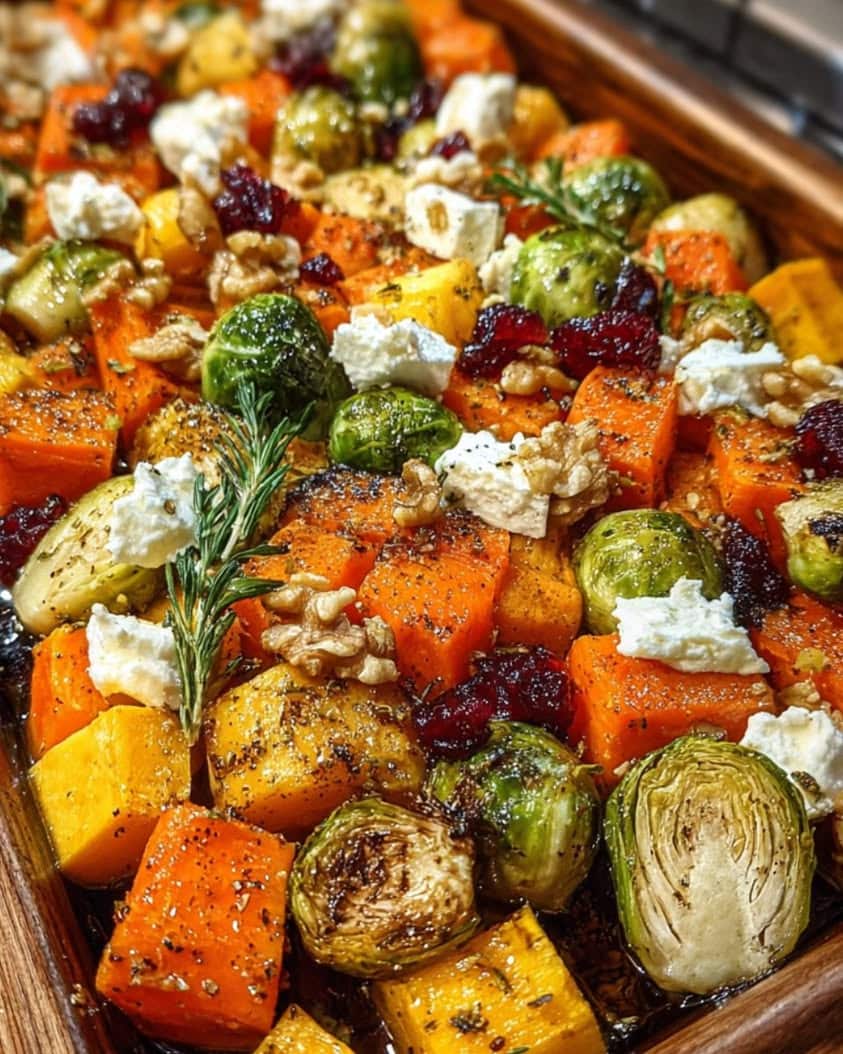
Roasted Sweet Potato, Carrots, Brussels Sprouts, and Butternut Squash with Feta, Walnuts, and Cranberry-Honey: The Ultimate Easy, Elegant, and Healthy Side Dish
Imagine a dish that brings the entire essence of a cozy autumn day to your dinner table. This recipe for roasted sweet potato, carrots, Brussels sprouts, and butternut squash is exactly that. It combines earthy, sweet, and savory flavors in one stunning medley. Furthermore, it fills your kitchen with an incredible aroma that promises a delicious meal. This dish is not just food; it is an experience. It transforms simple vegetables into a celebratory feast. Consequently, it becomes the star of any meal, from a quiet family dinner to a grand holiday gathering.
The magic happens in the oven, where high heat coaxes out the natural sugars in the root vegetables. Meanwhile, the Brussels sprouts develop a wonderful, crispy exterior. The final flourish of tangy feta, crunchy walnuts, and a sweet-tart cranberry-honey glaze elevates it to another level. Each component plays a crucial role in creating a symphony of textures and tastes. Therefore, every bite is a perfect balance. This dish proves that healthy eating can be indulgent and deeply satisfying. It is a celebration of seasonal produce at its finest.
Ultimately, this recipe is your new secret weapon for effortless entertaining. It looks incredibly impressive but requires minimal hands-on effort. You simply chop, roast, and drizzle. Moreover, it is naturally gluten-free and vegetarian, catering to various dietary needs. The vibrant colors make it a beautiful centerpiece. The combination of warm, roasted veggies with cool, salty feta is simply irresistible. This is the ultimate easy, elegant, and healthy side dish you will make again and again.
Quick Recipe Highlights
- Flavor Profile: This dish offers a masterful balance of sweet and savory. The natural sweetness from the roasted root vegetables beautifully contrasts with the salty, tangy feta. Additionally, the cranberry-honey glaze introduces a bright, tart note that ties everything together.
- Texture: You will experience a delightful contrast in every mouthful. The roasted vegetables become tender and caramelized inside with slightly crisp edges. Meanwhile, the walnuts provide a satisfying crunch, and the feta adds a soft, crumbly element.
- Aroma: As the vegetables roast, your kitchen will fill with a warm, earthy, and sweet fragrance. The scent of caramelizing squash and sweet potato is unmistakably comforting. Finally, the honey glaze adds a final note of fruity sweetness to the air.
- Visual Appeal: This dish is a feast for the eyes with its vibrant autumn palette. Deep orange sweet potatoes, bright orange carrots, green Brussels sprouts, and white feta create a stunning color contrast. The glossy glaze and sprinkled walnuts make it look professionally plated.
- Skill Level Needed: This is a beginner-friendly recipe that requires no advanced techniques. The most important skill is evenly chopping the vegetables for consistent roasting. Otherwise, it is a simple process of tossing and baking.
- Special Equipment: You only need a large baking sheet and some parchment paper for easy cleanup. A good chef’s knife and cutting board will make prep work faster. A small bowl for whisking the glaze is also helpful.
Recipe Overview
- Difficulty Level: This recipe is confidently rated as easy because it involves straightforward chopping and roasting. There are no complicated techniques or steps that could easily go wrong. The oven does most of the work, making it accessible for cooks of all levels. Simply ensure your vegetables are cut to a similar size for even cooking.
- Category: This dish falls perfectly into the side dish category, complementing a wide range of mains. It is also substantial enough to be a light vegetarian main course. Its versatility allows it to shine at breakfast, lunch, or dinner.
- Cuisine: While rooted in American seasonal cooking, this dish draws inspiration from Mediterranean flavors. The use of feta cheese and olive oil is a nod to Greek cuisine. The focus on roasted vegetables is a technique celebrated worldwide, making it a modern fusion dish.
- Cost: This is a very cost-effective recipe, especially during the fall and winter months. Root vegetables like sweet potatoes and carrots are typically inexpensive. Feta, walnuts, and cranberries can be bought in bulk, making this a budget-friendly, elegant option.
- Season: This recipe is ideal for autumn and winter when its main ingredients are at their peak. The hearty, warming nature of the dish is perfect for cooler weather. However, it can be enjoyed year-round as a healthy and colorful side.
- Occasion: It is a fantastic choice for holiday feasts like Thanksgiving and Christmas. Simultaneously, it is simple enough for a weeknight family meal. Its elegance also makes it suitable for potlucks and dinner parties.
Why You’ll Love This Recipe
First and foremost, the taste and texture appeal is undeniable. The combination of creamy sweet potato, tender butternut squash, and crispy Brussels sprouts creates a fantastic mouthfeel. Each vegetable brings its own unique flavor profile that harmonizes with the others. The salty feta cuts through the sweetness, while the walnuts add a necessary crunch. Furthermore, the cranberry-honey glaze adds a layer of complex sweetness that is not cloying. It is a dish that keeps you coming back for another bite to experience the different textures and flavors again. Ultimately, it satisfies cravings for both savory and sweet in one perfectly balanced plate.
Another significant benefit is the sheer convenience and simplicity of preparation. This recipe requires minimal active time in the kitchen. You can prepare the vegetables ahead of time, storing them in the refrigerator until you are ready to roast. The hands-off cooking time means you can focus on other parts of your meal or simply relax. Moreover, it uses just one sheet pan, which translates to very easy cleanup. This makes it a perfect recipe for busy weeknights or stressful holiday cooking schedules. Consequently, you get an impressive, restaurant-quality dish with home-kitchen effort.
From a health perspective, this dish is a nutritional powerhouse. It is packed with vitamins, minerals, and fiber from the diverse array of vegetables. Sweet potatoes and carrots are excellent sources of Vitamin A, while Brussels sprouts offer Vitamin C and K. The walnuts contribute healthy omega-3 fatty acids and protein. Using olive oil adds heart-healthy monounsaturated fats. This combination supports everything from eye health and immune function to reducing inflammation. It is a meal that makes you feel good from the inside out, proving that healthy food can be utterly delicious.
The social and entertaining value of this dish cannot be overstated. Its vibrant, colorful presentation is guaranteed to draw compliments from your guests. It is a versatile side that pairs well with almost any protein, from roast turkey to grilled chicken. Because it is vegetarian and gluten-free, it effortlessly accommodates various dietary restrictions at your table. Serving a dish that looks this beautiful also elevates the entire dining experience. It shows care and thoughtfulness in your menu planning. Therefore, it becomes a reliable go-to recipe for any gathering.
Finally, this recipe is remarkably cost-effective and accessible. The main ingredients are humble root vegetables and hardy greens that are affordable year-round. You do not need any expensive or hard-to-find specialty items. Feta, walnuts, and cranberries are pantry staples that can be used in countless other recipes. This accessibility means you can create a gourmet-tasting dish without a gourmet budget. It is a fantastic way to eat well and impress your family and friends without straining your wallet. This combination of ease, health, and flavor is truly unbeatable.
Historical Background and Cultural Significance
The practice of roasting vegetables is one of the oldest cooking methods known to humanity. Historically, after the discovery of fire, people would place root vegetables directly into the embers to cook. This method caramelized the natural sugars, making them more palatable and digestible. Over centuries, as cooking vessels developed, roasting in ovens became a staple in many cultures. The combination of root vegetables used in this recipe represents a New World and Old World fusion. Sweet potatoes and squash are native to the Americas, while carrots have origins in Central Asia. This dish is a relatively modern creation that celebrates global ingredient availability.
In terms of cultural importance, roasted vegetable medleys hold a significant place in many culinary traditions. In the United States, a similar mix often appears on Thanksgiving tables, symbolizing the harvest. Mediterranean cultures have long roasted vegetables with olive oil and herbs, often finishing them with cheese. The addition of feta cheese specifically roots part of this dish’s flavor profile in Greek cuisine. Meanwhile, the use of a sweet and tart glaze with cranberries feels inherently American, especially associated with New England. This recipe is a beautiful example of how modern cooking blends traditions to create something new and exciting.
The evolution of this specific recipe mirrors broader food trends towards healthier, vegetable-centric eating. Over the past few decades, side dishes have moved from heavy, cream-based casseroles to lighter, roasted preparations. This shift emphasizes the natural flavors of the ingredients themselves. The inclusion of a glaze made from honey and cranberries is a contemporary twist on classic sweet and sour pairings. Furthermore, the addition of nuts for crunch and cheese for saltiness shows a more sophisticated understanding of texture and balance in home cooking. This dish is a product of our current culinary moment that values health, flavor, and beauty equally.
Regional variations of this concept are endless. In the American South, you might find roasted sweet potatoes with pecans and a bourbon glaze. A Mediterranean version could feature rosemary, lemon, and kalamata olives instead of cranberries. In the Nordic countries, roasted root vegetables might be served with a lingonberry sauce, which is similar in tartness to cranberry. This adaptability is a testament to the universal appeal of roasted vegetables. You can take the basic formula and tailor it to your local ingredients and cultural preferences. Consequently, this recipe serves as a fantastic template for culinary creativity across the globe.
Ingredient Deep Dive
Sweet Potatoes: This vibrant tuber has a rich history, originating in Central or South America over 5,000 years ago. Christopher Columbus brought sweet potatoes to Europe after his first voyage. They are packed with beta-carotene, which your body converts to Vitamin A, crucial for vision and immunity. When selecting sweet potatoes, look for firm specimens with smooth, taut skin. Avoid any with soft spots or signs of sprouting. Store them in a cool, dark, and well-ventilated place, but not in the refrigerator. For a substitution, you could use regular potatoes, though the flavor and color profile will change significantly.
Butternut Squash: A type of winter squash, butternut squash is known for its sweet, nutty flavor and long storage life. It is native to the Americas and was a staple food for many Indigenous peoples. It is an excellent source of Vitamin A, Vitamin C, and fiber. Choose a squash that feels heavy for its size and has a hard, matte rind without any glossy patches. A whole butternut squash can be stored in a cool, dark place for months. Once cut, wrap it tightly and refrigerate. If unavailable, acorn squash or pumpkin make suitable substitutes.
Brussels Sprouts: These miniature cabbages have a fascinating history, believed to have been cultivated in ancient Rome and later popularized in Brussels, Belgium, hence the name. They are part of the brassica family, known for their cancer-fighting compounds and high levels of Vitamin K and C. Look for bright green, firm sprouts that are similar in size for even cooking. Smaller sprouts are often more tender and sweeter. Store them unwashed in a plastic bag in the refrigerator’s crisper drawer. Broccoli or cauliflower florets can be used as a replacement if needed.
Carrots: Carrots were originally purple and yellow and were first cultivated in Persia around the 10th century. The familiar orange carrot we know today was developed in the Netherlands in the 17th century. They are famously rich in beta-carotene and are great for eye health. Select firm, smooth carrots with a bright orange color. Avoid any that are limp or cracked. Store them in the crisper drawer of your refrigerator inside a plastic bag. Parsnips would be the closest substitute, offering a similar texture with a slightly different, earthier flavor.
Feta Cheese: Feta is a brined curd cheese with a centuries-old history in Greece, where it is a protected designation of origin (PDO) product. Traditionally made from sheep’s milk or a sheep-and-goat milk blend, it is tangy, salty, and crumbly. It provides a good source of calcium and protein. For the best flavor, buy feta blocks packed in brine. Store it in its brine in the refrigerator. For a dairy-free version, salty vegan feta or even creamy goat cheese can be used as alternatives.
Common Mistakes to Avoid
- Uneven Chopping: Cutting vegetables into different sizes is a common error. This leads to some pieces being overcooked and others undercooked. Always aim for a uniform, bite-sized dice to ensure everything roasts evenly and is ready at the same time.
- Crowding the Pan: Overloading the baking sheet steams the vegetables instead of roasting them. You need space for hot air to circulate and create those desirable caramelized edges. If necessary, use two baking sheets to avoid crowding.
- Skipping the Preheating: Placing vegetables in a cold oven drastically affects the cooking process. A properly preheated oven is essential for that initial sear that locks in flavor and creates a crispy exterior. Always wait for the oven to reach the correct temperature.
- Using Old, Dried Herbs: While dried herbs can work, they lack the vibrant flavor of fresh ones, especially rosemary. If you must use dried, reduce the quantity by half, as their flavor is more concentrated but often less complex.
- Neglecting to Season Enough: Vegetables need a generous amount of seasoning to truly shine. Do not be shy with the salt and pepper. Season in layers, tossing the vegetables with oil and seasonings thoroughly to coat every piece.
- Adding the Toppings Too Early: Incorporating the feta, walnuts, and glaze before roasting will ruin them. The feta will melt into a puddle, the nuts will burn, and the glaze will scorch. These are finishing elements added after roasting for texture and flavor contrast.
- Not Drying Brussels Sprouts: If your Brussels sprouts are wet when they go into the oven, they will steam instead of roast. After washing, be sure to pat them thoroughly dry with a clean kitchen towel or paper towels.
- Forgetting to Taste at the End: After assembling the final dish, always taste it. This is your chance to adjust the seasoning, add a pinch more salt, or drizzle a little extra honey if desired. Final seasoning adjustments are crucial.
Essential Techniques
Uniform Chopping: This is the most critical technique for success. Consistent size ensures that every piece of vegetable cooks at the same rate. If your pieces are different sizes, you will end up with a mix of burnt, mushy, and perfect pieces. Aim for a ¾-inch to 1-inch dice for the sweet potato, squash, and carrots. Halve or quarter the Brussels sprouts so they are roughly the same size as the other vegetable pieces. Using a sharp chef’s knife will make this task safer and more efficient.
High-Heat Roasting: Roasting at a high temperature, like 400°F (200°C), is non-negotiable. This heat is necessary to caramelize the natural sugars in the vegetables, creating a sweet, browned, and flavorful exterior. It also quickly cooks the interior to a tender consistency without making it waterlogged. A lower temperature will steam the vegetables, resulting in a pale and soggy outcome. The high heat is what transforms simple vegetables into a deeply flavorful and textured dish. Do not be tempted to lower the temperature to save time; it will have the opposite effect.
Tossing with Oil and Seasonings: How you coat the vegetables matters. Simply drizzling oil over them on the pan will lead to uneven coating and seasoning. Instead, place all the chopped vegetables in a large bowl. Drizzle with oil and add your salt, pepper, and herbs. Then, use your hands or a large spoon to toss everything together until every piece is glistening. This hands-on method ensures maximum flavor and prevents dry spots. It is a simple step that makes a world of difference in the final product.
Pro Tips for Perfect Roasted Vegetables with Feta and Walnuts
First, for extra crispy vegetables, preheat your baking sheet in the oven. Adding the oiled vegetables to a hot pan gives them an immediate sear. This technique jumpstarts the browning process and prevents sticking.
Second, do not discard the flat side of the Brussels sprouts. When you halve them, place them cut-side down on the baking sheet. This creates a larger surface area for direct contact with the hot pan, resulting in a beautifully caramelized and crispy exterior.
Third, consider roasting your walnuts for a few minutes. While optional, toasting the walnuts in a dry skillet or in the oven for 5-7 minutes before adding them to the dish deepens their nutty flavor. It also makes them crispier, adding more textural contrast.
Fourth, let the roasted vegetables rest for a few minutes after they come out of the oven. This allows them to reabsorb some of their own steam, firming up slightly and making their flavors more concentrated. Then, add the delicate toppings.
Fifth, if your feta is very wet, pat it dry with a paper towel before crumbling. This helps it maintain its shape and crumbly texture instead of dissolving into the dish. A drier feta will provide better salty bursts of flavor.
Sixth, warm the honey slightly before mixing it with the cranberry sauce. Warm honey is much easier to mix and will create a smoother, more pourable glaze. You can do this by placing the honey jar in a bowl of warm water for a few minutes.
Variations and Adaptations
For regional variations, you can easily take this dish on a world tour. Give it a Moroccan flair by swapping the rosemary for ras el hanout and the feta for crumbled goat cheese. An Italian version could use rosemary, toss in some cherry tomatoes, and substitute the feta for fresh mozzarella pearls. For a French twist, use Herbes de Provence and a Dijon vinaigrette instead of the cranberry-honey glaze. The basic formula of roasted veggies + cheese + crunch + sweet element is incredibly adaptable. Feel free to explore different spice blends and cheeses from your favorite cuisines.
Seasonal adaptations are simple and recommended. In the spring, try using asparagus, new potatoes, and radishes with a lemon-herb glaze. Summer calls for zucchini, bell peppers, and eggplant with a basil and balsamic finish. The autumn version is the one outlined here. In the depths of winter, sturdy roots like parsnips, turnips, and beets work wonderfully. Using what is fresh and in season not only improves flavor but also supports local agriculture. It keeps the recipe exciting and new throughout the year.
Dietary modifications are straightforward. For a vegan dish, simply omit the feta or use a high-quality vegan feta alternative. The rest of the recipe is naturally plant-based. To make it nut-free, replace the walnuts with roasted pumpkin seeds (pepitas) or sunflower seeds for a similar crunch. If you are avoiding honey, maple syrup or agave nectar are perfect substitutes in the glaze. For a lower-carb version, reduce the amount of sweet potato and carrot and increase the proportion of Brussels sprouts. This recipe is a fantastic canvas that can be tailored to nearly any dietary need.
Serving and Presentation Guide
Plating this dish beautifully enhances the dining experience. For a family-style presentation, transfer the roasted vegetables to a large, shallow platter. Drizzle the glaze in a zig-zag pattern over the top for a professional look. Then, sprinkle the feta and walnuts evenly, allowing some to fall into the crevices. Alternatively, for individual servings, use a ring mold to create a tall, elegant stack in the center of each plate. Drizzle the plate with the glaze around the base of the stack for a restaurant-worthy appearance. Garnish with a final sprig of fresh rosemary for a touch of green.
Garnishing ideas go beyond the ingredients in the recipe. Fresh, soft herbs like chopped parsley or chives sprinkled over the top add a burst of color and freshness. A final drizzle of high-quality extra virgin olive oil can enhance the flavors. For a special occasion, a few pomegranate arils scattered over the dish add a jewel-like appearance and a pop of tartness that complements the cranberry. Edible flowers are another stunning, though more advanced, garnish for a spring or summer event. The goal is to add elements that enhance both the visual appeal and the flavor without overwhelming the main components.
Traditional accompaniments for a dish like this are robust proteins. It is a classic side for a holiday roast turkey or a glazed ham. It also pairs wonderfully with roast chicken, pork tenderloin, or grilled sausages. For a vegetarian feast, serve it alongside a hearty lentil loaf or a creamy mushroom risotto. Modern serving suggestions include topping a bed of quinoa or farro with these roasted vegetables for a complete meal. You can also let it cool slightly and add it to a bed of greens for a warm salad. It is even delicious served at room temperature, making it excellent for picnics and buffets.
Wine and Beverage Pairing
Selecting the right wine can elevate this dish from great to extraordinary. The sweet and savory elements call for a wine with good acidity to cleanse the palate. A crisp, unoaked Chardonnay is a fantastic choice. Its apple and citrus notes complement the sweet vegetables, while its acidity balances the richness. Alternatively, a dry Rosé, with its red fruit flavors and crisp finish, handles the sweet-tart glaze and salty feta beautifully. For red wine lovers, a light-bodied Pinot Noir is ideal. Its low tannins and notes of cherry and earth won’t overpower the vegetables and will harmonize with the earthy notes of the dish.
For non-alcoholic alternatives, consider options with complexity. A sparkling apple cider provides effervescence and a touch of sweetness that mirrors the glaze. Ginger beer, with its spicy kick, can cut through the richness and refresh the palate between bites. For a more sophisticated option, an herbal iced tea, such as one infused with rosemary or thyme, echoes the herbal notes in the recipe. Simply brew a strong pot of tea, let it cool, and serve over ice. These beverages provide a satisfying and thoughtful pairing without alcohol.
If you prefer coffee or tea with your meal, opt for lighter roasts and profiles. A medium-roast coffee with low acidity and notes of nut or caramel would complement the walnuts and roasted flavors without bitterness. For tea, an oolong tea is a brilliant choice. Its complex character, which can range from floral to woody, bridges the gap between the sweet vegetables and the savory cheese. Serve either hot after the meal or as a warm accompaniment. The key is to avoid anything too heavy or bitter that would clash with the dish’s balanced flavors.
Storage and Shelf Life
Proper storage is key to maintaining the quality of your leftovers. First, allow the dish to cool completely to room temperature. Do not leave it out for more than two hours to prevent bacterial growth. Store the roasted vegetable base and the toppings separately for the best results. Place the cooled vegetables in an airtight container in the refrigerator. They will keep for 3 to 4 days. Store the crumbled feta and walnuts in their own separate containers. The cranberry-honey glaze can be kept in a small jar or container in the fridge.
Recognizing signs of spoilage is important for food safety. If the vegetables develop a slimy texture, an off smell, or any visible mold, discard them immediately. The feta should remain crumbly and smell tangy, not sour or ammonia-like. Walnuts can go rancid; if they smell like old paint or have a bitter taste, throw them out. The honey glaze is a preservative itself, but if you see any fermentation (bubbles) or mold, it should not be consumed. When in doubt, it is always safer to err on the side of caution and dispose of questionable food.
Reheating instructions are simple but crucial for texture. To reheat the vegetables, spread them in a single layer on a baking sheet and warm them in a 350°F (175°C) oven for 10-15 minutes. This will help restore some of their crispness. The microwave is a quicker option but will make the vegetables soft and steamy. After reheating the base, then add the fresh toppings—the cold feta, crunchy walnuts, and a fresh drizzle of glaze. Do not reheat the assembled dish with the toppings, as the feta will melt and the nuts will become soggy.
Make Ahead Strategies
You can significantly reduce your day-of cooking stress with smart make-ahead strategies. The vegetables can be prepped up to 24 hours in advance. After chopping the sweet potato, carrots, Brussels sprouts, and butternut squash, store them in a large zip-top bag or an airtight container in the refrigerator. You can even toss them with the oil, salt, pepper, and rosemary ahead of time. This not only saves time but can also allow the flavors to meld. When you are ready to cook, simply spread them on the baking sheet and roast. The glaze can also be prepared a day or two ahead and stored in the fridge.
Understanding the quality impact of make-ahead steps is important. Pre-chopping the vegetables may cause them to dry out slightly, but this is often negligible, especially for dense root vegetables. The oil coating can help prevent oxidation and browning. The primary benefit is the massive time savings during a busy meal preparation. The trade-off is minimal, especially for a roasted dish where the high heat will revive the textures. The convenience far outweighs any minor loss of moisture, making this a highly recommended strategy for entertaining.
For final assembly, the best approach is to roast the vegetables ahead of time and then re-crisp them. You can fully roast the vegetables a few hours before your meal. Let them cool and leave them at room temperature. About 15-20 minutes before serving, pop them back into a hot oven (400°F/200°C) for 5-10 minutes to warm through and re-crisp the edges. Then, transfer them to your serving platter and add the fresh, cold toppings—the feta, walnuts, and glaze. This method ensures the toppings retain their distinct textures and the vegetables are served warm and delicious.
Scaling Instructions
Halving this recipe is straightforward for smaller households. Simply divide all the ingredient quantities by two. Use a standard-sized baking sheet to ensure the vegetables still have plenty of room to roast properly, even in a smaller quantity. The cooking time may be slightly reduced, so start checking for doneness around the 20-minute mark. The same principles of uniform chopping and a hot oven apply. This is a perfect way to enjoy this dish without having excessive leftovers, though it is so tasty that leftovers are rarely a problem.
Doubling or tripling the recipe for a crowd requires a bit more planning. Do not simply pile double the amount of vegetables onto one baking sheet. This will cause them to steam. Instead, use multiple baking sheets and rotate them between the oven racks halfway through the cooking time to ensure even browning. You may also need to add a few extra minutes to the total roasting time. For very large gatherings, consider roasting in consecutive batches and keeping the finished batches warm in a low oven (200°F/95°C) until all are ready. This ensures every batch is perfectly roasted.
Timing modifications are important when scaling. While a single batch might take 30-35 minutes, a double batch on two sheets might need 35-40 minutes. Always rely on visual and textural cues rather than just the timer. The vegetables are done when they are tender when pierced with a fork and have caramelized edges. When scaling up, also consider your oven’s capacity and preheating time. A full oven will take longer to recover its temperature when the door is opened to add the pans. Plan your overall meal timeline accordingly to have everything ready to serve at once.
Nutritional Deep Dive
This dish offers an excellent macro breakdown, providing a balanced mix of carbohydrates, healthy fats, and protein. The carbohydrates come primarily from the fibrous vegetables, which are complex carbs that provide sustained energy. The healthy fats are sourced from the olive oil and walnuts, which contribute monounsaturated and polyunsaturated fats, including omega-3s. The protein is modest but present from the feta cheese and walnuts. This combination is very satiating, helping you feel full and satisfied. It is a nutrient-dense meal that fuels your body without empty calories. The fiber content also aids in digestion and blood sugar regulation.
The micronutrient analysis is incredibly impressive. Sweet potatoes and carrots are loaded with beta-carotene (Vitamin A), essential for vision and immune function. Brussels sprouts are a powerhouse of Vitamin K for bone health and Vitamin C for immunity. Butternut squash adds more Vitamin A and C, along with potassium. Walnuts provide important minerals like manganese and copper. Feta cheese contributes calcium for strong bones. Together, this dish covers a wide spectrum of your daily vitamin and mineral needs. It is a colorful plate for a reason—each color represents a different set of phytonutrients and antioxidants.
For weight management, this recipe is an excellent choice. It is high in volume and fiber, which promotes a feeling of fullness with a moderate calorie count. The healthy fats from the olive oil and walnuts also contribute to satiety. By focusing on whole, unprocessed plant foods, you are nourishing your body with quality ingredients. To make it even more weight-conscious, you can slightly reduce the amount of olive oil and be mindful of the portion of feta and walnuts. It is a satisfying dish that supports a healthy lifestyle without feeling like a restrictive “diet” food.
Dietary Adaptations
Gluten-Free: This recipe is naturally gluten-free as it contains no grains or gluten-containing ingredients. Always double-check the labels on your cranberry sauce to ensure no thickeners or additives containing gluten have been used. For complete peace of mind, make your own simple cranberry glaze by simmering fresh cranberries with a little orange juice and honey until they burst.
Dairy-Free/Vegan: Adapting this recipe for a dairy-free or vegan diet is simple. Omit the feta cheese entirely, or replace it with a store-bought vegan feta alternative. Many are made from tofu, almonds, or coconut oil and have a pleasantly tangy and salty profile. Ensure the honey in the glaze is substituted with maple syrup or agave nectar to keep the recipe fully plant-based. All other components are naturally vegan.
Low-Carb/Keto: To align this dish with a low-carb or keto diet, focus on the low-carb vegetables. Increase the proportion of Brussels sprouts and reduce or eliminate the sweet potato and butternut squash, as they are higher in carbohydrates. You can add cauliflower florets as a substitute. Use a sugar-free cranberry sauce or a very small amount of a low-carb sweetener in the glaze. The olive oil, walnuts, and feta are all excellent for a keto diet.
Paleo: For a Paleo version, the main adjustments are the cheese and the type of sweetener. Omit the feta cheese, as dairy is not included in a strict Paleo diet. Replace the honey in the glaze with pure maple syrup, which is often considered Paleo-friendly. Ensure all other ingredients are whole, unprocessed foods, which this recipe already emphasizes. The result is a hearty, vegetable-forward side dish perfect for a Paleo lifestyle.
Troubleshooting Guide
Vegetables Are Soggy: If your roasted veggies turned out soft and steamed instead of crispy, the culprit is likely overcrowding on the pan. When vegetables are too close together, they release steam that gets trapped, preventing browning. The solution for next time is to use a larger pan or two separate pans to allow for proper air circulation. For now, you can try spreading the leftovers on a pan and putting them under the broiler for a few minutes to crisp up the edges.
Vegetables Are Burned on the Edges: If the edges are charring before the centers are tender, your oven temperature may be too high, or your vegetable pieces may be too small. Oven thermostats can be inaccurate; consider using an oven thermometer. Another solution is to lower the rack position in the oven to prevent the tops from burning. If some vegetables are cooking faster than others, you can remove the done pieces and return the rest to the oven to finish.
Lack of Flavor: If the final dish tastes bland, it is almost always an issue of underseasoning. Vegetables need a generous amount of salt to bring out their natural flavors. The solution is to season in layers. Be sure to salt the vegetables adequately before roasting. Then, taste and adjust the seasoning after they are cooked, before adding the toppings. A final sprinkle of flaky sea salt over the finished dish can also work wonders to elevate the flavors.
Recipe Success Stories
We have received wonderful feedback from our community of home cooks. One reader, Sarah from Colorado, shared that this recipe was the star of her Thanksgiving dinner, outshining the turkey. She loved that her vegetarian guests had a substantial and celebratory dish to enjoy. Another home cook, Mark, mentioned that he added spicy chicken sausage to the mix and turned it into a one-pan weekly meal for his family. The versatility of the recipe is a common point of praise, with many people feeling empowered to make their own variations based on what they have in the fridge.
Many readers have successfully adapted this recipe for specific dietary needs. A common success story involves making it vegan for holiday gatherings. One user reported using a almond-based feta and maple syrup in the glaze to rave reviews from both vegan and non-vegan family members. Others have shared their low-carb versions, replacing the sweet potatoes with radishes and adding extra Brussels sprouts, with
Print
Roasted Sweet Potato, Carrots, Brussels Sprouts, and Butternut Squash with Feta, Walnuts, and Cranberry-Honey
Description
A vibrant and satisfying roasted vegetable medley, tossed with sweet cranberry-honey glaze and topped with creamy feta and crunchy walnuts.
Ingredients
For the Crust:
- 2 medium sweet potatoes, peeled and cubed
- 3 large carrots, peeled and sliced
- 1 lb Brussels sprouts, trimmed and halved
- 1 small butternut squash, peeled and cubed
- 3 tbsp olive oil
- 1 tsp garlic powder
- 1 tsp dried thyme
- Salt and black pepper to taste
- 1/4 cup honey
- 2 tbsp dried cranberries
- 1/2 cup crumbled feta cheese
- 1/4 cup chopped walnuts
Instructions
1. Prepare the Crust:
- Preheat oven to 400°F (200°C). Line a large baking sheet with parchment paper.
- In a large bowl, toss sweet potatoes, carrots, Brussels sprouts, and butternut squash with olive oil, garlic powder, thyme, salt, and pepper until evenly coated.
- Spread vegetables in a single layer on the prepared baking sheet. Roast for 25-30 minutes, or until tender and lightly browned, stirring halfway through.
- In a small bowl, mix honey and dried cranberries. Drizzle over roasted vegetables and toss gently.
- Top with crumbled feta and chopped walnuts. Serve warm.
Notes
You can customize the seasonings to taste.

I’m Shaykee—born in Morocco, seasoned across continents. From airplane galleys to home kitchens, I share the flavors and stories that shaped my journey.