
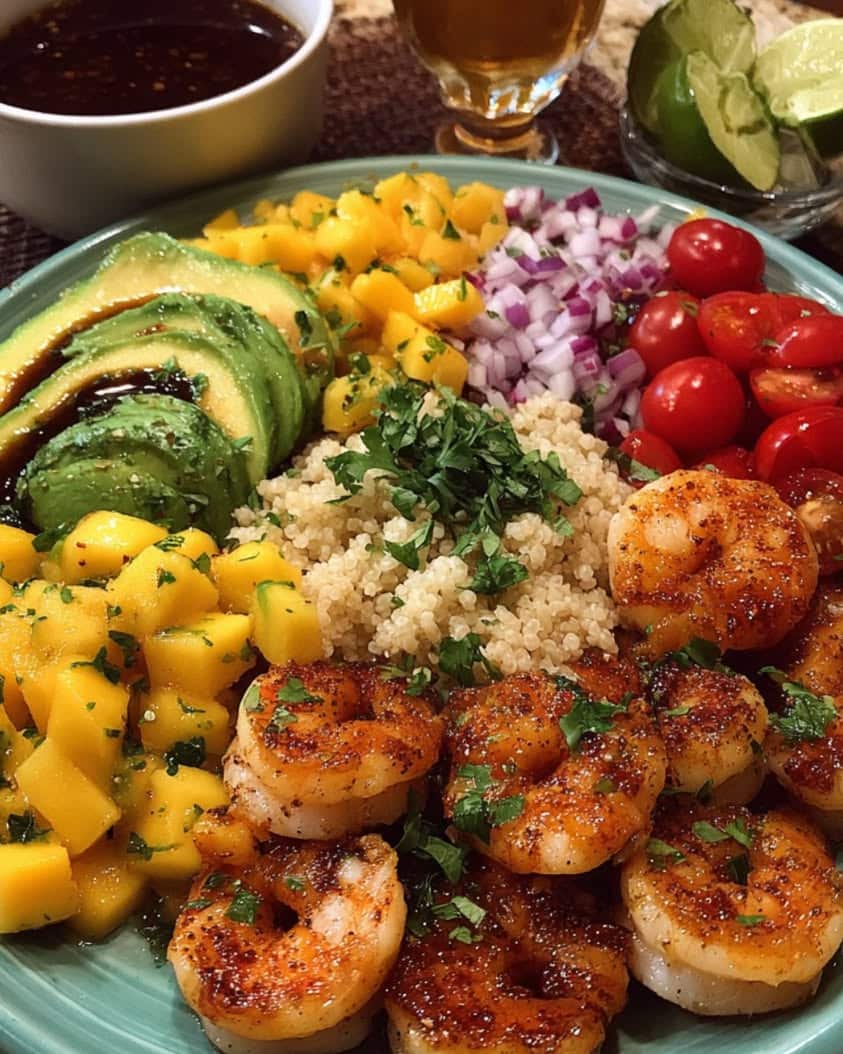
Shrimp and Avocado Bowls: A Tropical Flavor Fiesta
Imagine a meal that transports your taste buds straight to a sunny beach. These Shrimp and Avocado Bowls do exactly that. Creamy avocado and juicy shrimp meet sweet mango salsa in a vibrant bowl. Drizzled with a zesty lime-chili sauce, this dish is a fresh, healthy, and easy meal that’s bursting with flavor. Furthermore, it brings together textures and tastes from the sea and the tropics in one satisfying dish.
Moreover, this recipe is perfect for anyone seeking a nutritious lunch or dinner option. The combination of lean protein from the shrimp and healthy fats from the avocado creates a balanced meal. Additionally, the bright colors make it visually stunning. Consequently, it is as beautiful to look at as it is delicious to eat. This is one of those healthy recipes that feels like a treat.
Ultimately, this dish is a celebration of fresh ingredients. Each component shines on its own while contributing to a harmonious whole. The mango salsa adds a refreshing sweetness. Meanwhile, the avocado bowl base provides a creamy, rich foundation. Finally, the lime-chili sauce ties everything together with a perfect balance of tangy and spicy notes.
Quick Recipe Highlights
- Flavor Profile: This dish offers a spectacular balance of sweet, savory, spicy, and tangy notes. The sweetness of the mango contrasts beautifully with the savory shrimp. Meanwhile, the lime-chili sauce provides a zesty kick that elevates the entire dish.
- Texture: You will experience a wonderful interplay of textures. The shrimp are tender and succulent. Conversely, the avocado is creamy and smooth. Furthermore, the mango salsa adds a juicy, slightly firm bite that creates a satisfying mouthfeel.
- Aroma: The aroma is fresh and inviting. You will notice the bright, citrusy scent of lime first. This is complemented by the earthy fragrance of cilantro and the subtle sweetness of ripe mango. The cooking shrimp add a savory, oceanic note to the air.
- Visual Appeal: This bowl is a feast for the eyes. It features vibrant colors from the pink shrimp, green avocado, orange mango, and red onion. The presentation is naturally beautiful and looks restaurant-quality with minimal effort.
- Skill Level Needed: This is an accessible recipe for all skill levels. It requires basic knife skills for chopping and simple sautéing techniques. Therefore, even beginner cooks can achieve impressive results with this guide.
- Special Equipment: You only need common kitchen tools. A good chef’s knife and cutting board are essential for prep. Additionally, a mixing bowl and a skillet are the main pieces of equipment required for assembly and cooking.
Recipe Overview
- Difficulty Level: We rate this recipe as easy because it involves straightforward techniques. The most complex task is properly cooking the shrimp to avoid rubberiness. Otherwise, the recipe primarily consists of chopping and mixing fresh ingredients. Consequently, it is a fantastic choice for a weeknight dinner or a casual meal.
- Category: This dish fits into several meal categories. It is a perfect main course for lunch or dinner. Additionally, it can be served as a hearty salad or a protein-packed bowl. Its versatility makes it suitable for various dining occasions.
- Cuisine: This recipe draws inspiration from coastal and tropical cuisines. It has elements reminiscent of Mexican ceviche and Caribbean flavors. The use of fresh seafood, avocado, and citrus is common in Latin American cooking. Ultimately, it is a fusion dish that celebrates bright, fresh flavors.
- Cost: The cost is moderate and depends on the price of shrimp and fresh produce. Shrimp is typically the most expensive component. However, using frozen shrimp can be a budget-friendly alternative. Overall, it provides excellent value for a restaurant-quality meal made at home.
- Season: This dish is ideal for spring and summer. It is light, refreshing, and requires minimal cooking. Furthermore, mangoes are at their peak sweetness during the warmer months. Consequently, it is the perfect meal for a hot day when you want something satisfying but not heavy.
- Occasion: It is suitable for many occasions. Serve it for a quick family dinner, a healthy lunch, or a casual gathering with friends. Its vibrant presentation also makes it impressive enough for a dinner party. It is a truly versatile recipe.
Why You’ll Love This Shrimp and Avocado Bowl Recipe
First and foremost, the taste and texture appeal is undeniable. Every bite is a complex experience. You get the juicy pop of the shrimp, the buttery smoothness of the avocado, and the fresh crunch of the salsa. The lime-chili sauce then adds a layer of tangy heat that wakes up all your senses. This combination is incredibly addictive and satisfying. It is a meal that truly delights the palate.
Secondly, the convenience and preparation benefits are a major win. These Shrimp and Avocado Bowls come together in about thirty minutes. They are perfect for a busy schedule. Furthermore, you can prepare components like the mango salsa and sauce ahead of time. This makes final assembly a breeze. Consequently, you can enjoy a gourmet-quality meal on a hectic weeknight.
Thirdly, the nutritional advantages are impressive. This dish is packed with lean protein, healthy fats, and vitamins. Shrimp provide high-quality protein and selenium. Avocado contributes heart-healthy monounsaturated fats and fiber. Meanwhile, the mango and vegetables offer a boost of Vitamin C and antioxidants. It is a meal that fuels your body beautifully. Therefore, it is a cornerstone of any collection of healthy recipes.
Fourthly, the social and entertaining value is high. The vibrant, colorful presentation of this avocado bowl is always a crowd-pleaser. It looks like you spent hours in the kitchen, even though the active time is minimal. You can also set up a “bowl bar” where guests customize their own. This interactive element makes it fun for casual parties and family meals alike.
Finally, the cost-effectiveness and accessibility are key benefits. While it tastes luxurious, it is far cheaper than ordering a similar dish at a restaurant. Most ingredients are readily available at any standard grocery store. You can also easily adapt it based on what is seasonal or on sale. This recipe proves that eating well does not have to be expensive or complicated.
Historical Background and Cultural Significance
The concept of the bowl meal, or grain bowl, has ancient roots in many cultures. However, the modern interpretation is a relatively recent phenomenon. It gained massive popularity with the rise of health-conscious dining and fast-casual restaurants. The idea of combining a protein, grains, vegetables, and a sauce in a single vessel is both practical and visually appealing. This Shrimp and Avocado Bowl is a direct descendant of this trend, emphasizing fresh, high-quality ingredients.
The use of shrimp and avocado together has a strong foundation in coastal Latin American cuisine. Dishes like Mexican shrimp cocktail (coctel de camarones) often feature this pairing. The addition of mango salsa draws inspiration from Caribbean and Southeast Asian flavors, where fruit-based salsas and salads are common. This recipe is a beautiful fusion of these different culinary traditions. It represents a global approach to cooking that prioritizes flavor and freshness.
The evolution of this specific recipe is tied to the modern desire for meals that are both nutritious and Instagram-worthy. The bright colors and layered components are perfect for visual media. Furthermore, the customization aspect allows eaters to control their nutrition and preferences. This dish has evolved from restaurant menus to home kitchens, becoming a staple for those seeking a balanced and delicious easy meal.
Regional variations of this bowl are endless. In Hawaii, a similar concept exists with poke bowls. In Peru, a ceviche bowl would share many ingredients. The core principle remains the same: fresh, high-quality components combined in a harmonious way. This particular version with its zesty lime-chili sauce is a testament to the creativity of home cooks and chefs who continue to innovate within this flexible format.
Ingredient Deep Dive
Shrimp: Shrimp have been a valuable food source for thousands of years, featured prominently in coastal cultures worldwide. They are an excellent source of lean protein, low in calories, and rich in selenium, which is crucial for thyroid and immune health. When selecting shrimp, look for firm, translucent flesh with a mild sea smell. Avoid any with black spots or a strong ammonia odor. Store them in the coldest part of your refrigerator and use within two days, or freeze for longer storage. For a substitution, grilled chicken, scallops, or firm tofu work wonderfully.
Avocado: Originating in south-central Mexico, avocados have been cultivated for over 5,000 years. They are packed with heart-healthy monounsaturated fats, fiber, potassium, and vitamins C, E, and K. Choose avocados that are slightly soft to the touch near the stem; if it indents easily, it is ripe. To speed up ripening, place them in a paper bag with a banana. Store ripe avocados in the refrigerator to halt the process. While there is no perfect substitute for its creamy texture, a ripe, mashed chickpea mixture can provide a similar body in a bowl.
Mango: Mangoes are the national fruit of India, Pakistan, and the Philippines, with a history spanning over 4,000 years. They are a superb source of vitamins A and C, which support immune function and vision. A ripe mango will give slightly under pressure and have a fragrant smell at the stem end. Avoid fruits with many black spots. Store unripe mangoes at room temperature and refrigerate once ripe. For a substitution in the salsa, peaches or nectarines are excellent alternatives that provide a similar sweet and tangy profile.
Cilantro & Red Onion: Cilantro has been used since ancient times, with traces found in Egyptian tombs. It is rich in antioxidants and may aid digestion. Red onion, a staple in many cuisines, contains quercetin, a powerful antioxidant. Their sharp, pungent flavors are essential for balancing the sweetness in the mango salsa. If you dislike cilantro, flat-leaf parsley or basil can be used. For a milder onion flavor, soak the chopped red onion in cold water for 10 minutes before using.
Lime & Chili: Limes were first cultivated in Southeast Asia and are prized for their high vitamin C content. The chili pepper, native to the Americas, contains capsaicin, which can boost metabolism. The combination creates the zesty lime-chili sauce that defines this dish. Always roll your limes on the counter before juicing to get the most yield. For a less spicy sauce, remove the seeds from the chili or use a pinch of red pepper flakes instead.
Common Mistakes to Avoid
- Overcooking the Shrimp: This is the most common error. Overcooked shrimp become tough and rubbery. They cook very quickly, typically in just 2-3 minutes total. Watch for them to turn pink and opaque, then remove them from the heat immediately.
- Using Unripe Avocado: An unripe, hard avocado will lack the creamy texture that is vital to this avocado bowl. It can be difficult to slice and will not provide the desired richness. Always plan ahead and ensure your avocados are perfectly ripe.
- Neglecting to Pat Shrimp Dry: If you skip patting the shrimp dry with a paper towel before seasoning, they will steam instead of sear. This prevents the development of a nice, slightly caramelized exterior. Dry shrimp are key for a good sear.
- Making the Salsa Too Far in Advance: While you can prep the mango salsa a little ahead, making it hours in advance can cause it to become watery. The salt draws moisture from the mango and onions. For the best texture, assemble it close to serving time.
- Not Tasting the Sauce as You Go: The balance of the lime-chili sauce is subjective. You must taste it and adjust the seasoning. You might need more lime for acidity, more honey for sweetness, or more salt to bring all the flavors together.
- Forgetting to Season in Layers: Do not just season at the end. Season the shrimp before cooking. Season the salsa components. This builds depth of flavor in every component of your Shrimp and Avocado Bowls.
- Using Low-Quality Olive Oil: Since the sauce is not cooked, the flavor of the olive oil is prominent. A low-quality or overly strong oil can ruin the delicate balance. Use a good-quality extra-virgin olive oil for the best results.
- Skipping the Resting Time for the Onions: If you find raw red onion too pungent, soaking it in cold water for 10 minutes mellows its flavor significantly. This simple step makes the mango salsa more palatable for many people.
Essential Techniques
Properly Searing Shrimp: Achieving a perfect sear on shrimp is crucial for texture and flavor. Pat the shrimp completely dry before they hit the pan. Use a hot skillet with just enough oil to coat the bottom. Do not overcrowd the pan; cook in batches if necessary. The shrimp should sizzle upon contact. Cook for about 1-2 minutes per side until they are pink and opaque with a slight golden crust. The key visual cue is the color change from gray and translucent to pink and white with a firm, curled shape.
Dicing an Avocado: To neatly dice an avocado, first slice it in half lengthwise and remove the pit. Then, while the avocado is still in its skin, make lengthwise and crosswise cuts with a knife to create a grid pattern. Finally, use a spoon to scoop the perfectly diced cubes out of the skin. This technique keeps the avocado from getting mushy and creates uniform pieces that look great in your avocado bowl.
Balancing a Vinaigrette-Style Sauce: The zesty lime-chili sauce is an emulsion. The goal is to balance fat (oil), acid (lime juice), heat (chili), and sweetness (honey). Whisk the lime juice, honey, and seasonings together first. Then, slowly stream in the olive oil while whisking constantly. This gradual incorporation helps create a temporarily stable, slightly thickened sauce that will coat the ingredients nicely instead of pooling at the bottom.
Creating a Unified Salsa: A great mango salsa has evenly sized pieces. This ensures every spoonful contains a bit of every flavor. Use a sharp knife to dice the mango, red onion, and cilantro to a similar small size. Gently fold the ingredients together to avoid crushing the delicate mango. The salsa should be vibrant and chunky, not soupy.
Pro Tips for Perfect Shrimp and Avocado Bowls
For the most flavorful shrimp, marinate them in a bit of the lime juice and chili from the sauce for 15 minutes before cooking. This brief soak infuses them with flavor from the inside out.
To prevent the avocado from browning if you are prepping ahead, toss the diced avocado in a teaspoon of the lime juice from the sauce recipe. The acid in the lime juice significantly slows down the oxidation process.
If your mango is not perfectly ripe and sweet, add a tiny pinch of sugar to the salsa. This will enhance its natural sweetness and balance the acidity from the lime and the sharpness from the onion.
Warm your serving bowls before assembling the dish. A warm bowl makes the entire meal more comforting and helps keep the shrimp warm if you are not serving it chilled.
Add a textural crunch factor. Consider sprinkling toasted pepitas, crushed tortilla chips, or crispy shallots on top right before serving. This contrast in texture elevates the eating experience.
Use the residual heat in your skillet after cooking the shrimp. You can quickly warm your base, like rice or quinoa, in the same pan to soak up any flavorful bits left behind.
For a creamier lime-chili sauce, add a quarter of a ripe avocado to the blender when you make it. This creates a lush, creamy, and pale green sauce that is incredibly delicious.
If you are using frozen shrimp, the best way to thaw them is overnight in the refrigerator. For a quicker method, place them in a sealed plastic bag and submerge them in cold water for 30-60 minutes.
Variations and Adaptations
Regional Variations: You can easily take this bowl on a world tour. For a Hawaiian poke-style bowl, use a soy sauce, sesame oil, and ginger base for the sauce. For a Mediterranean twist, replace the mango salsa with a chopped Greek salad and use a lemon-oregano vinaigrette. The basic framework of the Shrimp and Avocado Bowl is incredibly adaptable to different flavor profiles.
Seasonal Adaptations: While perfect for summer, this bowl can be enjoyed year-round. In the fall, use roasted sweet potato cubes and a cranberry-orange relish instead of the mango salsa. During winter, a base of warm, spiced lentils would be hearty and satisfying. The key is to maintain the balance of protein, healthy fat, and a fresh, acidic component.
Dietary Modifications: This recipe is naturally gluten-free. For a vegan version, substitute the shrimp with seasoned, roasted chickpeas or marinated tofu. To make it lower-carb or keto-friendly, serve it on a bed of cauliflower rice and ensure your honey substitute is sugar-free. It is one of the most flexible healthy recipes in your arsenal.
Flavor Variations: Experiment with different herbs in the salsa. Mint or basil can provide a surprising and delightful twist. For a smokier flavor, use chipotle powder in the sauce instead of fresh chili. A teaspoon of fish sauce in the dressing, while non-traditional, can add a fantastic depth of umami flavor.
Texture Modifications: If you prefer a smoother eating experience, you can puree the avocado with a little lime juice and spread it on the bottom of the bowl like a creamy base. For more crunch, add shredded cabbage, jicama sticks, or radishes to the assembly.
Presentation Alternatives: Instead of a bowl, serve the components as a layered salad in a wide, shallow platter. You can also serve the deconstructed elements as a DIY taco or lettuce wrap bar, allowing everyone to build their own creation. This makes the meal interactive and fun.
Serving and Presentation Guide
Plating Techniques: Start with a warm, wide, shallow bowl for the best presentation. Create a base layer with your chosen grain or greens. Then, artfully arrange the other components in distinct sections around the bowl. Place the avocado in one area, the shrimp in another, and a generous scoop of the mango salsa in a third. This “deconstructed” look is visually appealing and allows the colors to shine.
Garnishing Ideas: A final garnish adds a professional touch. A sprinkle of fresh, whole cilantro leaves, a wedge of lime on the side, and a light drizzle of the zesty lime-chili sauce over everything is classic. For extra color and flavor, add a sprinkle of paprika or a few thin slices of fresh red chili.
Traditional Accompaniments: The most common base for this avocado bowl is white or brown rice. Cilantro-lime rice is a natural and delicious pairing. Alternatively, quinoa provides a complete protein and a nutty flavor. For a low-carb option, a bed of mixed greens or shredded lettuce works perfectly.
Modern Serving Suggestions: For a heartier meal, include black beans or pinto beans as an additional component. Roasted corn kernels would also add a sweet, smoky element. Serving with warm, crispy tortilla chips on the side is always a welcome addition for scooping up any leftover salsa and sauce.
Temperature Considerations: You can serve this dish warm, at room temperature, or chilled. For a warm bowl, serve the shrimp and base hot and the salsa and avocado cool. For a chilled bowl, similar to a ceviche, refrigerate all components and assemble cold. Room temperature is often ideal for allowing all the flavors to be perceived fully.
Portion Control Tips: This recipe is naturally well-portioned. A good rule of thumb is 4-6 ounces of shrimp per person, half an avocado, and a half-cup of salsa. The base, like rice, should be about 3/4 cup per serving. This creates a balanced and satisfying meal without being overly heavy.
Wine and Beverage Pairing
Wine Pairings: The bright, citrusy, and slightly spicy notes of this dish call for wines with good acidity. A crisp, dry Sauvignon Blanc is a classic and perfect match; its herbal and citrus notes complement the lime and cilantro beautifully. A Spanish Albariño, with its stone fruit and saline quality, also pairs wonderfully with the shrimp and mango. For a rosé option, choose a dry Provencal style that won’t clash with the dish’s flavors.
Non-Alcoholic Alternatives: A sparkling water with a squeeze of lime and a few mint leaves is a refreshing and simple choice. For something more complex, a ginger beer or a homemade agua fresca made with blended mango and lime would be fantastic. Iced green tea with a hint of honey also works well, as its slight bitterness can balance the sweetness of the mango.
Coffee/Tea Pairings: While not a traditional pairing for this meal, if you are enjoying it for lunch, a light roast coffee or an iced black tea could follow. The key is to avoid heavy, bitter beverages that would overwhelm the delicate flavors of the bowl. A citrusy herbal tea like lemongrass or ginger would be a better choice than a strong breakfast tea.
Temperature Considerations: Chilled beverages are generally the best companion for this dish, especially if served during warmer weather. The coolness contrasts nicely with the potential slight heat from the chili. However, a slightly chilled white wine or a room temperature craft beer can also be delightful.
Serving Suggestions: Always serve your chosen beverage in a clean glass to appreciate its aroma and flavor. A wine glass for white wine, a tall highball glass for non-alcoholic spritzers, or a classic pint glass for beer. The right vessel enhances the entire dining experience alongside your Shrimp and Avocado Bowls.
Storage and Shelf Life
Storage Methods: It is best to store the components of this avocado bowl separately in airtight containers. The cooked shrimp will keep in the refrigerator for up to 2 days. The mango salsa is best consumed within 24 hours as it will become watery. The diced avocado, even if tossed in lime juice, is best used the same day. The lime-chili sauce can be stored for up to 3 days.
Temperature Requirements: All components must be stored in the refrigerator at or below 40°F (4°C). Do not leave the assembled bowl at room temperature for more than two hours, as the shrimp and avocado are both perishable. This is crucial for food safety.
Container Recommendations: Use glass containers with tight-sealing lids for the best results. They are non-porous and will not absorb odors. For the salsa and sauce, shallow containers are better than deep ones, as they allow for quicker and more even cooling.
Signs of Spoilage: Discard the shrimp if they develop a sour or ammonia-like smell. The avocado will turn brown and mushy when past its prime. If the salsa develops an off odor or the mango becomes slimy, it is time to throw it out. When in doubt, remember the golden rule: throw it out.
Reheating Instructions: Only the shrimp and the base (like rice) should be reheated. Gently reheat the shrimp in a skillet over low heat just until warm, to avoid further cooking. You can also use the microwave in short, 15-second bursts. Do not reheat the avocado, salsa, or sauce.
Freezing Guidelines: Freezing is not recommended for this dish. The cooked shrimp can become rubbery upon thawing. The avocado and mango salsa will suffer severe textural damage and become mushy and watery. This is a recipe best enjoyed fresh.
Make Ahead Strategies
Prep Timeline: You can efficiently prep this meal over a couple of days. Two days ahead, you can make the lime-chili sauce and store it in the fridge. The day before, cook your base (rice/quinoa) and store it separately. The morning of, you can chop the red onion and cilantro for the salsa. The final assembly—cooking the shrimp, dicing the avocado and mango, and combining the salsa—should be done just before serving for the best quality.
Storage Between Steps: Keep all prepped components in their own sealed containers in the refrigerator. If you pre-cook the shrimp, let them cool completely before storing them to prevent condensation, which can make them soggy. Store the base grain in a shallow container to cool it quickly and safely.
Quality Impact Assessment: Prepping the sauce ahead actually improves its flavor as the ingredients have time to meld. The base grain reheats well. However, the texture of the shrimp, avocado, and mango will be at their peak immediately after preparation. The trade-off for convenience is a slight loss in the perfect texture of the fresh elements.
Assembly Tips: When ready to serve, reheat your base and shrimp if desired. Then, assemble the bowls in this order: base, avocado, shrimp, and a final mound of the freshly made mango salsa. Drizzle with the sauce right before serving to keep everything looking fresh and vibrant.
Reheating Guidelines: Reheat only the components that benefit from it. The shrimp and base can be gently warmed. Everything else should be added cold or at room temperature. This contrast in temperatures can actually be quite pleasant in the final dish.
Fresh Element Additions: The key to a successful make-ahead strategy is to identify which elements must be fresh. The avocado and mango must be diced at the last minute. The salsa should be mixed just before serving. By isolating these tasks, you minimize the last-minute work while maximizing flavor and texture.
Scaling Instructions
Halving the Recipe: Halving this recipe for two people is straightforward. Simply divide all the ingredient quantities by two. Use a smaller skillet for the shrimp to ensure they still have room to sear properly rather than steam. The cooking time for the shrimp will remain roughly the same, as it is dependent on their size and the pan’s temperature, not the quantity.
Doubling or Tripling: For a larger crowd, doubling or tripling works well. The most important consideration is to not overcrowd the shrimp when cooking. Cook them in multiple batches to ensure each one gets a proper sear. You may need to make the mango salsa in a very large bowl. The lime-chili sauce can be easily multiplied and whisked together in a larger measuring cup or shaken in a mason jar.
Equipment Adjustments: When scaling up, your standard skillet may not be sufficient. Consider using a large griddle or roasting pan set over two burners to cook many shrimp at once. For mixing a large batch of salsa, a very large stainless steel bowl is your best friend. Ensure you have enough serving bowls for all your guests.
Timing Modifications: The prep time will increase linearly as you scale up. Chopping more mango and avocado will take more time. However, the active cooking time for the shrimp may not double if you have a large enough cooking surface to do it in one batch. Plan your timeline accordingly.
Storage Considerations: If you have leftovers from a scaled-up recipe, remember that the fresh components like the avocado and salsa do not keep well. It is better to have guests take home extra cooked shrimp and sauce, which have a longer fridge life, rather than the fully assembled bowls.
Nutritional Deep Dive
Macro Breakdown: This Shrimp and Avocado Bowl offers an excellent balance of macronutrients. The shrimp provide a high-quality, low-fat protein source that promotes satiety and muscle repair. The avocado contributes healthy monounsaturated fats, which are beneficial for heart health and help absorb fat-soluble vitamins. The mango and any grain base provide complex carbohydrates for sustained energy. This combination makes for a metabolically balanced and satisfying easy meal.
Micronutrient Analysis: This dish is a micronutrient powerhouse. Shrimp are rich in selenium, a crucial antioxidant, and iodine for thyroid function. Avocados are loaded with potassium, folate, and vitamins K and E. Mangoes are an exceptional source of vitamins A and C, which support immune function and vision. The red onions and cilantro add a boost of flavonoids and other phytonutrients.
Health Benefits: Regularly consuming meals like this can contribute to overall wellness. The healthy fats support cardiovascular health and cognitive function. The lean protein aids in maintaining a healthy metabolism. The array of vitamins and antioxidants helps combat oxidative stress and reduce inflammation. It is a meal that truly nourishes the body from the inside out.
Dietary Considerations: This recipe is naturally gluten-free and dairy-free. It is suitable for pescatarian diets. The dish is generally low in saturated fat and cholesterol, especially if you are mindful of the shrimp portion. It fits well into Mediterranean, DASH, and other heart-healthy eating patterns.
Portion Analysis: A standard serving as outlined in the recipe provides a substantial meal without excessive calories. The protein and fat content promote a feeling of fullness, which can help prevent overeating. If you are watching your calorie intake, you can adjust the portion of avocado (the most calorie-dense component) and the base grain.
Weight Management Tips: This bowl is an excellent choice for weight management due to its high protein and fiber content. For a lower-calorie version, increase the volume of non-starchy vegetables by serving it on a bed of spinach or arugula. You can also slightly reduce the amount of oil in the sauce. The key is its high satiety factor, which helps control hunger.
Dietary Adaptations
Gluten-free: This recipe is naturally gluten-free as written. Simply ensure that any pre-made condiments or bases you use, such as soy sauce (if adapting the sauce) or your grain, are certified gluten-free. Most tamari is naturally gluten-free, but always check the label.
Dairy-free: The standard recipe contains no dairy. No adaptations are necessary. It is a fantastic option for those with lactose intolerance or a milk allergy, providing a creamy texture from the avocado without any dairy products.
Vegan: To create a vegan avocado bowl, replace the shrimp with a plant-based protein. Crispy roasted chickpeas, marinated and baked tofu, or store-bought vegan “shrimp” are excellent choices. Use maple syrup or agave nectar instead of honey in the lime-chili sauce to keep it fully plant-based.
Low-carb / Keto: For a keto-friendly version, omit the mango from the salsa and replace it with finely diced red bell pepper for color and crunch. Serve the bowl on a bed of cauliflower rice instead of regular rice or quinoa. Double-check that the honey in the sauce is replaced with a keto-approved sweetener like monk fruit or stevia.
Paleo: This adaptation is similar to keto. Omit the grain base and use cauliflower rice or simply serve it as a salad on a bed of greens. Replace the honey in the sauce with raw honey if you are strict, or omit it entirely. Ensure all ingredients are whole, unprocessed foods.
Low-FODMAP: For a Low-FODMAP version, the main adjustments are the onion and avocado. Use only the green tops of scallions (spring onions) instead of red onion in the salsa. Limit the avocado to 1/8 of a fruit per serving to stay within Monash University guidelines. The shrimp and mango (in a 1/2 cup serving) are low-FODMAP friendly.
Troubleshooting Guide
Texture Issues (Mushy Salsa): If your mango salsa becomes watery, the likely culprit is either an overripe mango or salting it too far in advance. To fix it, drain the excess liquid from the bowl. You can also add a few extra tablespoons of finely diced red onion or bell pepper to help absorb moisture and add back some texture.
Flavor Balance (Sauce is Too Sharp): If your zesty lime-chili sauce is too acidic or spicy, you can balance it
Print
Shrimp and Avocado Bowls with Mango Salsa & Lime-Chili Sauce
Description
A vibrant and refreshing bowl featuring succulent shrimp, creamy avocado, and a zesty mango salsa, all drizzled with a tangy lime-chili sauce.
Ingredients
For the Crust:
- 1 lb large shrimp, peeled and deveined
- 2 ripe avocados, sliced
- 1 mango, diced
- 1/4 cup red onion, finely chopped
- 1 jalapeño, minced
- 1/4 cup cilantro, chopped
- 2 limes, juiced
- 1 tbsp olive oil
- 1 tsp chili powder
- 1/2 tsp cumin
- Salt and pepper to taste
- 2 cups cooked quinoa or rice
Instructions
1. Prepare the Crust:
- In a bowl, combine mango, red onion, jalapeño, cilantro, and half the lime juice to make the salsa. Set aside.
- Season shrimp with chili powder, cumin, salt, and pepper. Heat olive oil in a skillet over medium-high heat and cook shrimp for 2-3 minutes per side until pink and cooked through.
- Assemble bowls with a base of quinoa or rice, top with shrimp, avocado slices, and mango salsa.
- Whisk remaining lime juice with a pinch of chili powder and salt to create the lime-chili sauce. Drizzle over bowls before serving.
Notes
You can customize the seasonings to taste.

I’m Shaykee—born in Morocco, seasoned across continents. From airplane galleys to home kitchens, I share the flavors and stories that shaped my journey.