
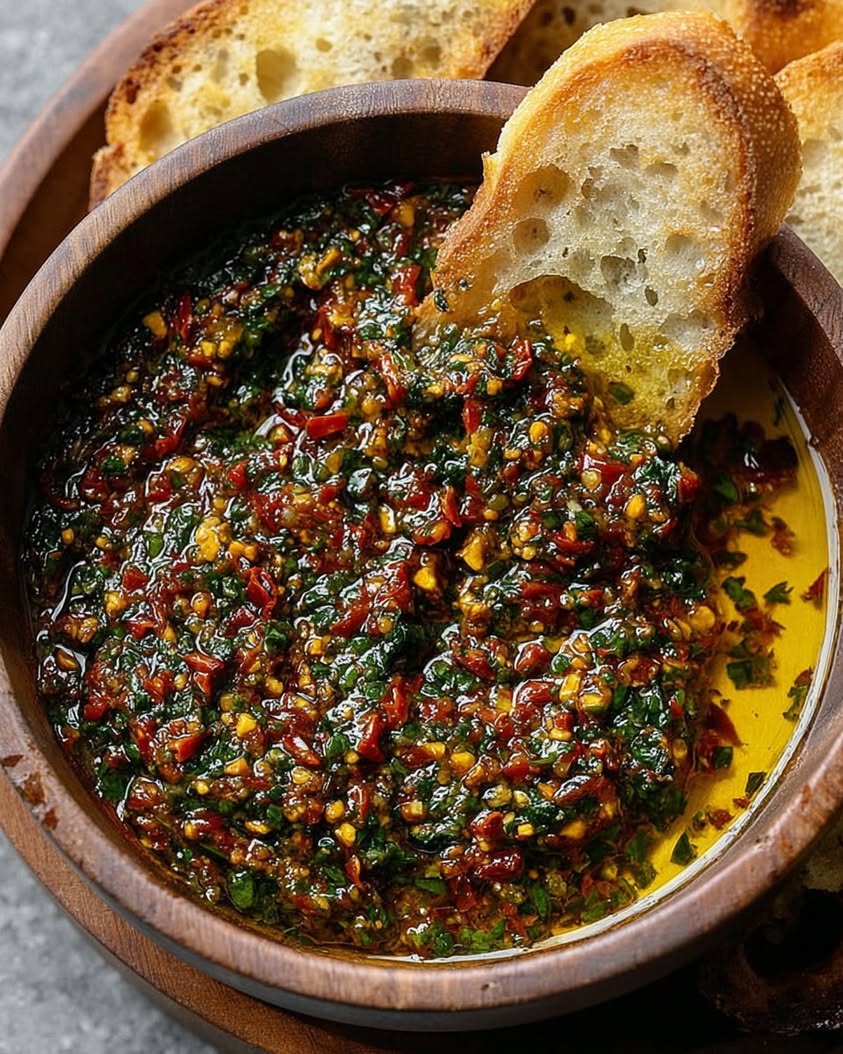
Sun-Dried Tomato Olive Oil Bread Dip: Your New Go-To Appetizer
Imagine tearing off a piece of warm, crusty artisan bread and dipping it into a vibrant, flavor-packed oil. This sun-dried tomato olive oil bread dip transforms that simple pleasure into an extraordinary culinary experience. Furthermore, it captures the essence of Italian antipasto in a bowl, offering a taste of a rustic trattoria right in your own kitchen. The deep, concentrated flavor of sun-dried tomatoes melds perfectly with fragrant herbs and high-quality olive oil.
This sun-dried tomato olive oil bread dip recipe requires absolutely no cooking, making it the ultimate last-minute appetizer. Consequently, you can whip it up in mere minutes while your bread warms in the oven. It is perfect for unexpected guests, busy weeknights, or when you simply crave a restaurant-quality snack without the fuss. Additionally, its stunning red and green appearance makes it a beautiful centerpiece for any table setting.
Every component of this easy appetizer works in harmony to create a symphony of flavors and textures. The chewy sun-dried tomatoes provide a sweet and tangy punch, while the herbs add freshness and complexity. Meanwhile, the garlic infuses the oil with a gentle warmth that lingers pleasantly on the palate. Ultimately, this sun-dried tomato olive oil bread dip is more than just a recipe; it is an invitation to slow down, savor, and share good food with great company.
Quick Recipe Highlights
- Flavor Profile: This sun-dried tomato olive oil bread dip delivers a robust, umami-rich taste. The intense sweetness of the tomatoes balances beautifully with the sharpness of garlic and the herbal notes of basil and oregano. Finally, a hint of red pepper flakes adds a subtle, warming kick that elevates the entire experience.
- Texture: The dip boasts a wonderfully varied texture that is both luxurious and interesting. The oil provides a smooth, liquid base, while the finely chopped sun-dried tomatoes offer a pleasingly chewy contrast. Additionally, the minced herbs contribute tiny bursts of freshness that make each bite unique.
- Aroma: Upon preparing this sun-dried tomato olive oil bread dip, your kitchen will fill with an irresistible Mediterranean fragrance. The primary scent is the fruity, peppery aroma of high-quality extra virgin olive oil. This is quickly followed by the pungent, inviting smell of fresh garlic and the earthy, sweet notes of dried Italian herbs.
- Visual Appeal: This appetizer is a feast for the eyes with its stunning color palette. The rich, ruby-red hue of the sun-dried tomatoes creates a vibrant base. Meanwhile, the green flecks of fresh basil and parsley and the occasional red pepper flake make the dip look professionally crafted and incredibly appetizing.
- Skill Level Needed: Absolutely no advanced culinary skills are required for this sun-dried tomato olive oil bread dip. In fact, the recipe is beginner-friendly and forgiving. The only techniques involved are simple chopping and stirring, making it accessible for cooks of all experience levels.
- Special Equipment: You need only the most basic kitchen tools to create this impressive dip. Essentially, a good chef’s knife and a cutting board are sufficient for prepping the ingredients. A single mixing bowl and a spoon for combining everything are the only other necessities.
Recipe Overview
- Difficulty Level: We classify this sun-dried tomato olive oil bread dip as exceptionally easy for several compelling reasons. Firstly, it involves zero cooking or technical processes like emulsification. Secondly, there is no risk of overcooking or undercooking any component. Consequently, the result is consistently perfect, making it a foolproof choice for any home cook.
- Category: This recipe falls squarely into the appetizer and snack category, ideal for starting a meal or enjoying as a light bite. It also fits beautifully into the condiment category, as it can enhance grilled meats, pasta dishes, or salads. Furthermore, it serves as a fantastic party food for gatherings and celebrations.
- Cuisine: This sun-dried tomato olive oil bread dip is firmly rooted in Italian culinary traditions, reminiscent of classic antipasto spreads. It draws inspiration from the Mediterranean practice of using high-quality olive oil as a base for flavorful dips. The specific combination of tomatoes, garlic, and basil is a hallmark of Southern Italian cuisine.
- Cost: Creating this sun-dried tomato olive oil bread dip is surprisingly economical, especially when considering its impressive impact. The most significant investment is a bottle of good extra virgin olive oil, which you can use for many other recipes. Sun-dried tomatoes and dried herbs are pantry staples that offer excellent value for their flavor contribution.
- Season: This dip is truly a seasonless recipe that you can enjoy all year round. However, it feels particularly fitting during the summer months when its bright, Mediterranean flavors complement outdoor dining. Conversely, its rich, comforting taste also makes it a wonderful appetizer for cozy winter gatherings.
- Occasion: This versatile sun-dried tomato olive oil bread dip is suitable for a vast array of occasions. It is perfect for casual family dinners, elegant dinner parties, and holiday feasts alike. Moreover, it makes a fantastic offering for potlucks or a simple, romantic snack for a quiet night in.
Why You’ll Love This Sun-Dried Tomato Olive Oil Bread Dip
The taste of this sun-dried tomato olive oil bread dip is genuinely unforgettable and keeps you coming back for more. Each component contributes a distinct layer of flavor that harmonizes into a complex and satisfying whole. The sun-dried tomatoes provide a deep, caramelized sweetness that is both rich and intense. Simultaneously, the fresh garlic adds a pungent sharpness that is mellowed by the fruity olive oil. The Italian herbs introduce an earthy, aromatic quality that grounds the entire flavor profile. Finally, the subtle heat from the red pepper flakes creates a lingering warmth that makes the dip incredibly moreish.
From a convenience standpoint, this sun-dried tomato olive oil bread dip is an absolute game-changer for busy hosts. You can assemble it in under ten minutes with minimal effort and virtually no cleanup required. Importantly, it can be prepared ahead of time, allowing the flavors to meld and intensify, which actually improves the final product. This make-ahead quality takes the pressure off entertaining, as your impressive appetizer is ready and waiting for guests. Consequently, you can spend less time in the kitchen and more time enjoying the company of your friends and family.
Nutritionally, this sun-dried tomato olive oil bread dip offers several notable health benefits when enjoyed in moderation. Extra virgin olive oil is a cornerstone of the Mediterranean diet, renowned for its heart-healthy monounsaturated fats and antioxidants. Sun-dried tomatoes are packed with lycopene, a powerful antioxidant that becomes more bioavailable when the tomatoes are concentrated. Garlic possesses natural anti-inflammatory and antimicrobial properties that have been valued for centuries. Furthermore, using this dip encourages the consumption of whole-grain breads, adding valuable fiber to your diet.
The social and entertaining value of this easy appetizer cannot be overstated. It creates an interactive, communal dining experience that breaks the ice and gets conversation flowing. Placing a beautiful bowl of this vibrant dip surrounded by torn bread on the table immediately sets a warm, welcoming tone. It is a universally appealing dish that caters to various dietary preferences, including vegetarians and vegans. Moreover, its sophisticated appearance and complex taste often lead guests to believe you spent far more time and effort than you actually did.
Cost-effectiveness is another significant advantage of this sun-dried tomato olive oil bread dip. Compared to ordering a similar appetizer at a restaurant, making it at home saves a substantial amount of money. The ingredients are pantry staples that are readily available and often already on hand. A single batch generously serves six people, making it an economical choice for feeding a crowd. Additionally, you have complete control over the quality of ingredients, allowing you to create a premium product without the premium price tag.
Historical Background and Cultural Significance
The tradition of dipping bread into seasoned olive oil has deep roots in the culinary history of the Mediterranean, particularly in Italy. This practice likely originated as a simple, humble way to make stale bread more palatable and enjoyable. Italian farmers and rural families would use their own freshly pressed olive oil, often infused with wild herbs from the hillsides. Over time, this basic sustenance evolved into a cherished culinary ritual, symbolizing hospitality and the sharing of a meal. The addition of sun-dried tomatoes is a more modern interpretation, reflecting the preservation techniques of Southern Italy where tomatoes are abundant in the summer.
Culturally, the act of sharing bread and oil is steeped in significance across Mediterranean societies. In Italy, it is often the first thing served at a meal, a gesture of welcome and a promise of the good food to come. This sun-dried tomato olive oil bread dip embodies the Italian culinary philosophy of “cucina povera,” or the art of making delicious food from simple, high-quality ingredients. It represents a connection to the land, celebrating the regional produce like olives, tomatoes, and herbs. Furthermore, it fosters a sense of community, as everyone gathers around the table to partake from a shared dish.
The evolution of this recipe mirrors the globalization of Italian cuisine and the increasing availability of its ingredients worldwide. Originally, the dip would have been made with whatever local herbs were available, such as rosemary, thyme, or wild marjoram. The specific inclusion of sun-dried tomatoes became popular outside of Italy as these preserved tomatoes gained international distribution. Contemporary versions often incorporate non-traditional elements like balsamic glaze or Parmesan cheese, showing how the recipe adapts to different palates. Despite these variations, the core principle remains: celebrating the flavor of good olive oil enhanced by a few simple, potent ingredients.
Regional variations of this bread dip highlight the diverse culinary landscapes within Italy and beyond. In Tuscany, the dip is often simplest, focusing on the quality of the region’s renowned olive oil with just a hint of garlic. Conversely, in Sicily, you might find additions like capers, anchovies, or local chili peppers for a more robust flavor. In American Italian restaurants, the “bread dip” has become a staple starter, often served with grated cheese and a drizzle of balsamic reduction. These adaptations demonstrate the recipe’s incredible versatility and its ability to absorb local influences while maintaining its essential character.
Ingredient Deep Dive
Extra virgin olive oil serves as the foundational liquid gold in this sun-dried tomato olive oil bread dip. Historically, olive oil has been a cornerstone of Mediterranean civilizations for thousands of years, used in cooking, religious ceremonies, and as a currency. Nutritionally, it is rich in monounsaturated fats and powerful antioxidants like oleocanthal, which has anti-inflammatory properties similar to ibuprofen. When selecting olive oil, look for a bottle that is darkly tinted and marked with a harvest date, ensuring freshness. Store it in a cool, dark place away from light and heat to prevent rancidity. For substitutions, a high-quality regular olive oil can work, though it will lack the fruity, peppery notes of extra virgin.
Sun-dried tomatoes provide the signature flavor and vibrant color that define this exceptional bread dip. Their creation was born from the necessity of preserving the summer tomato harvest to enjoy throughout the year, a practice particularly common in Southern Italy. They are nutritionally dense, offering concentrated levels of lycopene, vitamin C, potassium, and fiber compared to fresh tomatoes. When purchasing, choose sun-dried tomatoes packed in oil for the best texture and flavor, or dry-packed which you can rehydrate yourself. Store opened jars in the refrigerator to maintain quality. If you need a substitute, roasted red peppers can provide a similar sweet, concentrated flavor, though the character of the dip will change significantly.
Fresh garlic introduces a essential pungent warmth that is fundamental to the flavor profile of this dip. Garlic has been cultivated for over 5,000 years and was highly valued by ancient civilizations for both its culinary and medicinal properties. It contains a compound called allicin, which is released when crushed and provides most of its health benefits, including cardiovascular support and immune boosting. Select firm, plump bulbs with tight, unbroken skin, avoiding any that are sprouting or soft. Store garlic in a cool, dark, well-ventilated place; never refrigerate. If you cannot use fresh garlic, a quarter teaspoon of garlic powder can substitute for one clove, though the flavor will be less complex.
Italian herbs like basil and oregano contribute the aromatic, earthy notes that make this dip taste authentically Mediterranean. These herbs have been central to Italian cooking since Roman times, with each region favoring its own combinations. They are rich in antioxidants and essential oils that have digestive benefits and anti-microbial properties. For the best flavor, use fresh basil when possible and high-quality dried oregano, as drying actually concentrates its flavor. Store fresh herbs in the refrigerator with stems in water, and keep dried herbs in a cool, dark place for up to a year. If you lack these specific herbs, an Italian seasoning blend makes a convenient substitute.
Common Mistakes to Avoid
- Using low-quality olive oil is perhaps the most critical error, as the oil is the base of the entire dip. A bland or rancid oil will result in a flat-tasting dip no matter how good your other ingredients are. Always taste your olive oil before using it to ensure it has a fresh, fruity, and slightly peppery flavor.
- Over-mincing the garlic can make the dip unpleasantly sharp and overwhelming. When garlic is cut too finely, it releases more of its pungent compounds, which can dominate the other flavors. Instead, aim for a small, uniform dice that distributes evenly without becoming a paste.
- Skipping the resting time prevents the flavors from properly melding together. While you can serve the dip immediately, its taste improves dramatically after sitting for at least 30 minutes. This resting period allows the oil to absorb the flavors of the garlic, herbs, and tomatoes.
- Using stale or improperly stored herbs will diminish the dip’s aromatic quality. Dried herbs lose their potency after about six months, and fresh herbs should be vibrant and fragrant. Always check your herbs for freshness before adding them to ensure they contribute their full flavor potential.
- Chopping the sun-dried tomatoes too coarsely creates an awkward texture that is difficult to scoop with bread. The pieces should be small enough to adhere to the bread when dipped but substantial enough to provide a satisfying chew. A fine, consistent chop ensures every bite contains a balanced mix of ingredients.
- Forgetting to adjust seasoning after mixing is a common oversight. The salt level needed can vary depending on the saltiness of your sun-dried tomatoes and the personal preference of your guests. Always taste the finished dip and adjust with salt and pepper as needed before serving.
- Serving with the wrong type of bread can undermine the entire experience. A delicate, thinly sliced bread might become soggy, while a bread with too hard a crust can be difficult to dip. Opt for a crusty, rustic bread with a soft, porous interior that can hold up to the oil.
- Neglecting the temperature of the ingredients affects the final result. Using cold olive oil straight from the refrigerator will mute its flavors and make the dip less aromatic. Allow all ingredients to come to room temperature before mixing to ensure the fullest expression of their flavors.
Essential Techniques
Properly chopping the sun-dried tomatoes is crucial for achieving the ideal texture in your bread dip. First, ensure your knife is sharp to make clean cuts through the sometimes-chewy tomatoes. If your tomatoes are particularly dry or tough, you can briefly soak them in warm water to soften them before chopping. Hold the tomatoes together in a tight pile and use a rocking motion with your knife to create a fine, consistent mince. The goal is pieces small enough to distribute evenly but substantial enough to provide texture. Avoid processing them into a paste, as this will muddy the appearance and texture of your final dip.
Infusing the oil correctly is the secret to a deeply flavorful sun-dried tomato olive oil bread dip. This process involves allowing the oil to absorb the flavors of the other ingredients over time. After combining all components, let the mixture sit at room temperature for at least 30 minutes before serving. This resting period allows the oil to draw out the essential oils from the garlic and herbs while rehydrating the sun-dried tomatoes slightly. Gently stirring the dip occasionally during this time helps distribute the flavors more evenly. Do not apply heat to speed up this process, as warming the oil can degrade its quality and alter the fresh taste of the herbs.
Balancing flavors is a technique that transforms a good dip into an exceptional one. Taste your mixture after the initial resting period and assess the harmony of sweet, salty, acidic, and herbal notes. If the dip tastes too sharp from the garlic, a tiny pinch of sugar can help mellow it. If it lacks brightness, a small squeeze of lemon juice can lift all the flavors. Remember that the saltiness of sun-dried tomatoes can vary between brands, so always adjust seasoning at the end. The perfect dip should have no single dominant flavor but rather a harmonious blend where each ingredient complements the others.
Pro Tips for Perfect Sun-Dried Tomato Olive Oil Bread Dip
For superior flavor, gently warm the olive oil with the garlic and herbs before adding other ingredients. This technique, known as “steeping,” helps release the aromatic compounds into the oil without cooking them. Simply heat the oil very gently over low heat for 2-3 minutes, then remove from heat and let cool completely before proceeding.
Add a teaspoon of high-quality balsamic vinegar to your dip for a touch of sweetness and complexity. The acidity helps balance the richness of the oil while complementing the sweetness of the sun-dried tomatoes. Be cautious not to add too much, as it can overpower the other flavors and darken the vibrant color of your dip.
Include a small amount of the oil from the sun-dried tomato jar in your mixture. This oil is already infused with tomato flavor and will intensify the overall taste of your dip. Replace an equal amount of the regular olive oil with this flavored oil for an extra layer of tomato essence.
Toast your dried herbs briefly in a dry skillet before adding them to the dip. This simple step wakes up their essential oils and deepens their flavor profile. Heat them over medium heat for just 30-60 seconds until fragrant, being careful not to burn them, then let them cool before using.
For a textural variation, reserve a tablespoon of the chopped sun-dried tomatoes to sprinkle on top of the finished dip. This creates visual appeal and provides little bursts of concentrated tomato flavor for those who get a piece on their bread. The contrast between the infused oil and the straight tomato is delightful.
If serving for a special occasion, consider adding a few tablespoons of finely grated Parmesan or Pecorino Romano cheese. The salty, umami-rich cheese complements the tomatoes beautifully and adds another dimension of flavor. Stir it in just before serving to maintain its texture.
Variations and Adaptations
Regional variations of this sun-dried tomato olive oil bread dip showcase the diversity of Mediterranean flavors. For a Provençal twist, incorporate Herbes de Provence and a touch of lavender. A Greek version might include Kalamata olives, feta cheese, and fresh dill. Spanish influences could feature smoked paprika and marcona almonds. Meanwhile, a North African adaptation might include harissa, cumin, and preserved lemon. Each regional variation maintains the core concept of an oil-based dip while reflecting local ingredient preferences and culinary traditions.
Seasonal adaptations allow you to enjoy this dip year-round with ingredients at their peak. In spring, add fresh peas, mint, and young garlic for a lighter profile. Summer variations can include fresh chopped tomatoes alongside the sun-dried ones and an abundance of basil. For autumn, incorporate roasted garlic instead of raw and add a pinch of sage. Winter versions benefit from the addition of rosemary and thyme, which pair well with heartier winter meals. These seasonal tweaks keep the recipe feeling fresh and appropriate throughout the year.
Dietary modifications make this sun-dried tomato olive oil bread dip accessible to various eating preferences. For a vegan version, simply ensure all ingredients meet vegan standards, which they typically do. A keto-friendly adaptation might include adding chopped olives and serving with keto bread or vegetable crudités. To reduce fat content, you can replace half the oil with vegetable broth, though the texture will be less luxurious. For those with garlic sensitivity, roasted garlic provides a milder flavor, or you can use garlic-infused oil instead of fresh garlic.
Flavor variations can completely transform the character of your bread dip while maintaining the same preparation method. For a spicy version, increase the red pepper flakes or add a minced fresh chili pepper. A citrus-infused dip might include lemon zest and a squeeze of juice for brightness. An umami-rich version could incorporate chopped anchovies or a dash of Worcestershire sauce. For herb lovers, increasing the fresh herbs or adding non-traditional ones like tarragon or chervil creates a garden-fresh profile. Each variation offers a new experience while keeping the preparation simple and straightforward.
Serving and Presentation Guide
Plating techniques significantly impact the visual appeal and functionality of your sun-dried tomato olive oil bread dip. Choose a wide, shallow bowl rather than a deep one to maximize the surface area for easy dipping. Pour the dip into the bowl first, then use the back of a spoon to create subtle swirls on the surface. This technique creates pockets where the herbs and tomato pieces collect, making every dip visually interesting. Ensure the bowl is stable and won’t tip easily when guests press down with their bread. For individual servings, consider small ramekins which prevent double-dipping and create an elegant place setting.
Garnishing ideas elevate your dip from homemade to restaurant-quality with minimal effort. A final drizzle of high-quality olive oil over the surface adds shine and reinforces the fresh oil flavor. Sprinkle a few whole basil leaves or oregano sprigs on top for a pop of color and freshness. A light dusting of smoked paprika or a few extra red pepper flakes adds visual contrast and hints at the flavor within. For special occasions, edible flowers like nasturtiums or pansies create a stunning, impressive presentation that guests will remember.
Traditional accompaniments focus on bread selection to complement the robust flavors of the dip. A crusty Italian or French baguette, sliced or torn into chunks, is the classic choice. Focaccia, with its herbed surface and soft texture, makes an excellent alternative that soaks up the oil beautifully. For a regional touch, serve with grissini (Italian breadsticks) or crostini for a different textural experience. Always warm the bread slightly before serving to enhance its aroma and make it more receptive to absorbing the flavorful oil.
Wine and Beverage Pairing
Wine pairings for this sun-dried tomato olive oil bread dip should complement its Mediterranean character and robust flavors. A crisp, acidic white wine like Pinot Grigio or Vermentino cuts through the richness of the oil beautifully. For red wine lovers, a light-bodied Chianti or Barbera with good acidity stands up to the tomatoes without overwhelming the palate. Rosé wines, particularly those from Provence, offer a perfect middle ground with their dryness and berry notes. Ultimately, the high acidity in these wines cleanses the palate between bites, making each taste of the dip feel fresh and vibrant.
Non-alcoholic alternatives provide refreshing options for all guests while enhancing the dining experience. Sparkling water with a twist of lemon or lime cleanses the palate effectively between bites. For something more distinctive, a tart pomegranate juice mirrors the fruity notes in the dip. Iced herbal teas, particularly rosemary or basil-infused varieties, echo the herbal components in the recipe. Even a simple tomato juice with a celery stick garnish complements the sun-dried tomato flavor while offering a different texture experience.
Storage and Shelf Life
Proper storage methods are essential for maintaining the quality and safety of your sun-dried tomato olive oil bread dip. Always transfer any leftovers to an airtight container, pressing plastic wrap directly onto the surface before sealing to minimize air exposure. Refrigerate the dip promptly, as the garlic and fresh herbs can develop off-flavors at room temperature. For best results, use a glass container rather than plastic, which can absorb flavors and odors. Label the container with the date prepared to ensure you use it within the optimal timeframe.
The shelf life of your homemade dip depends on the freshness of your ingredients and storage conditions. Properly stored in the refrigerator, the dip will maintain its best quality for 5-7 days. The oil may solidify slightly when chilled, but this is normal and will return to liquid at room temperature. Do not freeze the dip, as this will damage the texture of the herbs and tomatoes and cause the oil to separate. Discard the dip if you notice any off odors, mold growth, or significant color changes.
Make Ahead Strategies
Advanced preparation of this sun-dried tomato olive oil bread dip actually enhances its flavor profile. You can comfortably prepare the complete dip 24 hours before serving, storing it covered in the refrigerator. The extended resting time allows the flavors to meld more completely, resulting in a more harmonious and developed taste. If preparing more than a day in advance, consider holding back the fresh herbs and adding them a few hours before serving to maintain their bright color and fresh flavor. This make-ahead quality makes it an ideal choice for stress-free entertaining.
Component preparation offers flexibility for last-minute assembly while still benefiting from advanced planning. Chop the sun-dried tomatoes and measure the dried herbs up to three days in advance, storing them separately in airtight containers. You can even pre-mix the dry ingredients and store them together, then simply add the oil when ready to serve. For the freshest garlic flavor, mince it no more than a few hours before combining with the oil. This approach minimizes active prep time when guests arrive while ensuring the final product tastes freshly made.
Scaling Instructions
Halving the recipe works perfectly for smaller gatherings or when you want just enough for two people. Simply divide all ingredient quantities exactly in half, using precisely half a garlic clove if your original recipe calls for one. The preparation method remains identical, though the resting time might be slightly shorter since there is less volume for flavors to distribute. Use a smaller serving bowl to maintain the attractive presentation where the dip has substantial depth. This scaled-down version is ideal for romantic dinners or when testing the recipe for the first time.
Doubling or tripling the recipe for larger parties requires minimal adjustments to the method. Multiply all ingredients consistently, though you may want to be slightly conservative with the red pepper flakes as heat can accumulate. Use a very large bowl for mixing to ensure even distribution of all components. The resting time becomes more important with larger batches, as it takes longer for the flavors to permeate the greater volume of oil. Consider serving the dip in multiple smaller bowls placed around your entertaining space to prevent congestion and encourage mingling.
Nutritional Deep Dive
The macronutrient breakdown of this sun-dried tomato olive oil bread dip reflects its Mediterranean origins. The primary component is fat from the olive oil, which is predominantly monounsaturated and considered heart-healthy. The sun-dried tomatoes contribute carbohydrates in the form of natural sugars and fiber, while the herbs provide minimal macronutrients. When paired with bread, the combination offers a balance of fats, carbohydrates, and a small amount of protein. Understanding this profile helps you incorporate the dip into a balanced diet, perhaps enjoying it before a protein-rich main course.
Micronutrient analysis reveals an impressive array of vitamins and minerals concentrated in this flavorful dip. Sun-dried tomatoes are particularly rich in lycopene, a powerful antioxidant associated with reduced risk of certain cancers and heart disease. Olive oil contains vitamin E and K, along with various phenolic compounds with anti-inflammatory properties. Garlic provides manganese, vitamin B6, and vitamin C, while the herbs contribute additional antioxidants. Together, these components create a nutrient-dense condiment that offers more than just flavor.
Dietary Adaptations
Gluten-free adaptation of this sun-dried tomato olive oil bread dip is remarkably straightforward since the dip itself contains no gluten. The modification comes entirely in the choice of accompaniments served with the dip. Offer gluten-free bread, crackers, or vegetable crudités for dipping to accommodate those with celiac disease or gluten sensitivity. Ensure all ingredients, particularly any pre-packaged items like sun-dried tomatoes, are certified gluten-free if cross-contamination is a concern. This simple adjustment makes the recipe accessible to virtually everyone while maintaining all its original flavor.
Vegan adaptation requires no changes to the standard recipe, as it naturally contains no animal products. The base ingredients of olive oil, sun-dried tomatoes, garlic, and herbs are all plant-based. When serving, simply ensure the bread accompaniment contains no dairy, eggs, or honey to maintain the completely vegan character of the offering. This inherent compatibility with vegan diets makes the dip an excellent choice for mixed-diet gatherings where you want to serve one dish that satisfies all guests.
Troubleshooting Guide
Texture issues typically manifest as an oil that has separated or ingredients that have become mushy. If your oil has solidified in the refrigerator, simply let the dip come to room temperature and stir vigorously to recombine. For a dip that has become too thick from chilled oil, you can gently warm the bowl in a warm water bath while stirring. If the sun-dried tomatoes have made the oil cloudy, this is normal from their natural oils and doesn’t indicate a problem. Should the herbs appear wilted or discolored after storage, simply stir in a fresh sprinkle before serving to revive the appearance.
Flavor balance problems can usually be corrected with simple adjustments even after the dip is mixed. If the garlic taste is too strong, adding more olive oil and sun-dried tomatoes can help dilute it without throwing off the recipe proportions. For a dip that tastes flat, a pinch of salt, squeeze of lemon juice, or additional herbs can brighten the flavors. If the sun-dried tomatoes make the dip too sweet, a tiny amount of red wine vinegar can provide balancing acidity. Remember that flavors continue to develop over time, so make adjustments gradually and let the dip rest before reassessing.
Recipe Success Stories
Community feedback on this sun-dried tomato olive oil bread dip consistently highlights its reliability and crowd-pleasing nature. Home cooks report that it has become their go-to appetizer for everything from casual family nights to important holiday meals. Many note that even children who typically avoid vegetables enjoy the dip, especially when served with their favorite bread. Several readers have shared that this recipe gave them the confidence to host more dinner parties, knowing they have an impressive starter they can prepare without stress. The most common compliment is that guests frequently request the recipe, making hosts feel like culinary rock stars.
Variation successes demonstrate the recipe’s adaptability to different tastes and ingredient availability. One cook substituted oil-packed artichoke hearts for half the sun-dried tomatoes and received rave reviews. Another added toasted pine nuts for crunch and found it elevated the textural experience significantly. A reader following a low-sodium diet used no-salt-added sun-dried tomatoes and increased the herbs, creating a version that met their dietary needs without sacrificing flavor. These adaptations show how the basic formula serves as a springboard for creativity while maintaining the essential character that makes the dip so appealing.
Frequently Asked Questions
Can I use fresh tomatoes instead of sun-dried tomatoes?
While fresh tomatoes offer a different flavor profile, they will not provide the concentrated sweetness and chewy texture that define this dip. Fresh tomatoes contain significantly more water, which will dilute the oil and create a less luxurious consistency. If you must substitute, consider roasting fresh tomatoes first to concentrate their flavor and remove excess moisture. However, for the authentic experience, sun-dried tomatoes are essential and worth seeking out.
How long can I leave the dip out at room temperature during a party?
For food safety, do not leave the dip at room temperature for more than two hours. If your gathering extends beyond this timeframe, place the dip bowl over a larger bowl of ice to keep it chilled while maintaining its liquid state. Alternatively, you can serve smaller portions, refreshing the bowl from the refrigerator as needed. This practice ensures the dip remains safe to eat while preserving its optimal texture and flavor throughout your event.
Can I make this dip without garlic?
Yes, you can omit the garlic entirely for a milder version, though it will lack the characteristic pungent note that balances the sweet tomatoes. For a similar aromatic quality without garlic, consider using a small amount of finely minced shallot, which provides a gentler allium flavor. Alternatively, a teaspoon of capers, rinsed and chopped, can add complexity and a briny note that compensates for the missing garlic. The dip will still be delicious, just with a different flavor profile.
What is the best type of olive oil to use for this dip?
Select a high-quality extra virgin olive oil with a fruity, peppery flavor profile rather than a mild or neutral oil. Since the oil is the primary ingredient, its quality directly determines the success of your dip. Look for oils labeled with a harvest date rather than just a best-by date, as fresher oil has better flavor. Oils from specific regions like Tuscany, Sicily, or California often have the robust character that stands up well to the other strong flavors in this recipe.
Why does my dip taste bitter?
Bitterness can result from several factors, including low-quality olive oil, over-processed garlic, or herbs that are past their prime. If your olive oil tastes bitter on its own, it may be of low quality or becoming rancid. Garlic that is crushed too vigorously can release bitter compounds, so a gentle mince is preferable. Old dried herbs can develop bitter notes, so ensure yours are fresh. A tiny pinch of sugar can help balance existing bitterness without making the dip taste sweet.
Can I add cheese to this dip?
Absolutely, grated hard cheeses like Parmesan, Pecorino Romano, or Asiago make excellent additions to this dip. Add about ¼ cup of finely grated cheese to the standard recipe, stirring it in just before serving. The cheese adds a salty, umami dimension that complements the tomatoes beautifully. For serving, you can also offer additional grated cheese on the side for guests to sprinkle over their bread before dipping. Just note that adding cheese makes the dip non-vegan and reduces its shelf life slightly.
How fine should I chop the sun-dried tomatoes?
Aim for pieces approximately the size of a grain of rice or
Print
Sun-Dried Tomato Olive Oil Bread Dip
Description
A savory and aromatic dip made with sun-dried tomatoes, herbs, and quality olive oil, perfect for serving with crusty bread.
Ingredients
For the Crust:
- 1/2 cup sun-dried tomatoes in oil, drained and finely chopped
- 1/2 cup extra virgin olive oil
- 3 cloves garlic, minced
- 2 tablespoons fresh basil, chopped
- 1 tablespoon fresh parsley, chopped
- 1 teaspoon dried oregano
- 1/2 teaspoon red pepper flakes
- 1/4 teaspoon sea salt
- 1/4 teaspoon black pepper
- 1 tablespoon balsamic vinegar
Instructions
1. Prepare the Crust:
- In a medium bowl, combine the sun-dried tomatoes, minced garlic, basil, parsley, oregano, red pepper flakes, salt, and black pepper.
- Pour in the extra virgin olive oil and balsamic vinegar, then stir well to combine all ingredients.
- Let the dip sit for at least 15 minutes to allow the flavors to meld. Serve with your favorite crusty bread or breadsticks.
Notes
You can customize the seasonings to taste.

I’m Shaykee—born in Morocco, seasoned across continents. From airplane galleys to home kitchens, I share the flavors and stories that shaped my journey.