
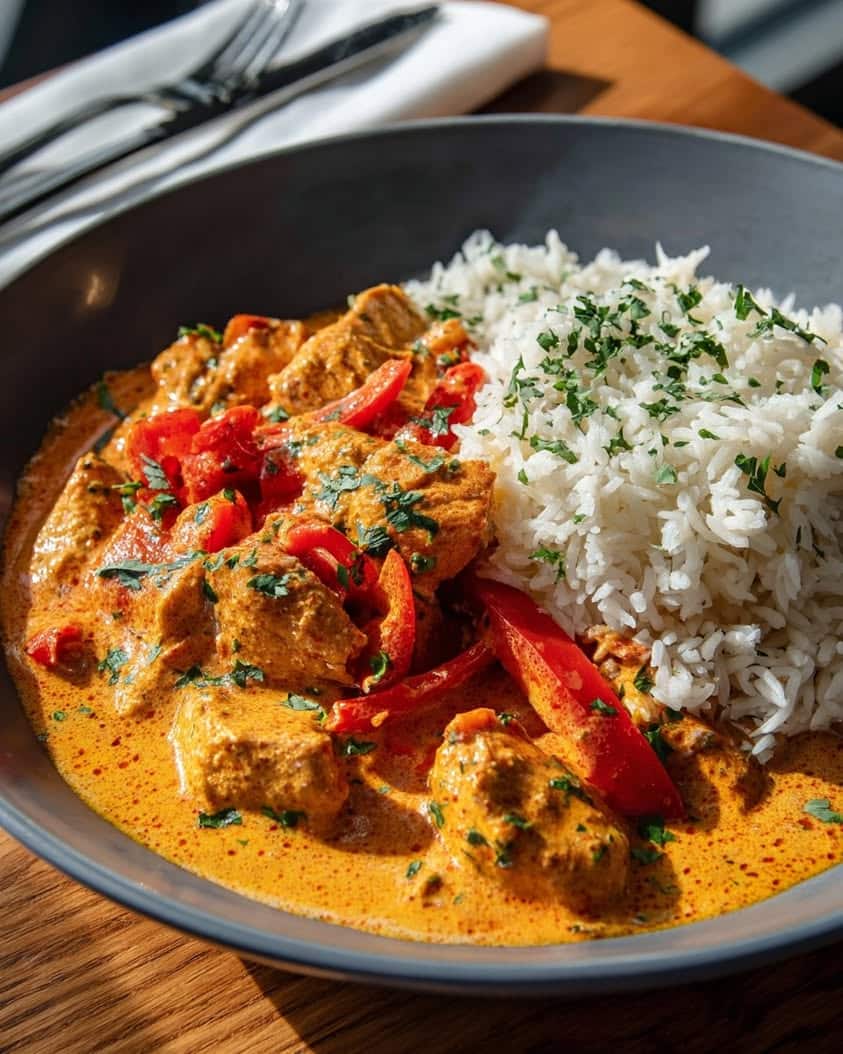
Ultimate Creamy Chicken Curry with Rice & Peppers: A 30-Minute Flavor Explosion
Imagine a dish that delivers the deep, complex flavors of a slow-simmered curry but lands on your table in under forty minutes. This ultimate creamy chicken curry with rice and peppers is precisely that kind of culinary magic. It transforms simple, accessible ingredients into a vibrant, soul-warming meal that feels both indulgent and comforting. The rich, velvety sauce clings to tender pieces of chicken and crisp-tender peppers, creating a symphony of textures and tastes in every single bite.
Furthermore, this recipe is a perfect solution for busy weeknights when you crave something special without the fuss. The process is straightforward, the ingredient list is forgiving, and the result is consistently impressive. From the moment the aromas of garlic, ginger, and spices hit the pan, your kitchen will fill with an irresistible fragrance that promises a delicious dinner ahead. Ultimately, this creamy chicken curry is more than just a meal; it is a quick escape to a world of flavor, offering a satisfying and complete dinner that the whole family will request again and again.
Quick Recipe Highlights
- Flavor Profile: This dish masterfully balances warm, earthy curry spices with the bright, fresh sweetness of bell peppers. Additionally, a touch of cream or coconut milk introduces a luxurious richness that mellows the spices without diminishing their character. The result is a complex, layered taste that is neither too spicy nor too mild, appealing to a wide range of palates.
- Texture: The texture is a delightful contrast between the succulent, juicy chicken and the slight crunch of the peppers. Meanwhile, the sauce itself is luxuriously smooth and creamy, coating each grain of fluffy rice perfectly. This combination ensures every forkful is interesting and satisfying, avoiding any monotony.
- Aroma: As the curry cooks, key aromatic notes of toasted cumin and coriander bloom in the oil, followed by the pungent kick of fresh garlic and ginger. These foundational scents are then rounded out by the sweetness of sautéing onions and peppers, creating an olfactory experience that is incredibly inviting and unmistakably reminiscent of comfort food.
- Visual Appeal: The presentation boasts a beautiful array of colors from the red and green bell peppers against the golden-yellow creamy sauce and white rice. Garnished with fresh cilantro, the plate looks vibrant and restaurant-worthy. Consequently, this visual feast makes the dish perfect for both casual family dinners and impressing guests.
- Skill Level Needed: This recipe requires only basic cooking expertise, such as chopping vegetables and sautéing. Importantly, it is designed to be forgiving, making it ideal for novice cooks looking to build confidence. Even experienced cooks will appreciate the efficient, reliable method for a stunning result.
- Special Equipment: You need only a large skillet or Dutch oven with a lid and a standard pot for cooking rice. No special tools are required, which makes this an accessible recipe for any home kitchen. A good sharp knife for prepping the chicken and vegetables is the most critical tool for success.
Recipe Overview
- Difficulty Level: We rate this recipe as “Easy” because it involves fundamental techniques like chopping, sautéing, and simmering. The steps are sequential and logical, with minimal multitasking required. Moreover, the recipe is very forgiving; slight variations in ingredient amounts or simmering time will still yield a delicious outcome. Therefore, it is an excellent choice for a confident beginner or any cook seeking a reliable weeknight solution.
- Category: This dish falls squarely into the categories of Main Course and Comfort Food. It is a complete, protein-rich meal when served with rice. Additionally, it fits well into the “Quick & Easy” and “Family-Friendly” collections, as it is fast to prepare and generally loved by both adults and children.
- Cuisine: While inspired by the broad, diverse traditions of South Asian curry, this recipe is a streamlined, weeknight-friendly adaptation. It draws on core techniques and spice blends from that region but simplifies the process for modern home kitchens. The result is a globally-inspired dish that respects its origins while prioritizing accessibility and speed.
- Cost: The cost is very reasonable, utilizing affordable staples like chicken thighs, onions, and bell peppers. The spices represent a one-time investment that will season many meals. Overall, this creamy chicken curry is a cost-effective way to create a restaurant-quality dinner at home, often for a fraction of the price of takeout.
- Season: This dish is truly versatile across seasons. It provides warmth and comfort during cooler fall and winter months. Conversely, the bright peppers and aromatic spices also make it feel fresh and appropriate for spring and summer, especially when served with a light side salad.
- Occasion: It is perfectly suited for busy weeknight dinners, casual weekend family meals, or even informal entertaining. The recipe scales easily to feed a crowd and its universally appealing flavors make it a safe yet impressive choice for potlucks or dinner parties.
Why You’ll Love This Recipe
First and foremost, the taste and texture appeal of this creamy chicken curry is undeniable. The sauce achieves a perfect harmony of spices, creaminess, and savory depth that clings wonderfully to the chicken and rice. Each bite delivers the tender meat, the slight crunch of pepper, and the fluffy rice in a single, cohesive package. This satisfying combination makes it a meal that truly comforts and delights, hitting all the right notes for a memorable dinner experience.
From a convenience standpoint, this recipe is a genuine weeknight hero. With a total hands-on time of around fifteen minutes and a cook time of twenty-five, you can have a spectacular meal on the table in about forty minutes. The process is largely hands-off once the simmering begins, allowing you to prepare sides, set the table, or simply relax. Importantly, it uses one pan for the curry and one pot for the rice, minimizing cleanup and maximizing efficiency in your kitchen routine.
Nutritionally, this dish offers a well-balanced profile. Chicken provides high-quality, lean protein essential for muscle repair and satiety. Bell peppers are loaded with vitamins A and C, powerful antioxidants. Using a moderate amount of cream or a coconut milk alternative keeps the sauce rich without being overly heavy. When served with a reasonable portion of whole-grain rice, this meal delivers sustained energy, making it a wholesome choice for any night of the week.
For social and entertaining value, this creamy chicken curry is a fantastic option. It is inherently a sharing dish, meant to be served family-style from a central platter. The vibrant colors and aromatic steam make a dramatic presentation when brought to the table. Because the flavors are crowd-pleasing and the recipe is easy to double, it takes the stress out of hosting, allowing you to enjoy your guests’ company rather than being stuck in the kitchen.
Finally, its cost-effectiveness and accessibility are major wins. The ingredients are common and affordable, available at any standard grocery store. Compared to ordering curry takeout for a family, cooking this at home saves a significant amount of money. Furthermore, you control the quality of ingredients, the level of salt, and the freshness of each component, resulting in a healthier, more personalized, and economical meal that doesn’t sacrifice an ounce of flavor.
Historical Background and Cultural Significance
The concept of “curry” is a vast and complex tapestry woven through centuries of trade, migration, and cultural exchange across South Asia and beyond. The word itself is believed to be an anglicization of the Tamil word “kari,” meaning sauce or relish. Originally, these dishes were built on a foundation of locally available spices, meats, and vegetables, pounded into pastes and slow-cooked to develop deep flavors. Our modern interpretation, while simplified, honors this tradition of building layers of spice and aroma in a savory sauce.
Culturally, curry holds immense importance as a centerpiece of family and community meals in many regions. It is more than just food; it is a vehicle for tradition, often passed down through generations with each family adding its own signature touch. The act of sharing a pot of curry signifies hospitality, warmth, and connection. Our creamy chicken curry with peppers captures this spirit of communal eating, designed to be shared straight from the skillet, fostering togetherness at the dinner table.
The evolution of the recipe, particularly for Western home kitchens, is a story of adaptation. Traditional methods could involve dozens of spices, long marination times, and extended simmering. Modern versions, like this one, streamline the process by using efficient curry powder blends and quicker-cooking proteins like chicken breast or thigh. This evolution makes the incredible flavors of curry accessible to home cooks with limited time, without sacrificing the soul of the dish. It represents a beautiful fusion of tradition and contemporary lifestyle.
Regional variations of chicken curry are endless, reflecting local ingredients and tastes. In Northern India, a curry might be richer with cream and nuts, while a Southern version could be lighter with coconut milk and more heat. A Thai green curry would feature lemongrass and basil. Our version with bell peppers is a common and beloved adaptation found in many home kitchens globally, adding sweetness, color, and texture. This flexibility is the true beauty of curry—it is a framework for creativity, welcoming personal interpretation and available ingredients.
Ingredient Deep Dive
Chicken thighs are the preferred protein for this creamy chicken curry due to their superior flavor and moisture retention during cooking. Unlike breast meat, thighs contain slightly more fat, which translates to juicier, more tender bites that won’t dry out in the simmering sauce. From a nutritional standpoint, they are an excellent source of protein, iron, and zinc. For the best results, look for boneless, skinless thighs and trim any excess fat. You can substitute chicken breast if desired, but be vigilant to avoid overcooking.
Bell peppers contribute crucial sweetness, vibrant color, and a satisfying crunch. Historically, peppers traveled from the Americas to Asia via trade routes, becoming integral to many cuisines. They are packed with vitamins, especially vitamin C, and antioxidants. Select peppers that are firm with glossy, taut skin. For a more dynamic flavor, use a mix of colors like red, yellow, and green. They store well in the refrigerator’s crisper drawer. If you prefer a different vegetable, zucchini, cauliflower, or green beans make excellent substitutes.
The curry powder blend is the heart of the dish’s flavor. Commercial curry powder is actually a British invention, an attempt to recreate the complex spice blends of India. It typically contains turmeric, coriander, cumin, fenugreek, and chili powder. Turmeric provides the iconic golden color and offers anti-inflammatory properties. To maximize flavor, toast the curry powder briefly in the oil with the onions. For a fresher taste, you can make your own blend or use a high-quality store-bought version. Store spices in a cool, dark place to preserve their potency.
Coconut milk or heavy cream creates the luxurious, creamy sauce that defines this curry. Coconut milk, used in many Southeast Asian curries, adds a distinct tropical sweetness and dairy-free richness. Heavy cream provides a more neutral, velvety texture. Nutritionally, coconut milk contains medium-chain triglycerides (MCTs), while cream adds fat-soluble vitamins. Always shake a can of coconut milk well before opening. For a lighter version, light coconut milk or even Greek yogurt added at the very end can work, though yogurt must be tempered to prevent curdling.
Common Mistakes to Avoid
- Not Toasting the Spices: Adding curry powder directly to the liquid without toasting it in oil first is a missed opportunity. Toasting, or “blooming,” the spices for just 30-60 seconds unlocks their essential oils and deepens their flavor profile dramatically, moving the taste from flat and dusty to rich and complex.
- Overcrowding the Pan When Browning Chicken: If you add all the chicken pieces at once, they will steam instead of sear. You must cook in batches if necessary to ensure each piece gets proper contact with the hot pan. This browning, known as the Maillard reaction, creates foundational savory flavors that enrich the entire sauce.
- Using Old, Stale Spices: Spices lose their potency over time. If your curry powder has been sitting in the cabinet for years, your curry will taste bland no matter what you do. Always check the smell of your spices; they should be aromatic. Investing in fresh spices is crucial for a flavorful creamy chicken curry.
- Overcooking the Bell Peppers: Adding the peppers too early will cause them to become mushy and lose their vibrant color and pleasant crunch. They should be added partway through the simmering process so they retain some texture. This provides a welcome contrast to the tender chicken and creamy sauce.
- Boiling the Creamy Sauce: Once you add the coconut milk or cream, you should only simmer the curry gently. A rolling boil can cause the dairy to separate or the sauce to become greasy. Gentle heat ensures the sauce stays smooth, velvety, and properly emulsified.
- Underseasoning at the End: Spices need salt to make their flavors pop. Always taste the finished curry just before serving and adjust the seasoning with salt and perhaps a squeeze of lime juice or lemon juice. This final seasoning step is what brings all the layered flavors into perfect harmony.
- Skipping the Fresh Aromatics: While curry powder provides the base flavor, fresh garlic and ginger are non-negotiable for authentic depth. Using powdered forms will result in a less vibrant, more one-dimensional taste. The pungent, sharp notes of fresh garlic and ginger are irreplaceable in building the sauce’s aromatic foundation.
- Using the Wrong Rice: A fluffy, long-grain rice like Basmati or Jasmine is ideal because it doesn’t clump and perfectly soaks up the sauce. Using a short-grain or sticky rice can make the dish feel heavy and stodgy. Cooking the rice properly—rinsed and steamed—is essential for the complete experience.
Essential Techniques
The Maillard Reaction, achieved by properly browning the chicken, is the first essential technique. This chemical reaction between amino acids and sugars creates hundreds of new flavor compounds, resulting in a deep, savory, nutty taste that forms the flavor backbone of your sauce. To master it, ensure your pan is hot and the chicken pieces are dry before adding them. Do not move them immediately; let them sear undisturbed for a few minutes to develop a golden-brown crust. The visual cue for success is a caramelized exterior that releases easily from the pan.
Blooming Spices is the second critical technique. This involves cooking the curry powder (and any other ground spices) in hot oil for a short time before adding liquids. The heat unlocks and toasts the essential oils within the spices, transforming and intensifying their flavors. To do it, cook your onions until soft, then add the curry powder and stir constantly for about 30-60 seconds until fragrant. The common pitfall is burning them, which makes spices bitter. Success is marked by a wonderfully aromatic smell filling your kitchen without any sign of smoking.
Building and Simmering the Sauce is the final, patient technique. After adding liquids like broth and coconut milk, you bring the curry to a gentle simmer, not a rolling boil. This slow, even heat allows the flavors to meld, the chicken to cook through tenderly, and the sauce to thicken slightly. Covering the pan helps retain moisture and cook everything evenly. The visual cue for doneness is chicken that is cooked through with no pink inside and a sauce that has thickened enough to coat the back of a spoon. Rushing this step with high heat will ruin the texture.
Pro Tips for Perfect Creamy Chicken Curry
For maximum flavor, marinate your chicken pieces in a tablespoon of yogurt and a teaspoon of the curry powder for 15-30 minutes before cooking. This not only adds flavor but also helps tenderize the meat, ensuring it stays incredibly juicy throughout the cooking process.
Use homemade or low-sodium chicken broth to control the salt level of your final dish. Since broth reduces during simmering, a regular-sodium broth can make the curry too salty, especially if you are using a seasoned curry powder blend.
Add a teaspoon of tomato paste when sautéing the onions. This little addition adds a subtle sweetness and umami depth that rounds out the sauce beautifully, complementing the spices and creaminess without making the curry taste like tomatoes.
Finish the curry with a garnish of fresh herbs. While cilantro is classic, chopped fresh parsley, Thai basil, or even a sprinkle of sliced green onions add a burst of freshness and color that elevates the entire dish just before serving.
If your sauce is too thin after simmering, create a quick slurry by mixing one teaspoon of cornstarch with one tablespoon of cold water. Stir this into the simmering curry and cook for one more minute until the sauce thickens to your desired consistency.
For a richer, more complex flavor, toast whole spices like cumin seeds, coriander seeds, and a cinnamon stick in the oil before adding the onions. Then proceed with the ground curry powder. This double layer of spice makes an extraordinary difference.
Let the finished curry rest for 5-10 minutes off the heat before serving. This allows the flavors to settle and integrate more fully, and the sauce will thicken slightly as it cools, achieving the perfect creamy consistency.
Variations and Adaptations
For regional variations, explore different curry pastes. Substitute the curry powder with two tablespoons of Thai red or green curry paste for a Southeast Asian twist, using coconut milk and fish sauce. For a Japanese influence, use a mild curry roux block for a completely different, stew-like consistency. An Indian variation might involve making your own garam masala blend and adding tomatoes for a butter chicken-style sauce.
Seasonal adaptations are simple and effective. In summer, add fresh corn kernels or diced zucchini in the last few minutes of cooking. For autumn, incorporate cubed sweet potato or pumpkin, adding them earlier to soften. In winter, hearty greens like spinach or kale, stirred in at the end until wilted, add nutrition and color. Spring might call for fresh peas and asparagus tips.
Dietary modifications are straightforward. For a gluten-free version, ensure your curry powder and broth are certified gluten-free. To make it dairy-free, use full-fat coconut milk. For a vegan adaptation, replace chicken with chickpeas, firm tofu, or cauliflower florets, and use vegetable broth. A low-carb or keto version can be served over cauliflower rice instead of traditional rice.
Flavor variations can customize the dish to your taste. For a tangier curry, add a tablespoon of tamarind paste or a squeeze of lime juice at the end. For more heat, include a diced fresh chili pepper like a serrano or jalapeño when sautéing the onions, or add a pinch of cayenne pepper. For a nuttier profile, stir in a tablespoon of smooth peanut butter or almond butter into the sauce.
Serving and Presentation Guide
Plating techniques matter for visual appeal. For a casual family meal, serve the creamy chicken curry directly in a warm, shallow bowl with a mound of rice in the center, allowing the sauce to pool around it. For a more elegant presentation, use a large platter: spread the rice in an even layer, then carefully ladle the curry over one half, letting the colors of the chicken and peppers show. This creates a beautiful contrast on the plate.
Garnishing ideas add the final touch of freshness and color. A generous sprinkle of chopped fresh cilantro is classic. Thinly sliced red chili peppers add a pop of color and hint at heat. A drizzle of plain yogurt or a swirl of cream can look beautiful. Toasted coconut flakes, chopped roasted peanuts, or fried shallots add delightful crunch and extra layers of flavor.
Traditional accompaniments include plain Basmati rice or fluffy naan bread for scooping. A simple side of cucumber raita (yogurt with cucumber and mint) or a tangy mango chutney provides a cooling contrast. A light, crisp salad with a lemon vinaigrette helps balance the richness of the curry. These sides complete the meal, offering variety in texture and temperature.
Wine and Beverage Pairing
Wine pairings should complement the spice and richness. An off-dry Riesling or Gewürztraminer is a classic choice, as their slight sweetness and floral notes beautifully counterbalance the heat and spices. For red wine lovers, a fruity, low-tannin wine like a Beaujolais or a Pinot Noir works well, as high tannins can clash with the spices. A chilled glass of rosé with its bright acidity and berry notes can also be a surprisingly perfect match for this creamy chicken curry.
Non-alcoholic alternatives are just as important. A sweet and tangy mango lassi (a yogurt-based drink) is the ultimate pairing, soothing the palate. Sparkling water with a squeeze of lime and a pinch of salt is refreshing and cleansing. Iced hibiscus or ginger tea offers complexity that can stand up to the bold flavors. Even a simple glass of cold milk can effectively calm any lingering spice.
Storage and Shelf Life
Store leftover creamy chicken curry in an airtight container in the refrigerator for up to 3-4 days. The flavors often improve overnight as they continue to meld. Ensure the curry cools to room temperature before refrigerating to prevent condensation, which can make the sauce watery. Store rice separately to maintain the best texture for both components.
For freezing, this curry freezes exceptionally well for up to 3 months. Cool it completely, then transfer to freezer-safe bags or containers, leaving some headspace for expansion. Thaw overnight in the refrigerator. Note that the texture of the peppers may become softer after freezing and thawing, but the flavor will remain excellent.
Reheating instructions are key to preserving quality. Gently reheat the curry in a saucepan over medium-low heat, stirring occasionally. If the sauce has thickened too much, add a splash of water, broth, or coconut milk to loosen it. You can also reheat it in the microwave, using short bursts and stirring in between to ensure even heating. Always ensure the curry is piping hot throughout before serving.
Make Ahead Strategies
You can significantly speed up dinner by prepping components ahead of time. Chop the chicken, onions, peppers, garlic, and ginger up to 24 hours in advance and store them separately in sealed containers in the refrigerator. Measure out your spices and have your broth and coconut milk ready. This “mise en place” turns the active cooking time into a simple, streamlined assembly process.
For a full make-ahead meal, cook the entire creamy chicken curry a day in advance. As mentioned, the flavors deepen wonderfully overnight. Simply cool, cover, and refrigerate. When ready to serve, reheat gently on the stovetop. Cook fresh rice just before serving for the best texture. This strategy is perfect for stress-free entertaining or ensuring a hot meal is ready on a particularly busy weeknight.
Scaling Instructions
Halving the recipe is straightforward for smaller households. Simply divide all ingredient quantities by two. Use a medium skillet instead of a large one. The cooking times will remain roughly the same, though you may need to reduce the simmering time by a few minutes since there is less volume to heat through. Keep a close eye on the chicken for doneness.
Doubling or tripling the recipe for a crowd is easy. Double or triple all ingredients proportionally. You will likely need to use a very large Dutch oven or pot. You may also need to brown the chicken in more batches to avoid overcrowding. The simmering time may increase slightly to ensure the larger volume of chicken cooks through completely. Taste and adjust seasoning at the end, as larger batches sometimes require a bit more salt and spice.
Nutritional Deep Dive
This creamy chicken curry provides a balanced macronutrient profile. A typical serving with a cup of rice offers a substantial amount of protein from the chicken, essential for muscle maintenance and satiety. The carbohydrates come primarily from the rice and peppers, providing energy. The fats are mainly from the coconut milk or cream and the chicken, contributing to the feeling of fullness and helping absorb fat-soluble vitamins from the spices, like curcumin in turmeric.
Micronutrient analysis reveals a wealth of vitamins and minerals. Bell peppers are an excellent source of Vitamin C and Vitamin A. Chicken provides B vitamins, particularly B6 and B12, along with minerals like selenium and phosphorus. The spices, especially turmeric, offer compounds like curcumin with noted anti-inflammatory properties. Using bone-in chicken thighs can also add trace minerals to the broth. This makes the dish not just comforting, but also nourishing.
Dietary Adaptations
For a gluten-free version, confirm that your curry powder and chicken broth are certified gluten-free, as some blends may contain wheat-based anti-caking agents. This simple check makes the entire dish safe for those with celiac disease or gluten sensitivity without altering the flavor or texture.
To make this creamy chicken curry dairy-free, use full-fat canned coconut milk as your creamy base. It provides a rich, luxurious texture and a subtle sweetness that pairs beautifully with the spices. Avoid “light” coconut milk for this purpose, as it can be watery and may not provide the desired creaminess.
A vegan adaptation is simple and delicious. Replace the chicken with one and a half cups of cooked chickpeas or a block of extra-firm tofu, pressed and cubed. Use vegetable broth instead of chicken broth. Sauté the tofu until golden before proceeding, or add chickpeas when you would add the chicken. The result is a hearty, plant-based curry that is equally satisfying.
Troubleshooting Guide
If your sauce is too thin, the most common issue is not simmering it long enough to reduce. Continue to simmer uncovered, stirring occasionally, until it reaches your desired consistency. Alternatively, use a cornstarch slurry (1 tsp cornstarch mixed with 1 tbsp cold water) stirred into the simmering sauce to thicken it quickly without affecting flavor.
If your sauce is too thick, it may have reduced too much. Simply stir in a splash of additional chicken broth, water, or coconut milk until the consistency is perfect. Remember that the sauce will also thicken slightly as it cools, so aim for a consistency that is slightly looser than you want in the final dish.
If the curry tastes bland, the likely culprits are underseasoning or old spices. First, ensure you have added enough salt, as salt is essential for making all other flavors pop. Next, add a squeeze of fresh lime or lemon juice; acidity can brighten dull flavors. Finally, consider adding a pinch more fresh curry powder or some freshly ground black pepper at the end of cooking.
Recipe Success Stories
Community feedback on this creamy chicken curry recipe consistently highlights its reliability and flavor. Many home cooks report that it has become a permanent fixture in their weekly meal rotation because it is so fast and everyone loves it. Parents especially appreciate that they can adjust the spice level to suit younger children while still enjoying a flavorful meal themselves. The common theme is that it delivers a “special” dinner experience without special effort.
Readers have shared wonderful adaptation stories. One cook added sweet potato and spinach for a heartier meal. Another used shrimp instead of chicken for a quick seafood variation. Several have successfully made it in a slow cooker by browning the chicken and onions first, then adding everything to the pot to cook on low for 6 hours. These stories show the recipe’s fantastic versatility and how it inspires creativity in the kitchen.
Frequently Asked Questions
Can I use chicken breast instead of thighs? Yes, you can use boneless, skinless chicken breast. Cut it into bite-sized pieces and reduce the simmering time by a few minutes, as breast meat cooks faster and can become dry if overcooked. Check for doneness early to ensure it stays tender.
What can I use if I don’t have coconut milk? Heavy cream or half-and-half are excellent substitutes for a rich, dairy-based sauce. For a lighter option, you can use plain Greek yogurt or sour cream, but you must temper it by stirring a little hot sauce into it first before adding it to the pan to prevent curdling.
How can I make this curry spicier? To increase the heat, add a diced fresh chili pepper (like a jalapeño or serrano) when you sauté the onions. You can also add a pinch of cayenne pepper or red pepper flakes along with the curry powder. Serve with sliced chilies on the side for individuals to add their own heat.
Is this curry freezer-friendly? Absolutely. This creamy chicken curry freezes very well for up to 3 months. Cool it completely, then store in airtight freezer-safe containers. Thaw in the refrigerator overnight before reheating gently on the stovetop. The peppers may soften slightly, but the flavor will be great.
Can I make this in a slow cooker? Yes. Brown the chicken and onions as directed in a skillet, then transfer them to your slow cooker. Add all other ingredients except the peppers and cream/coconut milk. Cook on LOW for 6 hours or HIGH for 3 hours. Add the peppers and creamy element in the last 30 minutes of cooking.
What type of rice is best to serve with this? Long-grain aromatic rice like Basmati or Jasmine is ideal. Rinse the rice until the water runs clear to remove excess starch, which results in fluffier, separate grains. The light, floral scent of these rices complements the spices in the curry perfectly.
My sauce separated, what happened? This usually occurs if the sauce was boiled vigorously after adding the coconut milk or cream. High heat can cause the fats to separate. To fix it, remove the curry from heat and whisk vigorously. You can also stir in a tablespoon of hot water or broth and whisk to re-emulsify the sauce.
Can I add other vegetables? Definitely. This recipe is very adaptable. Good additions include cauliflower florets, green beans, peas, diced carrots, or spinach. Add harder vegetables earlier in the simmering process and delicate ones like spinach at the very end, just until wilted.
Additional Resources
For related recipes, explore other quick and comforting dishes like a Thai Red Curry with vegetables, a simple Butter Chicken, or a hearty Lentil Dal. Each of these shares the same principle of building flavor with spices and aromatics for a satisfying meal. They are perfect for expanding your weeknight dinner repertoire with global flavors.
For technique guides, learning how to properly cook Basmati rice, how to bloom spices for maximum impact, and how to achieve the perfect sear on chicken will elevate not just this curry, but countless other dishes. These fundamental skills are the building blocks of confident, efficient cooking and are well worth mastering.
PrintUltimate Creamy Chicken Curry with Rice & Peppers
Description
A rich and flavorful curry featuring tender chicken, bell peppers, and aromatic spices in a creamy coconut sauce, served over fluffy rice.
Ingredients
For the Crust:
- 1 lb boneless, skinless chicken breast, cubed
- 1 cup basmati rice
- 1 red bell pepper, sliced
- 1 green bell pepper, sliced
- 1 onion, diced
- 3 cloves garlic, minced
- 1 tbsp ginger, grated
- 1 can (13.5 oz) coconut milk
- 2 tbsp curry powder
- 1 tsp turmeric
- 1 tsp cumin
- 1 tbsp vegetable oil
- Salt and pepper to taste
- Fresh cilantro for garnish
Instructions
1. Prepare the Crust:
- Cook rice according to package instructions and set aside.
- Heat oil in a large skillet over medium heat. Add chicken and cook until browned, about 5-7 minutes. Remove and set aside.
- In the same skillet, add onion, garlic, and ginger. Sauté until fragrant, about 3 minutes.
- Stir in bell peppers and cook for another 5 minutes until slightly softened.
- Add curry powder, turmeric, and cumin, stirring to coat vegetables.
- Pour in coconut milk, bring to a simmer, then return chicken to the skillet. Cook for 10-15 minutes until sauce thickens and chicken is cooked through.
- Season with salt and pepper. Serve curry over rice, garnished with cilantro.
Notes
You can customize the seasonings to taste.

I’m Shaykee—born in Morocco, seasoned across continents. From airplane galleys to home kitchens, I share the flavors and stories that shaped my journey.