
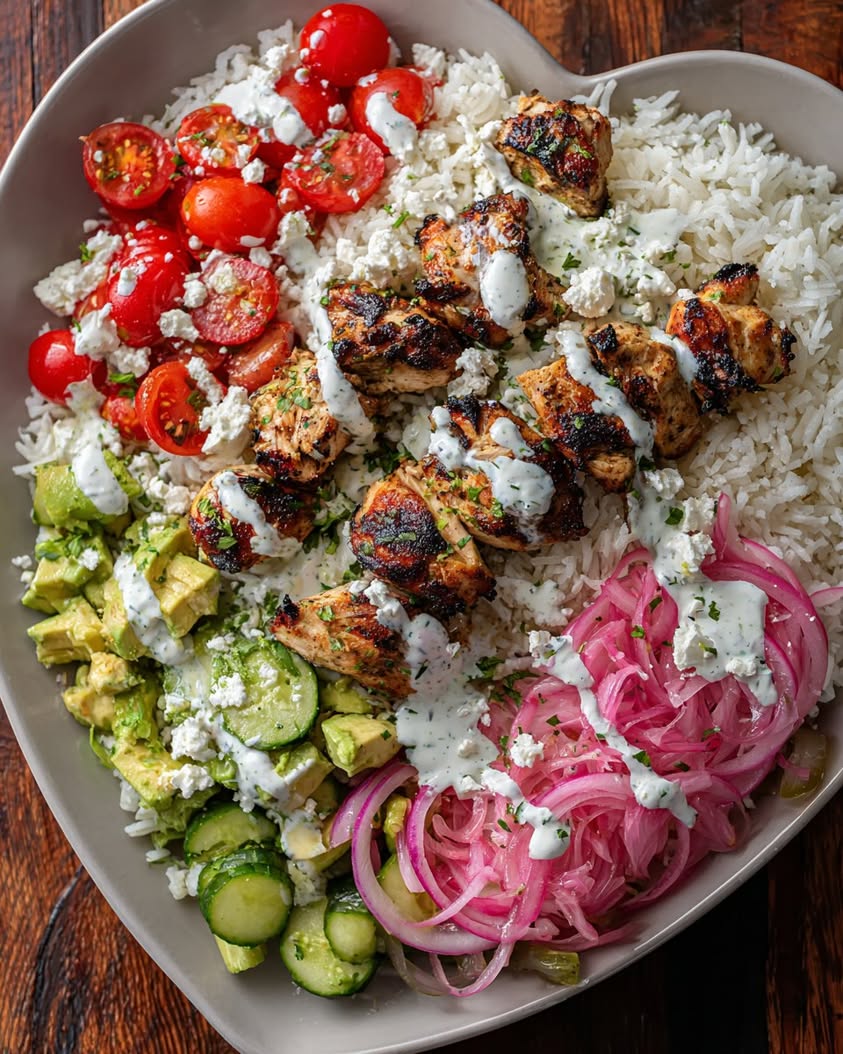
Ultimate Greek Chicken Rice Bowl with Tzatziki, Avocado & Pickled Onion: A Mediterranean Feast in a Bowl
This Ultimate Greek Chicken Rice Bowl brings the vibrant flavors of the Mediterranean straight to your kitchen. Imagine tender, herb-marinated chicken resting on a bed of fluffy rice, all topped with cool, creamy tzatziki, buttery avocado, and bright quick-pickled onions. Every single bite delivers an incredible harmony of textures and tastes that will transport your senses to a sunny Greek taverna. Furthermore, this dish is not just about incredible flavor; it is also a visually stunning meal that looks as good as it tastes.
Creating this Greek chicken rice bowl is surprisingly simple, even for a weeknight dinner. The marinade for the chicken uses common pantry staples, while the quick-pickled onions add a professional touch with minimal effort. Consequently, you can easily assemble a restaurant-quality meal in under an hour. This recipe is perfect for anyone seeking a healthy, satisfying, and flavor-packed dinner solution that the whole family will love.
The beauty of this Greek bowl lies in its versatility. You can customize it with your favorite vegetables or adjust the seasoning to your personal preference. Moreover, it is an excellent meal prep option, as the components store beautifully in the refrigerator. Ultimately, this dish proves that eating well does not require complicated techniques or hard-to-find ingredients.
Quick Recipe Highlights
- Flavor Profile: This Greek chicken rice bowl features savory, lemon-herb marinated chicken perfectly balanced by the cool, garlicky tzatziki. The quick-pickled onions add a sharp, acidic punch that cuts through the richness, while the creamy avocado provides a smooth, buttery contrast. Ultimately, every component works in harmony to create a truly authentic Mediterranean taste experience.
- Texture: You will experience a wonderful textural journey from the tender, juicy chicken and the fluffy rice. The crisp, fresh vegetables and the crunchy quick-pickled onions provide a satisfying bite. Meanwhile, the creamy tzatziki and soft avocado create a luxurious, smooth mouthfeel that ties the entire bowl together beautifully.
- Aroma: As the chicken cooks, your kitchen will fill with the irresistible scent of garlic, lemon, and Mediterranean herbs like oregano. The fresh dill in the tzatziki adds a light, grassy note, while the quick-pickling process gives the onions a bright, vinegary aroma. This combination creates an olfactory preview of the delicious meal to come.
- Visual Appeal: This Greek bowl is a feast for the eyes with its stunning color contrast. The golden-brown chicken sits against the white rice and tzatziki, accented by the vibrant pink of the pickled onions and the deep green of the fresh herbs. Presentation is key, making this dish impressive enough for guests.
- Skill Level Needed: This recipe is perfectly suited for beginner cooks, as it involves straightforward techniques like marinating, pan-searing, and simple assembly. The most complex step is making the tzatziki, which simply requires grating and mixing. Therefore, even novice home chefs can achieve fantastic results with confidence.
- Special Equipment: You need only basic kitchen tools: a mixing bowl for the marinade and tzatziki, a skillet or grill pan for the chicken, and a small jar for the quick-pickled onions. A box grater for the cucumber and garlic is helpful but not strictly necessary. Consequently, you can make this gourmet meal without any fancy equipment.
Recipe Overview
- Difficulty Level: We classify this Greek chicken rice bowl as easy because it breaks down into simple, manageable steps. The marinade requires just mixing, the chicken involves basic pan-cooking, and the tzatziki is a no-cook sauce. Even the pickled onions are effortless, requiring only a brief soak. Therefore, this recipe is accessible for cooks of all skill levels looking for a flavorful, healthy meal.
- Category: This dish falls squarely into the main course category, providing a complete and balanced meal in one bowl. It is also an excellent candidate for healthy lunches and efficient meal prep. Furthermore, its components can be served separately as part of a larger mezze-style spread for entertaining.
- Cuisine: This recipe is firmly rooted in Greek and broader Mediterranean culinary traditions, emphasizing fresh herbs, olive oil, lemon, and yogurt. It draws inspiration from classic Greek souvlaki and gyros, reimagined in a convenient bowl format. The use of tzatziki and oregano is quintessentially Greek, offering an authentic taste of the region’s beloved flavors.
- Cost: Preparing this Greek bowl is remarkably cost-effective, especially when compared to dining out. The main protein is chicken, which is typically affordable, and the other ingredients like rice, yogurt, and vegetables are pantry staples. You can expect to feed a family of four a restaurant-quality meal for a fraction of the price, making it a budget-friendly gourmet option.
- Season: This dish is truly versatile across seasons, but it shines brightest in the spring and summer months. The fresh, bright flavors complement warm weather perfectly. However, its satisfying and wholesome nature also makes it a wonderful comfort food during cooler months, providing a taste of sunshine year-round.
- Occasion: This Greek chicken bowl is perfect for busy weeknight dinners, casual weekend lunches, or even meal prep for the workweek. It is also impressive enough to serve at informal gatherings or potlucks. Ultimately, its flexibility makes it suitable for almost any dining situation where delicious, healthy food is the goal.
Why You’ll Love This Recipe
First and foremost, the taste and texture appeal of this Greek chicken rice bowl is absolutely phenomenal. The savory, herbaceous chicken pairs magically with the cool, creamy tzatziki sauce. Each forkful delivers a combination of tender meat, fluffy rice, crisp vegetables, and the sharp tang of pickled onions. This symphony of flavors and textures ensures that every single bite is interesting and satisfying, preventing any hint of mealtime boredom.
From a convenience standpoint, this recipe is a true weeknight hero. You can marinate the chicken in the morning and have dinner on the table in under 30 minutes in the evening. The components can also be prepared in parallel; for instance, you can cook the rice while the chicken marinates and the onions pickle. Consequently, you achieve maximum flavor with minimal active cooking time, making healthy eating effortless.
Nutritionally, this Greek bowl is a powerhouse. It provides a excellent balance of lean protein from the chicken, complex carbohydrates from the rice, and healthy fats from the avocado and olive oil. The tzatziki adds gut-friendly probiotics, while the fresh vegetables contribute fiber and essential vitamins. This meal will keep you full and energized for hours without feeling heavy or overly indulgent.
This dish also holds tremendous social and entertaining value. Its vibrant, colorful presentation is guaranteed to impress guests, making it perfect for casual dinners. Furthermore, you can easily set up a “build-your-own-bowl” bar for a fun, interactive meal. Everyone can customize their bowl to their liking, which takes the pressure off the host and ensures guest satisfaction.
Finally, the cost-effectiveness and accessibility of this recipe cannot be overstated. You create a gourmet-quality meal using simple, affordable ingredients found at any grocery store. By cooking at home, you save significantly compared to ordering similar dishes from restaurants. This approach allows you to enjoy healthy, delicious, and impressive meals on a regular budget.
Historical Background and Cultural Significance
The origins of this dish are deeply rooted in the traditional food culture of Greece. While the “bowl” format is a modern presentation, the core components—souvlaki-style chicken, tzatziki, and rice—are Greek classics. Souvlaki, meaning “little skewers” in Greek, dates back to ancient times when soldiers would cook meat over open fires. The combination of these elements in a single serving plate reflects the contemporary global trend of bowl foods, which prioritize convenience without sacrificing flavor or authenticity.
Culturally, this Greek chicken rice bowl represents the heart of Mediterranean eating philosophy. Greek cuisine emphasizes fresh, high-quality ingredients, simple preparation, and a balance of flavors. Meals are often social, family-oriented events. This bowl captures that spirit by combining multiple distinct elements that create a harmonious whole. It is a celebration of the Greek table, where yogurt, olive oil, herbs, and lemon are foundational ingredients that define the region’s culinary identity.
The evolution of this recipe is a story of globalization and adaptation. Traditional Greek meals might feature souvlaki wrapped in pita or served on a platter with sides. The modern bowl format makes the meal more convenient for on-the-go eating and aligns with current health trends that favor balanced macronutrients in a single dish. This adaptation shows how traditional cuisines can evolve to fit new lifestyles while retaining their essential character and flavor profile.
Regional variations of this concept exist throughout the Mediterranean. For example, you might find similar bowls in Turkey with a cacık sauce (a close relative of tzatziki) or in Lebanon with toum (a powerful garlic sauce). The specific combination of marinated meat, a yogurt-based sauce, and grains is a recurring theme. This Greek version distinguishes itself with its characteristic blend of oregano, lemon, and garlic, which is uniquely Hellenic in its profile.
Ingredient Deep Dive
Let us start with the star: the chicken. For the best Greek chicken rice bowl, we recommend using boneless, skinless chicken thighs. Thighs remain juicier and more flavorful during cooking compared to breast meat. The marinade, a simple blend of olive oil, lemon juice, garlic, and dried oregano, is classic for a reason. Oregano is the definitive herb of Greek cuisine, and its robust, slightly bitter flavor stands up well to the strong garlic and bright lemon. Marinating for at least 30 minutes is crucial for infusing the chicken with authentic Mediterranean flavor.
The tzatziki sauce is the soul of this dish. Authentic tzatziki uses thick, strained Greek yogurt as its base. You must strain regular yogurt or use pre-strained Greek yogurt to avoid a watery sauce. The cucumber should be grated and then thoroughly squeezed to remove excess moisture; this step is non-negotiable for a creamy, dip-like consistency. Fresh dill and garlic provide the signature aroma and taste. This cooling sauce is not just a condiment; it balances the savory chicken and adds a refreshing, probiotic-rich element to the bowl.
Next, we have the quick-pickled onions, which provide a vital acidic counterpoint. Pickling transforms the sharp, pungent raw onion into something tangy, slightly sweet, and wonderfully crisp. The process is incredibly simple: a brief soak in a hot mixture of vinegar, water, sugar, and salt. The sugar is not for sweetness per se, but to round out the vinegar’s sharpness. These onions cut through the richness of the chicken and avocado, ensuring the bowl feels light and balanced. They are a simple technique that elevates the entire dish.
The avocado and rice play supporting but essential roles. Creamy, ripe avocado adds healthy monounsaturated fats and a buttery texture that complements the other components. For the rice, long-grain white rice like jasmine or basmati works perfectly, providing a neutral, fluffy base that soaks up the juices and sauces. You can also use brown rice for extra fiber. Cooking the rice in chicken broth instead of water adds a subtle layer of savory depth that makes the entire bowl more cohesive and flavorful.
Common Mistakes to Avoid
- Do not skip marinating the chicken. The marinade is essential for infusing flavor and tenderizing the meat. A minimum of 30 minutes is required, but marinating for a few hours will yield even better results. Rushing this step will result in bland, less flavorful chicken that does not live up to the “Greek” promise.
- Avoid using watery yogurt for the tzatziki. If you do not use pre-strained Greek yogurt, you must strain regular full-fat yogurt for several hours. Furthermore, failing to squeeze the grated cucumber thoroughly will dilute the sauce, making it runny and less creamy. A thick tzatziki is key for both flavor and presentation.
- Do not overcook the chicken. Chicken thighs are forgiving, but they can still become dry and tough if cooked for too long. Use a meat thermometer to ensure the internal temperature reaches 165°F (74°C) and then remove it from the heat immediately. Letting the chicken rest for a few minutes before slicing allows the juices to redistribute.
- Resist the urge to use raw red onions without pickling them. The quick-pickling process tames their harshness and adds a complex acidity that raw onions lack. Skipping this step will make the onion flavor overpowering and disrupt the delicate balance of the bowl.
- Avoid using under-ripe or over-ripe avocado. An under-ripe avocado will be hard and flavorless, while an over-ripe one will be mushy and brown. Look for avocados that yield slightly to gentle pressure for the perfect creamy texture and fresh, buttery taste.
- Do not forget to season every component individually. Season the chicken marinade well, add a pinch of salt to the tzatziki, and even season the rice after cooking. Layering seasoning throughout the cooking process is what separates a good dish from a great one.
- Avoid assembling the bowls too far in advance. If you plan to meal prep, store the components separately and assemble just before eating. This prevents the rice from becoming soggy and the avocado from browning, ensuring the best texture and freshness.
- Do not use old, stale dried herbs. The flavor of dried oregano diminishes over time. For the most potent Greek flavor, make sure your dried oregano is fresh. If possible, rub it between your palms before adding it to the marinade to wake up the essential oils.
Essential Techniques
Mastering the quick-pickle is a game-changer for this Greek chicken rice bowl. This technique involves briefly heating a vinegar solution and pouring it over sliced onions. The heat helps the onions absorb the liquid quickly, transforming their flavor and texture in as little as 30 minutes. The key is to ensure the slices are thin and uniform for even pickling. You must also let the mixture cool completely to room temperature before using it. This simple process adds a professional, gourmet touch to your cooking with minimal effort.
Properly marinating the chicken is another critical technique. The goal is to allow the acidic lemon juice and flavorful oils and herbs to penetrate the meat. Always use a non-reactive container, like glass or ceramic, and ensure the chicken is fully submerged in the marinade. Do not marinate for excessively long periods in a highly acidic marinade, as this can actually break down the protein and give the meat a mushy texture. For this recipe, 30 minutes to 4 hours is the ideal window for perfect, flavorful chicken.
Creating a perfectly creamy tzatziki relies on the technique of moisture removal. After grating the cucumber, you must squeeze out as much water as possible using your hands, a cheesecloth, or a clean kitchen towel. This step is what prevents a watery, disappointing sauce. Furthermore, allowing the finished tzatziki to rest in the refrigerator for at least 30 minutes before serving lets the flavors meld together and the garlic to mellow slightly, resulting in a more harmonious and developed taste.
Pro Tips for Perfect Greek Chicken Rice Bowl
For an extra flavor boost, cook your rice in chicken broth instead of water. This simple swap infuses the grains with a subtle savory depth that complements the other components beautifully. You can also add a bay leaf or a smashed garlic clove to the pot while the rice cooks for an additional aromatic layer.
Get a better sear on your chicken by ensuring your pan is properly preheated. Pat the marinated chicken thighs completely dry with paper towels before they hit the pan. Furthermore, do not overcrowd the skillet; cook in batches if necessary to avoid steaming the chicken. A good sear equals more flavor and a more appealing texture.
Let the cooked chicken rest before slicing it. As soon as the chicken comes off the heat, transfer it to a cutting board and let it sit for 5-7 minutes. This allows the muscle fibers to relax and reabsorb the juices. Slicing it immediately will cause all those precious juices to run out, leaving you with drier meat.
Add fresh herbs as a final garnish. While the marinade uses dried oregano, sprinkling fresh chopped dill or parsley over the assembled bowl just before serving adds a burst of color and a bright, fresh flavor that dried herbs cannot provide. This final touch elevates the dish from great to exceptional.
Warm your pita bread if serving. If you are including pita on the side, quickly warm it in a dry skillet or toaster oven until it is soft and pliable. You can also brush it with a little olive oil and sprinkle with dried oregano before warming for an extra treat.
Customize your vegetable toppings. While this recipe is perfect as is, feel free to add other classic Greek salad ingredients like diced tomatoes, sliced Kalamata olives, or chopped bell peppers. This allows you to use what you have on hand and make the bowl your own.
Variations and Adaptations
For regional variations, you can easily adapt this Greek bowl to other Mediterranean cuisines. For a Turkish twist, replace the tzatziki with a sauce called cacık, which often includes mint and is slightly more liquid. For a Cypriot version, add a sprinkle of halloumi cheese cubes that you have pan-fried until golden brown. A Lebanese adaptation might feature a garlicky toum sauce and a side of garlic sauce. These small changes can take your taste buds on a tour of the Eastern Mediterranean.
Seasonal adaptations are straightforward and recommended. In the summer, add fresh, juicy cherry tomatoes and crisp Persian cucumbers. During the fall, you could incorporate roasted root vegetables like sweet potatoes or beets for a heartier version. In the winter, a side of warm, lemony lentil soup would complement the bowl perfectly. Spring calls for the addition of fresh artichoke hearts or asparagus tips. Consequently, this recipe serves as a fantastic template for year-round eating.
Dietary modifications are easily accommodated. For a gluten-free version, simply ensure all your ingredients, including the chicken broth, are certified gluten-free. To make it dairy-free, substitute the Greek yogurt in the tzatziki with a thick, plain coconut or almond-based yogurt. For a vegetarian option, replace the chicken with grilled, marinated portobello mushrooms or chickpeas. A low-carb or keto adaptation would use cauliflower rice as the base and increase the portion of avocado and chicken.
Flavor variations can keep this recipe exciting. Try adding a spoonful of harissa paste to the chicken marinade for a spicy North African kick. Alternatively, mix chopped sun-dried tomatoes and kalamata olives into the rice for a more robust flavor. You could also experiment with different herbs in the tzatziki, such as mint or basil, for a unique twist on the classic sauce. The basic framework is incredibly forgiving and encourages creativity.
Serving and Presentation Guide
Plating techniques are crucial for making your Greek chicken rice bowl visually stunning. Start by creating a base with the fluffy rice, slightly mounding it in the center of a wide, shallow bowl. Then, artfully arrange the sliced Greek chicken over one portion of the rice. Drizzle the creamy tzatziki generously over the chicken and rice, allowing some to pool at the bottom. Subsequently, place the avocado slices and a generous heap of pink pickled onions in separate sections around the bowl. This method ensures each component is visible and easily accessible.
Garnishing ideas can elevate the dish from homemade to restaurant-quality. A final sprinkle of fresh chopped dill or parsley adds a pop of green color and fresh flavor. A light drizzle of high-quality extra virgin olive oil over the top just before serving enhances richness and gloss. You can also add a wedge of lemon on the side for those who want an extra burst of acidity. A few whole Kalamata olives and a crumble of feta cheese make for an authentic and beautiful finishing touch.
Consider traditional accompaniments to round out the meal. Warm, soft pita bread is a classic and necessary side for scooping up every last bit of tzatziki and rice. A simple Greek salad of tomatoes, cucumbers, red onion, and olives with a red wine vinaigrette makes a perfect starter or side. For a more substantial spread, include other mezze like hummus, dolmades (stuffed grape leaves), or spanakopita (spinach pie).
Temperature considerations are key to the perfect eating experience. The bowl is best served with the chicken and rice warm or at room temperature, contrasting with the cool, refreshing tzatziki. The pickled onions and avocado should be at room temperature. Avoid serving the chicken piping hot directly onto the cold tzatziki, as this can cause the sauce to become watery. Letting the cooked chicken rest and cool slightly before assembling is the ideal approach.
Wine and Beverage Pairing
For wine pairings, you have several excellent options that complement the flavors of this Greek chicken rice bowl. A crisp, dry white wine like Assyrtiko from Santorini is the ultimate authentic choice; its citrus notes and mineral quality mirror the lemon in the marinade and cut through the richness of the tzatziki. Alternatively, a Sauvignon Blanc with its grassy, herbal character pairs wonderfully with the dill and oregano. If you prefer red wine, opt for a light-bodied, low-tannin red like a Beaujolais or a Greek Xinomavro, which will not overpower the dish.
Non-alcoholic alternatives can be just as sophisticated. A sparkling lemonade or limeade provides a sweet-tart counterpoint that refreshes the palate between bites. Iced herbal teas are another fantastic option; consider a mint tea or a lemon verbena tea, both of which echo the herbal notes in the dish. For a truly Greek experience, seek out a brand of non-alcoholic grape juice that mimics the flavor profile of dry white wine.
If you are serving this for lunch or a brunch gathering, coffee and tea pairings work surprisingly well. A medium-roast coffee with low acidity will not clash with the garlic and lemon flavors. For tea, a simple cup of Earl Grey, with its bergamot citrus notes, can be a delightful companion. Ultimately, the goal is to choose beverages that are refreshing and either complement or cleanse the palate, enhancing the overall Mediterranean dining experience.
Storage and Shelf Life
Proper storage methods are essential for maintaining the quality and safety of your Greek chicken rice bowl components. You must store all elements separately in airtight containers in the refrigerator. The cooked chicken and rice will last for 3-4 days. The tzatziki sauce is best consumed within 3 days, as the cucumber will continue to release water over time. The quick-pickled onions can last for up to 2 weeks in their brine, often becoming even more flavorful after a day or two.
Understanding the signs of spoilage is crucial for food safety. Discard any component that develops an off smell, unusual sliminess, or mold. The chicken should be reheated to an internal temperature of 165°F (74°C) if you are warming it up. The avocado, of course, is best added fresh and will brown if stored after slicing. To prevent this, store the avocado half with the pit intact and wrap it tightly in plastic wrap, or squeeze a little lemon juice over the slices.
Reheating instructions are simple but important. The chicken and rice can be reheated gently in the microwave with a splash of water to prevent drying out, or in a skillet over medium heat. We do not recommend reheating the tzatziki, as it can separate and become watery. Instead, add it cold to the reheated base components. The pickled onions should always be used cold. For the best texture and flavor, we recommend assembling your bowl fresh each time you plan to eat it.
Make Ahead Strategies
A strategic prep timeline can make weeknight dinners effortless. You can marinate the chicken up to 24 hours in advance; this actually improves the flavor. The quick-pickled onions can be made up to two weeks ahead and stored in the refrigerator. The tzatziki sauce can be prepared 1-2 days in advance, allowing the flavors to meld beautifully. The rice can be cooked a day ahead and reheated. The only component that should be prepared fresh is the avocado, to prevent browning.
Understanding the quality impact of make-ahead steps is key. Marinating the chicken longer will only improve its tenderness and flavor. The pickled onions benefit from time, becoming more mellow and integrated. The tzatziki may become slightly watery after a day; simply give it a good stir before serving. Cooked rice can dry out or become hard in the fridge; reheating it with a tablespoon of water and fluffing it with a fork will restore its texture.
For optimal assembly, have all your cold components (tzatziki, pickled onions) and fresh components (avocado, herbs) ready to go in separate containers. Reheat your rice and chicken just before you are ready to eat. Then, follow your plating guide to build beautiful, fresh-tasting bowls in minutes. This assembly-line approach is perfect for families or for meal prepping several lunches at once, ensuring you have a delicious, healthy meal ready in no time.
Scaling Instructions
Halving the recipe for one or two people is very straightforward. Simply divide all the ingredient quantities by two. Use a smaller skillet for cooking the chicken to maintain good contact with the pan surface. The timing for marinating and cooking will remain roughly the same. Be mindful that the quick-pickling liquid for the onions can still be made in the original quantity if desired, as it stores well and can be used for other dishes like salads or sandwiches.
Doubling or tripling the recipe for a crowd requires minor adjustments. Use a large baking sheet to cook the chicken in the oven at 400°F (200°C) instead of pan-frying, as this is more efficient for large batches. You may need to cook the rice in two separate pots to ensure it cooks evenly. Make the tzatziki in a large bowl and consider using a food processor with a grating attachment for the cucumber to save time. For serving, a “build-your-own-bowl” bar is the most practical and fun approach for a large group.
Consider storage space when scaling up. Doubling the recipe means you will have more leftovers, so ensure you have enough airtight containers for all the components. If you are meal prepping for the week, dividing the finished components into individual portion-sized containers immediately after cooking is the most efficient method. This makes grabbing a healthy lunch or dinner as easy as possible throughout your busy week.
Nutritional Deep Dive
This Greek chicken rice bowl offers an excellent macro breakdown, making it a balanced meal choice. The chicken provides a high-quality source of lean protein, essential for muscle repair and satiety. The rice serves as a complex carbohydrate, offering sustained energy release. The avocado and olive oil contribute healthy monounsaturated fats, which are beneficial for heart health and help absorb fat-soluble vitamins from the other vegetables. This combination of protein, carbs, and fats ensures you feel full and satisfied without the energy crash associated with less balanced meals.
A micronutrient analysis reveals a wealth of vitamins and minerals. The dish is rich in B vitamins from the chicken, which support energy metabolism. The vegetables and lemon juice provide Vitamin C, a powerful antioxidant. The tzatziki, made from yogurt, is a good source of calcium and probiotics for gut health. The avocado contributes potassium and Vitamin K, while the oregano and other herbs contain various phytonutrients with anti-inflammatory properties. This makes the bowl not just a meal, but a nutrient-dense powerhouse.
For those mindful of portion control and weight management, this bowl is inherently well-structured. The recipe provides clear serving sizes, helping to prevent overeating. The high protein and fiber content promote feelings of fullness, which can reduce snacking between meals. If you are watching your carbohydrate intake, you can easily reduce the rice portion and increase the volume of non-starchy vegetables like cucumbers, tomatoes, and leafy greens. This flexibility allows you to tailor the bowl to your specific dietary goals while still enjoying a flavorful and satisfying meal.
Dietary Adaptations
For a gluten-free version, this recipe is already nearly compliant. Simply double-check that your chicken broth and Greek yogurt are certified gluten-free, as some brands may contain hidden gluten or be processed on shared equipment. All other core ingredients—chicken, rice, vegetables, and spices—are naturally gluten-free. This makes the Greek chicken rice bowl an safe and delicious option for those with celiac disease or gluten sensitivity.
Creating a dairy-free adaptation is simple with modern substitutes. Replace the Greek yogurt in the tzatziki with a thick, plain, unsweetened plant-based yogurt. Coconut milk yogurt works exceptionally well for its rich texture and neutral flavor. Alternatively, you could create a sauce based on tahini (sesame seed paste) thinned with water and lemon juice, which would provide a creamy, dairy-free element with a delicious nutty flavor that still fits the Mediterranean profile.
A vegan transformation of this bowl is entirely possible and delicious. Replace the chicken with marinated and grilled chickpeas, cubed extra-firm tofu, or seitan. Use the dairy-free tzatziki option mentioned above. The vegetable components and rice remain the same. The marinade for the protein can be identical to the chicken marinade, ensuring you still get those classic Greek flavors. This adaptation proves that the vibrant taste of the Mediterranean is accessible to everyone, regardless of dietary preference.
Troubleshooting Guide
If your tzatziki becomes watery, do not despair. You can often fix it by straining the sauce again through a fine-mesh sieve or cheesecloth for 15-30 minutes. If the problem is severe, you can stir in a tablespoon of strained yogurt or a teaspoon of mayonnaise to help re-emulsify and thicken it. To prevent this issue in the future, always remember that squeezing the grated cucumber is the most critical step for a perfect, creamy consistency.
If your chicken is cooking too quickly on the outside but remains raw inside, the heat is likely too high. Lower the heat to medium and continue cooking, flipping occasionally, until the internal temperature reaches 165°F (74°C). Using a meat thermometer is the only surefire way to achieve perfectly cooked chicken. If the outside is already overly browned but the inside needs more time, you can finish cooking the chicken in a 350°F (175°C) oven for 5-10 minutes.
If your pickled onions are too harsh or vinegary, they may not have pickled long enough, or the vinegar-to-water ratio might be off. Let them sit for another 30 minutes and taste again. For future batches, you can increase the amount of sugar slightly to balance the acidity, or use a milder vinegar like apple cider vinegar instead of distilled white vinegar. The beauty of quick-pickling is that it is very forgiving and can be adjusted to your personal taste.
Recipe Success Stories
We have received wonderful community feedback from readers who have made this Greek chicken rice bowl a staple in their homes. One reader, Sarah from Colorado, shared that it has become her family’s favorite “Friday Fun Night” dinner, with her kids loving the build-your-own-bowl aspect. Another, Mark from Florida, reported that he meal preps this every Sunday and it keeps him satisfied and energized throughout his workweek. Many have commented on how the recipe has given them the confidence to try more Mediterranean cooking.
Variation successes have been particularly inspiring. A reader named Lisa successfully adapted the recipe for her vegan daughter by using marinated chickpeas and a cashew-based tzatziki, reporting that it was a hit with the entire family. Another home cook, David, tried the low-carb version with cauliflower rice and said it was so delicious he did not miss the grains at all. These stories highlight the recipe’s incredible versatility and its ability to bring people together over good food, regardless of dietary needs.
Reader suggestions have also helped improve the recipe over time. Several people recommended adding a pinch of sugar to the chicken marinade to help with caramelization, which we have since incorporated as an optional but recommended step. Others suggested serving with a side of warm pita bread, which is now a standard recommendation. We love seeing how this recipe becomes a collaborative project, with each cook adding their own touch and sharing their discoveries with the community.
Frequently Asked Questions
Can I use chicken breasts instead of thighs?
Yes, you can absolutely use chicken breasts. However, they are leaner and can dry out more easily. We recommend pounding them to an even thickness for uniform cooking and reducing the cooking time slightly. Use a meat thermometer to ensure they reach 165°F internally without overcooking. The result will be a leaner, but still flavorful, version of the Greek chicken bowl.
How long do the quick-pickled onions last?
The quick-pickled onions will keep beautifully in their brine in an airtight container in the refrigerator for up to two weeks. In fact, their flavor often improves after the first 24 hours as the vinegar fully penetrates the onions. This makes them a fantastic make-ahead component not just for this recipe, but for salads, sandwiches, and tacos throughout the week.
My tzatziki is too runny. What can I do?
A runny tzatziki is almost always due to insufficiently drained cucumber. To fix it, you can strain the finished sauce through a fine-mesh sieve or cheesecloth for 30 minutes. For future batches, after grating the cucumber, squeeze it in a clean kitchen towel or with your hands until no more water comes out. This step is crucial for a thick, dip-like consistency.
Can I make this recipe ahead for meal prep?
This is an excellent meal prep recipe. Cook the chicken and rice, and prepare the tzatziki and pickled onions. Store all components separately in airtight containers for up to 4 days. Wait to slice the avocado until you are ready to eat. When ready to serve, re
Print
Ultimate Greek Chicken Rice Bowl with Tzatziki, Avocado & Pickled Onion
Description
A vibrant and healthy bowl featuring tender Greek-spiced chicken, fluffy rice, creamy tzatziki, fresh avocado, and tangy pickled onions.
Ingredients
For the Crust:
- 1 lb boneless, skinless chicken thighs, cut into strips
- 2 tbsp olive oil
- 1 tsp dried oregano
- 1 tsp garlic powder
- 1/2 tsp smoked paprika
- Salt and black pepper to taste
- 1 cup basmati rice, cooked
- 1 large avocado, sliced
- 1/2 cup tzatziki sauce
- 1/2 red onion, thinly sliced
- 1/4 cup red wine vinegar
- 1 tsp sugar
- Fresh dill for garnish
Instructions
1. Prepare the Crust:
- In a bowl, toss chicken strips with olive oil, oregano, garlic powder, paprika, salt, and pepper. Let marinate for 10 minutes.
- Heat a skillet over medium-high heat and cook chicken for 6-8 minutes, until browned and cooked through.
- While chicken cooks, combine red onion, red wine vinegar, and sugar in a small bowl. Let sit for 10 minutes to pickle.
- Assemble bowls: divide cooked rice among four bowls, top with chicken, avocado slices, pickled onions, and a dollop of tzatziki.
- Garnish with fresh dill and serve immediately.
Notes
You can customize the seasonings to taste.

I’m Shaykee—born in Morocco, seasoned across continents. From airplane galleys to home kitchens, I share the flavors and stories that shaped my journey.