
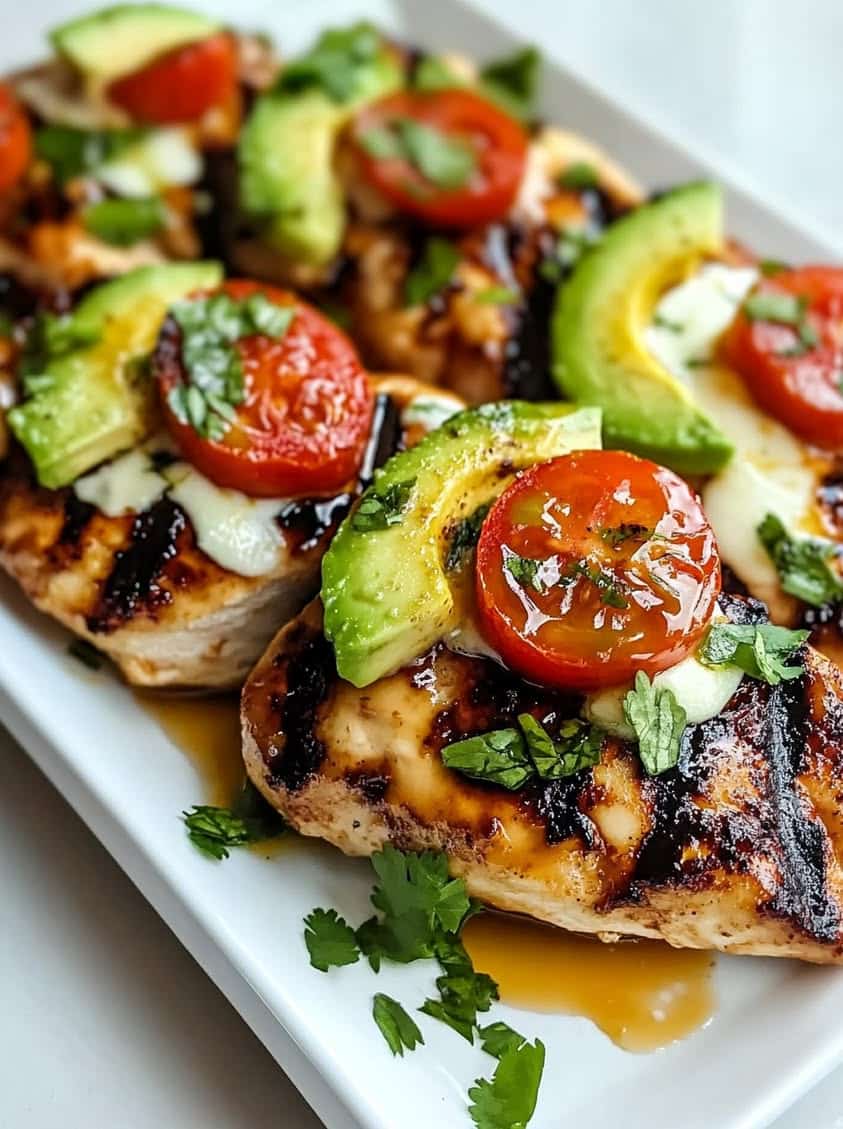
West Coast Grilled Chicken with Melted Avocado, Tomato & Citrus Flair: A Taste of Sunshine on Your Plate
Imagine the smoky char of perfectly grilled chicken meeting the creamy, cool richness of avocado. Now, picture that combination brightened with the juicy pop of fresh tomato and the vibrant zing of citrus. This West Coast Grilled Chicken with Melted Avocado, Tomato & Citrus Flair is exactly that culinary daydream brought to life. It captures the essence of California cuisine, where fresh, high-quality ingredients and bold, simple flavors reign supreme. This dish is not just a meal; it’s a vibrant, healthy experience that feels both indulgent and nourishing.
Furthermore, this recipe is a celebration of texture and temperature. You get the satisfying, slightly crispy exterior of the grilled chicken breast contrasting beautifully with the luxuriously soft, almost sauce-like melted avocado. The fresh tomatoes add a juicy burst, while the citrus flair, typically from lime or lemon, cuts through the richness with a clean, aromatic finish. Consequently, every bite is a complex and delightful symphony. Ultimately, this grilled chicken gets a West Coast twist with melted avocado, fresh tomato, and a bright citrus flair, making it the ultimate healthy weeknight dinner or impressive weekend grill-out centerpiece.
Additionally, the beauty of this dish lies in its stunning visual appeal. The golden-brown chicken, vibrant green avocado, red tomatoes, and fresh herbs create a plate that looks as good as it tastes. It’s the kind of food that makes you want to eat outside, savoring the sunshine. This recipe is your ticket to a flavorful, restaurant-quality meal made effortlessly at home, proving that healthy eating can be incredibly exciting and delicious.
Quick Recipe Highlights
- Flavor Profile: This dish masterfully balances smoky, savory, creamy, and bright notes. The grilled chicken provides a deep, umami base, while the melted avocado adds a rich, buttery layer. Simultaneously, the fresh tomato offers sweetness and acidity, and the citrus flair ties everything together with a refreshing, zesty punch.
- Texture: Expect a wonderful contrast in every mouthful. The chicken has a firm, juicy bite with a slightly charred exterior. Conversely, the avocado becomes luxuriously soft and creamy, almost melting into a sauce. The diced tomatoes contribute a pleasant, juicy pop, creating a truly satisfying eating experience.
- Aroma: The scent is incredibly inviting. As the chicken grills, it releases smoky, savory aromas. When you add the fresh herbs and squeeze the citrus, the air fills with bright, grassy, and tangy notes that stimulate the appetite and promise a fresh, clean finish.
- Visual Appeal: This plate is a feast for the eyes with its vibrant color palette. The golden-brown sear on the chicken, the brilliant green of the avocado and herbs, the red of the tomatoes, and occasional yellow from lemon wedges create a stunning, Instagram-worthy presentation that screams freshness.
- Skill Level Needed: This is an accessible recipe for most home cooks. The techniques involved—marinating, grilling, and simple assembly—are foundational. Therefore, even beginners can achieve excellent results by following the key steps for proper grilling and avocado preparation.
- Special Equipment: A reliable grill or grill pan is the only specialized tool required. A good pair of tongs, a sharp knife for prepping the vegetables and herbs, and a citrus juicer or reamer are also helpful but not strictly mandatory for success.
Recipe Overview
- Difficulty Level: We rate this recipe as “Easy” because it breaks down into straightforward, manageable steps. The marinade is a simple mix, the grilling process is direct, and the avocado topping requires no cooking. However, attention to detail—like not overcooking the chicken and properly seasoning the avocado—is key to elevating it from good to great.
- Category: This dish fits perfectly into several categories. Primarily, it’s a fantastic main course for a healthy dinner. It also works wonderfully as a high-protein lunch option, served warm or even chilled. Additionally, you can slice the chicken and serve it over salads or in wraps for a versatile meal solution.
- Cuisine: This recipe is a proud example of New American cuisine, with strong roots in West Coast or California culinary traditions. It emphasizes local, seasonal produce, lean proteins, and bold, uncomplicated flavors that highlight the natural quality of each ingredient without heavy sauces or complicated techniques.
- Cost: This is a very cost-effective meal, especially when avocados and tomatoes are in season. Chicken breasts are an affordable protein, and the herbs and citrus are low-cost flavor powerhouses. Overall, you can create this restaurant-style dish for a fraction of the price of eating out, making it excellent for family meals.
- Season: While truly a year-round recipe thanks to indoor grill pans, it shines brightest in late spring and summer. This is when tomatoes are at their peak sweetness, herbs are abundant, and avocados are often most affordable. Naturally, it’s the ideal food for outdoor grilling and al fresco dining during warmer months.
- Occasion: Its versatility makes it suitable for countless occasions. It’s quick enough for a busy Tuesday night, yet elegant enough for a casual weekend dinner party with friends. You can also pack it for a picnic or serve it at a backyard barbecue as a healthier, standout option among traditional grill fare.
Why You’ll Love This Recipe
First and foremost, the taste and texture combination is utterly irresistible. This grilled chicken gets a West Coast twist with melted avocado, fresh tomato, and a bright citrus flair that wakes up your palate. Each component complements the others perfectly. The savory, charred meat, the cool, fatty avocado, the sweet-acidic tomato, and the zesty lime create a harmony that is both sophisticated and deeply satisfying. You won’t find a boring bite in this entire meal.
From a convenience standpoint, this recipe is a weeknight hero. The active hands-on time is minimal, and most of the marinating happens while you prep other components or simply relax. Moreover, cooking on a grill or grill pan is relatively fast and creates little mess compared to other methods. You can have a stunning, healthy dinner on the table in well under an hour, which is a major win for any busy household.
Nutritionally, this dish is a powerhouse. Chicken breast is an excellent source of lean protein, essential for muscle repair and keeping you full. Avocado provides heart-healthy monounsaturated fats, fiber, and a host of vitamins. Tomatoes are rich in antioxidants like lycopene. Together, they form a balanced meal that fuels your body without weighing you down, aligning perfectly with a wholesome, mindful eating approach.
For social and entertaining value, this recipe is a gem. It’s incredibly easy to scale up for a crowd. You can marinate the chicken ahead of time and grill it just before serving. The colorful, vibrant presentation always impresses guests, making it look like you spent far more effort than you actually did. It’s a conversation starter that feels special and indulgent while still being approachable.
Finally, its cost-effectiveness and accessibility are huge benefits. The ingredient list is short and uses whole foods you can find at any grocery store. There are no expensive, hard-to-find specialty items. This means you can enjoy a taste of West Coast-inspired, gourmet-quality food regularly without straining your budget. It democratizes delicious, healthy eating, proving you don’t need fancy ingredients to create something extraordinary.
Historical Background and Cultural Significance
The origin story of this dish is woven into the fabric of California cuisine, a movement that gained prominence in the 1970s. Pioneered by chefs like Alice Waters of Chez Panisse, this culinary philosophy championed locally sourced, seasonal ingredients prepared simply to highlight their natural flavors. Dishes like this grilled chicken embody that ethos perfectly. They moved away from heavy, French-influenced sauces and towards lighter, vegetable-forward plates that reflected the state’s abundant produce and health-conscious lifestyle.
Culturally, this recipe represents a shift in American dining attitudes. The West Coast, particularly California, became synonymous with a focus on wellness, outdoor living, and fusion flavors. This grilled chicken gets a West Coast twist by incorporating ingredients like avocado and citrus, which are staples in the region’s agriculture. It’s food that feels fresh, vibrant, and casual—a direct reflection of the coastal lifestyle itself. It’s meant to be enjoyed in a relaxed setting, often outdoors.
The evolution of the recipe is a story of global influence meeting local bounty. Grilling techniques are ancient and universal. Avocados are native to Central and South America. Citrus has origins in Asia. California cuisine acted as a melting pot, bringing these elements together in new, health-focused ways. The “melted” avocado topping is a modern, deconstructed take on guacamole, serving as both a garnish and a sauce, which simplifies presentation and intensifies the avocado’s role on the plate.
Regarding regional variations, you’ll see similar themes across the Southwest and Pacific Rim. In Arizona, you might find a spicier chipotle marinade. In Hawaii, a teriyaki or pineapple-based glaze could be used. The core concept—grilled protein with fresh, creamy, and acidic accents—remains constant. This particular version with its clear, bright citrus flair is classic California: uncluttered, produce-driven, and designed to make each high-quality ingredient sing.
Ingredient Deep Dive
Chicken Breast: As the protein foundation, chicken breast is a lean, versatile canvas. Culturally, it’s a staple in American diets due to its mild flavor and adaptability. Nutritionally, it’s packed with high-quality protein and essential B vitamins, particularly niacin and B6, which support metabolism and energy production. For best results, select plump, evenly sized breasts and pound them to a uniform thickness to ensure even cooking. You can substitute with boneless, skinless chicken thighs for a juicier, more flavorful result, though the fat content will be higher.
Avocado: The star of the “melted” component, avocado is central to this dish’s identity. Historically revered by Mesoamerican cultures like the Aztecs, it was called “ahuacatl.” It’s nutritionally dense, offering nearly 20 vitamins and minerals, along with fiber and those celebrated healthy fats that promote heart health and nutrient absorption. Choose avocados that yield slightly to gentle pressure at the stem end. To store uncut avocados, keep them at room temperature. Once cut, sprinkle with citrus juice and wrap tightly to prevent browning.
Fresh Tomato: Tomatoes bring essential acidity, sweetness, and color. Originally from South America, they were once feared in Europe before becoming a culinary cornerstone. They are an excellent source of vitamin C, potassium, and the antioxidant lycopene, which is linked to reduced risk of certain cancers. For this recipe, use ripe but firm tomatoes like Roma or vine-ripened for the best flavor and least watery texture. Store at room temperature until ripe, then refrigerate if not used immediately. In a pinch, high-quality canned diced tomatoes (well-drained) can work off-season.
Citrus (Lime or Lemon): The “citrus flair” is the non-negotiable brightener. Citrus fruits have a long history in trade and medicine, valued for preventing scurvy on long voyages. They are vitamin C powerhouses, crucial for immune function and collagen synthesis. The juice’s acidity balances the fat from the avocado and chicken, while the zest adds intense aromatic oils. Always juice citrus at room temperature for maximum yield. For the best flavor, use fresh juice rather than bottled. You can experiment with different citrus like Meyer lemon or orange for a sweeter flair.
Fresh Herbs (Cilantro & Chives): Herbs provide the final layer of fresh, aromatic complexity. Cilantro, with its divisive but beloved flavor, is prevalent in Mexican and Asian cuisines. Chives offer a mild, onion-like note. They contribute minimal calories but are rich in antioxidants and vitamins A and K. For the brightest taste, add herbs just before serving. If you’re averse to cilantro, flat-leaf parsley or fresh basil make excellent substitutes, each offering a different but delightful aromatic profile to your West Coast grilled chicken.
Common Mistakes to Avoid
- Overcooking the Chicken: This is the most common pitfall. Overcooked chicken breast becomes dry and tough. Use a meat thermometer and pull the chicken off the grill at 160-165°F, as it will continue to cook while resting. Remember, carryover cooking will raise the temperature another 5 degrees.
- Using Rock-Hard Avocados: Attempting to mash an unripe avocado will result in a chunky, unpleasant texture, not the desired creamy “melted” consistency. Plan ahead and allow avocados to ripen at room temperature until they yield gently to pressure.
- Neglecting to Rest the Meat: Slicing into chicken immediately after grilling causes all the precious juices to spill out onto the cutting board. Always let it rest for at least 5-7 minutes. This allows the fibers to relax and reabsorb the juices, ensuring every bite is moist.
- Underseasoning the Avocado: Avocado needs ample seasoning to taste its best. Simply mashing it is not enough. Be generous with salt, pepper, and the citrus juice. The seasoning should enhance the avocado’s natural flavor, not mask it.
- Adding Herbs Too Early: Delicate herbs like cilantro and chives wilt and lose their vibrant color and fresh punch if added to hot components too soon. Always stir them into the avocado topping or sprinkle them over the dish at the very last moment before serving.
- Skipping the Marinade Time: While you can cook the chicken immediately after seasoning, allowing it to marinate for even 30 minutes makes a significant difference. The marinade seasons the meat more deeply and helps keep it juicy during the high-heat cooking process.
- Grilling on Dirty Grates: Food sticks to dirty grates, tearing the beautiful sear off your chicken. Always preheat your grill and clean the grates thoroughly with a brush before adding the meat. This ensures those perfect, clean grill marks and easy release.
- Not Preheating the Grill: Placing chicken on a cool grill leads to steaming instead of searing. You won’t achieve that desirable caramelized, smoky exterior. Preheat your grill or grill pan to medium-high heat so it sizzles confidently when the chicken makes contact.
Essential Techniques
Pounding Chicken to Even Thickness: This is a critical step for even cooking. Chicken breasts are naturally thicker at one end. By placing them between plastic wrap and gently pounding with a meat mallet or rolling pin, you create a uniform thickness. Consequently, the entire piece cooks at the same rate, preventing the thin end from drying out before the thick center is done. The goal is an even, about ¾-inch thick cutlet.
Creating a Hot, Clean Grill Sear: The sear is responsible for flavor development through the Maillard reaction. First, ensure your grill grates are clean and oiled. Next, preheat your grill to medium-high heat. The chicken should sizzle loudly upon contact. Avoid moving it for the first few minutes to allow a proper crust to form. This technique locks in juices and provides the characteristic smoky, charred flavor essential to this West Coast grilled chicken.
Perfectly Mashing Avocado to a “Melted” Consistency: The goal is a creamy, spreadable texture, not chunky guacamole. Use a fork and a bit of elbow grease in a bowl. Add the citrus juice and seasoning early in the mashing process; the acid and salt help break down the avocado fibers. Mash until mostly smooth with only a few tiny bits for texture. It should be soft enough to melt slightly over the warm chicken.
Mastering the Resting Period: Resting is not optional; it’s a fundamental technique for juicy meat. When protein cooks, its fibers tighten and push juices to the center. Slicing immediately releases those juices. By resting the chicken loosely tented with foil, the fibers relax, and moisture redistributes evenly throughout the entire breast. This results in a dramatically more succulent and tender final product.
Pro Tips for Perfect West Coast Grilled Chicken
For maximum flavor, add a teaspoon of grated citrus zest to your chicken marinade. The oils in the zest carry an intense aroma that permeates the meat, complementing the juice you’ll add later.
If your avocados are slightly underripe, you can salvage them by placing the mashed avocado in a food processor with the citrus juice. Pulse briefly; the mechanical action will help achieve a smoother consistency.
Score the top of your chicken breasts lightly in a crosshatch pattern before marinating. This creates more surface area for the marinade to adhere to and allows for better heat penetration during grilling.
After grilling, place your chicken on a wire rack instead of a plate to rest. This prevents the bottom from steaming in its own juices and preserves that crispy exterior you worked so hard to achieve.
Toast your spices if using any dried ones in the marinade, like cumin or coriander. A quick toast in a dry pan before grinding or adding to the marinade unlocks deeper, more complex flavors.
For an extra layer of flavor, grill your lime or lemon halves cut-side down for 1-2 minutes before juicing them over the finished dish. The gentle caramelization adds a subtle smoky sweetness to the citrus flair.
If using wooden skewers for any component, always soak them in water for at least 30 minutes beforehand. This prevents them from burning and splintering on the hot grill.
Keep a spray bottle of water nearby when grilling. If flare-ups occur from dripping fat, a quick mist will tame the flames without cooling down the grill grates excessively.
Variations and Adaptations
For regional variations, consider a Baja-inspired twist. Add a spoonful of chopped chipotle in adobo to the avocado mash and serve with a crunchy cabbage slaw. Alternatively, a Pacific Rim version could use a marinade with soy sauce, ginger, and sesame oil, topping the chicken with a mango-avocado salsa instead of plain tomato.
Seasonal adaptations are simple and rewarding. In summer, use heirloom tomatoes in a mix of colors. For fall, incorporate roasted cherry tomatoes and add a pinch of smoked paprika to the avocado. In winter, a pomegranate aril garnish adds a festive, juicy burst, while spring welcomes the addition of fresh peas or asparagus on the side.
Dietary modifications are straightforward. For a keto or low-carb version, serve the chicken and avocado topping over a bed of cauliflower rice or simply with a side of grilled vegetables. To make it Whole30 or Paleo, ensure your marinade uses compliant ingredients like coconut aminos instead of soy-based products.
Flavor variations can keep this recipe exciting. Try an “Italian Coast” version with a marinade of lemon, garlic, and rosemary, then top the chicken with a mash of avocado, sun-dried tomatoes, and fresh basil. A “Spicy Southwest” take could include a chili powder rub on the chicken and a mash with jalapeño and cotija cheese.
Texture modifications can cater to different preferences. For more crunch, sprinkle toasted pepitas or pine nuts over the finished dish. For a smoother, saucier experience, thin the avocado mash with a tablespoon of Greek yogurt or olive oil until it reaches a drizzling consistency.
Presentation alternatives offer fun ways to serve. Slice the grilled chicken and serve it in lettuce wraps with the avocado mash as a filling. Alternatively, chop all components and turn them into a hearty, deconstructed salad bowl with a citrus vinaigrette, perfect for meal prep.
Serving and Presentation Guide
Plating techniques matter for the full experience. Slice the rested chicken breast on a diagonal against the grain; this makes it more tender to eat. Fan the slices slightly on one side of the plate. On the other side, place a generous dollop of the melted avocado mixture. Scatter the fresh tomatoes and herbs around and between the components for an organic, bountiful look.
Garnishing is your final touch of artistry. Beyond the basic herbs, consider edible flowers, a light drizzle of high-quality olive oil, a sprinkle of flaky sea salt like Maldon, or a few thin slices of fresh chili for color and heat. A final grind of black pepper over the whole plate adds visual texture and fresh aroma.
Traditional accompaniments keep the meal light and West Coast-inspired. A simple side of cilantro-lime rice or quinoa absorbs the delicious juices. A crisp green salad with a citrus vinaigrette echoes the main dish’s flavors. Grilled vegetables like zucchini, corn, or asparagus are also perfect partners.
Modern serving suggestions embrace casual dining. Serve the components family-style on a large platter, allowing everyone to build their own perfect bite. Alternatively, for a party, serve the grilled chicken sliced on a board with bowls of the avocado mash, tomatoes, and other toppings for a DIY “West Coast Chicken Bar.”
Temperature considerations are key. The chicken should be served warm, not piping hot, after its rest. The avocado topping should be cool or at room temperature. This contrast is part of the magic. Ensure your plates are warm to keep the chicken at an ideal temperature for longer once served.
Portion control is easy with this balanced dish. A standard serving is one 6-ounce chicken breast per person with a quarter to a half of an avocado’s worth of mash. The tomatoes and herbs are essentially free additions. This provides a satisfying meal rich in protein and healthy fats that promotes fullness without overeating.
Wine and Beverage Pairing
Wine pairings should complement the dish’s brightness and richness. A Sauvignon Blanc, particularly from New Zealand or California, is a classic choice. Its crisp acidity and notes of citrus and fresh grass mirror the lime and herbs beautifully. Alternatively, a dry Rosé with its berry notes and crisp finish can handle the savory chicken, creamy avocado, and acidic tomato all at once.
For non-alcoholic alternatives, think refreshing and herbal. A sparkling water infused with cucumber and mint is incredibly cleansing. Homemade iced hibiscus tea (agua de jamaica) offers a tart, cranberry-like flavor that stands up to the bold tastes. A virgin mojito, with its muddled mint and lime, is practically a beverage version of the dish itself.
While not a classic coffee dish, if serving for brunch, a light roast coffee with citrusy notes would pair nicely. For tea, consider a green tea like sencha, which has vegetal, slightly grassy notes that complement the fresh herbs and chicken without overwhelming the palate.
Temperature is crucial for beverages. White wines, rosés, and non-alcoholic options should be served well-chilled, between 45-55°F. This cold, refreshing quality contrasts wonderfully with the warm, savory elements of the food and cleanses the palate between bites of rich avocado.
Serving suggestions include offering a variety. For a dinner party, set out a bottle of Sauvignon Blanc and a pitcher of a signature mocktail, like a citrus-basil sparkler. Provide plenty of ice to keep drinks cold. Encourage guests to take small sips between bites to reset their taste buds and fully appreciate each layer of flavor in the West Coast grilled chicken.
Storage and Shelf Life
Storage methods must be handled carefully due to the avocado. Store leftover cooked chicken and the tomato-herb mixture separately from the avocado mash. Place the chicken in an airtight container in the refrigerator. The avocado mash should be stored with plastic wrap pressed directly onto its surface to limit air exposure, then placed in a sealed container.
Temperature requirements are standard refrigerator temperatures, at or below 40°F. Do not leave the assembled dish at room temperature for more than two hours, as the avocado can oxidize and the chicken enters the food safety “danger zone.” Always refrigerate leftovers promptly.
Container recommendations include glass or BPA-free plastic containers with tight-fitting lids. For the avocado, a small, narrow container is better than a wide, shallow one, as it minimizes the surface area exposed to air. A mason jar works perfectly for the mash.
Signs of spoilage are important to recognize. Discard the chicken if it develops an off odor, slimy texture, or unusual color. Avocado mash will turn from bright green to a dull, brownish-green as it oxidizes; while surface browning is safe to scrape off, if the entire mass has darkened significantly and smells fermented, it should be discarded.
Reheating instructions apply only to the chicken. Reheat gently to avoid further drying. The best method is in a covered skillet with a splash of water or broth over low heat, or briefly in the microwave at 50% power. Never reheat the avocado topping; serve it cold or at room temperature alongside the reheated chicken.
Freezing guidelines: You can freeze the cooked, unadorned grilled chicken for up to 3 months. Thaw in the refrigerator before reheating. Do not freeze the avocado mash or the fresh tomato mixture, as they will become watery and mushy upon thawing. The quality of those components depends on their freshness.
Make Ahead Strategies
A prep timeline can streamline your cooking. The chicken can be marinated and stored in the refrigerator for up to 24 hours before grilling. The vegetables (tomatoes, onions for the topping) can be diced and stored separately in the fridge a day ahead. The herbs can be washed, dried, and chopped, then stored wrapped in a paper towel in a bag.
Storage between steps is simple. Keep the marinating chicken in a sealed zip-top bag or container on the bottom shelf of your fridge. Store pre-chopped veggies in their own containers. Wait to mash the avocado until just before serving, as it browns quickly, even with citrus.
Assessing the quality impact is key. Marinating longer improves flavor. Pre-chopping vegetables saves time with minimal quality loss. However, mashing avocado more than an hour ahead leads to oxidation and loss of vibrant color and fresh flavor, so that step should be done last.
Assembly tips for serving: If preparing for a crowd, grill all the chicken, let it rest, and slice it. Arrange it on a platter. Cover loosely. Prepare the avocado mash and immediately spread it in a stripe next to the chicken. Quickly top with the pre-chopped tomatoes and herbs. Serve immediately for the best texture and temperature contrast.
Reheating guidelines for make-ahead chicken are as mentioned: gentle and moist. If you’ve fully assembled plates ahead of time (not recommended due to the avocado), it’s best to enjoy them cold rather than trying to reheat the entire composition, which will ruin the avocado.
Fresh element additions are the secret to a make-ahead meal that tastes just-made. Even if you pre-chop herbs, give them a final mince right before sprinkling. Squeeze the final citrus wedge over the assembled plates at the table. These last-second actions provide a burst of fresh aroma and flavor that elevates the entire dish.
Scaling Instructions
Halving the recipe is straightforward for smaller households. Use one large chicken breast, halved and pounded. Use half an avocado, one small tomato, and adjust herbs and citrus juice to taste. The cooking time will remain roughly the same, but watch the smaller pieces of chicken closely as they may cook a minute or two faster.
Doubling or tripling for a crowd requires slight adjustments. You may need to grill the chicken in batches to avoid overcrowding the grill, which lowers the temperature and causes steaming. Keep cooked batches tented with foil on a warm platter while finishing the rest. For the avocado topping, mix in a large bowl, but consider mashing it in two batches to ensure even seasoning.
Equipment adjustments may be necessary when scaling up. If using an outdoor grill, ensure you have enough space or plan a staggered cooking schedule. For very large batches, a sheet pan in the oven under the broiler can work, though you’ll lose some smoky grill flavor. Have multiple serving platters ready.
Timing modifications are minimal. The actual grilling time per piece of chicken doesn’t change. However, the total time to cook multiple batches will increase linearly. Factor this in for meal planning. The prep time for chopping more vegetables and herbs will also increase, so start earlier.
Storage considerations for leftovers change with scale. If you’ve made a large batch, storing components separately becomes even more critical to maintain quality. Have enough small containers on hand to store individual portions of chicken and avocado mash, making them easy to grab for lunches throughout the week.
Nutritional Deep Dive
A macro breakdown for one serving is impressive. You get approximately 35-40 grams of high-quality protein from the chicken, essential for satiety and muscle maintenance. The avocado provides 15-20 grams of primarily monounsaturated fat, the heart-healthy kind. The tomatoes and citrus add minimal carbohydrates (around 5-10g net carbs), making this a naturally low-carb, high-protein, and healthy-fat meal.
The micronutrient analysis reveals a wealth of vitamins and minerals. Chicken breast is rich in B vitamins, particularly B6 and niacin (B3), which support energy metabolism. Avocado delivers vitamin K, folate, vitamin C, and potassium. Tomatoes contribute vitamin C, vitamin K, potassium, and the antioxidant lycopene. Citrus is, of course, famed for its vitamin C content.
Health benefits are significant. This meal supports heart health through its balance of lean protein and healthy fats. The fiber from avocado and tomato promotes digestive health. The antioxidants (lycopene, vitamin C) combat oxidative stress. The high protein and fat content also helps regulate blood sugar levels, preventing energy crashes.
Dietary considerations are favorable. The dish is naturally gluten-free and dairy-free. It’s suitable for Paleo and Whole30 diets if the marinade is compliant. It’s also excellent for low-carb and keto lifestyles, though those on strict keto may adjust the tomato quantity slightly. It’s a whole-foods-based meal with no processed ingredients.
Portion analysis shows it’s a balanced, calorie-conscious choice. A full serving typically ranges between 400-500 calories, depending on the size of the chicken breast and avocado half. This provides a substantial meal that is satisfying without being excessively high in calories, fitting well into a balanced daily intake.
Weight management tips include using this recipe as a template. The high protein and fiber promote fullness, reducing the likelihood of snacking later. To further reduce calories, you can use a slightly smaller portion of avocado. There’s no need for added sugars or empty carbohydrates, making it a clean choice for those focusing on body composition.
Dietary Adaptations
For a gluten-free adaptation, this recipe is naturally compliant. Simply ensure that any pre-made spice blends or marinades you use are certified gluten-free, as some may contain hidden wheat-based fillers or anti-caking agents. Otherwise, the core ingredients pose no risk.
A dairy-free adaptation is also inherent to the recipe. No dairy products are used in the standard version. The creamy texture comes solely from the avocado. This makes it an excellent choice for those with lactose intolerance or following a dairy-free lifestyle.
Creating a vegan version requires a significant but delicious pivot. Replace the chicken with thick slices of grilled cauliflower steaks, portobello mushroom caps, or extra-firm pressed tofu. Marinate and grill as you would the chicken. The avocado and tomato topping remains perfectly suitable for this plant-based adaptation.
For low-carb and keto diets, this recipe is nearly perfect. The only minor adjustment is to be mindful of the tomato quantity, as tomatoes contain some natural sugars. Staying within a half-cup of diced tomato per serving keeps it firmly in keto-friendly territory. The rest of the dish is ideal for these macros.
A Paleo or Whole30 adaptation requires checking the marinade ingredients. Use coconut aminos instead of soy sauce if your recipe includes it. Ensure all spices are pure with no additives. The dish is otherwise an exemplary Paleo meal—centered on meat, vegetables, and healthy fats with no grains, legumes, or dairy.
For a low-FODMAP adaptation, modifications are needed. Use only the green tops of chives (spring onion greens) and omit garlic from the marinade if used. A small serving of avocado (1/8 of a whole) is typically low-FODMAP. Ensure the tomato serving is kept to a moderate amount as well.
Troubleshooting Guide
If your chicken is dry, the cause is almost always overcooking. Next time, use a thermometer and pull at 160°F. For the current batch, salvage it by slicing thinly and serving it with extra avocado mash and a drizzle of olive oil or a simple sauce to add moisture back.
If the flavors seem flat, you likely underseasoned. Don’t be shy with salt—it enhances all other flavors. Brighten it up by adding an extra squeeze of fresh citrus juice just before serving. A pinch of flaky salt on the finished plate can also work wonders.
If the avocado topping browns before serving, you can scrape off the top oxidized layer. To prevent it, ensure you’ve mixed in enough acid (lime/lemon juice) and store it with plastic wrap pressed directly on the surface. Adding it to the plate at the very last minute is best.
If the chicken sticks to the grill, the grates weren’t hot or clean enough, or you tried to move it too soon. For future success, clean and oil grates while hot, preheat thoroughly, and let the chicken sear for 4-5 minutes before attempting to flip. If it’s stuck now, be patient; it will often release once a proper crust forms.
If you’re out of fresh citrus, a tablespoon of high-quality bottled lime or lemon juice can work in a pinch for the marinade and avocado. However, for the final “flair” squeeze on the plate, a bit of white wine vinegar or rice vinegar can provide the necessary acidity, though the flavor profile will shift.
PrintWest Coast Grilled Chicken with Melted Avocado, Tomato & Citrus Flair
Description
A vibrant, healthy grilled chicken dish featuring creamy melted avocado, fresh tomatoes, and a zesty citrus marinade that captures the sunny flavors of the West Coast.
Ingredients
For the Crust:
- 4 boneless, skinless chicken breasts
- 2 ripe avocados, pitted and sliced
- 1 cup cherry tomatoes, halved
- 1/4 cup fresh lime juice
- 2 tablespoons olive oil
- 2 cloves garlic, minced
- 1 teaspoon smoked paprika
- 1/2 teaspoon cumin
- Salt and black pepper to taste
- Fresh cilantro for garnish
Instructions
1. Prepare the Crust:
- In a bowl, whisk together lime juice, olive oil, minced garlic, smoked paprika, cumin, salt, and pepper to create the marinade.
- Place chicken breasts in a resealable bag or shallow dish, pour marinade over them, and refrigerate for at least 30 minutes.
- Preheat grill to medium-high heat. Grill chicken for 6-8 minutes per side, or until internal temperature reaches 165°F (74°C).
- While chicken grills, gently mash avocado slices in a small bowl until slightly melted but still chunky.
- Serve grilled chicken topped with melted avocado and cherry tomatoes, garnished with fresh cilantro.
Notes
You can customize the seasonings to taste.

I’m Shaykee—born in Morocco, seasoned across continents. From airplane galleys to home kitchens, I share the flavors and stories that shaped my journey.