
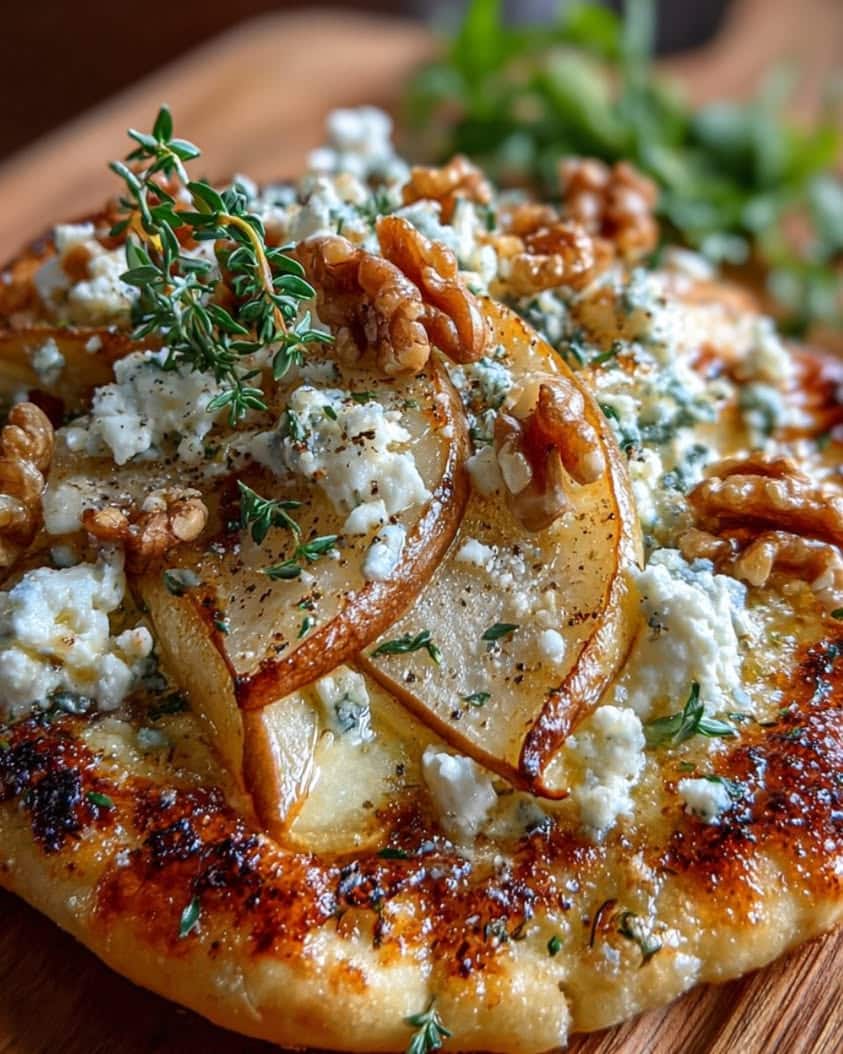
Pear and Gorgonzola Flatbread: A Symphony of Sweet and Savory
This pear and gorgonzola flatbread recipe creates an unforgettable appetizer that will impress your guests with minimal effort. The combination of creamy, tangy gorgonzola cheese with sweet, juicy pears on a crispy flatbread base is nothing short of magical. Furthermore, this dish balances sophisticated flavors with approachable preparation, making it perfect for both weeknight dinners and special occasions. You will find that this recipe delivers restaurant-quality results from your own kitchen.
Creating this pear and gorgonzola flatbread requires just a handful of quality ingredients and a few simple steps. The beauty of this dish lies in its versatility; you can easily adapt it to suit different dietary needs or personal preferences. Moreover, the visual appeal of the finished flatbread, with its golden crust, melted cheese, and artistically arranged pear slices, makes it a stunning centerpiece for any table. Ultimately, this recipe proves that gourmet cooking can be both accessible and immensely satisfying.
This particular flatbread recipe stands out because it marries contrasting textures and flavors so harmoniously. The crispiness of the flatbread base provides a perfect foundation for the soft, melting cheese and tender pears. Additionally, the optional drizzle of honey and sprinkle of walnuts add layers of sweetness and crunch that elevate the entire experience. Consequently, every bite offers a complex symphony of sensations that will keep you coming back for more.
Quick Recipe Highlights
- Flavor Profile: This pear and gorgonzola flatbread features a beautiful balance between the sweet, delicate taste of ripe pears and the bold, tangy punch of gorgonzola cheese. The flavors are further enhanced by aromatic fresh thyme and a potential hint of honey, creating a sophisticated taste experience that is both complex and approachable.
- Texture: You will experience a delightful contrast of textures, starting with the crisp, chewy flatbread base. The soft, yielding pears and creamy, melting gorgonzola create a luxurious mouthfeel, while optional walnut pieces contribute a satisfying crunch that completes the sensory journey.
- Aroma: As this pear and gorgonzola flatbread bakes, your kitchen will fill with the warm, comforting scent of baking bread and melting cheese. The fragrance of fresh thyme becomes more pronounced with heat, mingling with the subtle sweetness of caramelizing pears to create an irresistible aromatic profile.
- Visual Appeal: The finished pear and gorgonzola flatbread presents a beautiful composition of colors and textures. Golden-brown crust provides the backdrop for white and blue-veined cheese, pale yellow pear slices, and vibrant green thyme leaves, making it as pleasing to the eye as it is to the palate.
- Skill Level Needed: This pear and gorgonzola flatbread is perfectly suited for beginner cooks, as it requires no advanced techniques or specialized knowledge. The process involves simple assembly and basic baking, making it an excellent introduction to creating impressive, restaurant-style dishes at home.
- Special Equipment: You need only standard kitchen tools to prepare this pear and gorgonzola flatbread. A baking sheet, parchment paper, a sharp knife for slicing, and a cutting board are sufficient, though a pizza cutter makes serving easier.
Recipe Overview
- Difficulty Level: This pear and gorgonzola flatbread earns its easy rating because it involves straightforward assembly rather than complex cooking techniques. You simply arrange pre-sliced ingredients on a flatbread base and bake until golden. The recipe contains no complicated steps that could challenge novice cooks, and the margin for error is quite generous. Consequently, even those with limited kitchen experience can achieve excellent results.
- Category: This pear and gorgonzola flatbread fits multiple meal categories beautifully. It functions wonderfully as an appetizer for dinner parties, a light lunch when paired with a simple salad, or even as an elegant snack. The recipe’s flexibility means you can serve it at various times of day and for different types of occasions without feeling out of place.
- Cuisine: This pear and gorgonzola flatbread draws inspiration from Italian culinary traditions while incorporating modern fusion elements. Flatbread as a base has Mediterranean roots, while the combination of fruit and cheese appears in various European cuisines. The result is a contemporary dish that respects traditional flavor pairings while offering a fresh, approachable presentation.
- Cost: Preparing this pear and gorgonzola flatbread is surprisingly economical, especially when compared to ordering similar dishes at restaurants. The most significant expenses are the gorgonzola cheese and the fresh pears, but both are used in moderate quantities. When you consider that this recipe serves four people, the cost per portion becomes quite reasonable for such an impressive dish.
- Season: This pear and gorgonzola flatbread shines brightest during autumn when pears are at their peak sweetness and availability. However, thanks to year-round pear availability in most markets, you can enjoy this recipe in any season. The warm, comforting qualities make it particularly appealing during cooler months, though it remains refreshing enough for spring and summer entertaining.
- Occasion: This pear and gorgonzola flatbread suits a wide range of occasions from casual family dinners to sophisticated cocktail parties. It works beautifully as a starter for holiday meals, an elegant offering for book club gatherings, or a quick yet impressive weeknight dinner solution. The recipe’s adaptability makes it a valuable addition to your entertaining repertoire.
Why You’ll Love This Recipe
You will appreciate how this pear and gorgonzola flatbread delivers sophisticated flavors with minimal effort. The combination of sweet pears and tangy cheese creates a complex taste profile that feels luxurious and special. Meanwhile, the textural contrast between the crispy crust, soft fruit, and creamy cheese provides endless sensory interest. This recipe proves that you don’t need complicated techniques or obscure ingredients to create something truly memorable and delicious.
The convenience factor of this pear and gorgonzola flatbread cannot be overstated. With just twenty-five minutes from start to finish, it fits perfectly into busy schedules without compromising on quality. Furthermore, the preparation is remarkably straightforward, requiring no special skills or equipment. This accessibility means you can whip up an impressive dish on short notice, whether for unexpected guests or simply when you want something nice without a big production.
From a nutritional perspective, this pear and gorgonzola flatbread offers more balance than many traditional appetizers. Pears contribute dietary fiber and vitamin C, while the cheese provides protein and calcium. By using a moderate amount of quality cheese and complementing it with fruit, you create a satisfying dish that doesn’t feel overly heavy. Additionally, you can easily adapt the recipe to include whole grain flatbreads for extra fiber and nutrients.
The social and entertaining value of this pear and gorgonzola flatbread is significant. It creates an immediate impression of culinary sophistication that will impress your guests. The beautiful presentation encourages sharing and conversation, making it an excellent centerpiece for casual gatherings. Moreover, because it’s easily divisible into portions, it facilitates a communal dining experience that brings people together over good food.
This pear and gorgonzola flatbread represents excellent value for money, particularly when you consider restaurant prices for similar dishes. The ingredients are generally accessible and not prohibitively expensive, especially when you choose seasonal pears. The recipe makes efficient use of higher-cost items like gorgonzola by pairing them with more affordable components. Consequently, you can enjoy a gourmet-level dining experience without the gourmet-level price tag.
Historical Background and Cultural Significance
The tradition of baking flatbreads dates back thousands of years across numerous cultures. From the ancient Egyptians to Mediterranean civilizations, flatbreads served as a fundamental staple food for millennia. The specific combination of fruit and cheese on bread has particularly strong roots in Italian and French culinary traditions, where contrasting flavors and textures have long been celebrated. This pear and gorgonzola flatbread represents a modern interpretation of these ancient pairings, bridging historical cooking practices with contemporary tastes and convenience.
Gorgonzola cheese itself carries significant cultural weight, with protected designation of origin status in Italy. Traditionally produced in the northern regions of Lombardy and Piedmont, this blue cheese has been crafted for centuries using specific techniques passed down through generations. The practice of pairing this distinctive cheese with sweet elements like pears or honey reflects the Italian culinary principle of “dolce e salato” (sweet and salty). Consequently, this pear and gorgonzola flatbread honors time-honored Italian flavor combinations while adapting them to a modern format.
The evolution of flatbread recipes mirrors changes in eating habits and food availability worldwide. While traditional flatbreads were often simple affairs with minimal toppings, contemporary interpretations like this pear and gorgonzola flatbread embrace global influences and ingredient diversity. The rise of gourmet pizzas and artisanal flatbreads in restaurant culture during the late 20th century helped popularize these creative combinations. Today, recipes like this one represent how home cooking has absorbed and adapted restaurant trends, making sophisticated flavor pairings accessible to everyday cooks.
Regional variations of fruit and cheese pairings appear throughout European culinary traditions. In France, pear and Roquefort cheese represent a classic combination, while in Spain, membrillo (quince paste) with cheese is traditional. This pear and gorgonzola flatbread draws inspiration from these established pairings while offering its own distinct character. The flexibility of the flatbread format allows for numerous interpretations, reflecting how culinary traditions continuously evolve through cross-cultural exchange and ingredient availability.
Ingredient Deep Dive
Gorgonzola cheese, the star of this flatbread, boasts a rich history dating back to the early Middle Ages in Italy. This protected designation of origin cheese comes in two main varieties: Gorgonzola Dolce (sweet and creamy) and Gorgonzola Piccante (firmer and more pungent). Nutritionally, it provides significant amounts of calcium, protein, and phosphorus, though it’s also high in saturated fat and sodium. When selecting gorgonzola for your pear and gorgonzola flatbread, look for a piece that feels moist but not overly wet, with visible blue veining throughout. Store it tightly wrapped in the refrigerator, where it will keep for up to three weeks. If you need substitutions, other blue cheeses like Roquefort or Stilton work well, or for a milder flavor, try feta or goat cheese.
Pears have been cultivated for over three thousand years, with evidence of their consumption found in prehistoric Swiss lake dwellings and ancient Greek literature. They belong to the Rosaceae family, making them relatives of apples and quinces. Nutritionally, pears are an excellent source of dietary fiber, particularly in the skin, and provide vitamin C, potassium, and various antioxidants. For this pear and gorgonzola flatbread, choose ripe but firm pears like Bosc or Anjou that will hold their shape during baking. Store unripe pears at room temperature and refrigerate ripe ones to extend their freshness. If pears are unavailable, thin apple slices or even figs make suitable alternatives that maintain the sweet element contrasting with the cheese.
Flatbread forms the foundation of this dish, with origins tracing back to some of the earliest forms of baked goods. Modern flatbread options range from traditional Mediterranean styles to pre-made naan or pizza crusts for convenience. From a nutritional standpoint, flatbreads can vary significantly based on their ingredients; whole grain versions offer more fiber and nutrients than refined flour options. When selecting flatbread for your pear and gorgonzola creation, choose one that is sturdy enough to support the toppings without becoming soggy. Store unused flatbreads in a cool, dry place or freeze for longer storage. For substitutions, pre-baked pizza crust, naan, or even homemade dough all work beautifully in this recipe.
Common Mistakes to Avoid
- Using overly ripe pears will cause them to become mushy and release too much liquid during baking. This excess moisture can make your flatbread soggy instead of crisp. Instead, select pears that yield slightly to pressure but still feel firm, as they will soften perfectly during the brief baking time.
- Spreading the gorgonzola too thickly can overwhelm the other flavors and make the flatbread greasy. The strong flavor of gorgonzola means a little goes a long way. Distribute it evenly in small crumbles rather than large chunks to ensure every bite has balanced flavor without dominance from the cheese.
- Neglecting to preheat your baking sheet or pizza stone results in a less crispy crust. A hot surface immediately begins cooking the bottom of the flatbread, preventing sogginess from the toppings. For the best texture, always place your flatbread on a preheated surface in a properly preheated oven.
- Overloading the flatbread with toppings seems tempting but leads to structural issues. Too many ingredients prevent proper cooking and can make the flatbread difficult to slice and eat. Show restraint with your toppings to maintain the perfect balance between crisp base and flavorful additions.
- Skipping the olive oil brush on the crust reduces flavor and texture quality. A light coating of oil helps the flatbread achieve a beautiful golden color and adds richness to each bite. This simple step significantly enhances the final result without adding complexity to the preparation.
- Cutting the pear slices too thick creates textural challenges and uneven cooking. Thin, uniform slices ensure the pears soften properly during the brief baking time and distribute evenly across the flatbread. Aim for approximately ¼-inch thickness for ideal results in both texture and appearance.
- Baking at too low a temperature prevents proper crisping of the flatbread base. The high heat is necessary to cook the crust quickly while merely warming the toppings. Follow the temperature guidelines precisely to achieve the perfect contrast between crisp base and tender toppings.
- Forgetting to let the flatbread rest briefly after baking causes messy slicing. Allowing it to sit for two to three minutes lets the cheese set slightly, making cleaner cuts possible. This brief patience pays off in presentation and ease of serving.
Essential Techniques
Proper cheese crumbling is crucial for achieving balanced flavor distribution in your pear and gorgonzola flatbread. Use your fingers to break the cheese into small, irregular pieces rather than uniform crumbles, as this creates pockets of flavor throughout the flatbread. Ensure your cheese is cold when crumbling, as it becomes sticky and difficult to work with at room temperature. The goal is to have small pieces that will melt slightly without completely disappearing, maintaining their distinctive appearance and concentrated flavor in each bite.
Uniform pear slicing ensures even cooking and elegant presentation in your pear and gorgonzola flatbread. Use a sharp knife to create consistent ¼-inch thick slices, cutting from top to bottom rather than crosswise. This longitudinal slicing provides attractive crescent shapes that arrange beautifully on the flatbread. Remove the core and seeds carefully to maintain the integrity of each slice. The consistent thickness means all pear pieces will soften at the same rate during baking, preventing some from becoming mushy while others remain unpleasantly firm.
Strategic ingredient layering creates the perfect textural experience in your pear and gorgonzola flatbread. Begin with a light brushing of olive oil on the flatbread base to create a barrier against moisture from the toppings. Next, distribute most of the cheese directly on the oiled surface, where it will melt and act as additional protection against sogginess. Arrange the pear slices in a single layer, then scatter the remaining cheese and thyme over the top. This method ensures every component contributes to the overall harmony without any single element dominating.
Pro Tips for Perfect Pear and Gorgonzola Flatbread
Lightly toasting walnuts before adding them to your flatbread enhances their flavor and crunch. Simply spread them on a baking sheet and toast for five to seven minutes at 350°F until fragrant. This extra step deepens their nutty character, providing better contrast with the other ingredients. Always let them cool completely before crumbling over your flatbread to maintain their crisp texture.
Experiment with different pear varieties to discover your preferred flavor profile. Bosc pears hold their shape particularly well during baking, while Anjou pears offer a slightly sweeter note. If you prefer more pronounced pear flavor, allow slices to sit at room temperature for thirty minutes before assembling to intensify their natural sweetness. Each variety will bring its own unique character to the finished dish.
Consider adding a light drizzle of high-quality honey after baking rather than before. The heat of the oven can cause honey to become bitter if baked too long. Applying it just before serving preserves its delicate floral notes and creates beautiful glossy streaks across the surface. Alternatively, offer honey on the side for guests to add according to their preference.
If using fresh flatbread dough rather than pre-baked, partially bake it before adding toppings. This technique, known as blind baking, ensures the crust cooks completely without overcooking the delicate toppings. Bake the plain dough for five to seven minutes until it just begins to set, then add your toppings and return to the oven. This method prevents a soggy center in your finished flatbread.
For extra flavor dimension, infuse your olive oil with garlic or herbs before brushing it on the flatbread. Gently warm the oil with crushed garlic cloves and fresh thyme sprigs for ten minutes, then strain before using. This simple enhancement adds subtle complexity without additional preparation steps. The infused oil elevates the entire dish with minimal effort.
Variations and Adaptations
Regional variations of this concept appear throughout Mediterranean and European cuisines. In France, a similar preparation might feature Roquefort cheese and pear on a baguette base. Italian versions often include prosciutto alongside the pear and gorgonzola combination. For a Middle Eastern twist, use za’atar-seasoned flatbread with halloumi cheese and poached pears. These cultural adaptations demonstrate the versatility of the fruit and cheese pairing while maintaining the essential contrast of flavors and textures that makes the original so appealing.
Seasonal adaptations allow you to enjoy this flatbread concept year-round with the best available produce. During summer, try substituting ripe figs for the pears and adding arugula after baking. In spring, asparagus tips and pea shoots create a fresh, green variation. Winter versions might include roasted squash or caramelized onions alongside or in place of the pears. These seasonal twists keep the recipe feeling current and aligned with what’s naturally available in your market.
Dietary modifications make this recipe accessible to various eating preferences and restrictions. For a gluten-free version, use your favorite gluten-free flatbread or pizza crust. Vegan adaptations can substitute the gorgonzola with cashew-based cheese or vegan blue cheese alternatives. Lower-carb options might use a cauliflower crust or portobello mushroom caps as the base. Each modification maintains the spirit of the original while accommodating specific dietary needs.
Serving and Presentation Guide
Plating techniques significantly impact how your pear and gorgonzola flatbread is perceived. For individual servings, use a pizza cutter to create clean, sharp slices and transfer them to plates with a wide spatula. For family-style presentation, place the whole flatbread on a large wooden cutting board or decorative platter, allowing guests to serve themselves. The rustic appearance of the uneven cheese melting and irregular pear arrangement contributes to the artisanal feel of the dish. Always leave a small border around the edge of each slice to maintain structural integrity and visual appeal.
Garnishing ideas can elevate your pear and gorgonzola flatbread from simple to spectacular. Fresh herb sprigs like thyme, rosemary, or microgreens add color and freshness when scattered over the finished dish. A light drizzle of reduced balsamic glaze creates beautiful visual contrast and complementary flavor. For textural interest, sprinkle toasted pine nuts or pumpkin seeds over the top just before serving. Edible flowers like nasturtiums or pansies provide an unexpected elegant touch for special occasions. Remember that garnishes should enhance rather than overwhelm the existing flavors and appearance.
Traditional accompaniments for pear and gorgonzola flatbread include simple green salads with vinaigrette dressings. The acidity and freshness of the salad provide perfect contrast to the rich, savory flatbread. For more substantial meals, pair with roasted vegetable soups or protein-based appetizers. When serving as part of a larger spread, complement with other Mediterranean-inspired dishes like olives, marinated vegetables, and cured meats. These pairings create a cohesive menu that highlights the flatbread without competing for attention.
Wine and Beverage Pairing
Wine pairings for pear and gorgonzola flatbread should balance the contrasting sweet and savory elements. Off-dry white wines like Riesling or Gewürztraminer complement the sweetness of the pears while standing up to the bold cheese. For red wine lovers, lighter varieties such as Pinot Noir or Beaujolais provide enough structure without overwhelming the delicate flavors. Sparkling options like Prosecco or Cava cut through the richness beautifully while celebrating the festive nature of the dish. Ultimately, the best pairing depends on your personal preference and the specific balance of flavors in your flatbread.
Non-alcoholic alternatives can be just as sophisticated as traditional wine pairings. Sparkling apple cider mirrors the fruity elements while providing refreshing bubbles. Herbal teas like chamomile or mint offer calming counterpoints to the rich flavors. For something more unique, try a pear-infused sparkling water with a sprig of fresh thyme. These alcohol-free options ensure all guests can enjoy complementary beverages regardless of their drinking preferences.
Coffee and tea pairings work surprisingly well with pear and gorgonzola flatbread, particularly when serving it as a lunch or light dinner. Medium-roast coffees with low acidity complement without competing, while Earl Grey tea provides citrus notes that brighten the rich flavors. For after-dinner servings, consider digestive herbal blends featuring fennel or anise. These warm beverages extend the comforting qualities of the flatbread while aiding digestion of the rich components.
Storage and Shelf Life
Storage methods for leftover pear and gorgonzola flatbread depend on how quickly you plan to consume it. For short-term storage of up to two days, place completely cooled slices in an airtight container with parchment paper between layers. Refrigerate promptly, as the moisture content of the pears can cause sogginess if left at room temperature. For best results, consume refrigerated leftovers within forty-eight hours, as the texture will continue to deteriorate over time.
Freezing guidelines for pear and gorgonzola flatbread require special consideration due to the high moisture content of the toppings. While you can freeze assembled unbaked flatbreads, the texture of the pears may become somewhat watery upon thawing. For better results, freeze the components separately: wrap the flatbread base individually, and prepare cheese and pre-sliced pears in separate freezer bags. Assemble just before baking, adding a few minutes to the cooking time if ingredients are still partially frozen.
Make Ahead Strategies
Prep timeline for pear and gorgonzola flatbread can be stretched over two days for maximum convenience. The day before serving, slice your pears and store them in acidulated water (water with a squeeze of lemon juice) to prevent browning. Crumble the cheese and store it separately in an airtight container in the refrigerator. Measure out any additional ingredients like walnuts or thyme so everything is ready for assembly. This advance preparation reduces final assembly to just minutes before baking.
Storage between steps requires attention to ingredient-specific needs. Prepared pear slices will keep for up to twenty-four hours when completely submerged in acidulated water in the refrigerator. Crumbled gorgonzola should be tightly wrapped and refrigerated separately to prevent its strong flavor from permeating other foods. Pre-measured walnuts can be stored at room temperature, while fresh herbs benefit from being wrapped in slightly damp paper towels inside plastic bags in the refrigerator. Proper component storage ensures each element remains at its best until assembly.
Scaling Instructions
Halving the pear and gorgonzola flatbread recipe works beautifully for smaller households or when testing the recipe for the first time. Use exactly half of each ingredient, but maintain the full oven temperature and possibly reduce baking time by one to two minutes since a smaller flatbread may cook slightly faster. The assembly process remains identical regardless of quantity. This scaled-down version allows you to enjoy the dish without excessive leftovers while maintaining all the flavor characteristics of the original.
Doubling or tripling the recipe requires some adjustments to ensure consistent results. Use multiple baking sheets rather than overcrowding a single surface, as proper air circulation is crucial for even cooking. Rotate the baking sheets halfway through cooking time to account for hot spots in your oven. You may need to extend the baking time by three to five minutes when cooking multiple flatbreads simultaneously. Consider staggering the preparation by ten minutes if oven space is limited, keeping assembled flatbreads at room temperature while waiting to bake.
Nutritional Deep Dive
Macro breakdown of pear and gorgonzola flatbread varies based on specific ingredients used, but generally provides a balance of carbohydrates, protein, and fat. The flatbread base contributes most of the carbohydrates, while the cheese provides protein and fat. Pears add natural sugars and fiber, particularly if you leave the skins on. Using whole grain flatbread increases fiber content, while the proportion of cheese to other ingredients determines the overall fat percentage. This balance makes the dish more satisfying than carbohydrate-heavy traditional pizzas while still providing energy.
Micronutrient analysis reveals that pear and gorgonzola flatbread offers several valuable vitamins and minerals. Pears contribute vitamin C and potassium, while gorgonzola provides significant calcium and phosphorus. Using whole grain flatbread adds B vitamins and various minerals depending on the flour blend. The olive oil contains vitamin E and beneficial monounsaturated fats. Together, these components create a nutrient profile that supports bone health, immune function, and cardiovascular wellness when consumed as part of a balanced diet.
Dietary Adaptations
Gluten-free adaptation of pear and gorgonzola flatbread simply requires substituting the regular flatbread with a gluten-free version. Many excellent pre-made gluten-free flatbreads and pizza crusts are available commercially, or you can make your own using gluten-free flour blends. Ensure all other ingredients, including any pre-shredded cheeses, are certified gluten-free, as some cheese products use anti-caking agents containing wheat. The flavor profile remains essentially unchanged, making this an easy modification for those with celiac disease or gluten sensitivity.
Dairy-free adaptation replaces the gorgonzola with vegan cheese alternatives that provide similar tangy characteristics. Several brands now offer credible blue cheese-style vegan products made from nuts or soy. Alternatively, crumbled firm tofu marinated in lemon juice and miso paste can approximate some of the savory qualities. The olive oil base remains the same, and the pears and other toppings are naturally dairy-free. This adaptation allows those with dairy allergies or lactose intolerance to enjoy the same flavor contrasts as the original recipe.
Troubleshooting Guide
Texture issues commonly involve a soggy crust, which typically results from excess moisture or insufficient oven heat. If your flatbread emerges with a soft, undercooked center, ensure your oven has reached the proper temperature before baking and consider using a pizza stone or preheated baking sheet. Another solution involves brushing the flatbread base with olive oil before adding toppings to create a moisture barrier. If pears are particularly juicy, pat them dry with paper towels before arranging on the flatbread. These simple adjustments typically resolve most texture problems.
Flavor balance problems usually stem from either overwhelming cheese or insufficient seasoning. If the gorgonzola dominates the other flavors, use less cheese next time or select a milder variety. Conversely, if the flatbread tastes bland, ensure you’re using enough salt in the preparation or adding a flavorful element like a drizzle of high-quality olive oil after baking. The sweetness of the pears should be perceptible but not cloying, so adjust pear ripeness accordingly. Remember that flavors intensify during baking, so what seems subtle before cooking may become more pronounced afterward.
Recipe Success Stories
Community feedback on this pear and gorgonzola flatbread recipe consistently highlights its reliability and impressive results. Home cooks frequently report receiving compliments from guests who assume the dish came from a professional kitchen. Many note that the recipe has become their go-to appetizer for dinner parties because it feels special yet requires minimal last-minute attention. The balance of flavors receives particular praise, with many expressing surprise at how well the sweet and savory elements complement each other. These success stories demonstrate the recipe’s ability to deliver consistent results across different kitchen environments and skill levels.
Variation successes show how adaptable this basic formula can be to different tastes and ingredient availability. Cooks have reported excellent results using apples instead of pears during winter months, or adding caramelized onions for extra depth. Some incorporate cooked bacon or pancetta for a heartier version, while others keep it vegetarian with additional roasted vegetables. These successful adaptations prove the recipe’s fundamental soundness while encouraging personalization based on preference and seasonal availability. The core combination of fruit, cheese, and crisp bread seems to welcome creative interpretation while maintaining its essential appeal.
Frequently Asked Questions
Can I make pear and gorgonzola flatbread ahead of time? You can prepare components in advance, but for best texture, assemble and bake just before serving. Slice pears up to a day ahead and store in water with lemon juice to prevent browning. The cheese can be crumbled in advance and refrigerated separately. The actual baking should happen close to serving time to maintain the ideal contrast between crisp crust and tender toppings.
What’s the best pear variety for this recipe? Bosc and Anjou pears work exceptionally well because they hold their shape during baking while offering good flavor. Bosc pears have a denser texture that maintains integrity, while Anjou pears are slightly juicier and sweeter. Avoid extremely soft varieties like Bartlett, which may become mushy. The ideal pear is ripe but firm, offering slight resistance when sliced but not hard or gritty.
Can I use a different cheese instead of gorgonzola? Several cheeses work well if you prefer alternatives to gorgonzola. Blue cheese varieties like Roquefort or Stilton provide similar tangy characteristics. For a milder flavor, try goat cheese or feta, which offer creaminess with less pungency. Even sharp white cheddar can work surprisingly well, though the flavor profile will be different. The key is selecting a cheese with enough character to balance the sweetness of the pears.
How do I prevent the flatbread from getting soggy? Several techniques help prevent sogginess in your pear and gorgonzola flatbread. Always preheat your baking surface thoroughly before adding the flatbread. Brush the base lightly with olive oil before adding toppings to create a moisture barrier. Pat pear slices dry if they seem particularly juicy, and avoid overloading with toppings. Finally, bake at a high temperature to quickly crisp the crust before toppings release too much liquid.
Can I freeze assembled unbaked flatbread? Freezing assembled unbaked flatbread is possible but may affect texture, particularly of the pears. For better results, freeze components separately: wrap the flatbread base, and prepare cheese and pear slices in separate freezer bags. Assemble just before baking, adding a few extra minutes to the cooking time if ingredients are still partially frozen. This method preserves the quality of each component better than freezing the fully assembled product.
What herbs work best with this flavor combination? Fresh thyme is classic with pear and gorgonzola flatbread, but other herbs work beautifully too. Rosemary offers a more pungent, woody note that stands up well to the strong cheese. Sage provides an earthy quality that complements both the fruit and cheese. Fresh basil added after baking lends a bright, fresh contrast. Experiment with small quantities to discover your preferred herb pairing.
Is this recipe suitable for vegetarian diets? The basic pear and gorgonzola flatbread recipe is naturally vegetarian, containing no meat products. However, strict vegetarians should verify that their gorgonzola cheese uses vegetarian rennet, as some traditional versions use animal-derived rennet. Most commercially produced gorgonzola today uses vegetarian alternatives, but checking labels ensures alignment with vegetarian principles. All other components are plant-based or dairy.
Can I add protein to make it a complete meal? Adding protein transforms pear and gorgonzola flatbread from appetizer to main course. Thinly sliced prosciutto or cooked pancetta complement the flavors beautifully. For plant-based protein, toasted walnuts or pecans provide both protein and complementary texture. Cooked chicken or turkey slices work well for a more substantial version. Add protein elements sparingly to maintain balance with the other flavors.
What’s the ideal thickness for pear slices? The perfect pear slice thickness for this recipe is approximately ¼-inch. This thickness allows the pears to soften during the brief baking time without becoming mushy or disintegrating. Thicker slices may remain too firm, while thinner slices can become too soft and release excess moisture. Using a sharp knife ensures clean cuts that maintain the pear’s structural integrity throughout the baking process.
How do I know when the flatbread is properly cooked? Properly cooked pear and gorgonzola flatbread displays several visual cues. The edges should be golden brown and crisp, and the cheese should be melted with perhaps slight browning in spots. The pear slices will appear softened and slightly translucent. The bottom should sound hollow when tapped and show even browning. Total baking time typically falls between twelve and fifteen minutes in a properly preheated oven.
Additional Resources
Related recipes that complement pear and gorgonzola flatbread include other fruit and cheese combinations that work well as appetizers or light meals. Fig and prosciutto flatbread offers similar sweet-savory balance with different textural elements. Apple and brie crostini provides a quicker, no-bake alternative with comparable flavor principles. For those who enjoy the pear and cheese combination in different formats, pear and gorgonzola salad incorporates similar flavors in a fresh, leafy context. These related dishes expand your repertoire while maintaining the flavor principles that make the original so appealing.
Technique guides that enhance your flatbread-making skills include proper dough handling if you choose to make your base from scratch. Learning to stretch dough without tearing it ensures an even crust that bakes uniformly. Understanding cheese melting properties helps you select the right varieties for different applications. Knife skills tutorials improve your pear slicing efficiency and consistency. These fundamental techniques transfer to numerous other culinary projects beyond this specific recipe.
PrintPear and Gorgonzola Flatbread
Description
A gourmet flatbread combining sweet pears, tangy Gorgonzola, and caramelized onions on a crispy crust.
Ingredients
For the Crust:
- 1 pre-made flatbread crust
- 1 ripe pear, thinly sliced
- 1/2 cup crumbled Gorgonzola cheese
- 1/2 red onion, thinly sliced
- 2 tbsp olive oil
- 1 tbsp balsamic glaze
- 1 tsp fresh thyme leaves
- Salt and black pepper to taste
Instructions
1. Prepare the Crust:
- Preheat oven to 400°F (200°C). Place flatbread crust on a baking sheet.
- Brush the crust with olive oil and sprinkle with salt and pepper.
- Arrange pear slices and red onion evenly over the crust.
- Sprinkle Gorgonzola cheese and thyme leaves on top.
- Bake for 12-15 minutes until the crust is golden and cheese is melted.
- Drizzle with balsamic glaze before serving.
Notes
You can customize the seasonings to taste.

I’m Shaykee—born in Morocco, seasoned across continents. From airplane galleys to home kitchens, I share the flavors and stories that shaped my journey.