
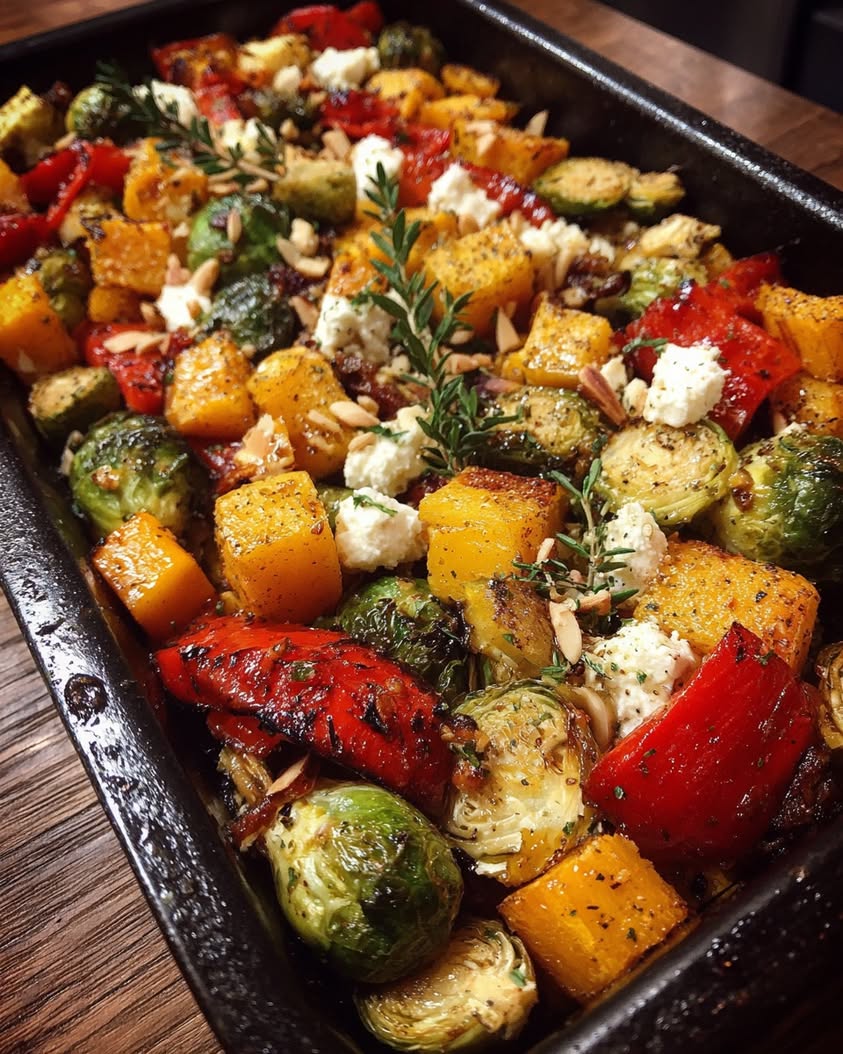
Roasted Pumpkin, Brussels Sprouts & Red Pepper with Feta, Almonds & Honey-Balsamic Glaze: A Vibrant Fall Feast
This recipe for Roasted Pumpkin, Brussels Sprouts & Red Pepper with Feta, Almonds & Honey-Balsamic Glaze captures the very essence of autumn in a single, stunning dish. Imagine sweet, caramelized pumpkin and red pepper mingling with earthy, crispy Brussels sprouts, all brought together by a glossy, sweet-tangy glaze. The final flourish of creamy, salty feta and crunchy, toasted almonds creates a symphony of textures and flavors that will make this your new go-to vegetable side dish. Furthermore, it transforms simple, humble ingredients into a show-stopping centerpiece worthy of any dinner table.
This dish is not just delicious; it is incredibly versatile. You can serve it as a magnificent vegetarian main course, a hearty side for roasted chicken or pork, or even as a standout addition to your holiday spread. The process of roasting intensifies the natural sugars in the vegetables, creating a deep, complex flavor that feels both rustic and refined. Ultimately, the combination of warm roasted vegetables, cool feta, and the sticky honey-balsamic glaze is a culinary experience that is both comforting and exciting.
Creating this beautiful medley of Roasted Pumpkin, Brussels Sprouts & Red Pepper is surprisingly straightforward. With minimal prep work and mostly hands-off roasting time, you can achieve a restaurant-quality dish with ease. This recipe is perfect for both weeknight dinners and entertaining, as it is naturally beautiful and packed with nutrition. Consequently, it is a fantastic way to enjoy the best produce of the season while impressing your family and friends with your culinary skills.
Quick Recipe Highlights
- Flavor Profile: This dish features a masterful balance of sweet roasted pumpkin and peppers, earthy Brussels sprouts, tangy feta cheese, and a sweet-and-sour honey-balsamic glaze. The toasted almonds add a nutty depth that ties all the elements together perfectly.
- Texture: You will enjoy a delightful contrast of soft, caramelized roasted vegetables, creamy crumbles of feta cheese, and the satisfying crunch of toasted almonds. The glaze adds a sticky, glossy coating that enhances every bite.
- Aroma: As it roasts, your kitchen will fill with the warm, sweet scent of caramelizing pumpkin and the savory, slightly nutty fragrance of Brussels sprouts. The honey-balsamic glaze reduces into a fragrant, tangy syrup that completes the aromatic experience.
- Visual Appeal: This dish is a feast for the eyes with its vibrant colors from the orange pumpkin, deep green Brussels sprouts, and bright red peppers. The white feta and brown almonds provide beautiful contrast, making it look as good as it tastes.
- Skill Level Needed: This is an beginner-friendly recipe that requires basic knife skills for chopping and the ability to use an oven. The techniques are simple, involving tossing vegetables in oil and roasting them until tender and golden brown.
- Special Equipment: You only need a large baking sheet, parchment paper for easy cleanup, a sharp knife, and a small saucepan for making the simple honey-balsamic glaze. No fancy kitchen gadgets are required.
Recipe Overview
- Difficulty Level: This recipe is rated easy because it involves fundamental cooking techniques like chopping vegetables and roasting. The steps are sequential and simple to follow, making it accessible for cooks of all levels. Additionally, there is plenty of margin for error in the roasting process, so even beginners can achieve excellent results.
- Category: This dish falls perfectly into the categories of vegetarian side dishes, healthy fall recipes, and holiday sides. It is substantial enough to be a main course for a light meal yet also works beautifully as an accompaniment to proteins like chicken, fish, or steak.
- Cuisine: While not tied to one specific tradition, this recipe draws inspiration from modern American and Mediterranean cuisines. The use of feta cheese and a balsamic glaze is reminiscent of Mediterranean flavors, while the focus on roasted seasonal vegetables is a hallmark of contemporary American cooking.
- Cost: This is a very cost-effective recipe, especially when made during the autumn months when pumpkins and Brussels sprouts are in season and priced lower. The other ingredients, like bell peppers, almonds, and feta, are generally affordable pantry and refrigerator staples.
- Season: This dish is ideal for fall and winter when pumpkins and Brussels sprouts are at their peak of flavor and freshness. The warm, roasted nature of the dish is also perfectly suited to cooler weather, providing comfort and warmth.
- Occasion: It is versatile enough for a simple family dinner yet elegant enough for Thanksgiving, Christmas, or a dinner party. You can also bring it to potlucks where it is sure to be a colorful and popular addition to the table.
Why You’ll Love This Roasted Pumpkin and Brussels Sprouts Recipe
You will absolutely adore the incredible flavor combination in this roasted pumpkin and Brussels sprouts dish. The natural sweetness of the pumpkin and red pepper caramelizes beautifully in the oven, creating a rich, deep flavor that contrasts wonderfully with the slightly bitter, earthy notes of the Brussels sprouts. Then, the tangy honey-balsamic glaze cuts through the richness, while the salty feta and crunchy almonds add the final layers of complexity. Every single bite offers a harmonious blend of sweet, savory, tangy, and crunchy that is utterly irresistible and deeply satisfying.
The convenience of this recipe is another major reason to love it. With just fifteen minutes of active prep time, you can have your vegetables chopped, tossed, and in the oven. The roasting process is mostly hands-off, freeing you up to prepare the rest of your meal or simply relax. Moreover, the ingredients are easy to find at any grocery store, especially during the fall season. This makes it a practical and stress-free option for busy weeknights or when you need to prepare a impressive side dish without a lot of fuss.
From a nutritional standpoint, this dish is a powerhouse. Pumpkin is loaded with Vitamin A and fiber, Brussels sprouts are packed with Vitamin C and K, and red peppers are an excellent source of antioxidants. Using olive oil adds healthy fats, and the almonds contribute protein and vitamin E. Consequently, you are serving a meal that is not only delicious but also genuinely good for your body. It is a fantastic way to get a wide variety of nutrients in one colorful, delicious package.
The social and entertaining value of this roasted vegetable medley is immense. Its vibrant, colorful presentation makes it a stunning centerpiece on any dining table, guaranteed to draw compliments from your guests. It is a crowd-pleaser that appeals to vegetarians and meat-eaters alike, making menu planning for mixed groups much simpler. Furthermore, the familiar yet elevated flavors are approachable for all palates, ensuring that everyone at the table will enjoy this beautiful and tasty creation.
Finally, this recipe is remarkably cost-effective and accessible. It utilizes affordable, seasonal produce and transforms it into something truly special. You do not need expensive or hard-to-find ingredients to create a restaurant-quality dish at home. This accessibility means you can enjoy a gourmet-level vegetable side regularly, making healthy and delicious eating an achievable goal for any budget. It proves that eating well does not have to be complicated or expensive.
Historical Background and Cultural Significance
The practice of roasting vegetables is one of the oldest cooking methods known to humanity, dating back to prehistoric times when food was cooked over open fires. However, the combination of these specific ingredients is a relatively modern invention, reflecting contemporary culinary trends that celebrate seasonal, plant-based eating. This particular recipe for roasted pumpkin and Brussels sprouts is a product of the 21st-century food movement that prioritizes fresh, whole foods and bold flavor combinations. It showcases how global pantry staples like feta cheese and balsamic vinegar can be fused with classic roasting techniques to create something new and exciting.
Pumpkins and Brussels sprouts both have deep agricultural histories. Pumpkins are native to North America and have been a staple food for Indigenous peoples for thousands of years. Brussels sprouts, on the other hand, have their origins in Europe, specifically Belgium, from which they get their name. Bringing these two geographically distinct vegetables together on one plate is a testament to the globalized nature of modern cuisine. This dish represents a melting pot of ingredients, each with its own rich history, now united in a harmonious and delicious way.
The evolution of this recipe is tied to the rising popularity of farmers’ markets and the farm-to-table movement. As consumers became more interested in eating seasonally and locally, chefs and home cooks alike began looking for creative ways to use autumn harvest vegetables. Roasting emerged as a preferred technique because it reliably coaxes out the deepest, sweetest flavors from sturdy fall and winter produce. The addition of a glossy glaze and creamy cheese is a modern twist that elevates simple roasted vegetables into a sophisticated dish suitable for any occasion.
Regional variations of this concept are endless. In the Mediterranean, you might find a similar dish with oregano and lemon juice. In Asia, a version with soy sauce and sesame oil could be popular. The beauty of this roasted pumpkin and Brussels sprouts recipe is its adaptability. It serves as a fantastic template that can be customized based on local tastes and available ingredients. This flexibility ensures its place as a enduring and beloved recipe in home kitchens and restaurants around the world, constantly evolving while staying true to its roots in simple, honest cooking.
Ingredient Deep Dive
Pumpkin is the star of this dish, a squash native to North America with a history spanning over 7,000 years. Culturally, it is synonymous with autumn and harvest festivals, especially Halloween and Thanksgiving in the United States. Nutritionally, it is a powerhouse of beta-carotene, which your body converts to Vitamin A, essential for vision and immune health. It is also rich in fiber and Vitamin C. When selecting a sugar pumpkin for roasting, look for one that is firm, heavy for its size, and has a consistent orange color with no soft spots. Store whole pumpkins in a cool, dark place for up to a month. Butternut squash or sweet potatoes make excellent substitutes if pumpkin is unavailable.
Brussels sprouts look like miniature cabbages and belong to the Gemmifera group of cabbages, cultivated in Belgium since the 13th century. They have a distinctive, slightly bitter and nutty flavor that becomes sweet and complex when roasted. They are incredibly nutritious, packed with Vitamin K for bone health, Vitamin C for immunity, and antioxidants. Choose firm, bright green sprouts that are compact and heavy for their size; avoid those with yellowing leaves. Store them unwashed in a plastic bag in your refrigerator’s crisper drawer. For a different flavor profile, you can substitute broccoli or cauliflower florets, though the cooking time may vary slightly.
Red bell peppers add a pop of color and a sweet, juicy contrast to the earthier vegetables. Originally from Central and South America, peppers have become a global culinary staple. They are an excellent source of Vitamin C, even more so than oranges, and also provide Vitamin B6 and folate. Select peppers that have a deep, vibrant red color, glossy skin, and feel firm to the touch. Avoid any with soft spots or wrinkles. Store them in the refrigerator’s crisper drawer. You can easily substitute orange or yellow bell peppers for a similar sweet flavor and colorful presentation.
Feta cheese brings a creamy, salty, and tangy element that balances the sweetness of the roasted vegetables and glaze. This brined cheese has a history dating back to ancient Greece and is a protected designation of origin (PDO) product, meaning authentic feta must be made in Greece from sheep’s milk or a sheep and goat milk blend. It is a good source of calcium and protein. For the best flavor, buy feta blocks packed in brine rather than pre-crumbled varieties. If you need a substitute, fresh goat cheese (chèvre) or ricotta salata would work well, offering a similar tangy and crumbly texture.
The honey-balsamic glaze is the unifying element that adds a glossy sheen and a punch of sweet-and-sour flavor. Balsamic vinegar originates from Modena, Italy, where it is traditionally aged in wooden barrels for years, developing a complex, sweet-tart flavor. Honey, one of the world’s oldest sweeteners, adds natural sweetness and helps the glaze thicken into a syrupy consistency. Together, they create a simple yet sophisticated sauce. For a vegan version, you can substitute maple syrup for the honey. If you do not have balsamic vinegar, a reduction of red wine vinegar with a little sugar can work in a pinch, though the flavor will be different.
Common Mistakes to Avoid
- Overcrowding the Pan: Spreading the vegetables in a single layer is crucial for proper roasting. If the pan is too crowded, the vegetables will steam instead of roast, resulting in a soggy, less flavorful dish. Always use a large enough baking sheet to give each piece space to caramelize.
- Underseasoning the Vegetables: Do not be shy with salt and pepper before roasting. Seasoning at this stage is essential for building flavor from the inside out. The vegetables need this base layer of seasoning to taste their best, even with the flavorful glaze and toppings added later.
- Using the Wrong Pumpkin: Avoid using large, watery carving pumpkins for this recipe. They lack the dense, sweet flesh needed for roasting. Instead, always look for sugar pumpkins, also called pie pumpkins, which are smaller, sweeter, and have a better texture for cooking.
- Not Trimming the Brussels Sprouts Properly: Failing to trim the dry stem end and remove any loose or yellowed outer leaves can lead to a tough and bitter result. Taking an extra minute to properly prep each sprout ensures even cooking and a more pleasant eating experience.
- Neglecting to Toast the Almonds: While you can use raw almonds, toasting them first unlocks a deeper, nuttier flavor and a crispier texture that provides a much better contrast to the soft vegetables. Simply toast them in a dry skillet for a few minutes until fragrant.
- Overcooking the Glaze: When reducing the honey and balsamic vinegar, keep a close eye on it. If you cook it for too long, it can become overly thick and sticky, almost like candy, and it may burn. Remove it from the heat when it has thickened to a syrup that coats the back of a spoon.
- Adding the Feta Too Early: If you add the feta cheese before or during roasting, it will melt and become greasy instead of maintaining its creamy, crumbly texture. Always add the feta and almonds as a fresh garnish after the vegetables come out of the oven and have been glazed.
- Skipping the Resting Time: Allowing the roasted vegetables to sit for a few minutes after adding the glaze helps the flavors meld together. Serving them immediately from the oven is fine, but a brief rest allows the glaze to be absorbed slightly, creating a more cohesive dish.
Essential Techniques
Proper vegetable chopping is the foundational technique for this recipe. The goal is to cut the pumpkin, Brussels sprouts, and peppers into uniform sizes. This ensures that all pieces cook at the same rate, preventing some from being burnt while others are still hard. For the pumpkin, peel it first, then slice it into half-inch cubes. Halve the Brussels sprouts if they are medium-sized, or quarter them if they are larger. The red pepper should be cut into one-inch pieces. Using a sharp chef’s knife will make this task safer and more efficient, giving you clean cuts and consistent pieces for perfect roasting.
The art of roasting is what transforms these raw vegetables into a caramelized, flavorful masterpiece. Roasting at a high temperature, around 400°F (200°C), is key. This high heat encourages the natural sugars in the vegetables to caramelize on the surface, creating a sweet, slightly charred, and complex flavor. The Maillard reaction, a chemical process between amino acids and sugars, is responsible for this desirable browning and flavor development. To achieve this, toss the vegetables thoroughly in oil to coat every surface, which promotes even browning and prevents drying out. Halfway through cooking, give the pan a shake or use a spatula to flip the vegetables for all-around color.
Creating the honey-balsamic glaze involves a simple reduction technique. By simmering the vinegar and honey together in a saucepan, you are evaporating some of the water content. This process concentrates the flavors and thickens the liquid into a rich, syrupy glaze. It is important to use a gentle simmer rather than a rolling boil to prevent the honey from burning and becoming bitter. Stir the mixture occasionally as it reduces. The glaze is ready when it thickens enough to coat the back of a spoon and leaves a trail when you run your finger through it. This reduction intensifies the sweet and tangy notes, making it the perfect finishing touch for the roasted vegetables.
Pro Tips for Perfect Roasted Pumpkin and Brussels Sprouts
For extra crispy Brussels sprouts, try halving them and placing them cut-side down on the hot baking sheet. This maximizes the surface area in contact with the heat, leading to a beautiful, deep brown sear and a wonderfully crispy texture that contrasts with the tender interior.
Consider adding a sprig of fresh rosemary or thyme to the baking sheet with the vegetables. As they roast, the herbs will infuse the oil and vegetables with a subtle, aromatic flavor that complements the other ingredients perfectly. Simply remove the woody stems before serving.
Let your roasted vegetables rest for five minutes after adding the glaze before topping with feta and almonds. This brief waiting period allows the hot vegetables to absorb some of the glaze, ensuring every bite is flavorful. It also prevents the feta from melting completely upon contact.
If you have time, toss the chopped pumpkin and Brussels sprouts in the oil and seasonings about thirty minutes before roasting. This short marinating time allows the salt to begin drawing out moisture and the oil to penetrate, which can lead to better browning and more seasoned vegetables.
For a more complex flavor in your glaze, add a pinch of red pepper flakes or a crack of black pepper to the honey and balsamic vinegar as it simmers. This introduces a subtle heat that beautifully cuts through the sweetness and richness of the dish.
Always taste your glaze before drizzling it over the vegetables. Depending on the acidity of your balsamic and the sweetness of your honey, you may want to adjust the balance with a tiny pinch more of salt or a extra drizzle of honey to suit your personal preference.
Use a microplane to zest a little lemon zest over the finished dish right before serving. The bright, citrusy aroma will lift all the other flavors and add a fresh, vibrant note that makes the entire dish taste even more alive and exciting.
Variations and Adaptations
You can explore numerous regional variations to keep this dish exciting. For a Mediterranean twist, add kalamata olives and fresh oregano, swapping the almonds for pine nuts. An autumnal American version could include dried cranberries and pecans. For an Asian-inspired profile, replace the glaze with a mixture of soy sauce, sesame oil, and a touch of rice vinegar, then garnish with sesame seeds and chopped scallions. These adaptations show how versatile the base recipe is, allowing you to travel the world from your kitchen.
Seasonal adaptations are simple and recommended. In the winter, replace the red pepper with cubed parsnips or turnips. During summer, you can use zucchini and cherry tomatoes, though you will need to reduce the roasting time for these more delicate vegetables. In spring, asparagus and new potatoes would be a wonderful combination. Using what is freshest and most abundant in each season ensures the best flavor and supports local agriculture, making your cooking more sustainable and delicious.
Dietary modifications are straightforward for this already vegetarian dish. To make it vegan, simply omit the feta cheese or use a vegan feta alternative, and ensure your glaze is made with maple syrup instead of honey. For a nut-free version, substitute the almonds with toasted sunflower seeds or pumpkin seeds for a similar crunch. If you are watching your sugar intake, you can reduce the amount of honey in the glaze or use a sugar-free substitute that is stable for heating.
Feel free to experiment with flavor variations by changing the herbs and spices. Smoked paprika tossed with the vegetables before roasting adds a deep, smoky dimension. A sprinkle of garam masala can introduce warm, Indian-inspired flavors. Alternatively, a dusting of cumin and coriander would give it a North African flair. You can also change the cheese; try crumbled goat cheese for a sharper tang or shaved Parmesan for a more savory, umami-rich finish. The basic formula is a perfect canvas for your culinary creativity.
Serving and Presentation Guide
Plating this dish beautifully enhances the dining experience. For a family-style presentation, simply transfer the glazed roasted vegetables to a large, shallow serving platter and sprinkle the feta and almonds over the top. Alternatively, for individual portions, use a ring mold to create a neat, vertical stack of vegetables in the center of each plate. Drizzle a little extra glaze around the plate for a professional touch. Serving it in a colorful ceramic dish can also highlight the vibrant hues of the vegetables, making the dish look even more appetizing.
Garnishing is the final step to elevate the visual appeal. Beyond the feta and almonds, consider adding a handful of fresh, soft herbs like chopped parsley, mint, or basil for a burst of green color and fresh flavor. Edible flowers would make a stunning garnish for a special occasion. A final drizzle of high-quality extra virgin olive oil just before serving adds a lovely sheen. Remember, the goal of garnishing is to complement the dish, not overwhelm it, so a light hand is best.
This roasted vegetable medley pairs wonderfully with a variety of traditional accompaniments. It is a classic side for a holiday roast turkey or ham. For a simpler meal, serve it alongside grilled chicken breasts, pan-seared salmon, or a juicy steak. To keep it vegetarian, it is substantial enough to be a main course when served over a bed of creamy polenta, quinoa, or couscous. The robust flavors stand up well to grains and proteins, making it an incredibly versatile component of your meal.
Wine and Beverage Pairing
Selecting the right wine can elevate this dish from great to extraordinary. A crisp, unoaked white wine like a Sauvignon Blanc or Pinot Grigio works beautifully. Their high acidity cuts through the richness of the roasted vegetables and balances the sweetness of the glaze. Alternatively, a light-bodied red wine, such as a Pinot Noir, can also be an excellent choice. Its red fruit notes and low tannins complement the earthy Brussels sprouts and sweet pumpkin without overpowering the dish. Ultimately, the key is to choose a wine with good acidity to mirror the tanginess of the balsamic glaze.
For non-alcoholic alternatives, you have several delicious options. Sparkling water with a squeeze of fresh lemon or lime provides a clean, palate-cleansing effervescence. An apple cider spritzer, made with equal parts non-alcoholic cider and sparkling water, echoes the autumn flavors in the dish. Herbal teas served iced, such as peppermint or chamomile, can be a soothing and flavorful pairing. These beverages provide refreshment without competing with the complex flavors of the roasted vegetables and glaze.
If you prefer coffee or tea with your meal, opt for lighter roasts and varieties. A medium-roast coffee with low acidity would complement the earthy notes without bitterness. For tea, a gentle green tea or a white tea would be preferable, as their subtle, vegetal notes can harmonize with the roasted vegetables. Avoid strong, bold coffees or heavily tannic black teas, as they might clash with the sweet and tangy elements of the dish. Serving these beverages after the meal as a digestif is often the most pleasant approach.
Storage and Shelf Life
Proper storage is essential for maintaining the quality and safety of your leftovers. Allow the roasted vegetable dish to cool completely to room temperature before storing, but do not leave it out for more than two hours to prevent bacterial growth. Transfer the leftovers to an airtight container. It is best to store the components separately if possible; keep the roasted vegetables in one container and the feta and almonds in separate bags to maintain their distinct textures. This prevents the almonds from getting soft and the feta from dissolving into the vegetables.
The ideal storage location for leftovers is the refrigerator, where they will keep for up to three to four days. The vegetables may soften slightly upon reheating, but the flavors will still be delicious. Always use glass or BPA-free plastic containers with tight-fitting lids. Before sealing the container, you can place a piece of paper towel on top of the vegetables to absorb any excess moisture that might be released, helping to keep them from becoming too soggy.
Recognizing signs of spoilage is crucial for food safety. If you notice an off or sour smell, visible mold growth, or a significant change in texture becoming unpleasantly slimy, the food should be discarded immediately. When in doubt, it is always safer to throw it out. To reheat, spread the vegetables on a baking sheet and warm them in a 350°F (175°C) oven for about 10-15 minutes until heated through. This method helps to re-crisp them better than using a microwave, which can make them steam and become soft.
Make Ahead Strategies
You can significantly streamline your dinner preparation by utilizing make-ahead strategies for this dish. The day before you plan to serve it, you can wash, peel, and chop all the vegetables. Store the chopped pumpkin, Brussels sprouts, and red pepper in separate airtight containers or resealable bags in the refrigerator. This advance prep saves you valuable time on the day of cooking and makes the assembly process quick and effortless. You can also toast the almonds ahead of time and store them at room temperature in a sealed container.
Understanding the quality impact of each step is important. Pre-chopping the vegetables has virtually no negative effect; in fact, it can sometimes intensify the flavors as the salt from seasoning penetrates over time. However, dressing the vegetables in oil and storing them can lead to sogginess, so it is best to toss them with oil just before roasting. The honey-balsamic glaze can also be made up to three days in advance. Simply store it in a jar in the refrigerator and gently reheat it on the stove or in the microwave until it becomes pourable again.
For the best results on the day of serving, take your pre-chopped vegetables out of the refrigerator about 20 minutes before roasting to take the chill off. This helps them roast more evenly. Toss them with oil, salt, and pepper, then proceed with the recipe as directed. When assembling, add the fresh elements like the cold feta and room-temperature toasted almonds at the very last minute. This approach gives you the convenience of make-ahead prep while ensuring the final dish has the perfect textures and vibrant, fresh flavors that make it so special.
Scaling Instructions
This recipe is easily scaled up or down to suit your needs. For halving the recipe to serve two people, simply divide all the ingredient quantities by two. Use a standard-sized baking sheet; the smaller amount of vegetables will have plenty of space to roast properly and may even cook a few minutes faster, so keep a close eye on them. The glaze can also be halved, but it is easier to make the full batch and store the extra for another use, as reducing very small quantities in a pan can be tricky.
When doubling or tripling the recipe to feed a crowd, double or triple all the ingredients accordingly. The most important consideration here is to avoid overcrowding. You must use multiple baking sheets and roast the vegetables in batches, or use two oven racks and rotate the sheets halfway through cooking. Do not pile all the vegetables onto one sheet, as they will steam instead of roast. You may also need to increase the total roasting time by five to ten minutes because the increased volume can lower the oven’s temperature temporarily.
Scaling also requires timing modifications. While prep time will increase linearly with the amount of vegetables you are chopping, the roasting time may not. A doubled recipe might need a slightly longer cooking time, but it is best to rely on visual and textural cues rather than the clock alone. Look for the same caramelized edges and tender interiors specified in the original recipe. For storage, remember that a larger batch will take longer to cool down, so spread the leftovers out in shallow containers before refrigerating to cool them quickly and safely.
Nutritional Deep Dive
This dish offers a well-rounded macronutrient profile. The primary source of carbohydrates comes from the pumpkin and red pepper, which provide complex carbs for sustained energy. The olive oil and almonds contribute healthy monounsaturated and polyunsaturated fats, which are beneficial for heart health and help with the absorption of fat-soluble vitamins. While not a high-protein dish, it does provide a modest amount from the almonds and feta cheese. This balance makes it a satisfying side dish or a light main course that provides energy without being overly heavy.
The micronutrient analysis is particularly impressive. Pumpkin is famously rich in beta-carotene, which the body converts to Vitamin A, crucial for vision, immune function, and skin health. Brussels sprouts are a powerhouse of Vitamin K, essential for blood clotting and bone metabolism, and Vitamin C, a potent antioxidant. Red bell peppers are one of the best dietary sources of Vitamin C. Together, these vegetables create a nutrient-dense dish that supports overall wellness, providing a wide spectrum of vitamins and minerals in every colorful bite.
From a dietary consideration standpoint, this recipe is naturally vegetarian and gluten-free. It can easily be adapted to be vegan and dairy-free by omitting the feta and using a plant-based sweetener in the glaze. For those on a low-carb or keto diet, the pumpkin and red pepper do contain carbohydrates, so portion control would be necessary. The high fiber content from the vegetables aids in digestion and promotes a feeling of fullness, which can be helpful for weight management. It is a wholesome, vegetable-forward dish that aligns with many healthy eating patterns.
Dietary Adaptations
This recipe is naturally gluten-free, as none of the core ingredients contain gluten. However, always check the labels on your balsamic vinegar and feta cheese, as very rarely some brands might include gluten-containing additives or be processed in facilities that handle wheat. For complete assurance, purchase products that are certified gluten-free. The dish remains vibrant and delicious without any modifications, making it a safe and excellent choice for anyone with celiac disease or a gluten sensitivity.
For a dairy-free adaptation, simply omit the feta cheese. The dish will still be flavorful from the roasted vegetables and the honey-balsamic glaze. To replicate the creamy, tangy element that the feta provides, you can sprinkle on a dairy-free alternative. Many stores now carry excellent vegan feta cheeses made from tofu, almonds, or coconut oil. Alternatively, a drizzle of a creamy tahini-lemon sauce can add a rich, savory depth that compensates beautifully for the missing cheese.
Creating a vegan version requires two simple swaps. First, replace the honey in the glaze with an equal amount of maple syrup, agave nectar, or vegan brown rice syrup. These plant-based sweeteners work perfectly to create the same sticky, sweet glaze. Second, follow the dairy-free guidance above to eliminate the feta cheese. With these changes, you have a stunning plant-based dish that is entirely vegan but loses none of the complex flavors and textures that make the original so appealing.
For those following a Low-FODMAP diet, this recipe can be adapted with careful ingredient selection. Pumpkin is low-FODMAP in servings of 1/3 cup, so you would need to reduce the pumpkin quantity significantly. Brussels sprouts are only low-FODMAP in servings of 2 sprouts per meal. You could replace a portion of them with low-FODMAP vegetables like carrots, zucchini, or green beans. The garlic-infused oil can be used instead of plain olive oil for flavor without the high-FODMAP garlic fructans. Always consult the Monash University FODMAP app for the most current serving size recommendations.
Troubleshooting Guide
If your vegetables are soggy instead of caramelized, the most likely cause is overcrowding the pan. When vegetables are too close together, they release steam that prevents proper browning. The solution for next time is to use a larger baking sheet or roast in batches. Additionally, ensure your oven is fully preheated before the pan goes in. A hot oven is crucial for searing the outside quickly. If you are making this immediately, you can try broiling the cooked vegetables for a minute or two to crisp up the tops, but watch them closely to prevent burning.
When the flavor balance seems off, you can make quick adjustments. If the dish tastes too sweet, a squeeze of fresh lemon juice or an extra sprinkle of salt over the top can help balance it. Conversely, if it is too tangy from the balsamic, a light additional drizzle of honey or olive oil can mellow the acidity. If the vegetables taste bland, they were likely underseasoned before roasting. You can toss the warm vegetables with a little more salt and pepper after they come out of the oven to rectify this.
Burning is a common issue, especially with the glaze or the thinner edges of the vegetables. If your vegetables are browning too quickly, simply lower the oven temperature by 25 degrees Fahrenheit and tent the pan with aluminum foil. If the honey-balsamic glaze starts to smell burnt or becomes too thick and sticky, it has been overcooked. Unfortunately, a burnt glaze cannot be saved, so it is best to start over. To prevent this, always use a gentle simmer and never leave the glaze unattended while it reduces.
Recipe Success Stories
The community feedback for this roasted pumpkin and Brussels sprouts recipe has been overwhelmingly positive. Many home cooks have shared how it became the surprise hit of their Thanksgiving dinner, with even the most ardent vegetable skeptics asking for seconds. One reader wrote in to say that it has now earned a permanent spot in their weekly meal rotation because it is so easy and satisfying. Another mentioned that their children, who normally refuse Brussels sprouts, devoured this version without complaint, thanks to the sweet glaze and crunchy almonds. These stories highlight the recipe’s universal appeal and its power to convert picky eaters.
Readers have also shared fantastic success stories with their own variations. One person added sliced chorizo to the roasting pan for a spicy, meaty twist. Another used acorn squash instead of pumpkin with great results. A creative cook without
Print
Roasted Pumpkin, Brussels Sprouts & Red Pepper with Feta, Almonds & Honey-Balsamic Glaze
Description
A vibrant, sweet and savory roasted vegetable medley topped with creamy feta, crunchy almonds, and a drizzle of honey-balsamic glaze.
Ingredients
For the Crust:
- 1 small sugar pumpkin, peeled and cubed
- 1 lb Brussels sprouts, trimmed and halved
- 1 large red bell pepper, sliced
- 3 tbsp olive oil
- 1 tsp garlic powder
- 1 tsp dried thyme
- Salt and black pepper to taste
- 1/4 cup sliced almonds
- 1/2 cup crumbled feta cheese
- 2 tbsp balsamic vinegar
- 1 tbsp honey
Instructions
1. Prepare the Crust:
- Preheat oven to 400°F (200°C). Line a baking sheet with parchment paper.
- In a large bowl, toss pumpkin cubes, Brussels sprouts, and red pepper with olive oil, garlic powder, thyme, salt, and pepper until evenly coated.
- Spread vegetables in a single layer on the prepared baking sheet. Roast for 25-30 minutes, or until tender and lightly browned.
- While vegetables roast, toast sliced almonds in a dry skillet over medium heat until golden and fragrant, about 3-5 minutes. Set aside.
- In a small saucepan, combine balsamic vinegar and honey. Simmer over low heat for 3-4 minutes until slightly thickened.
- Transfer roasted vegetables to a serving platter. Top with crumbled feta, toasted almonds, and drizzle with the honey-balsamic glaze before serving.
Notes
You can customize the seasonings to taste.

I’m Shaykee—born in Morocco, seasoned across continents. From airplane galleys to home kitchens, I share the flavors and stories that shaped my journey.