
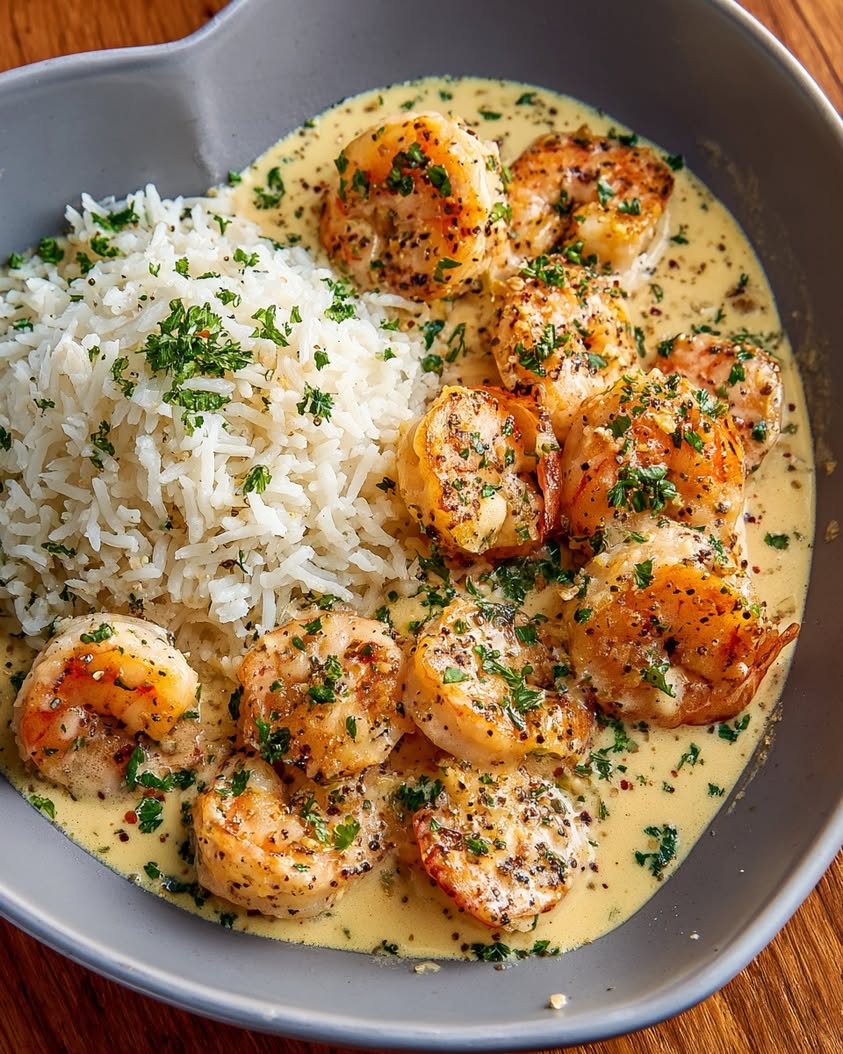
Lemon Herb Cream Shrimp with Fluffy White Rice: A Quick, Elegant Dinner That’s Ready in 30 Minutes!
Imagine a dish that feels like a special occasion but fits perfectly into a busy weeknight schedule. This Lemon Herb Cream Shrimp with Fluffy White Rice is exactly that kind of culinary magic. It combines plump, succulent shrimp with a velvety, aromatic sauce that’s bright with lemon and fragrant with fresh herbs. Served over a bed of perfectly steamed rice, it creates a meal that is both comforting and impressively elegant. The beauty of this recipe lies in its simplicity and speed, delivering restaurant-quality flavor from your own kitchen in about half an hour.
The allure of this creamy lemon herb shrimp recipe starts with its incredible aroma. As the garlic and herbs hit the warm pan, their fragrance fills your kitchen with an irresistible promise of a delicious meal. Meanwhile, the visual appeal is undeniable. The pink shrimp nestle in a pale, creamy sauce flecked with green herbs, all resting against the snowy backdrop of fluffy rice. It’s a plate that looks as good as it tastes, making it perfect for both quiet family dinners and last-minute entertaining. Ultimately, this dish proves that you don’t need complex techniques or hours of prep to create something truly memorable.
Furthermore, this recipe is a masterclass in balanced flavors. The rich, luxurious cream sauce is expertly cut by the sharp, citrusy punch of fresh lemon juice and zest. Herbs like parsley and dill add a garden-fresh brightness that lifts the entire dish. The shrimp themselves provide a sweet, delicate seafood flavor and a satisfying, tender bite. When you combine all these elements with the neutral, fluffy white rice, you get a harmonious bite that is rich yet refreshing, decadent yet light. It’s a combination that will have everyone at the table asking for seconds.
Quick Recipe Highlights
- Flavor Profile: This dish offers a sophisticated balance of rich, tangy, and herbal notes. The creamy sauce provides a luxurious base, while the fresh lemon juice and zest add a vital burst of acidity. Fresh herbs like parsley and dill contribute a final layer of aromatic freshness that makes the flavor pop.
- Texture: You will enjoy a wonderful contrast of textures in every bite. The shrimp are tender and slightly springy, while the cream sauce is velvety and smooth. The fluffy white rice serves as the perfect pillowy foundation, soaking up the sauce and completing the mouthfeel.
- Aroma: The cooking process releases an incredible scent that builds anticipation. Key aromatic notes include the savory sizzle of garlic, the bright citrus from lemon zest, and the earthy, fresh fragrance of chopped herbs as they warm in the pan.
- Visual Appeal: This plate is a feast for the eyes with its appealing color contrast. The pink shrimp and green herbs stand out beautifully against the creamy white sauce and bright white rice. A final garnish of lemon wedges and extra herbs makes the presentation restaurant-worthy.
- Skill Level Needed: This is an accessible recipe for most home cooks. It requires basic skills like sautéing, reducing a sauce, and cooking rice. However, timing is crucial to avoid overcooking the shrimp, making it a great recipe for building confidence in the kitchen.
- Special Equipment: You need only standard kitchen tools. A large skillet or sauté pan is essential for cooking the shrimp and sauce. Additionally, you will need a saucepan with a tight-fitting lid for cooking perfect fluffy rice. A microplane or zester for the lemon is highly recommended.
Recipe Overview
- Difficulty Level: We rate this Lemon Herb Cream Shrimp recipe as easy. The steps are straightforward and logical, involving basic techniques like sautéing and simmering. The most critical skill is managing heat to cook the shrimp perfectly without turning them rubbery. With a bit of attention, even a novice cook can achieve excellent results.
- Category: This dish falls squarely into the main course category for lunch or dinner. It is a complete, protein-focused meal when paired with the rice. You could also consider it a special occasion or date night recipe due to its elegant appearance and rich flavors, despite the simple preparation.
- Cuisine: While not tied to one specific tradition, this recipe draws inspiration from coastal European and American culinary styles. It echoes the simplicity of Italian shrimp scampi but with a creamy, herbaceous twist. The use of fresh herbs and cream is reminiscent of French cuisine, making it a delightful fusion dish.
- Cost: This is a moderately priced meal that feels luxurious. The main cost drivers are the shrimp and fresh herbs. Using frozen shrimp can lower the expense significantly. The remaining ingredients like rice, butter, cream, lemon, and garlic are pantry staples that keep the overall cost per serving reasonable.
- Season: This recipe shines brightest in the spring and summer. The bright lemon and fresh herbs mirror the flavors of the season. However, it is truly a year-round dish because it brings a touch of freshness and lightness to colder months, making it a versatile choice for any time of year.
- Occasion: It is incredibly versatile for different events. It is perfect for a quick and satisfying weeknight family dinner. Simultaneously, its elegant presentation makes it ideal for a romantic date night at home or for impressing guests at a small dinner party without requiring you to spend all day in the kitchen.
Why You’ll Love This Recipe
First and foremost, the taste and texture appeal of this creamy lemon herb shrimp is absolutely irresistible. The combination creates a luxurious eating experience that feels far more complex than the effort required. Each forkful delivers the sweet, delicate flavor of perfectly cooked shrimp coated in a sauce that is both rich and bright. The fluffy rice acts like a delicious sponge, ensuring you get every last drop of the incredible lemon herb cream. It is a dish that satisfies cravings for something comforting and something refreshing all at once.
Next, consider the sheer convenience and preparation benefits. This entire meal comes together in about thirty minutes from start to finish. The process is linear and simple: start the rice, then cook the shrimp and sauce. Most of the ingredients are pantry staples or easy-to-find fresh items. Because it cooks so quickly, it is an ideal solution for those nights when you need a fantastic meal but have limited time and energy. It is a reliable recipe that delivers consistent, impressive results every single time.
From a nutritional standpoint, this meal offers several advantages. Shrimp is an excellent source of lean protein and important nutrients like selenium and vitamin B12. Using fresh herbs not only adds flavor but also incorporates beneficial antioxidants. While the cream adds richness, you control the portion size. Serving it over plain rice provides energy-sustaining carbohydrates. As a result, you can enjoy a balanced, satisfying meal that fuels your body without leaving you feeling overly heavy.
Moreover, the social and entertaining value of this dish is incredibly high. It presents beautifully on the plate, making it look like you spent far more time cooking than you actually did. The recipe is easy to scale up for a small group, and the entire cooking process is relatively clean and contained. Serving this creamy lemon herb shrimp to guests almost guarantees compliments, and because it is not overly fussy, it allows you to enjoy the company of your friends instead of being stuck in the kitchen all evening.
Finally, the cost-effectiveness and accessibility make it a winner. Compared to ordering a similar seafood dish at a restaurant, making this at home saves a significant amount of money. You can often find frozen shrimp on sale, and the other ingredients are inexpensive. The recipe is also adaptable; if you do not have fresh dill, you can use more parsley or even a pinch of dried herbs. This flexibility ensures you can make a delicious version of the dish with what you have on hand, reducing food waste and stress.
Historical Background and Cultural Significance
The concept of cooking shrimp in a garlicky, buttery, or creamy sauce has roots in many coastal communities around the world. Dishes like Italian scampi, French crevettes à la crème, and various American coastal preparations all share a common thread: highlighting the sweet, delicate flavor of shrimp with simple, flavorful enhancements. This Lemon Herb Cream Shrimp recipe is a modern fusion that borrows elements from these traditions. It combines the classic French technique of finishing a sauce with cream and herbs with the bright, citrus-forward approach popular in contemporary American cuisine. The result is a dish that feels both familiar and excitingly new.
Culturally, shrimp holds a place of esteem in many societies as a symbol of both luxury and everyday sustenance, depending on the region. In the southern United States, for instance, shrimp and grits is a beloved staple. In Mediterranean countries, shrimp is often grilled or sautéed with olive oil and garlic. This recipe bridges those ideas by treating shrimp as the star of an elegant, quick meal. The addition of rice as a base is a global practice, from Asian fried rice to Spanish paella, making the dish feel universally comforting. It represents a modern, globalized approach to home cooking where techniques and flavors from different traditions blend seamlessly.
The evolution of this specific recipe is tied to the modern home cook’s desire for restaurant-quality meals without professional equipment or time. The use of heavy cream to create a quick, luxurious sauce is a technique that has gained popularity as people seek to replicate bistro-style dishes at home. Similarly, the emphasis on fresh herbs and citrus zest reflects a broader culinary trend toward bright, clean flavors and visually appealing, colorful plates. This Lemon Herb Cream Shrimp is a product of that evolution, offering sophistication through simplicity and quality ingredients rather than complex processes.
Regional variations of this concept are endless, which speaks to its adaptability. In the American South, you might find a version with a splash of bourbon or served over cheesy grits instead of rice. A coastal Italian version would likely use white wine and omit the cream, focusing on olive oil and lemon. In a Thai-inspired variation, the cream might be replaced with coconut milk, and herbs like cilantro and basil could be used. This particular recipe sits comfortably in a middle ground, using widely available ingredients to create a universally appealing profile. It invites cooks to make it their own, adding personal touches based on their pantry and preferences.
Ingredient Deep Dive
Let us start with the star: shrimp. Shrimp are decapod crustaceans enjoyed worldwide, with a history of cultivation dating back centuries in some Asian cultures. Nutritionally, they are a powerhouse of lean protein, low in calories and fat but rich in selenium, iodine, and vitamin B12. When selecting shrimp, look for firm, translucent flesh with a mild sea smell. For this recipe, large (21/25 count) shrimp, peeled and deveined, are ideal. Store them in the coldest part of your fridge and use within a day or two, or buy frozen for longer storage. If needed, you can substitute with scallops or even chunks of firm white fish.
Fresh herbs, specifically parsley and dill, are the soul of the lemon herb component. Parsley has been used since ancient times, often symbolizing joy and festivity. Dill, with its feathery fronds, has a long history in European and Scandinavian cooking. Both herbs are rich in vitamins A, C, and K, and they bring antioxidants to the dish. For the best flavor, choose bunches with vibrant green color and no wilting. Store them stem-down in a glass of water in the fridge, loosely covered with a bag. If you cannot find fresh dill, you can use an extra tablespoon of fresh parsley with a tiny pinch of dried dill, though the flavor will be less bright.
The creamy element comes from heavy cream or whipping cream. This dairy product is created by skimming the high-fat layer from unhomogenized milk. It provides the luxurious, velvety texture that defines the sauce. From a culinary standpoint, it stabilizes the sauce and carries the other flavors beautifully. Always check the date on the carton and give it a quick smell before using. For a lighter version, half-and-half can be used, but the sauce will be thinner and less rich. For a dairy-free adaptation, full-fat coconut milk is the best substitute, though it will impart a subtle coconut flavor.
Lemons are the essential source of bright acidity. Originating in Asia, lemons have become a global culinary staple prized for their juice and zest. They are an excellent source of vitamin C and flavonoids. For this recipe, you need both the zest and the juice. Choose lemons that are heavy for their size with smooth, brightly colored skin, as they will be juicier. Always zest the lemon before juicing it, as it is nearly impossible to do the reverse. Store lemons at room temperature for short-term use or in the fridge for longer storage. In a pinch, bottled lemon juice can work for the liquid, but you will miss the aromatic oils from the fresh zest.
Common Mistakes to Avoid
- Overcooking the Shrimp: This is the most common pitfall. Shrimp cook incredibly fast, becoming rubbery and tough if left in the pan too long. They are done as soon as they turn opaque and form a loose “C” shape. Always remove them from the pan the moment they are cooked through.
- Using Pre-Cooked Shrimp: Avoid using shrimp that are already cooked when you buy them. They will become very tough and chewy when reheated in the sauce. For the best texture, you must start with raw shrimp, whether fresh or thawed from frozen.
- Crowding the Pan: If you add too many shrimp to the pan at once, they will steam instead of sauté. This prevents proper browning and can lead to uneven cooking. Cook the shrimp in a single layer, possibly in two batches if your pan is not large enough.
- Not Patting Shrimp Dry: Moisture on the surface of the shrimp will prevent browning and cause the oil to splatter. Always pat shrimp thoroughly dry with paper towels before seasoning and adding them to the hot pan.
- Boiling the Cream Sauce: After adding the cream, you should bring it to a gentle simmer, not a rolling boil. Boiling heavy cream can cause it to separate or become grainy, ruining the smooth texture of your lemon herb cream sauce.
- Adding Lemon Juice Too Early: If you add the lemon juice at the beginning of making the sauce and let it boil, it can become bitter. The fresh, bright flavor is best preserved by adding the juice at the very end, just before serving.
- Using Dried Herbs as a Direct Substitute: Dried herbs are much more potent than fresh and have a different flavor profile. If you must use dried, use only one-third the amount called for of fresh, and add them earlier in the cooking process to allow their flavor to bloom.
- Forgetting to Season in Layers: Do not rely on salting only at the end. Season the shrimp before cooking, and taste and adjust the seasoning of the sauce after the cream has reduced. Building layers of seasoning ensures every component is perfectly seasoned.
- Skipping the Lemon Zest: The zest contains fragrant essential oils that provide a powerful lemon aroma without the sharp acidity of the juice. Skipping it will result in a sauce that tastes flat and one-dimensional. Always include both zest and juice.
- Using the Wrong Rice: For truly fluffy white rice, a long-grain variety like Basmati or Jasmine is ideal. Short-grain or sushi rice will be too sticky and clumpy, changing the intended texture of the final dish.
Essential Techniques
Sautéing the shrimp properly is the first critical technique. This quick-cooking method over medium-high heat uses a small amount of fat to create a flavorful sear on the outside while keeping the inside tender. The key is to ensure your pan and oil are hot before adding the dried shrimp. Listen for that initial sizzle. Do not move the shrimp around immediately; let them cook undisturbed for about a minute to develop color. Then flip and cook just until opaque. Mastering this technique prevents steaming and gives the shrimp a more complex flavor than simply boiling them.
Creating the pan sauce is the next foundational skill. After removing the shrimp, you use the same pan to build flavor. Cooking the garlic briefly toasts it without burning, which would make the sauce bitter. Deglazing with a bit of broth or wine lifts the flavorful browned bits (fond) from the bottom of the pan, incorporating them into the sauce. Then, adding the cream and letting it simmer gently allows it to reduce and thicken slightly, concentrating the flavor. This technique of building a sauce in the same pan used to cook the protein is a classic restaurant method that maximizes flavor with minimal cleanup.
Properly zesting and juicing a lemon is a simple but vital technique for this recipe. Use a fine microplane or zester to remove only the bright yellow outer skin of the lemon, avoiding the bitter white pith underneath. Do this before you cut and juice the lemon. For juicing, roll the lemon firmly on the countertop with the palm of your hand to break down the internal membranes and get more juice. Cut it in half and use a reamer or your hand to squeeze out the juice, catching any seeds. Adding the zest and juice at the correct stages—zest with the herbs, juice at the very end—preserves their vibrant qualities.
Cooking perfect fluffy white rice is the final supporting technique. The standard method involves rinsing the rice to remove excess starch, using a precise water-to-rice ratio (usually 2:1 for long-grain), bringing it to a boil, then immediately reducing to the lowest possible simmer and covering it tightly. Do not peek while it cooks, as this releases steam. After the cooking time is up, let it rest off the heat, still covered, for 5-10 minutes. Then, fluff it with a fork. This resting period allows the steam to finish cooking the grains evenly and ensures they separate beautifully instead of clumping together.
Pro Tips for Perfect Lemon Herb Cream Shrimp
First, use frozen shrimp and thaw them yourself. Most “fresh” shrimp at the counter were previously frozen and thawed. Buying frozen allows you to control the thawing process and often ensures better quality. Thaw them overnight in the fridge or under cold running water for a quick method.
Second, get all your ingredients prepped and ready before you start cooking. This “mise en place” is crucial for a fast-paced recipe like this. Have your shrimp dried and seasoned, herbs chopped, lemon zested and juiced, and garlic minced. Consequently, the cooking process will be smooth and stress-free.
Third, do not discard the flavorful fat after cooking the shrimp. That oil in the pan is infused with shrimp essence. Use it as the base for your sauce to build incredible depth of flavor that you would miss if you cleaned the pan or used fresh oil.
Fourth, if your sauce seems too thin after adding the cream, let it simmer for an extra minute or two. The sauce will thicken slightly as the water content evaporates. Remember, it will also thicken a bit more once it is off the heat and as it coats the shrimp and rice.
Fifth, finish the dish with a pat of cold butter. After you have taken the sauce off the heat and added the lemon juice, stir in one tablespoon of cold, cubed butter. This French technique, called “monter au beurre,” gives the sauce an extra layer of richness and a beautiful, glossy sheen.
Sixth, warm your serving plates. A hot dish served on a cold plate will start to cool immediately. Simply stack your plates in the microwave for one minute or place them in a warm oven while you cook. This small step makes a big difference in the dining experience.
Variations and Adaptations
For regional variations, you can take this recipe in many exciting directions. A Spanish-inspired version could include smoked paprika and a splash of sherry instead of white wine. For a taste of the American South, use stone-ground grits instead of rice and add a pinch of cayenne pepper. An Italian adaptation might replace the cream with a splash of white wine and finish with a drizzle of extra virgin olive oil, turning it into a scampi-style dish. Meanwhile, an Asian fusion twist could use coconut milk instead of cream, add a spoonful of red curry paste, and garnish with cilantro and basil.
Seasonal adaptations are simple and effective. In the spring, add a handful of fresh peas or asparagus tips to the sauce along with the shrimp. During summer, incorporate sweet cherry tomatoes, letting them blister in the pan for a burst of flavor. For a fall version, use hearty mushrooms like cremini, sautéing them before adding the garlic, and finish with a touch of thyme instead of dill. In winter, a sprinkle of lemon pepper can boost the citrus notes when fresh lemons are less vibrant.
Dietary modifications are straightforward for this adaptable recipe. For a gluten-free version, ensure your broth is certified gluten-free; all other ingredients are naturally safe. To make it dairy-free, substitute the butter with olive oil and the heavy cream with full-fat canned coconut milk. For a keto or low-carb adaptation, serve the creamy lemon herb shrimp over cauliflower rice or zucchini noodles instead of white rice. A paleo version would follow the dairy-free guidelines and also use ghee instead of butter.
Flavor variations can personalize the dish to your taste. If you love spice, add red pepper flakes to the garlic as it cooks. For a more savory, umami depth, stir a teaspoon of tomato paste into the garlic before adding the liquid. Tarragon makes a wonderful substitute for dill, offering a slight anise flavor that pairs beautifully with seafood. Alternatively, a tablespoon of capers added with the lemon juice will provide a briny, salty punch that cuts through the richness of the cream.
Serving and Presentation Guide
Plating techniques can elevate this simple dish to restaurant quality. Start by placing a neat mound of fluffy white rice slightly off-center in a shallow bowl or wide-rimmed plate. Using a spoon, create a small well in the center of the rice. Then, carefully spoon the creamy lemon herb shrimp and sauce over and around the rice, allowing some of the rice to peek through. Arrange the shrimp so a few are prominently displayed on top. This method creates height and visual interest, making the dish look abundant and carefully composed.
Garnishing is the final touch that adds color and freshness. Always have extra chopped herbs on hand for a vibrant green sprinkle over the finished dish. Thin slices of lemon or a reserved lemon wedge placed on the side of the plate are both functional and decorative. For a touch of elegance, a light drizzle of high-quality extra virgin olive oil over the sauce just before serving adds a beautiful gloss. Additionally, a final crack of black pepper or a tiny pinch of flaky sea salt on top provides texture and highlights your attention to detail.
Traditional accompaniments for a dish like this are simple and light. A crisp green salad with a lemony vinaigrette complements the main course without competing with its flavors. Similarly, steamed or roasted asparagus, green beans, or broccolini make excellent side vegetables. For a heartier meal, a loaf of crusty bread is essential for sopping up every last bit of the delicious cream sauce. These sides keep the focus on the shrimp while rounding out the meal perfectly.
Modern serving suggestions might include family-style presentation for a more casual, shareable feel. Serve the fluffy rice in one large, shallow bowl and the creamy shrimp in another beautiful serving skillet or dish. Allow guests to help themselves, which encourages interaction. For individual servings at a dinner party, you can pre-plate the dishes in the kitchen for a polished look. Consider using unique serveware, like slate boards or colorful ceramic plates, to make the presentation feel contemporary and special.
Wine and Beverage Pairing
Choosing the right wine enhances the dining experience tremendously. For this creamy lemon herb shrimp, a crisp, acidic white wine is the perfect companion. A classic Sauvignon Blanc, with its notes of citrus and grass, mirrors the lemon and herbal elements in the dish and cuts through the richness of the cream. Alternatively, an unoaked Chardonnay provides a fuller body that can stand up to the sauce without overpowering the delicate shrimp. A dry Riesling or a Pinot Grigio are also excellent choices, offering bright acidity and clean finishes that cleanse the palate between bites.
Non-alcoholic alternatives can be just as sophisticated. Sparkling water with a twist of lemon or lime is a refreshing and simple choice that echoes the citrus in the recipe. For something more complex, try a herbal iced tea, such as lemon verbena or mint, lightly sweetened. A virgin mojito, with its muddled mint and lime, offers a festive and flavorful pairing. Moreover, a ginger beer or a high-quality ginger ale provides a spicy kick that contrasts beautifully with the creamy, rich sauce.
While not traditional, certain light-bodied, fruity red wines can work if served slightly chilled. A Beaujolais or a Pinot Noir served at cellar temperature can be a surprising and delightful match. The key is to choose reds with low tannins and high acidity to avoid clashing with the seafood and cream. However, for most palates, sticking with white wines is the safest and most complementary route for this particular lemon herb cream shrimp dish.
Temperature considerations are vital for both alcoholic and non-alcoholic pairings. White wines should be served well-chilled, between 45-50°F, to maximize their refreshing quality. Non-alcoholic sparkling drinks should also be served cold. If you are serving iced tea or a mocktail, ensure it is freshly made and poured over plenty of ice. A warm or room-temperature beverage will feel lackluster against the warm, creamy shrimp, so paying attention to this detail makes a significant difference in the overall enjoyment of the meal.
Storage and Shelf Life
Proper storage methods are essential for maintaining quality and safety. Allow any leftovers to cool to room temperature within two hours of cooking. Then, transfer the creamy shrimp and rice to separate airtight containers. Storing them separately is crucial because the rice will absorb all the sauce and become mushy if left together. Glass containers are ideal as they do not retain odors. Place the containers in the refrigerator promptly. The shrimp and sauce will keep for up to 2 days, while the plain rice is best used within 1 day for optimal texture.
Reheating instructions require care to prevent the shrimp from becoming tough and the sauce from separating. For the shrimp and sauce, gently reheat them in a skillet over low heat, stirring frequently. If the sauce has thickened too much, add a tablespoon of broth, water, or cream to loosen it. Avoid boiling. For the rice, sprinkle it with a few drops of water and reheat it in the microwave covered with a damp paper towel, or steam it in a colander over simmering water. Never reheat seafood more than once for food safety reasons.
Freezing is not generally recommended for this dish. The cream sauce is likely to separate and become grainy when thawed and reheated. The cooked shrimp will also become rubbery and watery after freezing. The rice can be frozen separately, but it will lose its fluffy texture and become somewhat hard and crumbly. For the best results, this Lemon Herb Cream Shrimp is a “cook and serve” recipe meant to be enjoyed fresh. If you must plan ahead, prep the ingredients (chop herbs, zest lemon) and cook the components just before serving.
Make Ahead Strategies
You can implement an efficient prep timeline to get dinner on the table even faster. The day before or in the morning, complete all your ingredient preparation. Thaw the shrimp in the refrigerator. Chop all your herbs, mince the garlic, and zest and juice the lemon. Store each component in separate small containers in the fridge. You can also measure out your cream and broth. This advanced prep reduces your active cooking time to just about 15 minutes, making the recipe feasible for the busiest of weeknights.
Understanding the quality impact of each step is key. Pre-chopping herbs and garlic has minimal impact on flavor if stored properly in airtight containers. Lemon juice can oxidize and lose brightness, so it is best squeezed fresh if possible, though storing it for a few hours is acceptable. However, do not cook the shrimp or sauce ahead of time. The shrimp will overcook upon reheating, and the cream sauce may break or become too thick. The magic of this dish is in its freshness, so the actual cooking should be done just before serving.
For assembly, have your warm serving plates ready and your rice cooked and resting. Start the shrimp sauce while the rice is in its final resting phase. By the time the sauce is finished and the shrimp are added back, the rice will be perfectly fluffy and ready to fluff with a fork. This synchronized timing ensures every component is at its peak temperature and texture when it hits the table. It is a simple flow that makes you look like a kitchen pro.
Scaling Instructions
Halving the recipe is simple for a meal for two. Use half the amount of every ingredient. Your cook times will remain roughly the same, though the sauce may reduce a bit faster due to the smaller volume. Use a medium skillet instead of a large one to ensure the sauce reduces properly. The same principles apply: do not overcrowd the shrimp, and cook them just until opaque. This scaling down works perfectly without any other adjustments.
Doubling or tripling the recipe for a crowd requires some forethought. Do not attempt to cook all the shrimp in one batch; you must cook them in multiple batches to avoid steaming. Use the largest skillet or Dutch oven you have, or use two pans simultaneously. When making a larger volume of sauce, it will take longer to reduce and thicken. Be patient and maintain a gentle simmer. You may also need to zest and juice multiple lemons, so have them ready. Ensure your rice cooker or pot is large enough to handle the increased grain quantity, or cook the rice in separate batches as well.
Equipment adjustments are necessary when scaling. For a doubled recipe, a large Dutch oven or a wide braising pan provides more surface area for reducing the sauce and can accommodate more shrimp per batch. For a tripled recipe, consider using two large skillets on the stove at the same time to manage the volume efficiently. For the rice, a rice cooker with a large capacity is invaluable, or use a heavy-bottomed stockpot to prevent burning on the bottom when cooking a big batch on the stovetop.
Nutritional Deep Dive
Let us break down the macronutrients in a typical serving of this Lemon Herb Cream Shrimp with Rice. The shrimp provide a high-quality, complete protein source with minimal fat. The heavy cream contributes a significant amount of fat, primarily saturated, which is what creates the luxurious mouthfeel. The white rice is almost purely carbohydrates, offering quick energy. A balanced portion provides a good mix of all three macros. To adjust the balance, you can reduce the amount of cream slightly, use a lighter cream alternative, or increase the portion of shrimp and vegetables for more protein and fiber.
The micronutrient profile is also noteworthy. Shrimp are an excellent source of selenium, a powerful antioxidant, and iodine, which is crucial for thyroid function. They also provide vitamin B12, essential for nerve health. The fresh herbs, particularly parsley, are rich in vitamins K, C, and A. Lemon juice adds a boost of vitamin C. Garlic contains allicin, a compound with potential health benefits. Using low-sodium broth helps manage the dish’s sodium content, allowing you to control seasoning to your dietary needs.
For those monitoring calories or specific dietary goals, portion control is your best tool. A serving is typically about 5-6 large shrimp with a half-cup of sauce over a half-cup to three-quarters cup of cooked rice. Using this as a guide helps keep the meal satisfying but not excessive. To further manage calories, you can increase the ratio of vegetables in the meal, such as serving it with a large side salad, which adds volume and nutrients with fewer calories, helping you feel full and satisfied.
Dietary Adaptations
For a gluten-free adaptation, this recipe is naturally very close. The only ingredient that could potentially contain gluten is the broth. Therefore, simply ensure you use a broth that is certified gluten-free. All other ingredients—shrimp, cream, lemon, herbs, garlic, butter, and rice—are inherently gluten-free. Always check labels on pre-minced garlic or dried herbs for anti-caking agents that might contain gluten, though this is rare.
A dairy-free version is easily achieved with smart substitutions. Replace the butter with a high-heat oil like avocado oil or refined coconut oil. For the heavy cream, full-fat canned coconut milk is the best substitute as it provides a similar richness and texture. Be aware it will impart a mild coconut flavor, which can actually complement the lemon and herbs nicely. Alternatively, you can use a store-bought dairy-free heavy cream alternative made from oats or cashews, though results may vary by brand.
Creating a vegan adaptation requires more significant changes but is possible. Replace the shrimp with hearty vegetables like sliced king oyster mushrooms, artichoke hearts, or cauliflower florets. Use vegetable broth and the dairy-free substitutions mentioned above. To add a seafood-like flavor, include a small piece of nori (seaweed) in the broth as it simmers, then remove it, or use a pinch of kelp granules. The result will be a creamy, lemony vegetable dish with a unique and satisfying flavor profile.
For a keto or low-carb adaptation, the main adjustment is the rice. Replace the fluffy white rice with cauliflower rice. Sauté the cauliflower rice in a separate pan with a little oil until tender but not mushy. Follow the rest of the recipe as written. The shrimp, cream, butter, and herbs are all keto-friendly. Just be mindful of any added thickeners in store-bought broth that might contain carbs, and opt for a brand with no added sugar or starches.
Troubleshooting Guide
If your sauce is too thin, the likely cause is insufficient reduction. Simply continue to simmer the sauce over medium-low heat, stirring occasionally, until it thickens to your desired consistency. Remember that it will thicken slightly more as it cools. If you are in a hurry, you can create a quick slurry by mixing a teaspoon of cornstarch with a tablespoon of cold water and stirring it into the simmering sauce. Let it cook for another minute until thickened. Avoid adding flour directly to the hot cream, as it will clump.
If your sauce is too thick or has broken (looks curdled), it may have boiled too vigorously. For a sauce that is simply too thick, whisk in a splash of broth, cream, or even water, one tablespoon at a time, until it reaches the right consistency. For a broken sauce where
Print
Lemon Herb Cream Shrimp with Fluffy White Rice
Description
A quick and elegant dish featuring tender shrimp in a creamy lemon-herb sauce served over perfectly cooked white rice.
Ingredients
For the Crust:
- 1 lb large shrimp, peeled and deveined
- 1 cup long-grain white rice
- 2 cups chicken broth
- 1 cup heavy cream
- 3 cloves garlic, minced
- 1 lemon (zest and juice)
- 2 tbsp butter
- 2 tbsp olive oil
- 1 tsp dried thyme
- 1 tsp dried parsley
- Salt and black pepper to taste
- Fresh parsley for garnish
Instructions
1. Prepare the Crust:
- Rinse the rice under cold water. In a medium pot, combine rice and chicken broth. Bring to a boil, reduce heat to low, cover, and simmer for 15-20 minutes until fluffy.
- While rice cooks, season shrimp with salt and pepper. Heat olive oil in a large skillet over medium-high heat. Add shrimp and cook for 2-3 minutes per side until pink. Remove and set aside.
- In the same skillet, melt butter. Add garlic and sauté for 1 minute until fragrant. Stir in heavy cream, lemon zest, lemon juice, thyme, and parsley. Simmer for 5 minutes until slightly thickened.
- Return shrimp to the skillet and toss to coat in the sauce. Cook for 1-2 minutes to heat through.
- Serve the lemon herb cream shrimp over the fluffy white rice. Garnish with fresh parsley.
Notes
You can customize the seasonings to taste.

I’m Shaykee—born in Morocco, seasoned across continents. From airplane galleys to home kitchens, I share the flavors and stories that shaped my journey.