
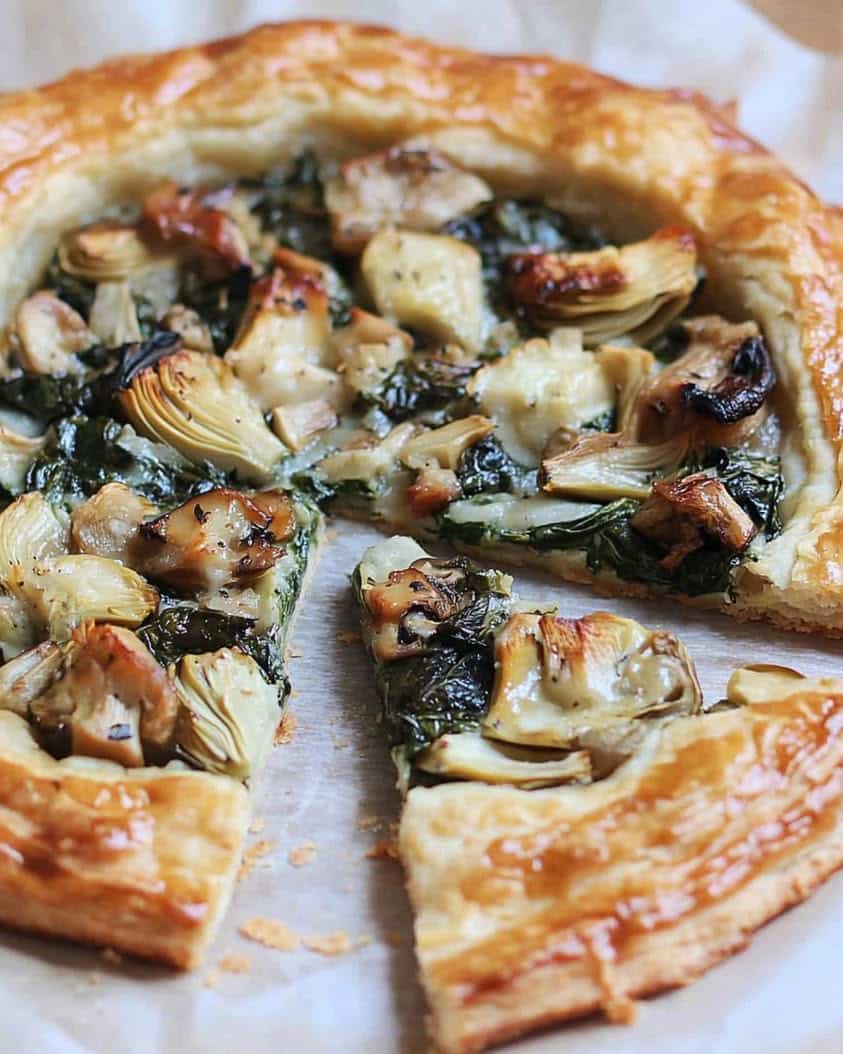
Spinach, Mushroom, and Artichoke Galette: A Rustic Masterpiece
This stunning spinach, mushroom, and artichoke galette delivers an impressive presentation with a surprisingly approachable preparation. Imagine a free-form pastry, its golden-brown crust cradling a luxurious filling of earthy mushrooms, vibrant spinach, and tender artichoke hearts. The beauty of this savory galette lies in its rustic elegance; consequently, it forgives imperfect edges while delivering a professional-looking result. Each component melds together under a blanket of melted cheese, creating a harmonious blend of flavors and textures that will delight your palate.
Furthermore, this versatile dish transitions effortlessly from a cozy family dinner to an elegant brunch centerpiece. The aroma of sautéed mushrooms and garlic wafting through your kitchen promises a memorable dining experience. Unlike a traditional pie, this savory galette requires no special pan, making it accessible for bakers of all skill levels. The flaky, buttery crust provides the perfect vessel for the rich, vegetable-forward filling, ensuring every bite offers a satisfying contrast between crisp pastry and creamy interior.
Additionally, this spinach, mushroom, and artichoke galette celebrates seasonal produce while offering year-round appeal. The combination of ingredients creates a sophisticated flavor profile that feels both comforting and elevated. Whether you are hosting guests or simply treating your family to something special, this dish delivers restaurant-quality results from your own kitchen. The visual appeal of the folded crust revealing the colorful filling makes it as beautiful as it is delicious, guaranteeing compliments from everyone at your table.
Quick Recipe Highlights
- Flavor Profile: This savory galette features earthy mushrooms balanced by the slight bitterness of spinach and the subtle tang of artichokes. Garlic and herbs enhance the natural flavors, while cheese adds a rich, creamy note that ties everything together beautifully.
- Texture: The contrast between the flaky, buttery crust and the tender vegetable filling creates a delightful mouthfeel. Additionally, the mushrooms retain a slight chewiness, while the spinach wilts into silkiness, and the artichokes offer a pleasant firmness against the melt-in-your-mouth pastry.
- Aroma: As this spinach, mushroom, and artichoke galette bakes, your kitchen fills with the comforting scent of toasted butter and caramelizing vegetables. The garlic and herbs release their fragrant oils, creating an irresistible perfume that builds anticipation for the finished dish.
- Visual Appeal: The rustic presentation showcases the golden-brown crust folded over the vibrant green spinach and earthy mushroom filling. Artichoke hearts peek through the surface, creating visual interest and hinting at the delicious contents within this beautiful savory pastry.
- Skill Level Needed: While this recipe requires some basic cooking techniques, it remains accessible for intermediate home cooks. The free-form nature of the galette means perfection is not necessary, making it an excellent project for bakers looking to expand their skills without pressure.
- Special Equipment: You will need a rolling pin for the crust and a baking sheet lined with parchment paper. A skillet for sautéing the vegetables and a mixing bowl for the dough are essential, but no specialized galette-making tools are required for success.
Recipe Overview
- Difficulty Level: This spinach, mushroom, and artichoke galette earns its intermediate rating due to the pastry-making component and the multi-step filling preparation. However, the process breaks down into manageable stages, and the rustic format forgives imperfections. With careful attention to dough handling and vegetable cooking techniques, even novice bakers can achieve excellent results.
- Category: This versatile dish fits perfectly into multiple meal categories including vegetarian main courses, brunch centerpieces, and elegant appetizers. It works beautifully for holiday meals, weeknight dinners, and special occasions, offering flexibility for various dining situations and menu planning needs.
- Cuisine: While galettes originate from French culinary tradition, this spinach, mushroom, and artichoke version incorporates Mediterranean influences through its ingredient selection. The combination reflects contemporary American cooking’s embrace of global flavors, resulting in a dish that feels both classic and modern simultaneously.
- Cost: This recipe utilizes affordable staples like flour and butter alongside moderately priced fresh vegetables and cheese. Artichoke hearts represent the most significant expense, but canned or frozen options provide budget-friendly alternatives. Overall, the dish delivers impressive results without excessive financial investment.
- Season: This savory galette shines during spring and fall when mushrooms and leafy greens are at their peak. Nevertheless, it works year-round thanks to the availability of frozen spinach and canned artichokes, making it a reliable option regardless of seasonal constraints or produce availability.
- Occasion: Perfect for bridal showers, holiday brunches, or intimate dinner parties, this galette elevates everyday meals while remaining approachable. Its stunning presentation makes it suitable for celebrations, yet its comforting nature works equally well for casual family gatherings or potluck contributions.
Why You’ll Love This Recipe
First and foremost, the taste and texture combination in this spinach, mushroom, and artichoke galette creates an unforgettable eating experience. The flaky, buttery crust provides a satisfying crunch that gives way to the creamy, savory filling. Earthy mushrooms, vibrant spinach, and tender artichokes meld together under a blanket of melted cheese, offering layers of flavor in every bite. The garlic and herb seasoning enhances the natural sweetness of the vegetables without overpowering them. Consequently, each component maintains its distinct character while contributing to a harmonious whole that delights the palate.
From a practical perspective, the convenience and preparation benefits make this recipe exceptionally user-friendly. Unlike traditional pies, this free-form galette requires no special pan or precise crimping techniques. The rustic folding method embraces imperfections, reducing stress for novice bakers. Additionally, you can prepare components in advance, assembling the galette just before baking for fresh results. The straightforward process builds confidence while teaching fundamental cooking skills like pastry making and vegetable sautéing. Ultimately, this approachability encourages repeated preparation and recipe mastery.
Nutritionally, this spinach, mushroom, and artichoke galette offers substantial health advantages alongside its incredible flavor. Spinach provides iron, vitamins A and K, while mushrooms contribute B vitamins and antioxidants. Artichokes support digestive health with their high fiber content and prebiotic properties. Using whole wheat flour in the crust adds additional fiber and nutrients. The moderate cheese amount provides calcium and protein without excessive saturated fat. This nutritional profile makes the dish both satisfying and nourishing, aligning with balanced eating principles.
Socially, this galette possesses impressive entertaining value despite its manageable preparation. The beautiful presentation never fails to impress guests, creating a centerpiece that sparks conversation. Its vegetarian nature accommodates diverse dietary preferences while satisfying meat-eaters with its substantial texture and rich flavor. Serving it warm from the oven creates an inviting atmosphere and memorable dining experience. Furthermore, the recipe scales easily for larger gatherings, making it equally suitable for intimate dinners and festive parties where it consistently receives enthusiastic compliments.
Economically, this dish delivers restaurant-quality results using accessible, budget-friendly ingredients. Basic pantry staples form the crust, while the filling utilizes vegetables available year-round. Compared to dining out, preparing this galette at home offers significant savings without compromising on quality or presentation. The recipe yields generous portions that provide excellent value, with potential leftovers that reheat beautifully. This cost-effectiveness, combined with the impressive results, makes it a smart choice for both everyday meals and special occasions where you want to maximize impact while minimizing expense.
Historical Background and Cultural Significance
The galette traces its origins to French country cooking, where resourceful home cooks developed this free-form pastry as a practical solution for utilizing seasonal ingredients. Unlike the precise, pan-formed tarts of formal French cuisine, galettes embodied a rustic, improvisational approach to baking. The name itself derives from the French word “galet,” meaning a smooth, flat stone, referencing the pastry’s simple, round shape. Traditionally, these pastries featured either sweet or savory fillings based on regional availability, with the savory versions often containing vegetables, cheese, and sometimes meat. This flexibility made galettes particularly valuable in rural communities where ingredient access varied seasonally.
Culturally, galettes represent the heart of French home cooking rather than professional cuisine. They symbolize resourcefulness, seasonal eating, and culinary simplicity—values deeply embedded in French food culture. Regional variations developed throughout France, with Brittany famous for its buckwheat galettes and other areas specializing in their own distinctive versions. The format traveled with French immigrants to North America, where it evolved to incorporate local ingredients and preferences. Today, the galette enjoys global popularity as cooks appreciate its forgiving nature and beautiful, rustic presentation that feels both humble and sophisticated simultaneously.
The evolution of the spinach, mushroom, and artichoke galette reflects contemporary culinary trends toward vegetable-forward dishes and global flavor fusion. While traditional French galettes might feature more classic combinations like leek and goat cheese, this particular version merges French technique with Mediterranean ingredients. The inclusion of artichokes, more common in Italian and Middle Eastern cuisines, demonstrates how traditional formats adapt to incorporate globally inspired flavors. This evolution continues as modern cooks experiment with diverse fillings, keeping the galette format relevant and exciting for contemporary palates while honoring its rustic origins.
Regional variations of savory galettes showcase how different cultures interpret this versatile format. In Italy, a similar concept appears as crostata, often with a thinner crust and tomato-based fillings. Eastern European versions might incorporate potatoes or cabbage, while Mediterranean interpretations frequently feature olives, sun-dried tomatoes, and feta cheese. The American adaptation, as seen in this spinach, mushroom, and artichoke version, often emphasizes generous fillings and flavorful combinations that reflect the diversity of available ingredients. These global interpretations demonstrate the galette’s incredible adaptability while maintaining the essential characteristics of a free-form pastry enclosing a savory filling.
Ingredient Deep Dive
Spinach forms the verdant foundation of this galette’s filling, contributing both vibrant color and nutritional benefits. Historically, spinach originated in ancient Persia before spreading to India and China, eventually reaching Europe in the 12th century. Nutritionally, it offers exceptional value with high concentrations of iron, vitamins A, C, and K, along with antioxidants like lutein and zeaxanthin that support eye health. When selecting spinach, choose bunches with crisp, deep green leaves without yellowing or wilting. For storage, refrigerate unwashed spinach in a plastic bag with a paper towel to absorb moisture, using within three to four days for optimal freshness. If fresh spinach is unavailable, frozen works excellently when thoroughly drained after thawing.
Mushrooms provide the earthy, savory notes that give this galette its substantial, meaty texture despite being vegetarian. Culturally, mushrooms have been foraged and cultivated for thousands of years across numerous civilizations, valued for their unique umami flavor and medicinal properties. Nutritionally, they offer B vitamins, selenium, potassium, and antioxidants while being low in calories. When selecting mushrooms, choose firm specimens with smooth caps and tightly closed gills, avoiding any with slimy surfaces or strong odors. Store them in a paper bag in the refrigerator rather than plastic, which causes moisture buildup. Cremini or baby bella mushrooms work perfectly here, though shiitake or oyster mushrooms would create interesting variations.
Artichokes contribute a subtle sweetness and firm texture that contrasts beautifully with the other vegetables in this galette. Historically, artichokes originated in the Mediterranean region, where they have been cultivated for centuries and feature prominently in Italian, Spanish, and Middle Eastern cuisines. Nutritionally, they are rich in fiber, vitamin C, folate, and minerals like magnesium and potassium, while also containing compounds that support liver health. When using fresh artichokes, select heavy-for-their-size specimens with tightly packed leaves, though canned or frozen artichoke hearts offer excellent convenience for this recipe. Store fresh artichokes in the refrigerator in a plastic bag with a damp paper towel. If substituting, hearts of palm offer a similar texture though with a milder flavor profile.
The pastry crust transforms this vegetable combination into a complete meal, providing the buttery, flaky vessel that defines a proper galette. Traditionally, galette dough is a simple pâte brisée containing just flour, butter, salt, and water, though contemporary versions sometimes incorporate sour cream or yogurt for tenderness. The key to successful pastry lies in keeping ingredients cold and handling the dough minimally to maintain flakiness. When selecting flour, all-purpose works perfectly, though substituting一部分 whole wheat flour adds nutty flavor and additional fiber. European-style butter with higher fat content creates particularly flaky results. For those short on time, quality store-bought pie dough can substitute, though homemade delivers superior flavor and texture.
Cheese serves as the unifying element that binds the vegetable filling together while adding richness and depth of flavor. In this galette, a combination of Parmesan and mozzarella provides both sharpness and meltability. Parmesan, with its ancient origins in Italy, contributes salty, nutty notes that enhance the other ingredients. Nutritionally, it offers concentrated calcium and protein with relatively low lactose content. Mozzarella creates the desirable stretch and creaminess that makes each slice so satisfying. When selecting cheeses, choose blocks to grate yourself rather than pre-shredded varieties, which contain anti-caking agents that can affect melting quality. For variations, Gruyère, fontina, or goat cheese would each create distinctive and delicious alternatives.
Common Mistakes to Avoid
- Overworking the dough represents one of the most common errors in galette preparation. When you handle the dough excessively, the butter pieces become too incorporated, resulting in a tough crust rather than a flaky one. Instead, mix just until the dough comes together, then chill thoroughly before rolling to ensure optimal texture in your finished savory galette.
- Using warm ingredients for the pastry crust inevitably leads to disappointing results. The butter must remain cold to create steam pockets during baking that produce flaky layers. Therefore, chill your butter, use ice water, and work quickly to maintain the proper temperature throughout the dough preparation process for the best spinach, mushroom, and artichoke galette.
- Insufficiently cooking the vegetables before assembling the galette causes excess moisture that creates a soggy crust. Always sauté mushrooms until they release their liquid and it evaporates, and wilt spinach completely while squeezing out any excess water. This crucial step ensures your filling won’t steam the pastry from underneath during baking.
- Rolling the dough too thin compromises the structural integrity of your galette and may cause tearing or leaking. Aim for approximately ⅛-inch thickness, which provides enough substance to contain the filling while still baking to a delicate crispness. This thickness creates the perfect balance between sturdiness and flakiness in your savory pastry.
- Neglecting to chill the assembled galette before baking often results in butter leakage and less defined layers. The brief refrigeration period allows the butter to firm up again after rolling, ensuring proper steam production during baking. This simple rest significantly improves the texture and appearance of your finished spinach, mushroom, and artichoke galette.
- Overfilling the pastry leads to difficulty folding the edges and potential spillage during baking. Leave a 2-3 inch border around the filling to allow for proper folding and containment. Remember that the rustic appearance comes from intentional imperfection, not from overstuffing that compromises the structure of your beautiful savory galette.
- Underbaking the galette produces a pale, soggy crust that lacks the characteristic flakiness. Bake until the pastry is deeply golden brown, which indicates sufficient cooking and proper texture development. The visual cue of a properly browned crust assures that both the pastry and filling have reached their ideal doneness simultaneously.
- Skipping the egg wash prevents the crust from achieving its attractive sheen and golden color. The egg wash not only enhances appearance but also helps seal the edges slightly, contributing to the structural integrity of your galette. This simple step elevates the visual appeal of your spinach, mushroom, and artichoke creation significantly.
Essential Techniques
Proper pastry making begins with cold ingredients and a light touch. The key to flaky crust lies in maintaining visible pieces of butter throughout the dough that will create steam pockets during baking. Start by cutting very cold butter into flour until the mixture resembles coarse crumbs with some pea-sized butter pieces remaining. Then add ice water gradually, mixing just until the dough comes together without being smooth or homogeneous. This minimal handling prevents gluten development that would make the crust tough. Finally, chill the dough thoroughly before rolling to relax the gluten and re-solidify the butter, ensuring maximum flakiness in your finished galette.
Sautéing vegetables properly ensures a flavorful filling without excess moisture that could sabotage your crust. Begin by cooking mushrooms over medium-high heat without crowding the pan, allowing them to brown properly and release their liquid. Continue cooking until all the released moisture evaporates, concentrating their flavor. Then add the spinach in batches, wilting each addition before adding more. Finally, thoroughly drain the artichokes and combine them briefly with the other vegetables just to incorporate. The goal is concentrated flavor and minimal liquid, creating a filling that enhances rather than compromises your pastry.
Rolling and shaping the galette requires a balance between even thickness and rustic appearance. Start with a well-chilled disk of dough on a lightly floured surface, rolling from the center outward in different directions to maintain a rough circle shape. Don’t worry about perfect edges—the charm lies in the irregular folds. Transfer the rolled dough to your baking sheet before adding the filling to avoid difficult handling later. Arrange the filling in the center, leaving a generous border, then fold the edges over the filling, pleating as you go. The folds should overlap slightly, creating containment while allowing the center to remain visible.
Egg washing and baking techniques significantly impact the final appearance and texture of your galette. Beat one egg with a teaspoon of water or cream to create an egg wash that will promote browning and add shine. Brush this mixture lightly over the folded crust edges, avoiding pooling in the creases. Sprinkle with flaky salt or sesame seeds for additional texture and visual appeal if desired. Bake in a preheated oven on the middle rack until the crust is deeply golden and the filling is bubbling. Rotate halfway through if your oven has hot spots to ensure even browning on your beautiful savory pastry.
Pro Tips for Perfect Spinach, Mushroom, and Artichoke Galette
First, freeze your butter for 15 minutes before making the dough, then grate it using a box grater. This technique distributes cold butter evenly throughout the flour without overworking it, creating exceptionally flaky layers in your finished galette crust with minimal effort.
Second, consider roasting your mushrooms instead of sautéing them for deeper, more concentrated flavor. Toss them with olive oil, spread in a single layer on a baking sheet, and roast at 400°F until browned and crisp-edged, then combine with the other filling ingredients.
Third, add a layer of grated Parmesan directly onto the rolled-out dough before adding the vegetable filling. This creates a moisture barrier that helps prevent sogginess while adding an extra dimension of flavor to every bite of your savory galette.
Fourth, incorporate a tablespoon of cornstarch into your filling mixture to absorb any residual moisture released during baking. This simple addition ensures a clean slice without runny filling, making serving and presentation significantly more polished.
Fifth, brush the finished baked galette with a little garlic-infused olive oil immediately after removing it from the oven. This last-minute enhancement adds shine, flavor, and aromatic appeal that elevates the entire dish to restaurant-quality status.
Sixth, let the galette rest for at least 10 minutes before slicing to allow the filling to set properly. This patience prevents the contents from spilling out when cut and allows the flavors to meld together beautifully for the best eating experience.
Variations and Adaptations
Regional variations allow you to explore global flavors while maintaining the galette format. For a Provençal version, incorporate Herbes de Provence, niçoise olives, and sun-dried tomatoes alongside the mushrooms. An Italian-inspired adaptation might feature ricotta as the base with sautéed kale and pancetta. Mediterranean influences could include feta cheese, lemon zest, and fresh dill for a brighter flavor profile. These regional interpretations demonstrate the incredible versatility of the galette format while introducing exciting new flavor combinations to your cooking repertoire.
Seasonal adaptations ensure your galette remains relevant throughout the year. In spring, feature fresh peas, asparagus, and young spinach with lemon zest and fresh herbs. Summer versions might highlight zucchini, corn, and cherry tomatoes with basil. Autumn adaptations could include roasted squash, caramelized onions, and sage. Winter variations might feature root vegetables, kale, and hearty mushrooms with thyme. These seasonal adjustments keep the concept fresh while utilizing produce at its peak, maximizing flavor and nutritional value in your savory pastry creations.
Dietary modifications make this galette accessible to various eating preferences and restrictions. For gluten-free needs, substitute your favorite gluten-free flour blend in the crust, adding a teaspoon of xanthan gum if not included. Vegan adaptations replace butter with vegan butter or coconut oil and use egg substitutes for washing. Dairy-free versions utilize nutritional yeast or vegan cheese alternatives. Low-carb options might feature a nut-based crust or simply prepare the filling as a vegetable side dish. These adaptations ensure everyone can enjoy this delightful dish regardless of dietary considerations.
Flavor variations introduce exciting new dimensions to the basic recipe. Consider adding cooked bacon or pancetta for a smoky element, or sun-dried tomatoes for tangy sweetness. Incorporating different cheese varieties like blue cheese, smoked gouda, or goat cheese dramatically changes the flavor profile. Herb substitutions such as tarragon, dill, or sage instead of thyme create distinctive aromatic qualities. Spice additions like red pepper flakes, smoked paprika, or nutmeg can highlight different aspects of the vegetables. These flavor experiments keep the galette concept endlessly interesting and customizable to personal preferences.
Serving and Presentation Guide
Plating techniques significantly enhance the visual impact of your galette. Serve it whole on a large wooden board or decorative platter for a rustic, family-style presentation that highlights its beautiful form. Alternatively, slice into wedges and arrange on individual plates with accompaniments for a more composed appearance. When slicing, use a sharp serrated knife with a gentle sawing motion to preserve the delicate pastry structure. Wipe the knife between cuts for clean edges that showcase the beautiful layers of your spinach, mushroom, and artichoke creation.
Garnishing ideas add the finishing touches that elevate your galette from homemade to professional. Fresh herb sprigs like thyme, parsley, or chives provide color and freshness against the golden crust. Microgreens or arugula scattered around the plate add contemporary elegance. Edible flowers create a stunning special-occasion presentation. A drizzle of high-quality olive oil or balsamic reduction adds shine and flavor complexity. Toasted pine nuts or walnuts contribute texture and visual interest. These garnishes should complement rather than overwhelm the galette itself, enhancing its natural beauty.
Traditional accompaniments balance the rich, savory qualities of the galette. A simple green salad with a bright vinaigrette provides refreshing contrast to the buttery pastry. Roasted vegetables like carrots or Brussels sprouts complement the earthy flavors without competing. Soup pairings, particularly tomato or mushroom bisque, create a comforting complete meal. For brunch service, poached eggs or smoked salmon alongside the galette makes an impressive spread. These traditional pairings have stood the test of time because they create balanced meals that highlight rather than overshadow the star attraction.
Modern serving suggestions reflect contemporary dining preferences and presentation styles. Deconstructed elements like herbed yogurt or labneh dollops alongside the galette offer interactive dining experiences. Global influences might include harissa-spiced dipping sauce or tzatziki for Mediterranean flair. Family-style meals could feature the galette alongside grain salads, roasted vegetable platters, and assorted dips for a relaxed gathering. Brunch boards might combine galette slices with charcuterie, cheeses, and fruits for visual abundance. These modern approaches acknowledge evolving dining habits while maintaining the galette’s central role in the meal.
Wine and Beverage Pairing
Wine pairings should complement the earthy, savory characteristics of the galette without overwhelming its delicate flavors. A crisp Sauvignon Blanc with its herbal notes and bright acidity cuts through the richness beautifully. For red wine preferences, a light Pinot Noir with earthy undertones enhances the mushrooms without tannins that might clash. Chardonnay, particularly unoaked or lightly oaked versions, provides enough body to stand up to the dish while maintaining freshness. Rosé, especially dry Provencal styles, offers versatility that works well with the various components. These selections create harmonious pairings that elevate the entire dining experience.
Non-alcoholic alternatives provide sophisticated options for those avoiding alcohol. Sparkling water with citrus slices or cucumber ribbons offers refreshing simplicity that cleanses the palate between bites. Herbal iced teas, particularly rosemary-lemon or mint varieties, provide complexity without sweetness that might clash with the savory notes. Craft sodas with herbal or spice infusions offer celebratory fizz without alcohol. Virgin Bloody Marys with their savory, spicy profile complement the galette exceptionally well. These thoughtful non-alcoholic options ensure all guests can enjoy complementary beverages with their meal.
Coffee and tea pairings work wonderfully, particularly for brunch servings. Medium-roast coffee with its balanced acidity and nutty notes complements the earthy flavors without bitterness. Earl Grey tea’s bergamot aroma provides an elegant contrast to the savory elements. Chai tea, with its warming spices, creates an interesting flavor dialogue with the herbal notes in the galette. For evening servings, decaffeinated coffee maintains the pairing concept without affecting sleep. These hot beverages offer comforting accompaniments that enhance rather than compete with the dining experience.
Storage and Shelf Life
Storage methods significantly impact the quality and safety of your leftover galette. Cool completely to room temperature before storing to prevent condensation that would make the crust soggy. Wrap tightly in plastic wrap or place in an airtight container, separating layers with parchment paper if stacking slices. Refrigerate for up to three days, though the texture is best within the first 24 hours. For longer storage, freezing preserves quality better than extended refrigeration. Always label with the date to ensure proper rotation and food safety with your savory pastry creations.
Reheating instructions help restore the galette’s original texture and enjoyment. For best results, reheat in a 350°F oven for 10-15 minutes until warmed through and the crust re-crisps. The air fryer works excellently for single slices, reheating at 325°F for 5-7 minutes. Microwave reheating is not recommended as it produces a soft, soggy crust. If the galette seems dry after storage, brush lightly with olive oil or melted butter before reheating to restore moisture and flavor. These methods help maintain quality when enjoying leftovers.
Freezing guidelines preserve your galette for future enjoyment with minimal quality loss. Cool completely after baking, then wrap tightly in plastic wrap followed by aluminum foil to prevent freezer burn. Alternatively, place slices on a baking sheet to freeze solid, then transfer to freezer bags for individual portions. Label with the date and contents, using within three months for optimal quality. Thaw overnight in the refrigerator before reheating using the oven method described above. Freezing unbaked assembled galettes also works well—freeze on the baking sheet until firm, then wrap—adding 5-10 minutes to the baking time when cooking from frozen.
Make Ahead Strategies
Prep timeline organization transforms galette preparation from stressful to manageable. The dough can be made up to three days in advance and refrigerated, or frozen for up to three months. The vegetable filling prepares completely up to two days ahead, stored separately in the refrigerator. Grated cheese stores well for several days when properly wrapped. Assembling the galette can happen several hours before baking—refrigerate until ready to bake. This staggered approach breaks the recipe into manageable components that come together quickly when needed, perfect for entertaining or busy schedules.
Storage between steps maintains quality when preparing components in advance. For the dough, wrap tightly in plastic wrap and refrigerate for up to three days, or freeze for longer storage. Bring to cool room temperature for 10-15 minutes before rolling for easier handling. The cooked vegetable filling should cool completely before transferring to an airtight container and refrigerating. If liquid accumulates during storage, drain before using. Cheese should be grated fresh if possible, but pre-grated stores adequately for a day or two in the refrigerator. These proper storage techniques ensure each component remains at its best until assembly.
Assembly tips for make-ahead preparation ensure optimal results. When assembling in advance, keep all components cold until the last possible moment. Roll the dough on parchment paper, then transfer parchment and dough to the baking sheet before adding filling. Assemble the galette, then refrigerate uncovered for 15-20 minutes to firm up before covering with plastic wrap. This prevents condensation from making the crust soggy. When ready to bake, remove from refrigerator, brush with egg wash, and bake directly without additional thawing time. These techniques maintain the quality of your pre-assembled galette.
Scaling Instructions
Halving the recipe works beautifully for smaller households or when testing the recipe. Reduce all ingredients by half, using one egg yolk instead of a whole egg for the dough. The dough may come together more quickly, so watch carefully during mixing. Use a smaller baking sheet and aim for approximately an 8-inch diameter galette rather than 12-inch. Baking time may reduce by 5-10 minutes, so begin checking for doneness earlier. The halved version offers all the flavor and appeal of the full recipe in a more manageable size for smaller gatherings.
Doubling or tripling the recipe requires some adjustments for optimal results. Prepare each dough batch separately to avoid overworking, then chill individually before rolling. Use multiple baking sheets, rotating them halfway through baking for even browning. Consider staggering baking times if oven space is limited. The filling can be cooked in larger batches, though overcrowding the pan may require cooking in stages for proper browning. These scaled-up versions work excellently for parties, potlucks, or when you want to freeze additional galettes for future meals.
Equipment adjustments become necessary when scaling the recipe significantly. For larger batches, ensure you have adequate baking sheet space and consider using parchment paper liners for easy cleanup. A food processor becomes particularly valuable for multiple dough batches. Larger skillets or cooking in batches ensures proper vegetable sautéing. When making individual mini galettes, a standard baking sheet typically accommodates four to six smaller versions, reducing the baking time by approximately 5-7 minutes. These equipment considerations ensure successful results regardless of the quantity you’re preparing.
Nutritional Deep Dive
Macro breakdown reveals a balanced nutritional profile that provides sustained energy. The crust contributes complex carbohydrates from flour, while the butter provides fats necessary for flavor and flakiness. The vegetable filling offers fiber and additional carbohydrates, though primarily the complex kind that digests slowly. Cheese and butter provide protein and fat that increase satiety. Overall, the galette offers a reasonable balance of all three macronutrients, making it a satisfying meal that provides lasting energy without dramatic blood sugar spikes.
Micronutrient analysis highlights the impressive vitamin and mineral content of this dish. Spinach delivers vitamins A, C, and K, along with iron and folate. Mushrooms provide B vitamins, selenium, and potassium. Artichokes contribute magnesium, folate, and vitamin C. The cheese offers calcium and additional B vitamins. Using whole wheat flour increases the fiber, magnesium, and zinc content. This diverse micronutrient profile supports various bodily functions including immune health, bone strength, and energy production, making the galette both delicious and nourishing.
Health benefits extend beyond basic nutrition to include specific advantages. The combination of fiber from vegetables and whole grains supports digestive health and regularity. Antioxidants from spinach and artichokes help combat oxidative stress and inflammation. The moderate fat content, primarily from butter and cheese, provides sustained energy and supports absorption of fat-soluble vitamins. The vegetable-heavy composition aligns with dietary patterns associated with reduced chronic disease risk. These health benefits make the galette a smart choice for those seeking meals that are both enjoyable and supportive of overall wellness.
Dietary Adaptations
Gluten-free adaptation requires substituting the all-purpose flour with a quality gluten-free blend that includes xanthan gum. Look for blends specifically formulated for pastry, or create your own using rice flour, tapioca starch, and potato starch. The dough may be more fragile, so chill thoroughly and handle carefully when rolling. Consider pressing rather than rolling the dough if it proves too delicate. The filling remains naturally gluten-free, though always check labels on processed ingredients like canned artichokes to ensure no gluten-containing additives.
Dairy-free modification replaces butter with vegan butter or refined coconut oil in the crust. For the filling, omit cheese or use dairy-free alternatives that melt well, such as those based on cashews or coconut oil. Nutritional yeast can provide the cheesy flavor without dairy. When brushing the crust, use olive oil or plant-based milk instead of egg wash. These substitutions create a galette that maintains the essential characteristics of the original while accommodating dairy restrictions or preferences.
Vegan adaptation combines the dairy-free modifications with egg replacement. The crust can use vegan butter or coconut oil as mentioned above. For egg wash, brush with plant-based milk, olive oil, or aquafaba (the liquid from canned chickpeas). The filling replaces cheese with vegan alternatives or simply omits it, perhaps increasing herbs and spices for flavor compensation. These adjustments create a completely plant-based version that still delivers the satisfying experience of a savory galette with all its rustic appeal.
Troubleshooting Guide
Texture issues often relate to moisture management in the filling or dough handling. If your crust turns out tough rather than flaky, you likely overworked the dough or used warm ingredients. For soggy bottoms, ensure vegetables are thoroughly cooked and drained before assembling, and consider the Parmesan barrier method mentioned earlier. If the filling seems dry, you may have overcooked the vegetables initially or baked the galette too long. These texture problems typically have straightforward solutions that lead to improved results on subsequent attempts.
Flavor balance problems usually stem from seasoning or ingredient quality. If the galette tastes bland, you likely underseasoned during the sautéing stage—vegetables need generous seasoning at each cooking phase. If one flavor overpowers, adjust proportions next time, or balance with accompaniments like a squeeze of lemon or drizzle of balsamic reduction. If the crust tastes floury, you may not have baked it sufficiently to develop flavor through browning. These flavor adjustments help create a more harmonious final product that highlights all components equally.
Equipment challenges can often be overcome with creative solutions. If you lack a rolling pin, use a wine bottle or sturdy water glass. Without a baking sheet, a cast-iron skillet or even the back of a sheet pan can work. If your oven temperature seems inaccurate, use an oven thermometer to verify and adjust accordingly. Without a pastry brush, you can carefully drizzle and spread
Print
Spinach, Mushroom, and Artichoke Galette
Description
A rustic, savory galette with a flaky crust, filled with sautéed spinach, mushrooms, and artichokes, seasoned with garlic and herbs.
Ingredients
For the Crust:
- 1 pre-made pie crust
- 2 cups fresh spinach
- 1 cup sliced mushrooms
- 1 cup canned artichoke hearts, drained and chopped
- 1 small onion, diced
- 2 cloves garlic, minced
- 1 tablespoon olive oil
- 1/2 cup shredded mozzarella cheese
- 1/4 cup grated Parmesan cheese
- 1 teaspoon dried thyme
- Salt and pepper to taste
- 1 egg, beaten (for egg wash)
Instructions
1. Prepare the Crust:
- Preheat oven to 375°F (190°C). Line a baking sheet with parchment paper.
- Heat olive oil in a skillet over medium heat. Sauté onion and garlic until fragrant, about 2 minutes.
- Add mushrooms and cook until softened, about 5 minutes. Stir in spinach and artichoke hearts, cooking until spinach wilts. Season with thyme, salt, and pepper. Remove from heat and let cool slightly.
- Roll out pie crust on the prepared baking sheet. Spread mozzarella and Parmesan cheeses in the center, leaving a 2-inch border.
- Spoon the spinach, mushroom, and artichoke mixture over the cheese. Fold the edges of the crust over the filling, pleating as you go.
- Brush the crust with beaten egg. Bake for 25-30 minutes, until crust is golden brown and filling is bubbly.
- Let cool for 5 minutes before slicing and serving.
Notes
You can customize the seasonings to taste.

I’m Shaykee—born in Morocco, seasoned across continents. From airplane galleys to home kitchens, I share the flavors and stories that shaped my journey.