
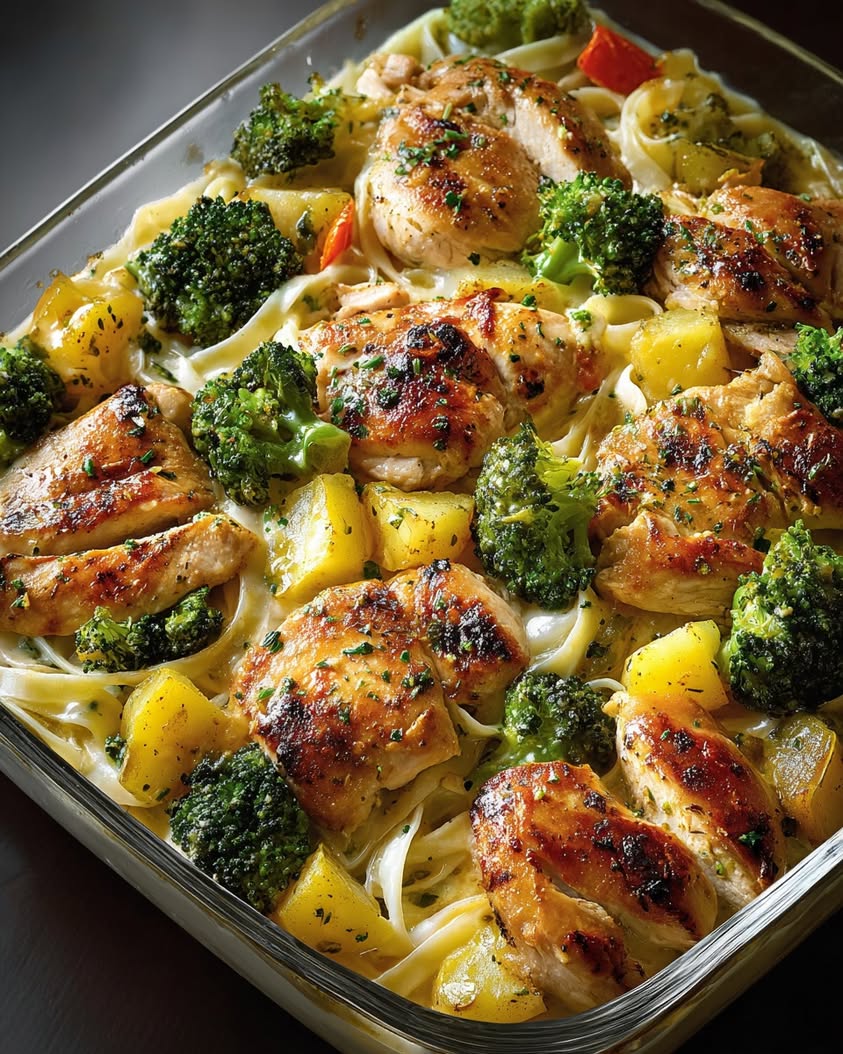
Creamy Chicken Fettuccine Bake with Broccoli & Potatoes: The Ultimate Family Comfort Food
Imagine a dish that delivers the cozy embrace of a classic casserole with the satisfying heartiness of a complete meal. This creamy chicken fettuccine bake does exactly that. It combines tender chicken, al dente pasta, fresh broccoli, and hearty potatoes in one glorious, bubbling dish. Ultimately, it is the epitome of a family-friendly dinner that pleases every palate at the table.
The aroma alone will draw everyone into the kitchen. As it bakes, the scent of garlic, herbs, and melting cheese fills your home with a promise of delicious comfort. This recipe transforms simple, wholesome ingredients into something truly special. Consequently, it is perfect for busy weeknights, yet impressive enough for casual weekend gatherings.
Furthermore, this creamy chicken fettuccine bake is a brilliant solution for getting a balanced meal on the table without multiple pots and pans. The pasta, protein, and vegetables all cook together harmoniously. Therefore, you get a flavorful, creamy, and cheesy comfort food experience in every single bite. It is a guaranteed crowd-pleaser that will become a regular in your dinner rotation.
Quick Recipe Highlights
- Flavor Profile: This dish features a rich and savory foundation from the garlic and chicken, balanced by the sharp, tangy notes of cheddar cheese. The Italian seasoning adds an herbal depth that ties all the elements together beautifully.
- Texture: You will enjoy a wonderful contrast of textures. The fettuccine offers a satisfying chew, the broccoli provides a slight crunch, and the potatoes become perfectly tender. Meanwhile, the creamy sauce creates a luxurious, cohesive mouthfeel.
- Aroma: While baking, key aromatic notes of roasting garlic, toasting herbs, and bubbling dairy will fill your kitchen. The scent is unmistakably inviting and promises a hearty, home-cooked meal.
- Visual Appeal: The presentation boasts a gorgeous golden-brown cheese crust over a vibrant medley of greens from the broccoli and the creamy white sauce. It is a colorful and appetizing dish straight from the oven.
- Skill Level Needed: This recipe requires basic cooking expertise like boiling pasta, sautéing chicken, and making a simple roux-based sauce. It is absolutely accessible for confident beginners and a straightforward project for seasoned cooks.
- Special Equipment: You will need a large pot for boiling pasta, a large skillet for cooking chicken and sauce, and a 9×13 inch baking dish. A good whisk for the sauce and a sturdy spoon for mixing are also essential tools.
Recipe Overview
- Difficulty Level: We classify this creamy chicken fettuccine bake as easy because it uses fundamental techniques most home cooks already know. The steps are sequential and logical, with no advanced skills required. However, managing multiple components simultaneously requires basic kitchen organization.
- Category: This recipe falls squarely into the categories of main dish, casserole, and comfort food. It is a complete meal featuring protein, starch, and vegetables. Therefore, it eliminates the need for elaborate side dishes.
- Cuisine: The dish draws inspiration from Italian-American cuisine through its use of fettuccine pasta and Italian seasoning. However, the creamy cheese sauce and baked casserole format give it a distinctly American comfort food twist.
- Cost: The cost is moderate and relies on affordable staples like chicken, pasta, potatoes, and broccoli. Cheese is the primary splurge. You can easily make this recipe budget-friendly by using store-brand ingredients or buying cheese in bulk.
- Season: This creamy chicken fettuccine bake is truly a year-round recipe. It provides warmth and comfort during fall and winter. Conversely, it is also excellent in spring and summer when fresh broccoli is at its peak.
- Occasion: It is perfectly suited for busy weeknight family dinners, casual potlucks, and comforting weekend meals. Additionally, it is a fantastic option for bringing a dish to a friend in need of a ready-to-eat meal.
Why You’ll Love This Recipe
First and foremost, the taste and texture appeal is undeniable. Each forkful delivers a symphony of creamy, cheesy, and savory flavors. The tender chicken, hearty potatoes, and crisp-tender broccoli create a satisfying contrast. Ultimately, the blend of melted cheddar and creamy sauce coats every ingredient perfectly. This ensures that every bite is as delicious as the last, making it the ultimate cheesy comfort food.
Next, consider the convenience and preparation benefits. This recipe is a true one-dish wonder that simplifies cleanup dramatically. You cook everything in just a couple of pots before combining it in the baking dish. Consequently, you spend less time washing up and more time enjoying your meal. It is an incredibly efficient path to a impressive and complete family-friendly dinner.
Moreover, the nutritional advantages are a significant win. This creamy chicken fettuccine bake packs protein, complex carbohydrates, and vegetables into a single serving. The broccoli adds vital vitamins and fiber, while the chicken provides lean protein. Therefore, you can feel good about serving a meal that is both indulgent and nourishing.
Additionally, the social and entertaining value is high. This dish is designed to feed a crowd and is universally appealing. It travels well for potlucks and holds beautifully on a buffet. Furthermore, its comforting nature makes it a hit at casual gatherings. It is a reliable recipe that guarantees happy guests and empty plates.
Finally, the cost-effectiveness and accessibility are major perks. The ingredients are common, affordable, and available at any standard grocery store. You likely have many of them in your pantry right now. This makes it an excellent choice for stretching your grocery budget without sacrificing flavor or satisfaction. It proves that easy dinner ideas can also be incredibly delicious.
Historical Background and Cultural Significance
The origin story of baked pasta casseroles like this one is deeply rooted in resourcefulness. Historically, cooks combined leftover pasta, meat, and vegetables with a binding sauce to create a new, hearty meal. The concept of baking pasta with cheese and sauce gained immense popularity in post-World War II America. Casseroles became a symbol of convenient, economical, and family-centered cooking during that era.
Cultural importance of such dishes is tied to community and comfort. In many cultures, a baked pasta dish signifies a gathering, a potluck contribution, or a meal shared with loved ones. It represents nourishment that is both physical and emotional. The creamy chicken fettuccine bake continues this tradition by being a centerpiece for family dinners and friendly gatherings alike.
The evolution of the recipe from simple leftovers to a planned meal is fascinating. Initially, these bakes were humble. Over time, home cooks and chefs began refining them, adding specific cheeses, fresh vegetables, and herbs to elevate the flavor. The inclusion of potatoes in a pasta bake is a more modern twist. It adds extra heartiness and stretches the meal further, reflecting a desire for all-in-one dinner solutions.
Regional variations of pasta bakes are endless. In the American Midwest, you might find a version with a creamy soup base. Italian regions have their own baked pasta classics like lasagna or baked ziti. This particular recipe, with its broccoli and cheddar, nods to American tastes while utilizing the Italian pasta format. It is a beautiful fusion that highlights the adaptability of comfort food across cultures.
Ingredient Deep Dive
Chicken breast is the lean protein star. Culturally, chicken is a globally prevalent and versatile meat. Nutritionally, it is an excellent source of high-quality protein and essential B vitamins. For best results, select uniform, plump breasts. You can store raw chicken in the coldest part of your fridge for 1-2 days. For a substitution, try boneless, skinless chicken thighs for more flavor and moisture.
Fettuccine pasta provides the classic, satisfying base. This ribbon pasta hails from Roman cuisine and is traditionally paired with rich sauces. It offers complex carbohydrates for sustained energy. Always cook it al dente, as it will soften further during baking. Store dried pasta in a cool, dry pantry indefinitely. Linguine or tagliatelle make perfect substitutes if you cannot find fettuccine.
Broccoli brings color, texture, and nutrition. This cruciferous vegetable has a long history in Italian cooking. It is packed with vitamins C and K, fiber, and antioxidants. Choose heads with tight, dark green florets and firm stalks. Store it unwashed in your refrigerator’s crisper drawer. For a variation, cauliflower or asparagus can be used in its place.
Potatoes add unexpected heartiness. Potatoes are a New World crop that became a European staple. They provide potassium, vitamin C, and starchy satisfaction. Yukon Golds are ideal for their buttery flavor and creamy texture when cooked. Store potatoes in a cool, dark, well-ventilated place. Red potatoes or even sweet potatoes can create a different but delicious twist.
Cheddar cheese delivers the signature sharp, tangy flavor. Cheddar originated in the English village of Cheddar but is now a cornerstone of American cheese culture. It provides calcium, protein, and fat for richness and browning. Always grate your own cheese for the best melt. For storage, keep block cheese tightly wrapped in the fridge. A Monterey Jack or Gruyère blend would also work wonderfully.
Common Mistakes to Avoid
- Overcooking the pasta during the initial boil is a critical error. Since the pasta continues to cook in the oven, boiling it to al dente is essential. Otherwise, you will end up with a mushy, disappointing texture in the final bake.
- Underseasoning the sauce and chicken is another common pitfall. Remember to season each component generously with salt and pepper as you cook. The cheese adds saltiness, but the foundational layers need their own flavor boost.
- Using pre-shredded bagged cheese seems convenient but often leads to a grainy sauce. These cheeses contain anti-caking agents that can inhibit smooth melting. For a perfectly creamy sauce, always take the time to shred a block of cheese yourself.
- Not properly draining the broccoli and potatoes after boiling will water down your sauce. Excess moisture is the enemy of a rich, cohesive casserole. Ensure you drain them well and even pat them dry with a towel if needed.
- Skipping the step of browning the chicken first misses an opportunity for deep flavor. That golden-brown sear, known as the Maillard reaction, creates complex savory notes that simply boiling or baking alone cannot achieve.
- Forgetting to reserve pasta water is a missed trick. The starchy water is a magical ingredient for adjusting sauce consistency at the end. It helps the sauce cling to the pasta and vegetables seamlessly.
- Overcrowding the skillet when cooking the chicken prevents proper browning. Cook the chicken in batches if necessary. This ensures each piece gets a good sear and cooks evenly without steaming.
- Rushing the roux for the sauce can result in a raw flour taste. Cook the butter and flour mixture for at least a full minute while stirring constantly. You want it to be bubbly and fragrant before adding the milk.
Essential Techniques
Creating a roux is the foundation for your creamy sauce. This technique of cooking equal parts fat and flour is crucial for thickening the milk without lumps. To master it, melt the butter completely before whisking in the flour. Cook the mixture over medium heat for 1-2 minutes until it smells nutty. The key visual cue is a pale golden color and a bubbly, paste-like consistency. A common pitfall is adding the milk too quickly, which guarantees lumps.
Browning the chicken properly builds foundational flavor. This technique, called the Maillard reaction, creates hundreds of new flavor compounds on the meat’s surface. To do it well, pat your chicken dry first and do not overcrowd the hot pan. Let the pieces develop a golden-brown crust without moving them constantly. The visual cue for success is easy release from the pan and rich color. The main pitfall is moving the chicken too soon, which tears the sear and releases moisture.
Cooking pasta al dente is vital for texture integrity. This means boiling the pasta until it is tender but still firm to the bite. It is important because the pasta will absorb more liquid and soften further during baking. To master it, set a timer for 1-2 minutes less than the package’s suggested cook time. Start tasting then. The perfect al dente pasta offers slight resistance when bitten. The common pitfall is relying solely on package times, which often lead to overcooked pasta.
Pro Tips for Perfect Creamy Chicken Fettuccine Bake
First, season every layer of your cooking process. Salt the pasta water, season the chicken before browning, and taste your sauce before combining. This builds depth of flavor from the inside out.
Second, let your shredded cheese come to room temperature before adding it to the hot sauce. This helps it melt smoothly and evenly, preventing any clumping or graininess in your final dish.
Third, use a combination of cheeses for a more complex flavor profile. Try mixing half sharp cheddar with half Gruyère or Fontina. The result is a richer, more nuanced cheesy comfort food experience.
Fourth, add a pinch of freshly grated nutmeg to your white sauce. This is a classic French technique that subtly enhances the creamy, dairy flavors without being identifiable.
Fifth, consider roasting your broccoli instead of boiling it. Toss the florets with oil, salt, and pepper and roast at 400°F for 15-20 minutes. This concentrates the flavor and improves texture.
Sixth, for a golden, crispy top, finish the bake under the broiler for the last 2-3 minutes. Watch it closely to prevent burning. This adds wonderful textural contrast to the creamy interior.
Seventh, allow the baked casserole to rest for 10-15 minutes after removing it from the oven. This lets the sauce set slightly, making it easier to serve neat portions.
Eighth, garnish with fresh herbs like chopped parsley or chives just before serving. The bright color and fresh flavor provide a beautiful contrast to the rich, baked elements.
Variations and Adaptations
For regional variations, consider a Southern twist by adding a cup of cooked, crumbled bacon and using a pepper jack cheese. A Mediterranean version could include sun-dried tomatoes, spinach, and feta cheese. These adaptations show how versatile the creamy chicken fettuccine bake framework truly is.
Seasonal adaptations are simple and effective. In spring, use fresh peas and asparagus tips instead of broccoli. During summer, incorporate roasted zucchini and bell peppers. For fall, swap in cubed butternut squash and sage. This keeps your family-friendly dinner exciting all year long.
Dietary modifications are straightforward. For a gluten-free version, use your favorite gluten-free pasta and a cornstarch slurry instead of a flour roux. To make it dairy-free, utilize a plant-based butter, unsweetened almond milk, and vegan cheddar shreds. The recipe remains a delicious easy dinner idea.
Flavor variations can take this dish in new directions. Add a teaspoon of smoked paprika to the sauce for a smoky depth. Stir in a tablespoon of Dijon mustard for tang. Alternatively, incorporate a cup of sliced mushrooms when cooking the garlic for an earthy note.
Texture modifications can cater to different preferences. For a creamier result, increase the sauce by half. For a firmer, more sliceable bake, add an extra egg to the sauce mixture. To include a crunchy topping, mix panko breadcrumbs with melted butter and Parmesan and sprinkle it on before baking.
Presentation alternatives include baking the mixture in individual ramekins for a personalized touch. You can also layer it like a lasagna for a more formal look. Another option is to skip the final bake and serve it as a stovetop skillet meal for ultimate speed.
Serving and Presentation Guide
Plating techniques matter for visual appeal. For a casual family meal, serve directly from the baking dish at the table. For a more composed plate, use a large spoon to scoop out a portion, ensuring you get all the layers. Wipe the edges of the plate clean for a professional look.
Garnishing ideas add the final touch. A sprinkle of fresh chopped parsley or chives provides color and freshness. A light dusting of grated Parmesan or red pepper flakes adds flavor and visual interest. A drizzle of high-quality olive oil just before serving can enhance richness.
Traditional accompaniments are simple. A crisp green salad with a vinaigrette dressing cuts through the richness perfectly. Garlic bread or a crusty baguette is ideal for soaking up any extra sauce. These sides complete the meal without competing with the main dish.
Modern serving suggestions might include pairing it with a kale Caesar salad or roasted cherry tomatoes on the vine. For a lighter option, serve with a simple arugula salad with lemon juice. This updates the classic comfort food presentation.
Temperature considerations are key. This creamy chicken fettuccine bake is best served piping hot from the oven. If it sits too long, the sauce can thicken excessively. Use warmed plates to keep the servings hot for longer at the dinner table.
Portion control tips are helpful. A standard 9×13 dish yields six generous servings. Using a sharp knife to score portions before scooping helps ensure even sizes. Remember, this is a hearty meal, so portions can be slightly smaller if served with substantial sides.
Wine and Beverage Pairing
Wine pairings should complement the rich, creamy, and cheesy elements. A crisp, acidic white wine like Sauvignon Blanc or Pinot Grigio cuts through the richness beautifully. For red wine lovers, a light-bodied, low-tannin red like Pinot Noir works well without overpowering the dish. Ultimately, the goal is balance between the beverage and the food.
Non-alcoholic alternatives are just as important. Sparkling water with a squeeze of lemon provides a refreshing palate cleanser. An herbal iced tea, like mint or peach, offers a sweet contrast. Even a simple glass of cold milk is a classic and comforting pairing for this family-friendly dinner.
Coffee and tea pairings work nicely after the meal. A medium-roast coffee with low acidity complements the savory notes. For tea, a robust black tea like English Breakfast stands up to the hearty flavors. These are best enjoyed after the meal as a digestif.
Temperature considerations for beverages are straightforward. White wines and non-alcoholic sparklers should be served well-chilled. Red wines should be served slightly below room temperature. Iced teas and waters should be very cold to provide maximum refreshment against the warm, baked casserole.
Serving suggestions include setting out a variety of options for guests. Offer both red and white wine, plus a non-alcoholic sparkler. Provide lemon wedges and fresh herbs for guests to customize their water. This thoughtful touch makes the meal feel more special and accommodating.
Storage and Shelf Life
Storage methods are simple for leftovers. Allow the bake to cool completely, then transfer it to an airtight container. You can also cover the baking dish tightly with plastic wrap and then foil. Always refrigerate within two hours of cooking to ensure food safety.
Temperature requirements are non-negotiable. This dish must be stored in the refrigerator at 40°F or below. Do not leave it at room temperature for extended periods. The creamy sauce and dairy components create an environment where bacteria can grow rapidly if not kept cold.
Container recommendations include glass food storage containers with tight-fitting lids. These do not absorb odors and allow for easy reheating. If using the original baking dish, ensure the plastic wrap is touching the surface of the food to prevent drying out.
Signs of spoilage are important to recognize. Look for an off smell, a significant change in texture (excessive sogginess or separation), or any visible mold. If in doubt, it is always safer to discard the leftovers rather than risk foodborne illness.
Reheating instructions are key to restoring quality. Reheat individual portions in the microwave, covered, stirring halfway through. For larger amounts, reheat in a 350°F oven, covered with foil, until warmed through. Adding a splash of milk or broth can help revive the creamy sauce.
Freezing guidelines can extend the shelf life. This creamy chicken fettuccine bake freezes reasonably well for up to 2 months. Freeze in portion-sized containers. Thaw overnight in the refrigerator before reheating. Note that the broccoli may become slightly softer after freezing and reheating.
Make Ahead Strategies
Prep timeline can be spread over two days. On day one, you can cook and shred the chicken, chop the vegetables, and even make the creamy sauce. Store each component separately in airtight containers in the refrigerator. This turns the final assembly on day two into a quick 15-minute task.
Storage between steps is crucial for quality. Cooked chicken and blanched vegetables should be cooled completely before refrigerating. The sauce can be stored in a container with plastic wrap pressed directly onto its surface to prevent a skin from forming. All components will keep well for 24 hours.
Quality impact assessment shows that make-ahead steps have minimal negative effect. In fact, letting the sauce cool and reheat can allow the flavors to meld more deeply. The key is to slightly undercook the pasta and vegetables since they will cook again during baking.
Assembly tips for make-ahead include bringing the cold sauce to a spreadable consistency before mixing. You may need to let it sit at room temperature for 20 minutes or warm it gently on the stove. Combine all components in the baking dish just before you are ready to bake.
Reheating guidelines for a fully assembled, unbaked casserole are simple. If the dish is cold from the fridge, add 10-15 minutes to the covered baking time. Check that the center is bubbly and hot before removing the foil for the final browning phase.
Fresh element additions can revive a make-ahead dish. If you prepared everything ahead, consider adding a fresh garnish of herbs or a new sprinkle of cheese on top before baking. This gives the appearance and taste of a freshly made meal.
Scaling Instructions
Halving the recipe is perfect for smaller households. Simply divide all ingredient quantities by two. Use an 8×8 inch baking dish and reduce the baking time by 5-10 minutes. Keep a close eye on it, as a smaller volume will heat through and brown more quickly.
Doubling or tripling the recipe is excellent for large gatherings. Double or triple all ingredients proportionally. You will likely need to bake it in two separate 9×13 dishes. Rotate the dishes in the oven halfway through baking to ensure even cooking. The total bake time may increase slightly.
Equipment adjustments are necessary when scaling. For a doubled recipe, ensure your skillet is large enough to brown all the chicken in batches without steaming. You may also need a very large pot for boiling the increased amount of pasta and vegetables.
Timing modifications are minimal when scaling up. The prep time will increase linearly as you have more ingredients to chop and cook. The baking time, however, may only need a slight increase of 5-10 minutes for a doubled recipe, as the depth of the casserole increases.
Storage considerations for large batches are important. If making multiple dishes, consider freezing one unbaked. Wrap it tightly in foil and plastic, then bake from frozen, adding 30-50 minutes to the covered baking time. This provides a future easy dinner with no extra work.
Nutritional Deep Dive
The macro breakdown of a serving provides a balanced mix. You get substantial protein from the chicken and cheese, complex carbohydrates from the pasta and potatoes, and moderate fats from the dairy and butter. This combination offers sustained energy and satiety, making it a fulfilling family-friendly dinner.
Micronutrient analysis reveals valuable vitamins and minerals. Broccoli contributes vitamins C and K, folate, and fiber. Potatoes add potassium and vitamin B6. Cheese and milk provide calcium and vitamin D. Chicken is a source of selenium and niacin. Together, they create a nutrient-dense meal.
Health benefits include supporting muscle maintenance from the protein, bone health from the calcium, and immune function from the vitamins. The fiber from the broccoli and whole-grain pasta options aids digestion. This dish proves that cheesy comfort food can also contribute positively to your overall diet.
Dietary considerations are important to note. The recipe is naturally high in sodium due to cheese and seasoning. Those monitoring sodium intake can use low-sodium cheese and broth. It contains dairy and gluten as written, but modifications for these are outlined in other sections.
Portion analysis shows that a single serving is quite substantial. Given the inclusion of starch, protein, and vegetables, a single portion is often satisfying on its own. Pairing it with a large salad can allow you to enjoy a slightly smaller portion of the bake while still feeling fully satisfied.
Weight management tips include using whole wheat pasta for extra fiber, which increases fullness. You can also reduce the butter in the sauce by a tablespoon and use 2% milk instead of whole. Increasing the proportion of broccoli and chicken to pasta can also create a more protein- and veggie-forward plate.
Dietary Adaptations
For a gluten-free adaptation, substitute the all-purpose flour in the roux with a gluten-free 1:1 baking flour or cornstarch. Use certified gluten-free pasta. Ensure your chicken broth is also gluten-free. This creates a safe and delicious version of the creamy chicken fettuccine bake for those with celiac disease or sensitivity.
A dairy-free version requires thoughtful substitutions. Use vegan butter or olive oil for the roux. For the milk, choose an unsweetened, unflavored plant milk like oat or soy, which cream well. The cheese can be replaced with a high-quality vegan cheddar shred that melts properly. The result is still a rich, comforting easy dinner.
Creating a vegan adaptation builds on the dairy-free changes. Replace the chicken with two cans of drained and rinsed chickpeas or a plant-based chicken alternative. Use vegetable broth. Sauté the chickpeas with the garlic to develop flavor. This makes a completely plant-based but still hearty casserole.
For a low-carb or keto adaptation, replace the pasta and potatoes with low-carb vegetables. Use cauliflower florets instead of potatoes and zucchini noodles (salted and drained) instead of pasta. Increase the chicken and cheese amounts slightly. Thicken the sauce with a touch of xanthan gum instead of flour.
A Paleo adaptation focuses on whole, unprocessed foods. Omit the pasta and dairy entirely. Use sweet potato cubes instead of white potatoes, and increase the broccoli. For the sauce, create a “cheesy” sauce from blended cashews, nutritional yeast, and coconut milk. This aligns with Paleo principles while keeping the comforting essence.
Troubleshooting Guide
If you encounter a watery sauce, the issue is likely excess moisture from the vegetables or undercooked roux. To fix it, create a slurry with a tablespoon of cornstarch and two tablespoons of cold water. Stir this into the bubbling casserole and bake for an additional 5-10 minutes. For future attempts, ensure vegetables are thoroughly drained.
A dry or thick casserole indicates too much pasta absorption or not enough sauce. The solution is to stir in a bit of warm milk or chicken broth until the desired consistency is reached. Cover with foil and return to the oven for a few minutes. Next time, reserve more pasta water and consider increasing the sauce recipe by 25%.
If the top is browning too quickly but the inside is still cold, your oven temperature may be too high or the rack positioned too high. Immediately cover the dish tightly with foil to stop the browning. Move the rack to the center and continue baking. Use an oven thermometer to verify your oven’s accuracy for reliable results.
Lumpy sauce results from adding milk too quickly to the roux or not whisking vigorously enough. To salvage it, strain the sauce through a fine-mesh sieve to remove lumps, then return it to the pan. Alternatively, use an immersion blender to smooth it out. Always add warm milk gradually to a hot roux while whisking constantly.
Bland flavor is a common concern. The fix is to aggressively season at the end. Stir in extra salt, pepper, garlic powder, a dash of Worcestershire sauce, or a pinch of cayenne. Taste and adjust. Remember, seasoning in layers during cooking is the best prevention for a flavorful creamy chicken fettuccine bake.
If the pasta becomes mushy, it was overcooked initially. Unfortunately, this cannot be reversed. For next time, boil the pasta for 2-3 minutes less than the package suggests, as it will cook more in the oven. Shock it in cold water after draining to halt the cooking process immediately.
Recipe Success Stories
Community feedback on this creamy chicken fettuccine bake has been overwhelmingly positive. Many readers report it becoming an instant family favorite, with children who normally avoid broccoli happily eating it. Several have mentioned it is their go-to meal for new parents or friends recovering from illness, highlighting its role as the ultimate comforting, easy dinner.
Variation successes shared by readers are inspiring. One home cook added a cup of frozen corn for sweetness and color, which was a hit. Another used smoked Gouda instead of cheddar for a deeper flavor profile. A third successfully made it gluten-free for a family gathering, with no one noticing the difference. These adaptations prove the recipe’s fantastic flexibility.
Adaptation stories for dietary needs are particularly heartening. A reader with a lactose-intolerant family member used lactose-free milk and cheese with great success. Another, cooking for a vegetarian, used giant white beans instead of chicken and reported it was equally satisfying. These stories show how the recipe framework can be inclusive.
Reader suggestions have improved the recipe over time. One suggested adding a teaspoon of lemon zest to the sauce for brightness, which we now often recommend. Another advised browning the potatoes slightly in the skillet after the chicken for extra flavor, a pro tip we love. This collaborative spirit makes the cooking community so valuable.
Photography tips from successful makers include using natural light and a simple, neutral plate to let the colors of the bake pop. Garnishing with fresh green herbs right before the photo adds a professional touch. Many note that capturing the stretchy, melted cheese pull is the ultimate sign of a perfect cheesy comfort food photo.
Frequently Asked Questions
Can I use frozen broccoli instead of fresh? Yes, you can. Use a 12-ounce bag of frozen florets. There is no need to thaw them completely; just rinse under cool water to break them apart and pat dry. Add them directly to the mix. The bake time might need an extra minute or two.
What can I use instead of heavy cream or whole milk? For a lighter version, 2% milk works perfectly. Half-and-half will make it even richer. For a dairy-free option, unsweetened oat milk or cashew milk are excellent choices because of their creamy texture and neutral flavor.
Can I prepare this dish the night before and bake it the next day? Absolutely. Assemble the entire casserole, cover tightly, and refrigerate overnight. When ready to bake, let it sit at room temperature for 30 minutes, then add 10-15 minutes to the covered baking time since it will start cold.
Is it necessary to boil the potatoes first? Yes, parboiling ensures they become fully tender during baking. If you add raw potatoes, they will likely remain hard and crunchy, disrupting the texture of your creamy chicken fettuccine bake. Parboiling is a crucial step for perfect results.
Can I use a different type of pasta? Certainly. Penne, rigatoni, or rotini are great choices because their shapes hold sauce well. Avoid very small pasta like orzo, as it can become mushy. The key is to use a shape that can stand up to baking.
How do I know when the casserole is done baking? It is done when the sauce is bubbling vigorously around the edges, the cheese on top is golden brown, and the center is hot. You can insert a knife into the center; it should come out hot to the touch. The internal temperature should reach 165°F.
My sauce broke or looks greasy. What happened? This usually occurs if the sauce was overheated or the cheese was added too quickly. To fix it, whisk in a tablespoon of warm milk or lemon juice vigorously. For prevention, add cheese off the heat and let it melt gradually.
Can I add other vegetables to this bake? Definitely. Sliced mushrooms, bell peppers, peas, or spinach are wonderful additions. For watery veggies like mushrooms or zucchini, sauté them first to remove excess moisture so they do not waterlog your sauce.
What is the best way to reheat leftovers? For single servings, the microwave is easiest. For larger portions, reheat in a 350°F oven, covered with foil, for 15-20 minutes. Adding a splash of broth or milk before reheating helps keep the creamy texture.
Can I freeze the baked casserole? Yes, it freezes well for up to 2 months. Cool completely, wrap tightly in foil and plastic, and freeze. Thaw in the refrigerator overnight before reheating in the oven. The texture of the broccoli may soften slightly, but the flavor remains excellent.
Additional Resources
For related recipes, explore other one-dish wonders like a classic chicken and rice casserole or a creamy tuna noodle bake. If you love the broccoli and cheese combination, a simple broccoli cheese soup or a cheesy broccoli quinoa bake would be perfect next projects. These all offer the same comforting, family-friendly dinner appeal.
Technique guides can elevate all your cooking. Deepen your understanding of making a perfect roux or mastering the al dente pasta cook. Learning
Print
Creamy Chicken Fettuccine Bake with Broccoli & Potatoes
Description
A comforting, one-dish bake featuring tender chicken, fettuccine pasta, broccoli, and potatoes in a rich, creamy cheese sauce, baked to golden perfection.
Ingredients
For the Crust:
- 1 lb boneless, skinless chicken breasts, cubed
- 12 oz fettuccine pasta
- 2 cups broccoli florets
- 2 medium potatoes, peeled and diced
- 1 cup heavy cream
- 1 cup shredded cheddar cheese
- 1/2 cup grated Parmesan cheese
- 1 small onion, chopped
- 2 cloves garlic, minced
- 2 tbsp olive oil
- 1 tsp dried thyme
- Salt and black pepper to taste
Instructions
1. Prepare the Crust:
- Preheat oven to 375°F (190°C). Grease a 9×13-inch baking dish.
- Cook fettuccine according to package directions until al dente. Drain and set aside.
- In a large skillet, heat olive oil over medium heat. Add chicken, onion, and garlic, cooking until chicken is browned and cooked through, about 8-10 minutes.
- Add broccoli, potatoes, heavy cream, thyme, salt, and pepper to the skillet. Simmer for 5 minutes until slightly thickened.
- Combine the cooked fettuccine with the creamy chicken mixture in the baking dish. Top with cheddar and Parmesan cheeses.
- Bake uncovered for 20-25 minutes, until cheese is bubbly and golden. Let cool for 5 minutes before serving.
Notes
You can customize the seasonings to taste.

I’m Shaykee—born in Morocco, seasoned across continents. From airplane galleys to home kitchens, I share the flavors and stories that shaped my journey.