
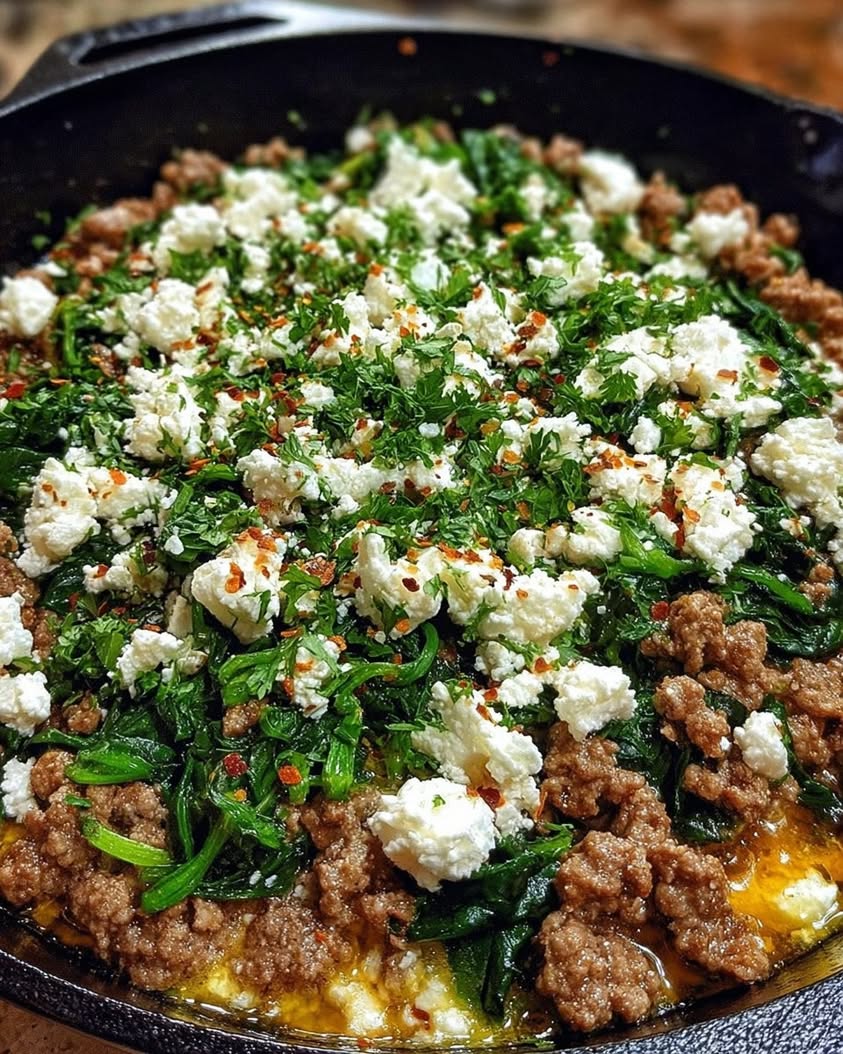
Ground Beef and Spinach Skillet with Feta: Creamy, Savory, and Ready in 20 Minutes!
This ground beef and spinach skillet with feta is your new secret weapon for busy weeknights. Imagine juicy, seasoned ground beef mingling with tender spinach in a rich, savory sauce, all crowned with creamy, tangy feta cheese. Furthermore, this entire delicious meal comes together in a single pan, meaning you get a fantastic dinner on the table with minimal cleanup. It is the perfect solution for when you need something satisfying, healthy, and incredibly fast.
The beauty of this recipe lies in its simplicity and depth of flavor. Each bite delivers a wonderful combination of savory beef, the slight bitterness of wilted spinach, and the salty punch of feta. Consequently, the dish feels both comforting and sophisticated, despite its straightforward preparation. It is a versatile foundation that you can easily adapt based on what you have in your fridge, making it a reliable go-to for any night of the week.
Additionally, this ground beef and spinach skillet is a nutritional powerhouse. It is naturally low in carbohydrates and packed with high-quality protein and iron from the beef, plus a wealth of vitamins and minerals from the fresh spinach. The feta cheese adds a dose of calcium and its signature briny flavor that ties everything together. Ultimately, you get a meal that is as good for your body as it is for your taste buds.
Quick Recipe Highlights
- Flavor Profile: This dish boasts a deeply savory and umami-rich base from the ground beef, which is perfectly complemented by the earthy notes of spinach. The creamy, salty feta cheese adds a bright, tangy finish that cuts through the richness, creating a beautifully balanced bite every time.
- Texture: You will experience a delightful contrast of textures, from the crumbly, hearty ground beef to the soft, almost silky wilted spinach. The feta cheese provides little pockets of creamy yet slightly grainy texture that melt in your mouth, adding a final layer of complexity.
- Aroma: As this cooks, your kitchen will fill with the irresistible scent of browning beef and aromatic garlic. The earthy fragrance of the spinach as it wilts blends seamlessly, while the final sprinkle of feta adds a subtle, salty tang to the air that promises a delicious meal.
- Visual Appeal: This skillet dinner is a feast for the eyes with its vibrant color palette. The deep brown of the beef, the brilliant green of the spinach, and the stark white crumbles of feta create a rustic yet elegant presentation that is incredibly inviting straight from the pan.
- Skill Level Needed: This recipe is specifically designed for cooks of all levels, especially beginners. It involves fundamental techniques like browning meat and wilting greens, with minimal steps and no complicated procedures. Therefore, anyone can achieve a restaurant-worthy result with ease.
- Special Equipment: The only essential tool is a reliable 10 or 12-inch skillet, preferably oven-safe if you wish to melt the feta slightly at the end. Beyond that, a spatula and a knife for mincing garlic are all you need, making this an accessible recipe for any kitchen.
Recipe Overview
- Difficulty Level: We have classified this ground beef and spinach skillet as easy because it requires no advanced culinary skills. The steps are sequential and simple: brown the meat, add aromatics, wilt the spinach, and finish with cheese. There is no intricate knife work or complex timing, making it virtually foolproof for a quick dinner.
- Category: This dish fits perfectly into several meal categories, primarily as a hearty main course for a low-carb or gluten-free diet. It can also serve as a robust breakfast hash or a high-protein lunch option. Its versatility makes it a valuable addition to your weekly meal rotation.
- Cuisine: While not tied to one specific tradition, this skillet dinner draws inspiration from Mediterranean and American homestyle cooking. The use of feta cheese nods to Greek flavors, while the combination of beef and greens is a staple in many comfort food cultures, resulting in a delicious fusion dish.
- Cost: This is an exceptionally budget-friendly meal. Ground beef is typically an affordable protein, and spinach and basic aromatics are inexpensive. Feta cheese is a cost-effective way to add a lot of flavor without the price tag of other cheeses, making this a wallet-friendly choice for families.
- Season: This recipe is truly a year-round winner. It is light enough for a spring or summer evening yet hearty and comforting for fall and winter. Using fresh, in-season spinach can enhance the flavor, but frozen spinach works perfectly, ensuring you can enjoy it any time.
- Occasion: This skillet is ideal for casual weeknight dinners, busy evenings, or a simple yet satisfying lunch. It is also excellent for meal prepping, as it reheats beautifully. While informal, it is impressive enough to serve to guests for a relaxed, family-style gathering.
Why You’ll Love This Ground Beef and Spinach Skillet
First and foremost, the taste and texture of this ground beef and spinach skillet are utterly irresistible. The savory, umami-rich beef forms a robust foundation, while the spinach adds a subtle earthiness and vibrant color. Consequently, every forkful is a perfect harmony of flavors. The creamy, salty feta cheese melts slightly into the dish, creating pockets of tangy goodness that elevate the entire meal. This combination is deeply satisfying and keeps you coming back for more, making it a guaranteed family favorite.
From a convenience standpoint, this recipe is a lifesaver. It requires only one pan, which translates to minimal cleanup and more time to relax after your meal. Furthermore, the entire process from start to finish takes just twenty minutes, making it faster than ordering takeout. You can easily keep all the ingredients on hand for a last-minute dinner solution. This efficiency does not compromise on flavor, proving that a delicious, home-cooked meal can be both simple and spectacular.
Nutritionally, this dish is a powerhouse. The lean ground beef provides a significant amount of high-quality protein, essential for muscle repair and keeping you full and energized. Spinach is loaded with iron, vitamins A, C, and K, and powerful antioxidants. Together, they create a low-carb, high-protein meal that supports a healthy lifestyle. Additionally, the fats from the beef and feta help with the absorption of the fat-soluble vitamins in the spinach, maximizing the nutritional benefits.
This ground beef and spinach skillet also holds great social and entertaining value. It is a versatile dish that you can serve family-style right in the skillet, encouraging a communal and relaxed dining experience. For guests, it feels rustic and thoughtfully prepared without requiring the host to spend hours in the kitchen. You can easily double the recipe to feed a crowd, and its universally appealing flavors are sure to please even the pickiest eaters.
Finally, the cost-effectiveness and accessibility of this meal are unmatched. The ingredients are affordable and readily available at any standard grocery store. You can often find ground beef and spinach on sale, making this an even more budget-conscious choice. Because the recipe is so flexible, you can adapt it to use what you already have, reducing food waste. Ultimately, this dish delivers incredible value, offering a restaurant-quality meal at a fraction of the cost.
Historical Background and Cultural Significance
The concept of cooking meat and greens together in a single pot is an ancient one, spanning countless cultures worldwide. Our modern ground beef and spinach skillet is a direct descendant of these humble, practical dishes. Peasant cooks throughout history have relied on such one-pan meals to create nourishing food with limited resources and cooking implements. The addition of a preserved cheese like feta connects it to traditions in the Mediterranean and the Balkans, where salting cheese was a vital method of preservation. Therefore, this recipe is a fusion of timeless, global cooking wisdom.
Culturally, skillet dinners hold a place of honor in American home cooking, particularly in the Midwest and the South. They represent a pragmatic and efficient approach to feeding a family. The rise in popularity of cast-iron skillets in the 19th and 20th centuries cemented this cooking method in the culinary lexicon. Meanwhile, the specific combination of beef and spinach gained traction as nutritional science highlighted the importance of iron-rich foods, with spinach being a celebrated source. This dish symbolizes a blend of old-world technique and new-world nutritional awareness.
The evolution of this recipe is a story of adaptation. Initially, such dishes might have used wild greens and tougher cuts of meat, simmered for hours. The modern version leverages the convenience of lean ground beef and pre-washed spinach, reflecting our faster-paced lifestyles. The inclusion of feta cheese, once considered an exotic import, is now commonplace, showing how global trade has influenced everyday cooking. This evolution demonstrates how classic comfort food continuously adapts to available ingredients and changing tastes.
Regional variations of this dish are plentiful. In Greece, a similar concept might include oregano and tomatoes, evolving into a dish like pastitsio filling. In Italy, the spinach and beef might be mixed with ricotta and pasta. A Turkish version could include spices like cumin and paprika and be served with yogurt. In the United States, it is often simplified into a low-carb meal or served over rice. These variations highlight the incredible versatility of the core ingredients and how different cultures imprint their unique flavors on a simple, effective cooking method.
Ingredient Deep Dive
Ground beef is the cornerstone of this skillet, providing rich, savory flavor and substantial protein. Historically, grinding meat was a way to tenderize tougher cuts and make them more palatable, a practice dating back centuries. Nutritionally, it is an excellent source of iron, zinc, and Vitamin B12, which are crucial for energy and a healthy immune system. When selecting ground beef, choose a lean variety like 90/10 to avoid excessive grease. For storage, keep it in the coldest part of your fridge and use it within two days, or freeze it for longer storage. If you need a substitute, ground turkey, chicken, or lamb will work well, though the flavor profile will shift.
Fresh spinach brings a vibrant green color and a wealth of nutrients to this dish. Culturally, spinach is believed to have originated in Persia and was introduced to Europe centuries ago, becoming a staple in many cuisines. It is packed with iron, calcium, vitamins A and K, and antioxidants that support eye and bone health. For the best results, look for crisp, dark green leaves without any signs of wilting or yellowing. Store it in your refrigerator’s crisper drawer, loosely wrapped in a paper towel inside a plastic bag. If fresh is unavailable, frozen chopped spinach, thoroughly thawed and squeezed dry, is a perfect and economical alternative.
Feta cheese, with its tangy and salty character, is the crowning glory of this skillet. This brined cheese has a history rooted in Greece, where it was traditionally made from sheep’s or goat’s milk. It adds a significant amount of calcium and protein while being lower in fat than many hard cheeses. When buying feta, opt for a block stored in brine for the best flavor and texture, as pre-crumbled feta can be drier. Keep it submerged in its brine in the refrigerator. For those who cannot have dairy, a firm, salted tofu crumbled with a bit of lemon juice can mimic the texture and tang, or you could use dairy-free feta alternatives.
Common Mistakes to Avoid
- Overcrowding the Skillet: Adding too much ground beef at once will steam it instead of browning it. Consequently, you will miss out on the deep, caramelized flavor that is essential to the dish. Always cook in batches if your skillet is not large enough to hold the beef in a single layer.
- Underseasoning the Beef: Ground beef needs a generous amount of seasoning to taste its best. Do not be shy with salt and pepper during the browning stage. This foundational seasoning builds layers of flavor that will carry through the entire dish.
- Burning the Garlic: Garlic burns very quickly and becomes bitter. Always add it after the beef is browned and only cook it for about 30 seconds until fragrant. Adding it too early will ruin the delicate flavor and can make the entire skillet taste acrid.
- Using Wet Spinach: If you are using frozen spinach, you must squeeze out every bit of excess water. Similarly, if you wash fresh spinach, ensure it is thoroughly dried. Excess moisture will make the skillet watery and dilute the flavors, resulting in a soupy rather than a cohesive dish.
- Overcooking the Spinach: Fresh spinach wilts in just a minute or two. Overcooking it makes it mushy and causes it to lose its vibrant green color and nutritional value. Stir it in at the very end, just until it has collapsed and turned bright green.
- Adding Feta Too Early: If you mix the feta cheese into the skillet and cook it, it will simply melt and disappear. For the best presentation and texture, crumble the feta over the top at the very end, either off the heat or just before serving.
- Skipping the Resting Time: Allowing the skillet to sit for a couple of minutes after cooking is crucial. This lets the juices redistribute throughout the meat and allows the flavors to meld together. Serving it immediately can make it seem less cohesive.
- Using a Cold Skillet: For proper browning, your skillet should be hot before you add the beef. Starting with a cold pan will cause the meat to stew in its own juices, preventing that desirable sear and leading to a gray, boiled taste.
Essential Techniques
Browning the ground beef correctly is the most critical technique for building flavor. This process, known as the Maillard reaction, creates hundreds of new flavor compounds that give the beef its deep, savory, umami-rich taste. To master it, ensure your skillet is hot before adding the meat and avoid overcrowding the pan. Use a spatula to break up the beef but then let it sit for a minute to develop a sear before stirring again. A common pitfall is constantly stirring, which steams the meat. Look for a rich, brown crust on the pieces of beef and the rendered fat in the pan should be clear, not cloudy.
Properly wilting the spinach is key to its texture and color. The goal is to just collapse the leaves so they become tender while retaining their nutritional value and bright green hue. This technique is important because overcooked spinach becomes slimy and loses its appeal. To do it perfectly, add the fresh spinach to the hot skillet and use tongs to toss it continuously. It will wilt in just one to two minutes. The visual cue for success is the leaves turning a brighter, vibrant green and becoming limp. Immediately remove the skillet from the heat at this point to prevent further cooking.
Pro Tips for Perfect Ground Beef and Spinach Skillet
For an extra flavor boost, sauté a finely chopped shallot or half a small onion with the garlic. This adds a subtle sweetness and aromatic depth that complements the savory beef beautifully.
Deglaze the pan with a splash of red wine or beef broth after browning the meat. Scrape up the browned bits from the bottom of the skillet; these bits are packed with flavor and will create a light, delicious sauce.
If you have an oven-safe skillet, place the entire pan under the broiler for 2-3 minutes after adding the feta. This will lightly brown and warm the cheese, adding a new dimension of texture and flavor.
Let the cooked skillet rest for five minutes off the heat before serving. This allows the juices to be reabsorbed, making the final dish more cohesive and flavorful.
Finish the dish with a drizzle of high-quality extra virgin olive oil and a crack of black pepper just before serving. This adds a fruity note and a fresh aroma that elevates the entire presentation.
For a herbaceous kick, stir in a tablespoon of fresh chopped dill, oregano, or parsley along with the spinach. Fresh herbs brighten up the rich flavors of the beef and cheese.
Variations and Adaptations
For regional variations, you can take this skillet in many exciting directions. A Greek-inspired version would include a teaspoon of dried oregano, a pinch of cinnamon, and a can of diced tomatoes. An Italian twist might involve a splash of balsamic glaze and a sprinkle of fresh basil, serving it over polenta. For a Tex-Mex flair, use taco seasoning for the beef, add a can of black beans and corn, and swap the feta for cotija cheese. These simple swaps can transport your taste buds around the world without complicating the cooking process.
Seasonal adaptations are straightforward and rewarding. In the summer, stir in fresh cherry tomatoes halved and sweet corn kernels off the cob. During autumn, add roasted cubes of butternut squash and a pinch of nutmeg. For a winter warmer, incorporate sliced mushrooms for an earthy, hearty element. Spring calls for fresh peas and asparagus tips added in the last minute of cooking. These additions keep the recipe feeling new and aligned with the best produce each season has to offer.
Dietary modifications are easily accommodated. For a Paleo or Whole30 version, simply omit the feta cheese and ensure your seasonings are compliant. To make it Keto, the base recipe is already perfect, but you can add more fat by using 80/20 ground beef and a dollop of sour cream. A dairy-free adaptation uses crumbled firm tofu marinated in lemon juice and salt instead of feta. For a gluten-free meal, just double-check that any added broths or seasonings are certified gluten-free, though the core ingredients naturally are.
Serving and Presentation Guide
Plating this skillet dinner beautifully enhances the dining experience. For a rustic and inviting presentation, bring the skillet directly to the table. Alternatively, use a large, shallow serving bowl to showcase the vibrant colors. To create height and visual interest, spoon the beef and spinach mixture onto the plate first, then artfully crumble the feta over the top. Garnish with a final sprinkle of fresh, chopped parsley or dill, which adds a pop of green and a fresh flavor contrast. A lemon wedge on the side allows guests to add a bright, acidic spark if they desire.
Choosing the right accompaniments can turn this dish into a complete and balanced meal. For a low-carb option, serve it alongside a crisp green salad with a lemon vinaigrette. If carbs are not a concern, it is fantastic over fluffy rice, creamy mashed potatoes, or buttered egg noodles to soak up the juices. For a middle ground, cauliflower rice or quinoa are excellent, healthy bases. Warm, crusty bread is also perfect for mopping up every last bit of flavor from your plate. Consider the preferences and dietary needs of your guests when selecting your sides.
Wine and Beverage Pairing
Selecting the right wine can elevate your ground beef and spinach skillet to a new level. A medium-bodied red wine with good acidity, such as a Sangiovese or a Chianti, is an excellent choice. The acidity cuts through the richness of the beef and balances the saltiness of the feta. Alternatively, a Syrah or Shiraz with its peppery notes complements the savory flavors beautifully. If you prefer white wine, a crisp, unoaked Chardonnay or a Sauvignon Blanc can work well, as their citrus and mineral notes provide a refreshing contrast to the dish’s depth.
For non-alcoholic alternatives, consider beverages that can cleanse the palate between bites. Sparkling water with a squeeze of lemon or lime is always a classic and effective choice. Iced herbal tea, such as mint or rooibos, offers a refreshing and flavorful option without caffeine. A tart cherry juice or a pomegranate spritzer can also stand up to the robust flavors of the skillet. The key is to choose a drink that is either crisp and cleansing or has a slight sweetness to counterpoint the savory and salty elements of the meal.
Storage and Shelf Life
Proper storage is key to enjoying your leftovers. Allow the skillet to cool completely to room temperature before transferring it to an airtight container. Do not leave it out for more than two hours to prevent bacterial growth. Stored correctly in the refrigerator, it will keep for 3-4 days. The flavors often meld and improve after a day, making the leftovers particularly delicious. You can also freeze this dish for up to three months. For best results, portion it into freezer-safe containers or bags, removing as much air as possible to prevent freezer burn.
Reheating instructions are simple but important for maintaining quality. The best method is to reheat it gently in a skillet over medium-low heat, adding a tablespoon of water or broth to prevent it from drying out. You can also use a microwave, but be sure to cover it and heat it in 30-second intervals, stirring in between, to ensure even warming. Do not overcook it during reheating, as this can make the spinach mushy and the beef tough. Always ensure the internal temperature reaches 165°F (74°C) for food safety.
Make Ahead Strategies
This ground beef and spinach skillet is a fantastic candidate for make-ahead meals. You can fully cook the entire dish, let it cool, and store it in the refrigerator for up to three days. When ready to serve, reheat it as described above. Alternatively, you can practice component prep to save time on a busy night. Brown the ground beef with the garlic and onions, then let this mixture cool and store it separately. Similarly, you can wash and dry the fresh spinach ahead of time. When dinner time arrives, you simply need to reheat the beef and wilt the spinach, a process that takes less than five minutes.
For meal prepping, divide the finished skillet into individual portion-sized containers. This creates ready-to-go lunches or dinners for the week. You can also pair it with your chosen side, like a portion of rice or quinoa, in the same container. The quality holds up very well, and the convenience is unmatched. If you are preparing it for a future freezer meal, undercook the spinach slightly before freezing. It will finish cooking when you reheat it, preventing it from becoming too soft. These strategies make healthy eating effortless during a hectic week.
Scaling Instructions
Scaling this recipe up or down is straightforward because of its simple ratios. To halve the recipe, simply use half of every ingredient. Use a smaller skillet, around 8 inches, to ensure the beef still browns properly instead of steaming. The cooking times will remain roughly the same, though you may need to reduce the wilting time for the spinach slightly. Conversely, to double or triple the recipe for a crowd, use a very large skillet or cook the beef in batches to avoid overcrowding. You may need to add a minute or two to the cooking time to ensure the larger volume of spinach wilts completely.
When scaling up, consider your equipment and serving logistics. A Dutch oven can be a good alternative to a skillet for very large batches. If you are doubling the recipe, you might need to slightly increase the seasoning, but it is best to season to taste at the end. For storage, dividing a large batch into several smaller containers will help it cool faster and remain safe. Remember that a larger mass of food will take longer to reheat evenly, so adjust your reheating method accordingly, perhaps using an oven for bigger portions.
Nutritional Deep Dive
This ground beef and spinach skillet offers a powerful nutritional profile. It is a high-protein, low-carbohydrate meal, making it ideal for blood sugar management and sustained energy. The lean ground beef is an excellent source of complete protein, providing all essential amino acids necessary for muscle repair and immune function. It is also rich in heme iron, which is more easily absorbed by the body than the iron from plants. Additionally, the beef supplies significant amounts of Zinc and Vitamin B12, both crucial for neurological health and metabolism.
The spinach in this dish is a nutritional superstar. It provides a substantial amount of non-heme iron, Vitamin A for vision and skin health, and Vitamin K for bone metabolism and blood clotting. It is also packed with antioxidants like lutein and zeaxanthin. The healthy fats from the beef and feta aid in the absorption of these fat-soluble vitamins. Furthermore, this meal is naturally gluten-free and can be adapted to fit various dietary plans, including Keto and Paleo. Its high protein and fiber content promote satiety, which can aid in weight management by helping you feel full longer.
Dietary Adaptations
For a Gluten-Free version, this recipe is naturally compliant as long as you confirm that any store-bought broth or seasoning blends used are certified gluten-free. For a Dairy-Free adaptation, omit the feta cheese. You can create a tangy topping by marinating crumbled firm tofu in lemon juice and a pinch of salt, or use a store-bought vegan feta alternative. To make it Vegan, substitute the ground beef with a plant-based ground meat alternative or cooked brown lentils, and use the dairy-free feta option. The cooking method remains largely the same.
For a strict Keto diet, this skillet is an excellent choice as-is. To increase the fat content, use 80/20 ground beef and consider adding a dollop of sour cream when serving. A Paleo version requires omitting the dairy, so simply leave out the feta cheese. For a Low-FODMAP adaptation, use garlic-infused oil instead of fresh garlic to impart flavor without the fructans, and ensure the spinach portion is kept to a single serving as per Monash University guidelines. These simple swaps make this versatile dish accessible to almost any dietary need.
Troubleshooting Guide
If your skillet turns out watery, the most common culprit is excess moisture from the spinach. To fix this, continue cooking the mixture over medium-high heat, stirring frequently, until the extra liquid evaporates. To prevent this next time, be meticulous about squeezing all the water from frozen spinach or drying fresh spinach thoroughly. If the dish is too dry, it likely means the beef was very lean and cooked for too long. Stir in a few tablespoons of beef broth, water, or even a splash of tomato sauce to add moisture back in and create a looser consistency.
If the flavors taste bland, the dish likely needs more seasoning. Do not be afraid to add more salt and pepper at the end. A splash of something acidic, like lemon juice or a drizzle of balsamic glaze, can also brighten all the flavors. If the beef did not brown properly, it was probably added to a cold pan or the skillet was overcrowded. While you cannot undo this, you can still enjoy the meal; just remember for next time to preheat the pan and cook in batches. For any texture issues with the spinach, remember that it wilts very quickly, so add it at the absolute last moment.
Recipe Success Stories
We love hearing from our community about their experiences with this ground beef and spinach skillet. One reader, Sarah from Colorado, shared that this recipe has become her family’s favorite “tired Tuesday” meal. Her kids love it served over rice, and she appreciates how quickly it comes together. Another home cook, Mark, reported that he added a diced jalapeño for some heat and served it in tortillas as a filling for low-carb tacos, which was a huge hit at his game night. These stories show the incredible adaptability of this simple recipe.
Many readers have successfully adapted this dish for their specific dietary needs. A reader named Lisa, who follows a dairy-free diet, used our tofu feta suggestion and said it was “surprisingly authentic and delicious.” Another, Tom, doubled the recipe to meal prep for his week and found that it reheated perfectly, tasting even better on the second and third days. We also love seeing your photos! For the best photography tips, shoot the skillet in natural light, use a colorful napkin or rustic board underneath, and garnish with fresh herbs right before snapping the picture to make the colors pop.
Frequently Asked Questions
Can I use frozen spinach instead of fresh?
Absolutely. You will need one 10-ounce package of frozen chopped spinach. Thaw it completely and then squeeze it in a clean kitchen towel or with your hands over the sink to remove all excess water. Adding frozen spinach without squeezing will make your skillet very watery. Once it is thoroughly dry, you can stir it in just as you would fresh spinach.
What can I use instead of feta cheese?
Goat cheese crumbles would be a fantastic substitute, offering a similar tangy creaminess. Queso fresco or cotija are good options for a milder saltiness. If you do not like tangy cheese, you could use shredded mozzarella or Monterey Jack and melt it over the top. For a dairy-free version, consider marinated tofu crumbles or a store-bought vegan feta alternative.
Is this recipe keto-friendly?
Yes, this ground beef and spinach skillet is naturally keto-friendly and low in carbohydrates. It is high in protein and fat, making it an excellent meal for those following a ketogenic diet. Just be sure to use a full-fat ground beef and check that any added ingredients, like broth, do not contain hidden sugars or starches.
Can I make this ahead of time?
You can certainly make this dish ahead of time. Cook it completely, let it cool to room temperature, and then store it in an airtight container in the refrigerator for up to 3-4 days. The flavors often improve after a day. Reheat gently on the stovetop or in the microwave, adding a splash of water if it seems dry.
How can I add more vegetables to this?
This skillet is very versatile. You can add diced bell peppers or mushrooms when you are cooking the garlic. Zucchini or yellow squash, chopped into small pieces, would also work well. For a Mediterranean twist, add a handful of kalamata olives or some artichoke hearts at the same time as the spinach.
My skillet is too watery. What did I do wrong?
A watery skillet is almost always due to moisture from the spinach. If using frozen, it must be thoroughly squeezed dry. If using fresh, ensure it is washed and dried properly. To fix it, simply continue cooking over medium heat, stirring, until the excess liquid evaporates. You can also stir in a tablespoon of tomato paste to help thicken the juices.
Can I freeze this dish?
Yes, this dish freezes quite well. Allow it to cool completely, then transfer it to a freezer-safe container or heavy-duty freezer bag. It will keep for up to 3 months. Thaw overnight in the refrigerator before reheating. The texture of the spinach may be a little softer after freezing, but the flavor will still be excellent.
What should I serve with this?
For a low-carb meal, serve it with a side salad or cauliflower rice. It is also delicious over regular rice, quinoa, couscous, or with a slice of crusty bread to soak up the juices. Mashed potatoes or buttered egg noodles make it a more comforting, hearty meal. The choices are endless.
Additional Resources
If you loved this ground beef and spinach skillet, you might enjoy exploring other quick and healthy one-pan meals. Our recipe for a Lemon Herb Chicken and Asparagus Skillet uses a similar method for a bright, spring-inspired dish. For a meatless option, our Mediterranean Chickpea Skillet with Feta is a vibrant and satisfying vegetarian dinner. If you are interested in mastering your skillet skills, check out our guide “How to Properly Season and Care for Your Cast Iron Skillet,” which will ensure your pan lasts a lifetime. Understanding your tools makes cooking even more enjoyable and successful.
For those looking to dive deeper into the ingredients, we have comprehensive guides on “Selecting the Best Lean Ground Beef” and “The Health Benefits of Dark Leafy Greens.” Learning about your ingredients empowers you to make the best choices at the grocery store and in the kitchen. Finally, if you are cooking for a specific diet, browse our collections of Keto-Friendly Dinners, Gluten-Free Weeknight Meals, and Dairy-Free Adaptations. We are dedicated to providing recipes that are not only delicious but also adaptable to your lifestyle and nutritional needs.
PrintGround Beef and Spinach Skillet with Feta
Description
A quick and flavorful one-pan meal featuring seasoned ground beef, fresh spinach, and tangy feta cheese.
Ingredients
For the Crust:
- 1 lb ground beef
- 1 onion, diced
- 2 cloves garlic, minced
- 6 cups fresh spinach
- 1 tsp dried oregano
- 1/2 tsp paprika
- Salt and pepper to taste
- 1/2 cup crumbled feta cheese
- 2 tbsp olive oil
Instructions
1. Prepare the Crust:
- Heat olive oil in a large skillet over medium heat. Add onion and cook until softened, about 5 minutes.
- Add ground beef and cook until browned, breaking it up with a spoon. Stir in garlic, oregano, paprika, salt, and pepper.
- Add spinach in batches, stirring until wilted. Cook for another 2-3 minutes.
- Remove from heat and sprinkle feta cheese over the top. Cover and let sit for 2 minutes before serving.
Notes
You can customize the seasonings to taste.

I’m Shaykee—born in Morocco, seasoned across continents. From airplane galleys to home kitchens, I share the flavors and stories that shaped my journey.